
The Middle East: 1384–1395 CE Timur's …
Years: 1384 - 1395
The Middle East: 1384–1395 CE
Timur's Conquests and Ottoman Expansion
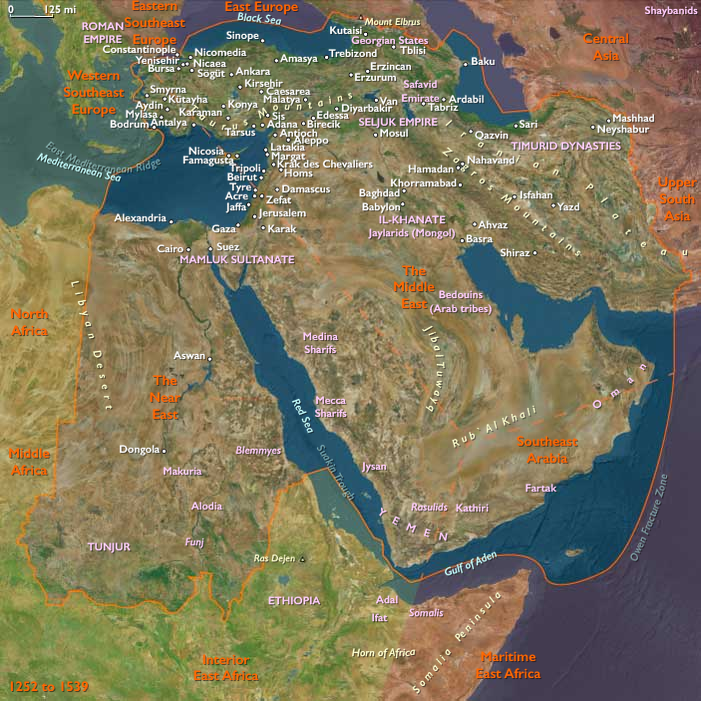
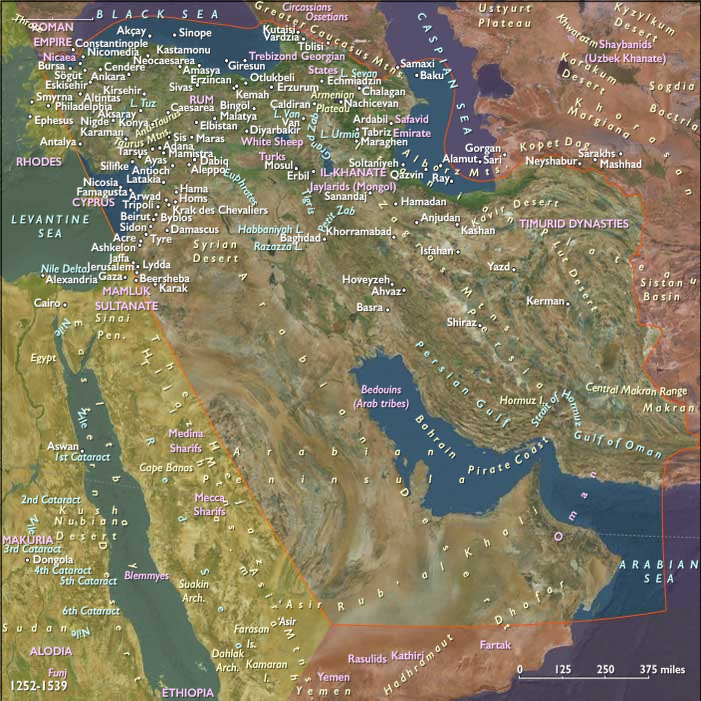
Between 1384 and 1395 CE, the Middle East witnesses intense military and political upheaval, primarily driven by the relentless campaigns of the Central Asian conqueror Timur (Tamerlane). Timur's invasions profoundly affect the Christian kingdom of Georgia, initiating a series of devastating attacks beginning in 1386. These invasions are intricately connected to his ongoing conflict with Tokhtamysh, the khan of the Golden Horde, as Timur seeks to secure and extend his influence across the Caucasus and Anatolia.
Ottoman Consolidation and Balkan Revolts
Meanwhile, the Ottoman Sultan Bayezid I, known for his aggressive expansionist policies, consolidates Ottoman control in Anatolia and the Balkans. In 1391, Bayezid decisively defeats the principality of Karaman and annexes several Turkmen states in eastern Anatolia, significantly expanding Ottoman territories and power.
However, Bayezid's eastern ambitions are temporarily halted by events in Europe, where several Balkan vassal states, emboldened and supported by Hungary and the declining Byzantine Empire, stage a revolt. Forced to redirect his focus westward, Bayezid suppresses these uprisings and reasserts Ottoman dominance in the region, setting the stage for future confrontations with both European powers and Timur himself.
Cultural and Intellectual Continuity
Despite ongoing conflicts, cultural and intellectual activities persist throughout the Middle East. Major urban centers such as Baghdad, Damascus, and Cairo continue to serve as key hubs of learning and scholarly exchange, fostering developments in literature, philosophy, and the sciences.
Fragmentation in Persia
The Jalayrid Sultanate, although maintaining nominal authority in western Persia and Iraq, continues to face significant internal dissension and external pressures. The fragmented political landscape allows regional rulers and rival tribal groups to challenge the Jalayrid's waning authority, contributing to sustained instability and ongoing power struggles across the region.
Legacy of Epidemics
Recurrent outbreaks of the Black Death persistently impact populations and economies, further exacerbating regional instability. These epidemics highlight vulnerabilities within the social and economic structures, influencing the broader political dynamics of the Middle East throughout the era.
In summary, the period 1384–1395 CE is marked by Timur's sweeping conquests, Ottoman territorial consolidation amidst Balkan revolts, continued cultural vitality despite fragmentation, and enduring challenges posed by recurring epidemics. These developments shape the historical trajectory of the Middle East, laying crucial groundwork for subsequent geopolitical shifts.
People
Groups
- Persian people
- Kurdish people
- Christians, Armenian Apostolic Orthodox
- Islam
- Muslims, Sunni
- Turkmen people
- Cuman people, or Western Kipchaks, also called Polovtsy, Polovtsians)
- Christians, Eastern Orthodox
- Rûm, Sultanate of
- Jerusalem, Latin Kingdom of
- Italians (Latins)
- Tripoli, County of
- Georgia, (Bagratid) Kingdom of
- Bulgarian Empire (Second), or Empire of Vlachs and Bulgars
- Teutonic Knights of Acre (House of the Hospitalers of Saint Mary of the Teutons in Jerusalem)
- Cyprus, Kingdom of
- Hungary, Kingdom of
- Egypt and Syria, Mamluk Bahri Sultanate of
- Karamanids
- Hamid, Beylik of
- Roman Empire, Eastern: Palaiologan dynasty
- Ottoman Emirate
- Germiyan, Beylik of
- Saruhan, Beylik of
- Muzaffarids (Iran)
- Jalayirid Sultanate
- Timurid Empire
Topics
- Byzantine-Ottoman wars
- Black Death, or Great Plague
- Byzantine-Ottoman Turk War of 1359-99
- Timur (Tamerlane), Conquests of
Subjects
- Writing
- Public health
- Labor and Service
- Conflict
- Faith
- Government
- Scholarship
- Custom and Law
- Catastrophe
Regions
Subregions
Years: 1384 - 1395
People
Groups
- Persian people
- Kurdish people
- Christians, Armenian Apostolic Orthodox
- Islam
- Muslims, Sunni
- Turkmen people
- Cuman people, or Western Kipchaks, also called Polovtsy, Polovtsians)
- Christians, Eastern Orthodox
- Rûm, Sultanate of
- Jerusalem, Latin Kingdom of
- Italians (Latins)
- Tripoli, County of
- Georgia, (Bagratid) Kingdom of
- Bulgarian Empire (Second), or Empire of Vlachs and Bulgars
- Teutonic Knights of Acre (House of the Hospitalers of Saint Mary of the Teutons in Jerusalem)
- Cyprus, Kingdom of
- Hungary, Kingdom of
- Egypt and Syria, Mamluk Bahri Sultanate of
- Karamanids
- Hamid, Beylik of
- Roman Empire, Eastern: Palaiologan dynasty
- Ottoman Emirate
- Germiyan, Beylik of
- Saruhan, Beylik of
- Muzaffarids (Iran)
- Jalayirid Sultanate
- Timurid Empire
Topics
- Byzantine-Ottoman wars
- Black Death, or Great Plague
- Byzantine-Ottoman Turk War of 1359-99
- Timur (Tamerlane), Conquests of
Subjects
- Writing
- Public health
- Labor and Service
- Conflict
- Faith
- Government
- Scholarship
- Custom and Law
- Catastrophe
Regions
Subregions