
The Holy League fleet provides support to …
Years: 1539 - 1539
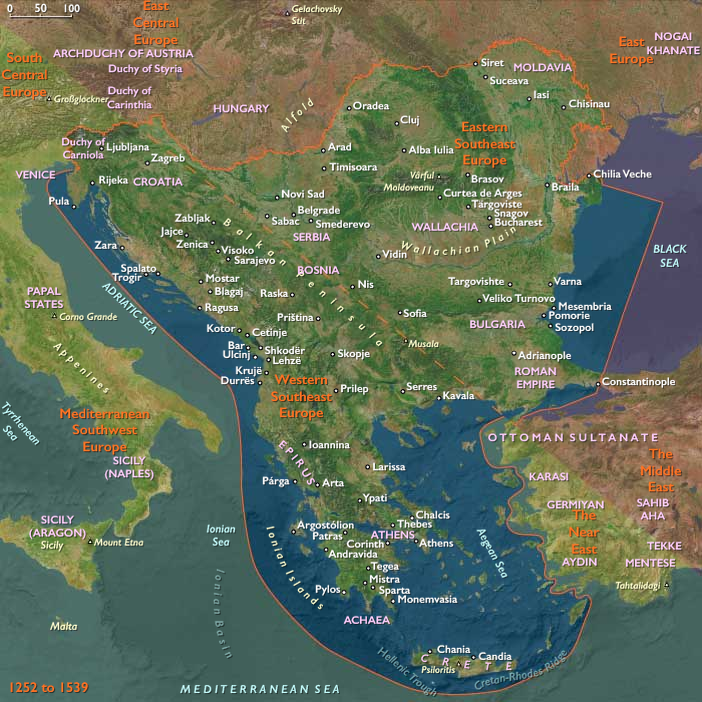
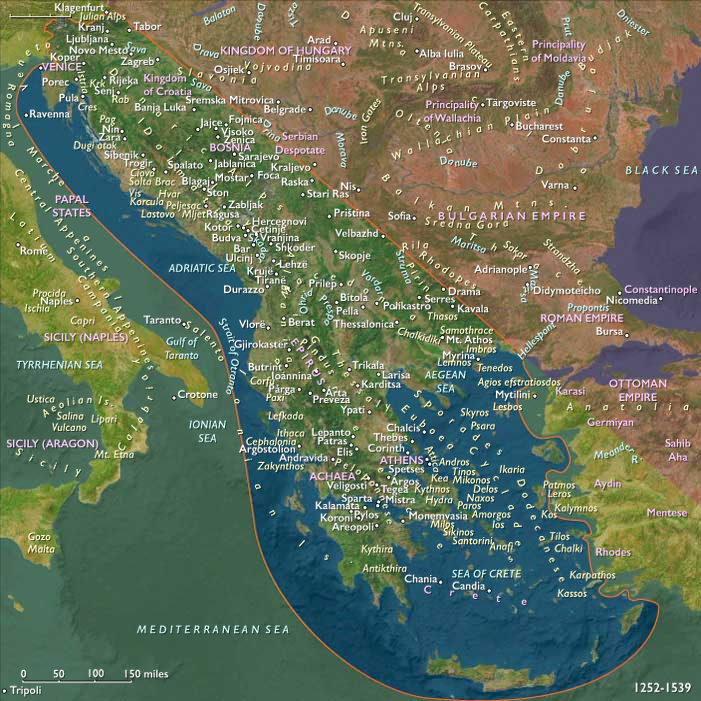
The Holy League fleet provides support to Spanish land forces on the Dalmatian coast that capture the small town of Castelnuovo, a strategic fortress between the Venetian possessions of Cattaro and Ragusa in the area known as Venetian Albania.
Venice therefore claims ownership of the city, but Charles V refuses to cede it.
This is the beginning of the end of the Holy League.
The town of Castelnuovo is garrisoned with approximately four thousand men.
The main force is a tercio of Spanish veteran soldiers numbering about thirty-five hundred men under the experienced Maestro de Campo Francisco Sarmiento de Mendoza y Manuel. This tercio, named Tercio of Castelnuovo, is formed by fifteen flags (companies) belonging to other tercios, among them the Old Tercio of Lombardy, dissolved the year before after a mutiny for lack of pay. The garrison also includes one hundred and fifty light cavalry soldiers, a small contingent of Greek soldiers and knights under Ándres Escrápula, and some artillery pieces managed by fifteen gunners under captain Juan de Urrés. The chaplain of Andrea Doria, named Jeremías, also remains in Castelnuovo along with forty clerics and traders and is appointed bishop of the town.
The reason for the garrison's large size is that Castelnuovo is projected to be the beachhead for a great offensive against the heart of the Ottoman Empire.
However, the fate of the troops in the fortress depends entirely on the support of the fleet, and this had been defeated by Barbarossa at Preveza.
Moreover, in a short time Venice withdraws from the Holy League after accepting a disadvantageous agreement with the Ottomans.
Without Venetian ships, the Allied fleet has no chance to defeat the Ottoman fleet commanded by Barbarossa, who is by this time supported by another experienced officer, Turgut Reis.
Suleiman orders Barbarossa to reorganize and rearm his fleet during the winter months to have it ready for the battle in the spring of 1539.
Ten thousand infantry and four thousand Janissaries are embarked aboard the warships to reinforce the troops of the galleys.
According to the orders received, Barbarossa's army, numbering about two hundred ships with twenty thousand fighting men aboard, are to blockade Castelnuevo by sea while the forces of the Ottoman governor of Bosnia, a Persian named Ulamen, is to besiege the fortress by land in command of thirty thousand soldiers.
Sarmiento, meanwhile, has used the peaceful months prior to the siege to improve the defenses of the town, repairing walls and bastions and building new fortifications.
In the event he cannot do much due to a lack of available means, as there is no plan to fortify the town since it is supposed to function as a beachhead.
Captain Alcocer is sent to Spain with instructions to call for help; Pedro de Sotomayor is sent to Sicily and Captain Zambrana to Brindisi, all in vain.
Andrea Doria, who is in Otranto with fofty-seven Imperial and four Maltese galleys, receives news of Castelnuovo's situation, but given the inferiority of his fleet he sends a message to Sarmiento recommending him to surrender.
Barbarossa's army is by 23 July ready to begin a general assault and his artillery prepared to break down the walls of Castelnuovo.
Enjoying a vast numerical superiority over the Spanish garrison, which is completely isolated and unable to receive support or supplies, Barbarossa offers an honorable surrender to the Spanish.
Sarmiento and his men will be granted a safe passage to Italy, the soldiers retaining their weapons and flags.
Barbarossa adds to his offer the incentive of giving each soldier twenty ducats.
His only demand to Sarmiento is the abandonment of his artillery and gunpowder.
Two squad corporals of Captain Vizcaino's company, Juan Alcaraz and Francisco de Tapia, manage to return to Naples and write their version of events many years later.
They record the answer given to Barbarossa that "the Maestro de Campo consulted with all the captains, and the captains with his officers, and they decided that they preferred to die in service of God and His Majesty."
The great assault on the city is launched shortly after, and last all day.
Almost all of the Janissaries and sixteen thousand from the other Ottoman units are killed in the assault.
According to rumor, Turkish losses amounted to thirty-seven thousand dead. Of the Spanish troops only two hundred survive, most of them wounded.
Half of the prisoners and all the clerics are also slaughtered to satisfy the Ottoman soldiers, who are angry at the great losses which they had suffered in capturing the city.
The few survivors are taken as slaves to Constantinople.
Twenty-five of them will manage to escape from prison six years later and sail to the port of Messina.
Locations
People
Groups
- Muslims, Sunni
- Genoa, (Most Serene) Republic of
- Christians, Roman Catholic
- Christians, Eastern Orthodox
- Venice, (Most Serene) Republic of
- Austria, Archduchy of
- Bohemia, Kingdom of
- France, (Valois) Kingdom of
- Moldavia, Principality of
- Venetian Albania
- Holy Roman Empire
- Ottoman Empire
- Greece, Ottoman
- Avlona, Sanjak of
- Spain, Habsburg Kingdom of
- Ottoman Algeria
- Habsburg Monarchy, or Empire
- Knights of Malta, Sovereign and Military Order of the
Topics
Commodoties
Subjects
Regions
Subregions
Years: 1539 - 1539
Locations
People
Groups
- Muslims, Sunni
- Genoa, (Most Serene) Republic of
- Christians, Roman Catholic
- Christians, Eastern Orthodox
- Venice, (Most Serene) Republic of
- Austria, Archduchy of
- Bohemia, Kingdom of
- France, (Valois) Kingdom of
- Moldavia, Principality of
- Venetian Albania
- Holy Roman Empire
- Ottoman Empire
- Greece, Ottoman
- Avlona, Sanjak of
- Spain, Habsburg Kingdom of
- Ottoman Algeria
- Habsburg Monarchy, or Empire
- Knights of Malta, Sovereign and Military Order of the
Topics
Commodoties
Subjects
Regions
Subregions