
The Treaty of Angers (851): The Recognition …
Years: 851 - 851
September
The Treaty of Angers (851): The Recognition of the Kingdom of Brittany
Following Erispoe’s decisive victory over Charles the Bald at the Battle of Jengland (851), the relationship between the Franks and the Bretons is permanently redefined. Recognizing his inability to subjugate Brittany by force, Charles meets Erispoe at Angers in September 851 to formalize a peace settlement.
The Terms of the Treaty of Angers (851)
-
Recognition of Erispoe as "King of Brittany"
- Erispoe formally submits to Charles as Emperor, acknowledging nominal Carolingian overlordship.
- In return, Charles grants him the title of "rex" (king), elevating Erispoe’s status beyond that of a mere duke or regional leader.
- This allows Erispoe to rule Brittany as a recognized sovereign, even though he remains, in principle, a vassal of the Carolingians.
-
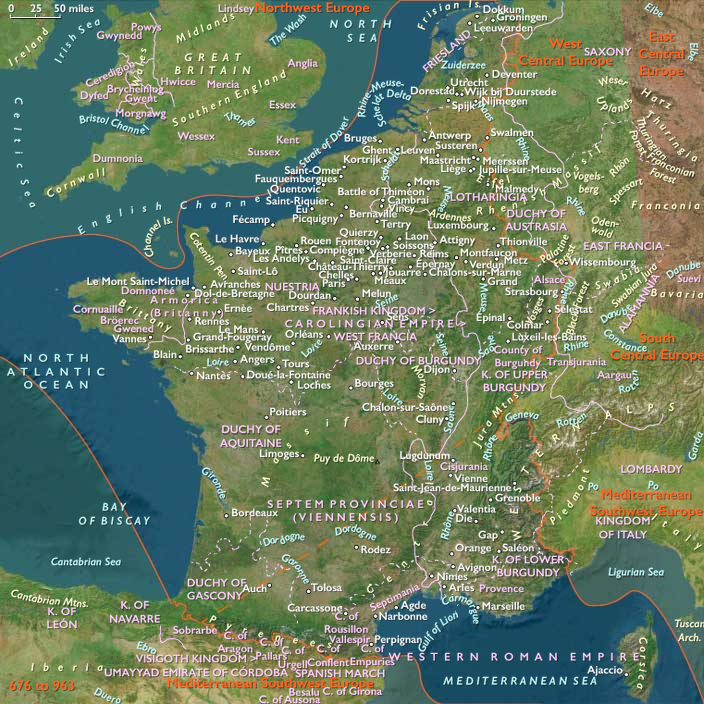
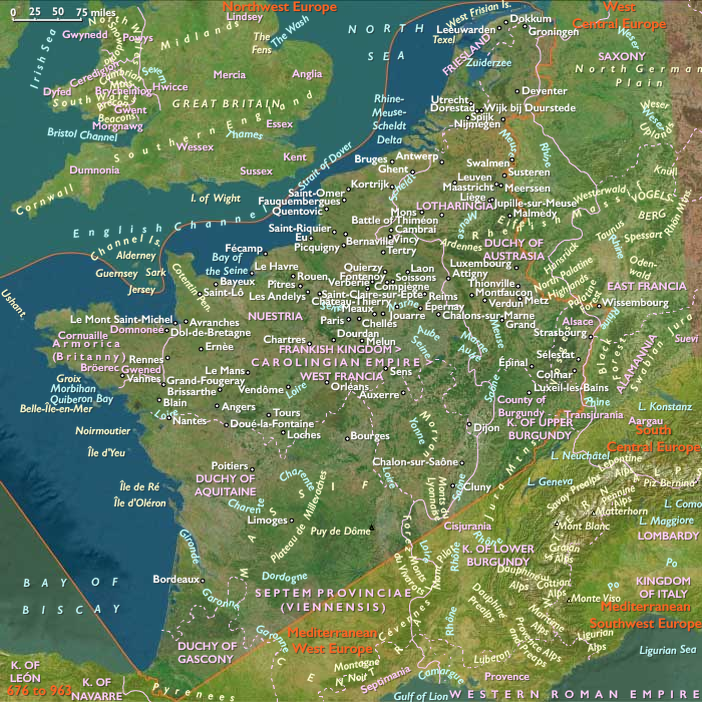
Expansion of Brittany’s Borders
- Charles cedes the former Breton March to Erispoe, including:
- Rennes
- Nantes
- Pays de Retz
- These territories, previously controlled by the Franks as a buffer zone, are now fully integrated into Brittany.
- For the first time, Brittany incorporates a significant non-Breton population, composed of Gallo-Roman and Romano-Frankish peoples, marking a shift in its political and cultural composition.
- Charles cedes the former Breton March to Erispoe, including:
-
The Stabilization of Franco-Breton Relations
- The treaty sets the limits of historic Brittany, essentially defining the borders of the medieval Duchy of Brittany and the later French province of Brittany.
- While later Breton rulers will attempt further expansion, their ability to hold additional lands proves difficult, as the treaty establishes a stable equilibrium between the two realms.
- By securing political recognition, Erispoe ensures that Brittany is no longer viewed as a rebellious province, but rather as a legitimate kingdom within the Frankish sphere.
The Long-Term Impact of the Treaty of Angers
- Breton Sovereignty is Secured → Though technically a vassal state, Brittany now operates as an independent kingdom, setting a precedent for later Breton rulers.
- Franco-Breton Peace Enables Defense Against the Vikings → With Franco-Breton relations stabilized, the Bretons can now focus on defending their land from Norse incursions, which will become a major threat in the coming decades.
- Defines the Borders of Brittany for Centuries → The treaty essentially establishes Brittany's medieval borders, ensuring that its territorial core remains distinct even as its rulers occasionally expand or lose lands.
The Treaty of Angers (851) marks a turning point in Franco-Breton relations, as it not only ends decades of conflict but also formally establishes Brittany as a political entity, separate from direct Carolingian control. While future Breton rulers will face internal and external challenges, this agreement cements Brittany’s place in medieval Europe as a kingdom in its own right.
Locations
People
- Charles the Bald
- Erispoe
- Lambert II of Nantes
- Lothair I
- Louis the German
- Nominoë
- Pepin II of Aquitaine
Groups
- Franks
- Gallo-Roman culture
- Saxons
- Breton people
- Brittany, Kingdom of
- Maine, County of
- Francia Occidentalis (West Francia, or France), Kingdom of
- Francia Orientalis (East Francia), Kingdom of
Topics
Commodoties
Subjects
Regions
Subregions
Years: 851 - 851
September
Locations
People
- Charles the Bald
- Erispoe
- Lambert II of Nantes
- Lothair I
- Louis the German
- Nominoë
- Pepin II of Aquitaine
Groups
- Franks
- Gallo-Roman culture
- Saxons
- Breton people
- Brittany, Kingdom of
- Maine, County of
- Francia Occidentalis (West Francia, or France), Kingdom of
- Francia Orientalis (East Francia), Kingdom of
Topics
Commodoties
Subjects
Regions
Subregions