
Lothair I
Emperor of the Romans and King of Italy
795 CE to 855 CE
Lothair I or Lothar I (795 – 29 September 855) is the Emperor of the Romans (817–855), co-ruling with his father until 840, and the King of Bavaria (815–817), Italy (818–855) and Middle Francia (840–855).
The territory of Lorraine (Lothringen in German) is named after him.
Lothair is the eldest son of the Carolingian emperor Louis the Pious and his wife Ermengarde of Hesbaye, daughter of Ingerman the duke of Hesbaye.
On several occasions, Lothair leads his full-brothers Pippin I of Aquitaine and Louis the German in revolt against their father to protest against attempts to make their half-brother Charles the Bald a co-heir to the Frankish domains.
Upon the father's death, Charles and Louis join forces against Lothair in a three-year civil war (840–843).
The struggles between the brothers lead directly to the breakup of the Frankish Empire assembled by their grandfather Charlemagne, and lay the foundation for the development of modern France and Germany.
World
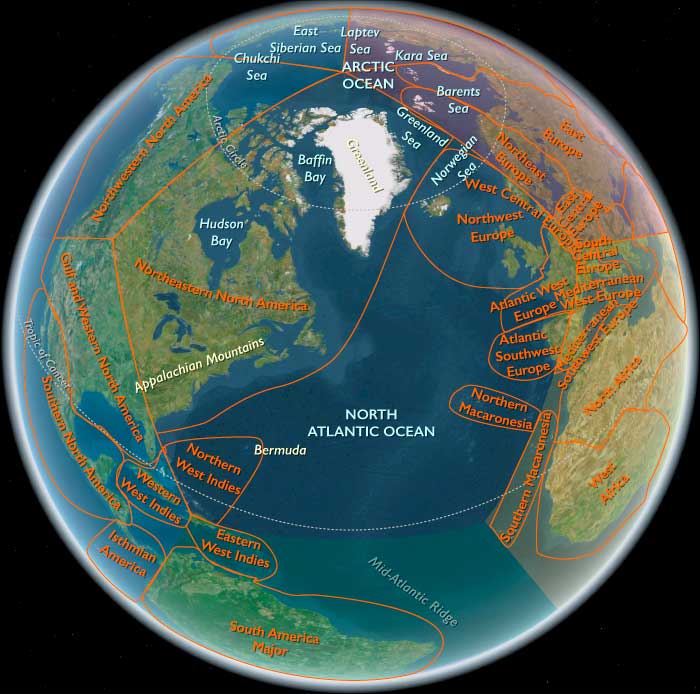
The Atlantic Lands
View →Related Events
Showing 10 events out of 75 total
Atlantic West Europe (676–819): From Merovingian Fragmentation to Carolingian Unity
Between 676 and 819, Atlantic West Europe—including regions corresponding to modern-day France (Neustria, Austrasia, Aquitaine, Brittany, Burgundy) and the Low Countries—underwent profound political restructuring, evolving from fragmented Merovingian rule into the unified, culturally vibrant Carolingian Empire. This age witnessed the pivotal transition from declining royal authority to the consolidation of power under influential mayors of the palace, culminating in the ascendance of Charlemagne and the flowering of the Carolingian Renaissance.
Political and Military Developments
Merovingian Fragmentation and Austrasian Dominance (676–714)
- Following the assassination of Childeric II (675), the Frankish kingdoms—Neustria, Austrasia, and Burgundy—descended into rivalry and weakened royal power.
- Pepin of Herstal, Austrasian mayor of the palace, established dominance after the decisive Battle of Tertry (687), consolidating power over Neustria and Burgundy, thereby shifting control away from Merovingian kings to the mayors of the palace.
Carolingian Rise (715–751)
- Charles Martel (r. 718–741), son of Pepin of Herstal, fortified the Carolingian position by defeating Neustrian rivals and asserting authority over Aquitaine, Burgundy, and the Low Countries.
- His victory at Tours-Poitiers (732) halted the northward expansion of Umayyad forces, significantly shaping the future of Atlantic West Europe and earning him legendary status.
Carolingian Consolidation and Expansion (752–819)
- Pepin the Short (r. 751–768), Charles Martel's son, deposed the last Merovingian king (751), becoming king himself with papal sanction. His reign legitimized Carolingian rule, strengthened royal authority, and subdued Aquitaine.
- Charlemagne (r. 768–814) dramatically expanded Frankish territory through wars against Saxons, Lombards, Avars, and Muslim Spain, solidifying control over Aquitaine, Brittany, and parts of Burgundy.
- Charlemagne’s imperial coronation in 800 by Pope Leo III established the Carolingian Empire, a cultural and political unity unprecedented since Rome.
- Louis the Pious (r. 814–840) inherited a vast, culturally vibrant empire, though internal tensions foreshadowed future divisions.
Economic and Social Developments
Agricultural Revival and Feudal Foundations
- Improved stability under the Carolingians spurred agricultural expansion and economic recovery. Monastic estates spearheaded land clearance, technological innovations, and improved farming practices, laying groundwork for medieval manorialism.
- Proto-feudal relationships emerged as local aristocrats and monasteries provided peasants protection in exchange for labor, reinforcing hierarchical rural societies.
Urban Development and Commercial Renewal
- Trade gradually revived as towns such as Paris, Lyon, Nantes, Tours, and Utrecht benefited from increased political stability, becoming regional market centers.
- The Carolingian monetary reforms, especially the introduction of the silver denier, standardized and facilitated trade throughout Atlantic West Europe.
Religious and Cultural Developments
Expansion of Christianity and Ecclesiastical Reforms
- Carolingian rulers promoted Christianity vigorously, supporting missionary work in Saxony and among neighboring peoples.
- St. Boniface (d. 754), supported by Charles Martel and Pepin the Short, reorganized the Frankish church, strengthened papal ties, and founded key bishoprics throughout Atlantic West Europe.
Carolingian Renaissance
- Charlemagne’s court at Aachen became the heart of an intellectual revival, attracting scholars like Alcuin of York, Paul the Deacon, and Einhard.
- The establishment of cathedral and monastic schools, along with manuscript production centers in monasteries such as Corbie, Tours, and Fulda, significantly advanced literacy, education, and classical scholarship.
- Revival and standardization of Latin, script reforms (Caroline minuscule), and illuminated manuscripts marked cultural achievements.
Intellectual and Artistic Developments
Artistic and Architectural Innovations
- The period saw an evolution from Merovingian artistic traditions to Carolingian art, blending Classical Roman, Byzantine, and Germanic elements.
- Notable architectural projects included Charlemagne’s palace chapel at Aachen, Abbey of Saint-Denis, and monasteries throughout the empire.
Legacy and Significance
The era from 676 to 819 in Atlantic West Europe transformed a fragmented post-Roman landscape into a unified, culturally dynamic Carolingian Empire. The rise of the Carolingian dynasty established a powerful political order, revitalized economic life, and fostered a vibrant intellectual and artistic culture, laying the critical foundations for medieval European civilization.
Louis and his court are crossing a wooden gallery from the cathedral to the palace in Aachen on Maundy Thursday 817, when the gallery collapses, killing many.
Louis, having barely survived and feeling the imminent danger of death, begins planning for his succession; three months later he issues an Ordinatio Imperii, an imperial decree that lays out plans for an orderly succession.
He had already given his two eldest sons a share in the government in 815, when he had sent his elder sons Lothair and Pepin to govern Bavaria and Aquitaine respectively, though without the royal titles.
Now, he proceeds to divide the empire among his three sons and his nephew Bernard of Italy: Lothair is proclaimed and crowned co-emperor in Aachen by his father.
He is promised the succession to most of the Frankish dominions (excluding the exceptions below), and will be the overlord of his brothers and cousin.
Bernard, the son of Charles's son Pippin of Italy, is confirmed as King of Italy, a title he had been allowed to inherit from his father by Charles.
Pepin is proclaimed King of Aquitaine, his territory including Gascony, the march around Toulouse, and the counties of Carcassonne, Autun, Avallon and Nevers.
Louis, the youngest son, is proclaimed King of Bavaria and the neighboring marches.
If one of the subordinate kings dies, he is to be succeeded by his sons.
If he dies childless, Lothair will inherit his kingdom.
In the event of Lothair dying without sons, one of Louis the Pious' younger sons will be chosen to replace him by "the people".
Above all, the Empire will not be divided: the Emperor will rule supreme over the subordinate kings, whose obedience to him is mandatory.
With this settlement, Louis tries to combine his sense for the Empire's unity, supported by the clergy, while at the same time providing positions for all of his sons.
Instead of treating his sons equally in status and land, he has elevated his first-born son Lothair above his younger brothers and given him the largest part of the Empire as his share.
The Division of the Carolingian Empire and the Rise of Feudal France (843–10th Century)
Though Louis the Pious (814–840) successfully maintains the unity of Charlemagne’s empire during his lifetime, his death leads to a power struggle among his sons. This results in the Treaty of Verdun (843), which formally divides the Carolingian Empire into three separate kingdoms:
- East Francia → Louis the German (precursor to the Holy Roman Empire/Germany)
- Middle Francia → Lothair I (including the imperial title and lands stretching from the North Sea to Italy)
- West Francia → Charles the Bald (the forerunner of modern France)
Of these, West Francia, which roughly corresponds to modern France, will experience increasing decentralizationand internal fragmentation, setting the stage for the rise of feudalism.
The Viking Threat and the Decline of Royal Power
Throughout the 9th and 10th centuries, Viking raiders devastate the coasts and river valleys of France, frequently sacking towns, monasteries, and trade centers. With the Carolingian monarchy weakened by internal division, local nobles take increasing responsibility for defense and governance.
This period witnesses a major shift in power:
- Titles and lands become hereditary, rather than being granted or revoked by the king.
- Local lords build castles and raise private armies, exerting more control over their regions.
- The French king’s authority weakens, becoming more religious and ceremonial rather than military and administrative.
This process leads to the emergence of feudalism, where the king’s power is increasingly challenged by powerful noblemen who act as semi-independent rulers within their own domains.
The Rise of Overmighty Vassals: The Norman Challenge
Over time, some of the king’s vassals become so powerful that they rival or even surpass royal authority. One of the most notable examples is the Duke of Normandy:
- In 1066, William the Conqueror, Duke of Normandy, invades England and claims the English crown after his victory at the Battle of Hastings.
- As both King of England and Duke of Normandy, William remains a vassal of the French king in Normandy but also a sovereign ruler in England, creating recurring tensions between the two realms.
- This dual status will lead to centuries of conflict, culminating in the Hundred Years’ War (1337–1453) between England and France.
The Legacy of the Treaty of Verdun
The Treaty of Verdun (843) marks the beginning of medieval Europe’s political landscape, dividing Charlemagne’s empire into the roots of modern France, Germany, and Italy. However, the weakening of royal power in West Francia ensures that France will take centuries to reassert central authority, with feudal lords ruling their lands like independent princes until the emergence of stronger monarchs in the 12th and 13th centuries.
Mediterranean West Europe (820 – 963 CE): Carolingian Lotharingia, Early Provence, and Rhone–Mediterranean Trade
Geographic and Environmental Context
Mediterranean West Europe includes southern France (from the Rhône valley to the Pyrenees, including Languedoc, Provence, and Roussillon), Monaco, Corsica, Lyon, and the southern Jura.
-
Anchors: the Rhône Valley (Lyon–Avignon–Arles–Marseille), the southern Jura gateways to Burgundy and Helvetia, the Provençal littoral (Nice, Toulon, Avignon, Marseille), the Languedoc plain (Narbonne, Carcassonne, Montpellier), the Roussillon/Catalan marches (Perpignan, Pyrenean passes to Aragon/Andorra), Corsica in the Tyrrhenian, and Monaco as a fortified seigneurial port.
Climate and Environmental Shifts
-
The early Medieval Warm Period improved cereal yields and vineyard productivity.
-
The Rhône valley and Languedoc plain supported olives, vines, and wheat; Jura uplands supported cattle and dairying.
Societies and Political Developments
-
After the Treaty of Verdun (843), much of the Rhône–Provence–Languedoc fell into Middle Francia (Lothair’s realm), later fragmenting into Burgundian and Provençal polities.
-
County of Provence consolidated around Arles and Marseille.
-
Septimania/Languedoc: local counts balanced between Frankish kings and Umayyad/Andalusian influence from across the Pyrenees.
-
Corsica: contested between local lords and Saracen raids.
-
Lyon emerged as an ecclesiastical center and a nodal point in Carolingian administration.
Economy and Trade
-
Rhone trade: wine, salt, and grain moved downstream to Arles and Marseille; luxury goods and silks from Italy passed upriver toward Lyon.
-
Agriculture: wheat, olives, and vines in Provence/Languedoc; cattle and cheese in Jura.
-
Corsica provided timber and pasturage.
Belief and Symbolism
-
Christianity anchored in monastic reform (Cluniac currents rising in the Jura).
-
Episcopal sees (Lyon, Arles, Narbonne) supervised cultural continuity.
Long-Term Significance
By 963, Mediterranean West Europe was a frontier zone of Carolingian heirs, with Rhône–Provençal commerce, Languedoc counts, and Corsican raiding setting the stage for 11th-century growth.
West Europe (820 – 963 CE): Carolingian Fragmentation, Monastic Renewal, and the Birth of Normandy
Geographic and Environmental Context
West Europe in this age stretched from the Rhône and Languedoc plains to the Loire and Seine valleys, the Channel coasts, and the Low Countries, forming the western heartlands of the former Carolingian Empire.
Two major subregions framed its geography:
-
Mediterranean West Europe—the Rhône valley, Provence, Languedoc, and Roussillon, connecting Burgundy and the Frankish interior to the western Mediterranean and Pyrenees.
-
Atlantic West Europe—northern France and the Low Countries, dominated by the Seine, Loire, and Scheldt basins opening to the Channel and North Sea.
From the Alpine passes and Jura uplands to the Breton headlands, river systems underpinned trade and defense, while the onset of the Medieval Warm Period after c. 950 lengthened growing seasons and expanded viticulture and grain production.
Societies and Political Developments
Mediterranean West Europe: Provençal Polities and the Rhone Corridor
-
After the Treaty of Verdun (843), the Rhône–Provence–Languedoc belt entered Middle Francia (Lothair’s realm), later fragmenting into Burgundian and Provençal spheres.
-
The County of Provence centered on Arles and Marseille; Septimania (Languedoc) balanced between Frankish and Andalusian influence across the Pyrenees.
-
Corsica remained semi-autonomous but suffered frequent Saracen raids; Monaco and coastal towns fortified themselves under local lords.
-
Lyon served as an ecclesiastical and Carolingian administrative hub, mediating Burgundy’s ties to the Mediterranean.
-
Regional counts in Narbonne, Carcassonne, and Montpellier asserted practical independence, forming the political seedbed of later Occitan culture.
Atlantic West Europe: Carolingian Successors and Viking Frontiers
-
Carolingian fragmentation (843–888) divided the western realm into West Francia, Burgundy, and Lotharingia.
-
Paris emerged as a fortified bastion against Viking fleets, who exploited navigable rivers—Seine, Loire, Scheldt—to plunder Rouen, Nantes, Tours, and Ghent.
-
The Treaty of Saint-Clair-sur-Epte (911) created the Duchy of Normandy under the Viking leader Rollo, securing coastal settlement and Christian conversion.
-
Flanders developed as a fortified marcher county, mediating between West Francia and Lotharingia, while Brittany alternated between independence and Frankish pressure.
-
In the Loire basin, regional counts (Anjou, Blois, Poitiers) consolidated territories that would later define the Capetian and Angevin worlds.
Economy and Trade
-
Agriculture:
-
Provence & Languedoc: olives, vines, wheat, and cattle; terraces and irrigation along the Rhône.
-
Northern France & Flanders: cereals, flax, and wool; viticulture on the Loire and Seine; cattle and dairying in Flanders and the Jura.
-
-
Rhone–Mediterranean trade: wine, salt, and grain moved downriver to Arles and Marseille; silks and spices from Italy moved upriver to Lyon and Burgundy.
-
Atlantic markets: Channel fisheries, salt pans, and wool processing in Flanders; Scheldt trade linked to the Rhine–Meuse.
-
Ports and routes:
-
Marseille, Narbonne, Arles connected inland Gaul to the Mediterranean.
-
Rouen, Nantes, and Bruges became northern entrepôts for textiles, salt, and grain.
-
-
Monetization: Carolingian deniers remained the standard; regional mints in Lyon, Tours, and Rouen circulated silver coins that tied seigneurial economies to long-distance trade.
Subsistence and Technology
-
Cereal expansion: heavy plow adoption on the loess soils of the Seine–Loire basins.
-
Viticulture: Rhone, Burgundy, and Loire slopes terraced for wine; barrels and presses standardized storage.
-
Maritime and river transport: flat-bottomed boats and clinker-built vessels navigated river–sea transitions.
-
Defensive architecture: wooden motte-and-bailey prototypes appeared by the 10th century; stone keeps in Provence and Narbonne guarded trade routes.
-
Monastic estates integrated mills, vineyards, and waterworks, providing food security and technical innovation.
Movement and Interaction Corridors
-
Rhône corridor: Burgundy ⇄ Provence ⇄ Mediterranean ports.
-
Loire & Seine rivers: arteries of Carolingian and Viking-era commerce; connected Paris and Tours to the Atlantic.
-
Via Domitia: Roman road linking Nîmes, Narbonne, and the Pyrenees.
-
Scheldt–Rhine–Meuse delta: network joining Flanders to the Rhineland and North Sea markets.
-
Pyrenean passes: opened communication between Roussillon and Aragon/Andorra, precursors to Catalan integration.
Belief and Symbolism
-
Christianity and reform:
-
Episcopal sees (Lyon, Arles, Narbonne, Reims, Tours) maintained Carolingian ecclesiastical continuity.
-
Cluny Abbey (founded 910) in Burgundy initiated the monastic reform movement that revitalized European spirituality and discipline.
-
-
Monastic patronage: monasteries in the Rhône–Saône–Loire triangle (Cluny, Tournus, Vézelay) and in Tourssafeguarded manuscripts and relics during Viking disruptions.
-
Relic cults and pilgrimage: shrines at Tours (St. Martin), Chartres, and Reims drew pilgrims and royal patronage.
-
Syncretism: Christian and regional traditions fused—Roman saints in Languedoc, local miracle cults in Burgundy, and re-sanctified pagan sites in Brittany and the Jura.
Adaptation and Resilience
-
Political decentralization created flexible local governance: counts and bishops stabilized territories when kingship faltered.
-
Riverine redundancy: when overland travel was unsafe, goods moved by river; when Vikings disrupted the Seine, the Loire or Rhône systems took up traffic.
-
Maritime continuity: even during raids, coastal trade adapted through fortified ports and protected monastic harbors.
-
Monastic organization and Cluniac discipline reasserted stability, literacy, and agrarian innovation.
-
Agrarian diversification—grains, vines, livestock—buffered communities from climate and warfare shocks.
Long-Term Significance
By 963 CE, West Europe had reorganized itself around river valleys, fortified counties, and monastic centers:
-
The Rhone–Provence corridor revived Mediterranean exchange under Burgundian and Provençal counts.
-
The Seine–Loire heartland endured Viking assault and birthed Normandy, a hybrid duchy bridging Norse vigor and Frankish order.
-
Flanders and Burgundy prospered as border economies balancing Latin and Germanic realms.
-
The Cluniac reform radiated spiritual renewal from Burgundy across Europe.
These patterns—local lordship, monastic reform, fortified commerce, and riverine unity—defined the political and cultural rebirth that would propel West Europe into the high medieval age.
The Fragmentation of Middle Francia and the End of Viking Rule in Frisia (843–900)
Following the Treaty of Verdun (843), the Carolingian Empire is divided into three distinct kingdoms:
- West Francia → The precursor to modern France.
- East Francia → The precursor to modern Germany and Austria.
- Middle Francia → A weak and politically unstable kingdom stretching from Frisia in the north to Italy in the south, including the Low Countries.
Viking Control in Frisia (850–885)
- Around 850, Lothair I of Middle Francia, unable to defend his northern territories from Viking incursions, acknowledges Rorik of Dorestad, a Danish Viking leader, as ruler of most of Frisia in exchange for his nominal loyalty.
- When Middle Francia is partitioned in 855, the northern lands pass to Lothair II, forming Lotharingia.
- After Lothair II’s death in 869, Lotharingia is divided into Upper and Lower Lotharingia, with the Low Countries becoming part of East Francia in 870 (under the Treaty of Meerssen). However, despite this formal annexation, the region remains effectively under Viking control, as Frisian and Frankish towns are frequently raided.
The Rise and Fall of Viking Rule in Frisia
- In 879, another Viking leader, Godfrid, Duke of Frisia, launches new raids on the Frisian lands, further destabilizing Frankish authority.
- The inability of West and East Francia to maintain control over Frisia allows local noblemen to take up the fight against Viking rule.
- Among these rising local leaders is Gerolf of Holland, who emerges as a key figure in the struggle for power.
The End of Viking Rule: Gerolf of Holland and the Assassination of Godfrid
- In 885, Gerolf, alongside other Frankish nobles, helps assassinate Godfrid, marking the end of Viking dominance in Frisia.
- In recognition of his role, Gerolf assumes lordship over Frisia, further cementing the transition from Carolingian royal rule to local noble governance.
The Legacy: The Fragmentation of Lower Lotharingia
- With the decline of central authority and the failure of East Francia to enforce its rule, Lower Lotharingia begins to fragment into semi-independent feudal states.
- The power vacuum left by the Carolingians and the Viking invasions strengthens the territorial lords, paving the way for the formation of the medieval Dutch and Flemish counties.
- Over time, these emerging feudal domains—such as Holland, Flanders, Brabant, and Gelre—will form the foundation of the medieval Low Countries, ultimately shaping the region’s future as an independent political entity.
Thus, what began as Carolingian instability and Viking incursions in the 9th century ultimately leads to the rise of regional feudal states, setting the stage for the later development of the Netherlands and Belgium.
Atlantic West Europe, 820–831: Dynastic Consolidation and Carolingian Stability
Between 820 and 831, Atlantic West Europe—which included Brittany, Aquitaine, Normandy, Burgundy, central France, Alsace, Franche-Comté, and the Low Countries—experienced a period of relative stability under Carolingian rule, although internal tensions foreshadowed future divisions.
Political and Military Developments
-
Carolingian Empire: Rule of Louis the Pious
- Louis the Pious (r. 814–840) continued to govern the vast Carolingian Empire from Aachen, maintaining imperial unity but increasingly challenged by succession disputes among his sons.
- Attempts to provide inheritance for his sons (Lothair, Pepin I of Aquitaine, Louis the German, and Charles the Bald) initiated complex internal dynamics, undermining central authority.
-
Aquitaine: Semi-Autonomous Rule
- Pepin I, as King of Aquitaine (817–838), enjoyed substantial regional autonomy, laying the foundations for Aquitaine’s distinct political identity within the empire.
-
Brittany: Independent Struggles
- Brittany, under Nominoë, asserted independence from Frankish overlordship, beginning a protracted struggle for autonomy that characterized much of the ninth century.
Economic and Social Developments
- Carolingian Economic Stability
- The Carolingian economic renaissance continued from Charlemagne’s era, with sustained agricultural productivity, trade, and monetization, supporting urban growth, particularly around key centers such as Tours, Orléans, and Nantes.
Religious and Cultural Developments
-
Monastic and Intellectual Continuity
- Monasteries, notably Saint Martin of Tours, preserved and expanded their cultural and intellectual role, copying manuscripts and promoting Carolingian learning and literacy.
-
Continued Carolingian Renaissance
- The Carolingian Renaissance's cultural flowering continued, fostering artistic and literary works, scriptoria productivity, and scholarly efforts, particularly in monastic centers.
Legacy
This era provided stability but also revealed underlying dynastic fragility that would soon lead to fragmentation, notably in the coming disputes among Louis the Pious's heirs. Atlantic West Europe enjoyed a continuation of Carolingian cultural and economic flourishing, even as seeds of political division were sown.
Agobard, archbishop of Lyon from 816, writes against the Adoptionist heresy—i.e., that Jesus was not the son of God by nature but by adoption—of Felix of Urge, who had been confined at Lyon from 800 to 818, and against the Jews.
In 820, he “proves” that Jews are born slaves and accursed.
He forcibly converts Jewish children, offering them and their parents no choice in the matter; the “choice” of expulsion is, for the first time in Carolingian domains, not an option.
Agobard's anti-Jewish essays, a few of which survive, are systematically aimed at humiliating and eradicating Francia’s Jewish community, referring to Jews as "sons of darkness".
In his writings against popular superstitions, he denounces the trial by ordeal of fire and water, the belief in witchcraft, and the ascription of tempests to magic, maintains the Carolingian opposition to image-worship, but carries his logic farther and opposes the adoration of the saints.
In his purely theological works, Agobard is strictly orthodox, denying the verbal inspiration of Scripture.
As many clerics, Agobard is a proponent of the unity of the Frankish Empire.
Hence, he opposes the Empress Judith's initiatives on behalf of her son Charles the Bald and supports the rebellion of Charles' half-brothers Lothair and Pepin against their father, Emperor Louis “the Pious”, the son and successor of Charlemagne and the fourth monarch of the Carolingian dynasty.
Pope Paschal, who dies in February 824, had attempted to curb the rapidly increasing power of the Roman nobility, who, to strengthen their positions against him, had turned for support to the Franks.
These nobles now make strenuous efforts to replace him with a candidate of their own; and despite the fact that the clergy put forward a candidate likely to continue the policy of Paschal the nobles are successful in their attempt.
They secure the consecration of Eugene, who is the archpriest of St. Sabina on the Aventine, although by a decree of the Roman Council of 769, under Stephen IV, they have no right to a real share in a papal election.
Another candidate, Zinzinnus, had been proposed by the plebeian faction, and the presence of King Lothair is necessary in order to maintain the authority of the new pope.
Lothair takes advantage of this opportunity to redress many abuses in the papal administration, to vest the election of the pope in the nobles, and to confirm the statute that no pope should be consecrated until his election had the approval of the Frankish emperor.
Lothair, Emperor Louis’ eldest son by Ermengarde, is the heir to the entire Carolingian Empire, but has to share it with his brothers because of the traditional Frankish practice of division of patrimonies among all surviving sons.
Lothair had probably passed his early life at the court of his grandfather Charlemagne, until 815 when he became king of Bavaria.
When Louis divided the Empire between his sons in 817, Lothair had been crowned joint emperor at Aix-la-Chapelle (Aachen) and given a certain superiority over his brothers, Pepin and Louis, who had respectively received Aquitaine and Bavaria.
Lothair was also given the Iron Crown of Lombardy, then still held by Louis the Pious' nephew Bernard.
After Bernard’s death, Lothair had received the Italian kingdom.
In 821, he had married Ermengarde, daughter of Hugh, count of Tours, and in 822 assumed the government of Italy.
On April 5, 823, he had been crowned co-emperor again by Pope Paschal I, this time at Rome.
In November 824, he promulgates a statute concerning the relations of pope and emperor which reserves the supreme power to the secular potentate, and from this time he is to issue various ordinances for the good government of Italy.