
Upper South Asia (1252 – 1395 CE): …
Years: 1252 - 1395
Upper South Asia (1252 – 1395 CE): Delhi Sultanate, Himalayan Courts, and the Bengal–Arakan–Chindwin Gateways
Geographic and Environmental Context
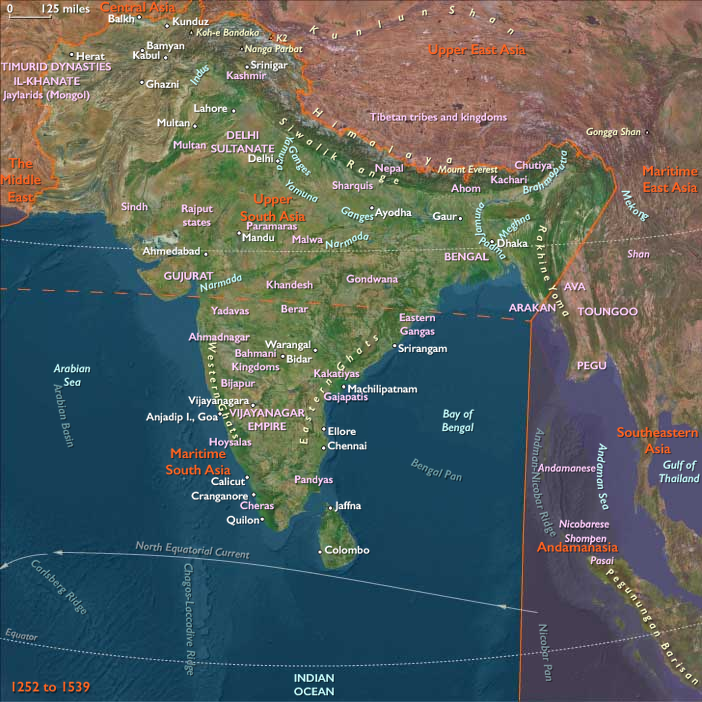
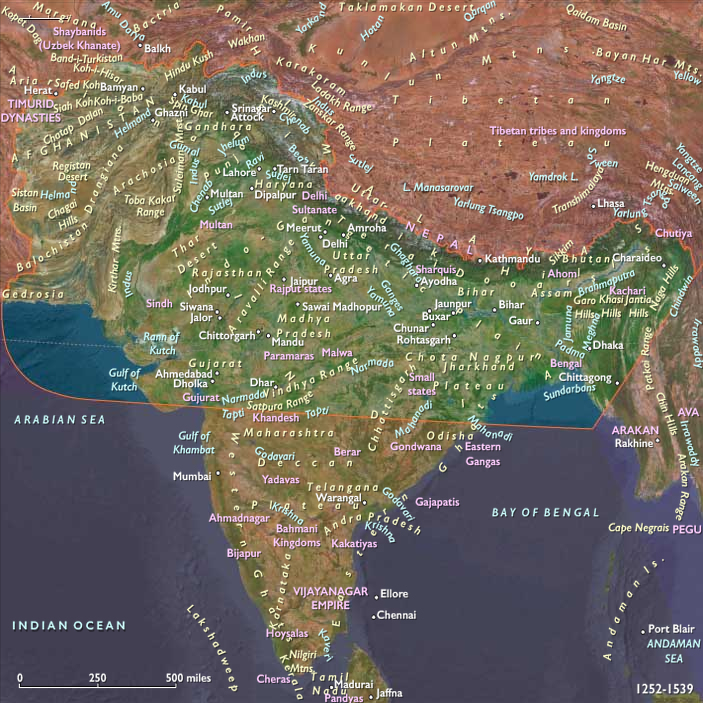
Upper South Asia includes Afghanistan, Pakistan, North India, Nepal, Bhutan, Bangladesh, and northwestern Myanmar (the northern Arakan/Yakhine sector and the Chindwin valley).
-
Anchors: the Kabul–Gandhara corridors; Punjab–Doab–Ganga–Brahmaputra plains; Kathmandu Valley and Himalayan foothills of Nepal–Bhutan; the deltaic lowlands of Bengal; and the northern Arakan/Chindwin gateway into Upper Myanmar.
Climate and Environmental Shifts
-
The late Medieval Warm Period eased into the early Little Ice Age after c. 1300: generally reliable monsoons with episodic droughts and floods.
-
Canalized tracts in the Doab and upper Ganga–Yamuna buffered dry years; the Brahmaputra–Meghna swells shaped Bengal’s rice calendars and riverine trade.
Societies and Political Developments
-
Delhi Sultanate (North India, Pakistan):
-
Mamluk and Khalji rule gave way to the Tughluqs (1320–1414).
-
Alauddin Khalji (r. 1296–1316) stabilized frontiers against Mongol raids, reorganized the revenue base, and asserted control over the Punjab–Doab.
-
Muhammad bin Tughluq (r. 1325–1351) expanded toward the Deccan but overextended; administrative experiments and famine eroded authority.
-
Firoz Shah Tughluq (r. 1351–1388) repaired canals, patronized madrasas and khanqāhs, and regularized land assignments (iqṭāʿ).
-
Timur’s invasion (1398–99) devastated Delhi and the upper Doab at the period’s close, fragmenting sultanate control.
-
-
Afghanistan & Khurasan marches:
-
Karts of Herat and later Timurid forces dominated the northwest approaches; Kabul–Ghazni linked Central Asian horses and trade to the Punjab.
-
-
Kashmir:
-
Transition from Hindu dynasties to the Shah Mir sultans (from 1339) introduced court Islam while preserving a rich Kashmiri literary and artistic milieu.
-
-
Bengal (Bangladesh & lower Ganga):
-
After periods under Delhi, the Bengal Sultanate consolidated under the Ilyas Shahi (from 1352), ruling from Gauda (Lakhnauti) and Pandua, later Sonargaon as a deltaic entrepôt.
-
Naval power and embankment-building underwrote autonomy; gold and silver tanka coinages flourished.
-
-
Nepal (Kathmandu Valley):
-
The Malla era (c. 1200–1768) matured: Kathmandu, Patan, and Bhaktapur city-states patronized Newar brick–timber palaces, pagodas, and gilded metalwork; syncretic Hindu–Buddhist courts thrived.
-
-
Bhutan:
-
Fragmented valley polities received monastic influences (notably Drukpa lineages from Tibet); dzong-like hill sites and temple estates expanded local authority.
-
-
Northwestern Myanmar (northern Arakan/Chindwin):
-
In Arakan, the Launggyet kingdom (from c. 1250) rose on the Naf–Kaladan corridors, mediating between Bengal and Upper Myanmar.
-
The Chindwin valley linked delta goods to the Ava polity (founded 1364) in Upper Myanmar; Theravāda Buddhism and cross-border trade connected the hills and plains.
-
Economy and Trade
-
Agrarian cores:
-
Doab–Ganga: irrigated wheat, barley, and cash crops under iqṭāʿ revenue systems.
-
Bengal: multi-cropped rice, jute, sugarcane; embanked polders and river ports.
-
Kathmandu Valley: irrigated paddy, millets; artisan–court economies.
-
-
Frontier staples & exchange:
-
Afghan passes supplied horses and falcons; Kabul–Lahore–Delhi caravans moved textiles, metals, and dyes.
-
Bengal–Arakan–Chindwin moved rice, salt fish, cottons, and elephants; Muslim and Buddhist merchants shared portage and brokerage.
-
Himalayan corridors carried salt, wool, and paper between Tibet–Bhutan–Nepal and the plains.
-
-
Coinage & markets: silver tanka and copper jital circulated in the sultanate; Bengal minted abundant tanka; bazars clustered along caravanserais and ghats.
Subsistence and Technology
-
Irrigation & hydraulics: Tughluq canal works (e.g., Yamuna link canals); Bengal embankments; Nepalese stone spouts (hiti) and tank systems.
-
Military & logistics: composite bows, armored cavalry; river flotillas in Bengal and Arakan; later-14th-century gunpowder traces at sieges.
-
Crafts: Delhi inlaid metalwork, carved stone; Bengal textiles and terracotta; Newar gilt copper repoussé and woodcarving.
-
Architecture: sultanate mosques and madrasas; Kashmiri and Bengali brick mosques; Newar tiered temples and palace squares.
Movement and Interaction Corridors
-
Khyber & Bolan passes: Afghan remounts and Central Asian goods into Punjab–Delhi.
-
Grand Trunk precursor: Lahore–Delhi–Gaya–Bengal trunk routes; ferry ghats knit riverine towns.
-
Delta & littoral lanes: Ganga–Brahmaputra distributaries to Chittagong/Sonargaon; coastal shuttles to Launggyet and the Chindwin.
-
Himalayan passes: Kuti, Kerung, and Nathu tied Nepal and Bhutan to Tibet; yak caravans moved salt and wool south, grain north.
Belief and Symbolism
-
Islam: sultanate legitimacy rested on sharīʿa patronage, madrasas, khanqāhs, and Friday mosques; Sufi orders (Chishtiyya, Suhrawardiyya) spread across towns and countryside—Nizamuddin Auliya (d. 1325) emblematic.
-
Hindu traditions & Bhakti: temple endowments persisted in Rajput and peripheral zones; early bhakti currents (e.g., Namdev, Ramananda on the horizon) reshaped devotion.
-
Buddhism & Himalayan syncretism: Nepalese Vajrayana and Hindu worship intertwined; Bhutan’s monastic houses expanded; Theravāda anchored Arakan and Upper Myanmar.
-
Kashmir: Islamization at court coexisted with Sanskrit scholastic traditions through the century.
Adaptation and Resilience
-
State flexibility: when the sultanate overreached, provincial elites (Bengal, Kashmir) localized authority without halting agrarian growth.
-
Hydraulic redundancy: canals, embankments, and floodplain mobility cushioned monsoon shocks.
-
Commercial pivots: Afghan pass traffic and Bengal’s river–sea trade maintained supplies during warfare; Himalayan corridors provided alternative staples (salt, wool).
-
Ritual and social glue: Sufi hospices, temple networks, and monastic centers mediated famine relief, dispute resolution, and credit.
Long-Term Significance
By 1395, Upper South Asia had become a continent-spanning mosaic:
-
The Delhi Sultanate remained the titular hegemon in the northwest–Doab despite fragmentation and Timur’s incursion.
-
Bengal emerged as a powerful, maritime-facing sultanate.
-
Kashmir and Nepal matured distinct court cultures; Bhutan’s valleys cohered around monasteries.
-
The Bengal–Arakan–Chindwin hinge integrated South and Southeast Asian worlds.
These trajectories set the stage for 15th-century realignments—Timurid influences from the northwest, Bengal’s coastal expansion, Ava and Arakan’s contests in the east, and enduring Himalayan polities shaping the northern front.
People
- Alauddin Khilji
- Amir Khusrau
- Firuz Shah Tughlaq
- Muhammad bin Tughluq
- Nizamuddin Auliya
- Shams-ud-Din Shah Mir
- Timur
Groups
- Tajik people
- Kirat people
- Iranian peoples
- Hinduism
- Bengalis
- Pashtun people (Pushtuns, Pakhtuns, or Pathans)
- Jainism
- Buddhism, Tibetan
- Buddhism
- Khas peoples
- India, Classical
- Buddhism, Mahayana
- Tokharistan (Kushan Bactria)
- Gandhāra
- Bon
- Bumthang, Kingdom of
- Islam
- Sufism
- Palas of Bengal, Empire of the
- Abbasid Caliphate (Baghdad)
- Paramara dynasty
- Rakhine State (Arakanese Kingdom)
- Chandelas (Candellas) of Khajuraho, Kingdom of the
- Abbasid Caliphate (Baghdad)
- Ghilzai (Pashtun tribal confederacy)
- Cauhans (Chamnas) of Ajmer and Delhi, Rajput Kingdom of the
- Gujarat, Solanki Kingdom of
- Rakhine (Arakanese) people
- Ghurid dynasty
- Senas of Bengal, Kingdom of the
- Ghurid Sultanate
- Delhi, Sultanate of (Ghurid Dynasty)
- Malla (Nepal)
- Delhi, Sultanate of (Mamluk or Ghulam Dynasty)
- Ilyas Shahi dynasty
- Samma dynasty
- Bengal, Sultanate of
- Ava, Kingdom of
Topics
Commodoties
Subjects
- Commerce
- Writing
- Architecture
- Sculpture
- Conflict
- Faith
- Government
- Custom and Law
- Medicine
- Mathematics
- Astronomy
- Philosophy and logic
Regions
Subregions
Related Events
Showing 10 events out of 46611 total
Years: 1252 - 1395
People
- Alauddin Khilji
- Amir Khusrau
- Firuz Shah Tughlaq
- Muhammad bin Tughluq
- Nizamuddin Auliya
- Shams-ud-Din Shah Mir
- Timur
Groups
- Tajik people
- Kirat people
- Iranian peoples
- Hinduism
- Bengalis
- Pashtun people (Pushtuns, Pakhtuns, or Pathans)
- Jainism
- Buddhism, Tibetan
- Buddhism
- Khas peoples
- India, Classical
- Buddhism, Mahayana
- Tokharistan (Kushan Bactria)
- Gandhāra
- Bon
- Bumthang, Kingdom of
- Islam
- Sufism
- Palas of Bengal, Empire of the
- Abbasid Caliphate (Baghdad)
- Paramara dynasty
- Rakhine State (Arakanese Kingdom)
- Chandelas (Candellas) of Khajuraho, Kingdom of the
- Abbasid Caliphate (Baghdad)
- Ghilzai (Pashtun tribal confederacy)
- Cauhans (Chamnas) of Ajmer and Delhi, Rajput Kingdom of the
- Gujarat, Solanki Kingdom of
- Rakhine (Arakanese) people
- Ghurid dynasty
- Senas of Bengal, Kingdom of the
- Ghurid Sultanate
- Delhi, Sultanate of (Ghurid Dynasty)
- Malla (Nepal)
- Delhi, Sultanate of (Mamluk or Ghulam Dynasty)
- Ilyas Shahi dynasty
- Samma dynasty
- Bengal, Sultanate of
- Ava, Kingdom of
Topics
Commodoties
Subjects
- Commerce
- Writing
- Architecture
- Sculpture
- Conflict
- Faith
- Government
- Custom and Law
- Medicine
- Mathematics
- Astronomy
- Philosophy and logic
Regions
Subregions