
North Africa (1948–1959 CE) Decolonization and …
Years: 1948 - 1959
North Africa (1948–1959 CE)
Decolonization and Pathways to Independence
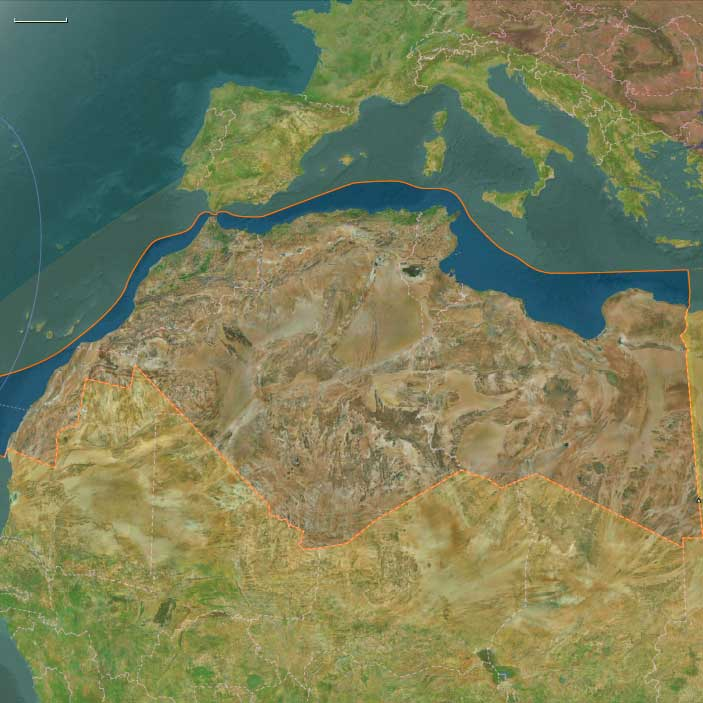
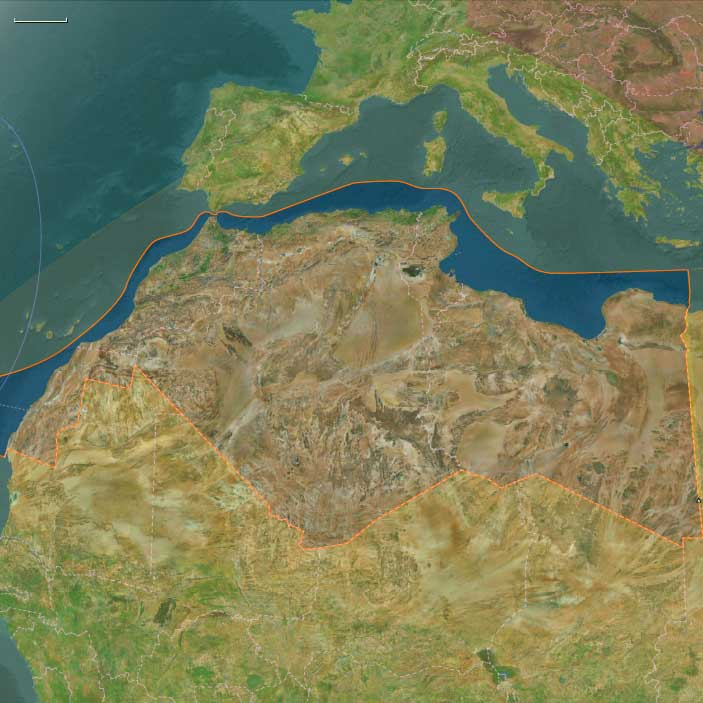
Between 1948 and 1959, North Africa undergoes profound political transformations driven by increasingly assertive nationalist movements, growing international support for independence, and the gradual collapse of colonial power across Algeria, Tunisia, Libya, and Morocco.
Algeria: Revolutionary Struggle and Armed Resistance
In Algeria, anti-colonial sentiment escalates dramatically, culminating in a full-scale revolutionary struggle. The formation of the National Liberation Front (FLN) in 1954 marks a pivotal moment, initiating the Algerian War of Independence (1954–1962). The FLN launches armed guerrilla warfare against French colonial forces, galvanizing widespread Algerian support.
French authorities respond with intense military repression and widespread human rights abuses, including torture and forced relocations. International awareness of these atrocities grows, gradually eroding France's moral and political position. By 1958, the prolonged conflict leads to political instability in France, contributing directly to the collapse of the Fourth Republic and the return to power of Charles de Gaulle, who acknowledges the need for a political resolution despite continued military actions.
Tunisia: Path to Sovereignty and Bourguiba's Leadership
Tunisia sees rapid political developments under the charismatic leadership of Habib Bourguiba and the Neo Destour Party. Persistent political activism, strikes, and international diplomatic engagement increasingly pressure France, resulting in internal autonomy being granted in 1954.
Full independence is achieved on March 20, 1956, with Bourguiba becoming Tunisia's first Prime Minister and, subsequently, its first President. He embarks on a transformative agenda focused on modernizing the state, secularizing institutions, and promoting women's rights, notably codified in the landmark Code of Personal Status in 1956.
Libya: Emergence as an Independent Kingdom
Libya, under UN administration after World War II, gains independence from colonial rule through international diplomatic processes. In 1951, Libya becomes the first North African country to achieve independence, forming the United Kingdom of Libya under King Idris al-Sanusi.
Initially, Libya struggles economically, heavily reliant on foreign aid and assistance. The discovery of significant oil reserves in 1959, however, dramatically changes Libya's economic and geopolitical status, laying the foundation for future prosperity and regional influence.
Morocco: Restoration of Sovereignty and National Unity
Morocco's nationalist movements gain momentum under the leadership of the Istiqlal Party, advocating firmly for independence. Increasing international pressure and domestic unrest compel France to negotiate, resulting in Morocco regaining its independence on March 2, 1956. Sultan Mohammed V, widely revered for his role in supporting nationalist aspirations, returns from exile and resumes power as King, symbolizing national unity.
Spain relinquishes most of its northern Moroccan territories the same year, though retains control of enclaves such as Ceuta and Melilla and the Spanish Sahara, leading to continued regional disputes and nationalist demands.
Regional Impacts and Socioeconomic Transformations
The decade witnesses substantial socioeconomic upheaval, fueled by both independence movements and post-independence reforms. Nationalization of industries, agrarian reforms, and investments in education and infrastructure become widespread, fundamentally reshaping North African societies.
Despite the progress, significant challenges persist, including economic inequalities, political rivalries, and tensions between traditional and modernist elements within the societies. Nevertheless, the overarching narrative remains one of resilience, national pride, and decisive rejection of colonial domination, setting the stage for ongoing nation-building efforts across the region.
People
Groups
- Arab people
- Berber people (also called Amazigh people or Imazighen, "free men", singular Amazigh)
- Islam
- Muslims, Sunni
- Muslims, Shi'a
- Muslims, Ibadi
- Alawi dynasty
- Morocco, 'Alawi (Filali) Sultanate of
- Algeria, French Colony of
- Senussi, or Sanussi
- Tunis, French protectorate of
- Morocco, (French) Protectorate of
- Libya, Italian
- Spain, Franconian Regency of (Spanish State)
- Libya, Allied Occupied
- Italy (Italian Republic)
- France (French republic); the Fourth Republic
- Libya, Kingdom of
- Tunisia, Republic of
- Morocco
- France (French republic); the Fifth Republic
Topics
Subjects
Regions
Subregions
Related Events
Showing 10 events out of 4916 total
Years: 1948 - 1959
People
Groups
- Arab people
- Berber people (also called Amazigh people or Imazighen, "free men", singular Amazigh)
- Islam
- Muslims, Sunni
- Muslims, Shi'a
- Muslims, Ibadi
- Alawi dynasty
- Morocco, 'Alawi (Filali) Sultanate of
- Algeria, French Colony of
- Senussi, or Sanussi
- Tunis, French protectorate of
- Morocco, (French) Protectorate of
- Libya, Italian
- Spain, Franconian Regency of (Spanish State)
- Libya, Allied Occupied
- Italy (Italian Republic)
- France (French republic); the Fourth Republic
- Libya, Kingdom of
- Tunisia, Republic of
- Morocco
- France (French republic); the Fifth Republic
Topics
Subjects
Regions
Subregions