
Morocco, (French) Protectorate of
Substate | Defunct
1912 CE to 1956 CE
Capital
Worlds
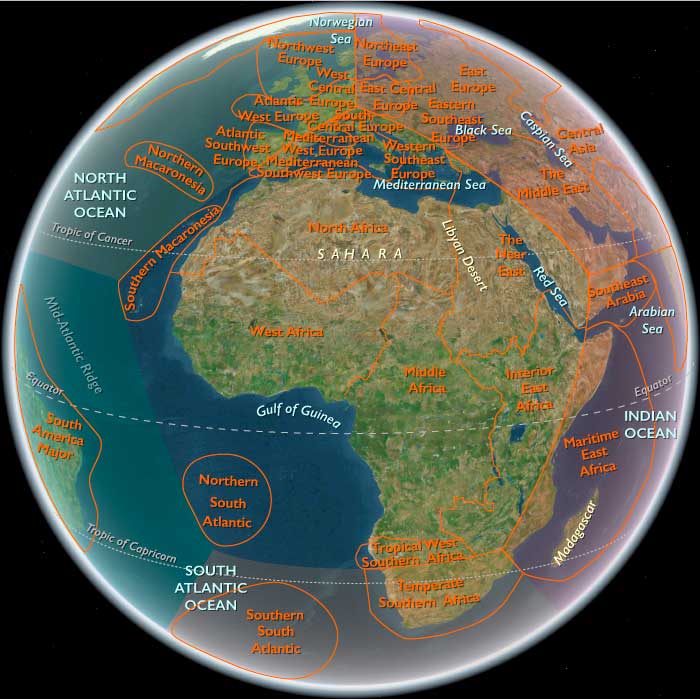
The Middle of The Earth
View →Related Events
Showing 6 events out of 6 total
North Africa (1828–1971 CE): Colonial Rule, Anticolonial Resistance, and National Independence
Geographic & Environmental Context
The subregion of North Africa includes Morocco (with the Western Sahara), Algeria, Tunisia, and Libya. Anchors included the Atlas Mountains, the Tell plains, the Western Sahara desert corridor (later Spanish Sahara, with Río de Oro and Saguia el-Hamra), the Saharan oases, and the Mediterranean ports of Algiers, Tunis, Tripoli, Casablanca, and Tangier. From fertile valleys to arid desert, the region’s environments were reshaped by European conquest, settler colonization, and the struggles for independence.
Climate & Environmental Shifts
The 19th century saw cycles of drought and famine across the Maghreb, devastating rural populations in Algeria and Morocco. Locust swarms exacerbated hardship. In the 20th century, irrigation projects and colonial plantations transformed the Tell and oases, while mechanized drilling extended wells into the Western Sahara. By mid-century, desertification intensified, placing stress on nomadic pastoralists.
Subsistence & Settlement
-
Algeria: Invaded by France in 1830, Algeria became a settler colony. Vineyards, wheat fields, and citrus groves expanded, while Indigenous communities lost land through confiscation. Rural revolts erupted, most famously under Abdelkader (1832–1847).
-
Tunisia: Declared a French protectorate in 1881. Olive cultivation and grain exports were commercialized; Tunis and Sfax grew as administrative and commercial centers.
-
Morocco: The Alaouite dynasty endured until the French and Spanish protectorates were imposed in 1912, with Tangier as an international zone. Rural tribes and the Rif War (1921–1926) challenged European control.
-
Libya: Conquered by Italy in 1911 from the Ottomans. Settlers colonized Cyrenaica and Tripolitania, facing fierce resistance from the Sanusi order under Omar Mukhtar (1923–1931) until his capture and execution.
-
Western Sahara: Formally annexed as Spanish Sahara (1884), divided into Río de Oro and Saguia el-Hamra.Spanish rule was consolidated in the 20th century with coastal outposts at Villa Cisneros (Dakhla) and La Güera. Phosphate deposits at Bou Craa (discovered 1947) became central to Spain’s colonial interests.
Technology & Material Culture
Colonial regimes built railways, ports, and roads to export grain, oil, wine, phosphates, and petroleum. European-style cities rose alongside Indigenous medinas. Mosques, zawiyas, and Sufi shrines remained cultural anchors. In Libya and Algeria, resistance fighters wielded rifles and guerrilla tactics. In Morocco and the Western Sahara, nomads sustained camel caravans, tents, and oral poetry while gradually adapting to modern arms and vehicles introduced in mid-century.
Movement & Interaction Corridors
-
Saharan caravans dwindled as steamships and railroads dominated trade, though camel routes persisted into the 20th century.
-
Colonial export networks: Algeria’s wine and wheat fed French markets; Tunisia exported olives and phosphates; Morocco exported citrus, leather, and phosphates.
-
Western Sahara: Connected to the Canary Islands and Spain by shipping routes; nomadic Sahrawis crossed borders with Mauritania and Morocco.
-
Migration: Thousands of Algerians, Moroccans, and Tunisians migrated to France as laborers during both World Wars and afterward.
Cultural & Symbolic Expressions
Islam remained the core of identity, reinforced through the Sanusi order in Libya, reformist ulama in Algeria, and Sufi brotherhoods across Morocco and Tunisia. Oral poetry and tribal traditions preserved Saharan identity. Colonial regimes sponsored European schools, churches, and cultural institutions, but local resistance emphasized Arabic language, Islamic law, and national symbols. Postwar nationalism produced flags, anthems, and revolutionary heroes, linking independence to cultural revival.
Environmental Adaptation & Resilience
Villages intercropped cereals and legumes to survive drought. Nomadic tribes in the Sahara adjusted grazing routes and relied on kinship networks. During famines, zawiyas and religious waqf lands distributed food aid. Resistance fighters exploited deserts and mountains as refuges against colonial armies. In the 20th century, conservation of oases and state irrigation schemes aimed to stabilize fragile ecosystems, though often at high social cost.
Transition
By 1971 CE, North Africa had undergone sweeping transformation:
-
Algeria achieved independence in 1962 after a bloody war led by the FLN.
-
Tunisia became independent in 1956 under Habib Bourguiba.
-
Morocco regained independence in 1956 under Mohammed V and Hassan II.
-
Libya became independent in 1951 under King Idris; a 1969 coup brought Muammar Gaddafi to power.
-
Western Sahara remained under Spanish control as Spanish Sahara, its Sahrawi population marginalized even as Bou Craa phosphate mines and fisheries drew colonial investment.
North Africa, long a crossroads of Saharan caravans and Mediterranean seaports, entered the modern era with its states independent and assertive—except for the Western Sahara, where the unfinished struggle for decolonization would soon ignite.
North Africa (1912–1923 CE)
Consolidation of Colonial Dominance and Rise of Nationalist Resistance
The era from 1912 to 1923 in North Africa witnesses intensified European colonial control and significant local responses, marked by growing nationalist movements and heightened socio-political transformations across Algeria, Tunisia, Libya, and Morocco.
Algeria: Entrenchment of French Rule and Emerging Resistance
In Algeria, French colonial policies deepen their grip, driven by the interests of the European settler population (colons). Indigenous Algerians experience further land seizures and economic disenfranchisement, exacerbating rural poverty and urban overcrowding. Algerian Muslims remain severely underrepresented in political institutions, their rights significantly curtailed by the French administration.
Despite continued resistance and increasing nationalist sentiment, organized opposition is fragmented. However, the groundwork for future nationalist movements is laid during this period, particularly among the growing educated elite who begin articulating political and social reforms.
Tunisia: Institutionalization of Colonial Control and Early Nationalist Activity
Tunisia solidifies as a French protectorate, its administrative and economic policies firmly subordinated to French interests. The role of the Tunisian Bey and local elites continues to be marginalized, fueling resentment among the indigenous population. Economic exploitation by French enterprises heightens socioeconomic disparities, spurring increased nationalist awareness and grassroots organization among Tunisians.
Emerging nationalist leaders begin advocating for reforms and greater political participation, setting the stage for the organized resistance movements that will significantly impact Tunisian political life in subsequent decades.
Libya: Sanusi Resistance and Italian Occupation
Libya experiences significant upheaval as Italy initiates a military invasion in 1911, formally establishing its colonial rule in 1912 after overcoming fierce resistance. The Sanusi Order, already influential under the leadership of Muhammad al-Mahdi as-Sanusi, becomes a central force in the anti-colonial resistance. Following the Mahdi’s death in 1902, his successor, Ahmed Sharif as-Sanusi, and later Omar al-Mukhtar, intensify the jihad against Italian forces.
Despite brutal Italian military campaigns and oppressive tactics, the Sanusi-led resistance remains resilient, particularly in Cyrenaica, where the Sanusis maintain substantial territorial control and widespread tribal allegiance. This persistent resistance foreshadows ongoing conflict and anti-colonial struggles in the decades to follow.
Morocco: Establishment of French and Spanish Protectorates
Morocco's sovereignty is significantly undermined as it is formally divided into French and Spanish protectorates in 1912, following the Treaty of Fez. The French protectorate, controlling the majority of the country, implements extensive colonial reforms designed to benefit French settlers and economic interests. Sultan Moulay Abd al-Hafid, facing overwhelming pressure, abdicates, and the new Sultan, Moulay Youssef, assumes a largely ceremonial role under French supervision.
The Spanish protectorate in northern Morocco faces fierce resistance, notably during the Rif War (1921–1926), led by Abd el-Krim, who successfully mobilizes tribal forces against Spanish occupation, achieving significant military victories and establishing the short-lived Republic of the Rif. His resistance gains international attention and significantly inspires anti-colonial sentiment throughout North Africa.
Socioeconomic Impacts and Nationalist Awakening
Across North Africa, the socioeconomic impacts of colonial policies intensify. Indigenous populations increasingly suffer from economic disenfranchisement and marginalization, prompting growing urban poverty and rural displacement. These pressures catalyze a more profound nationalist awakening, as educated elites and grassroots activists advocate political and social reforms, calling for independence and self-determination.
By 1923, North Africa stands at a critical juncture. Entrenched colonial structures face mounting local resistance, and nationalist movements lay the foundation for sustained anti-colonial struggles that will shape the region's political future profoundly.
North Africa (1924–1935 CE)
Escalation of Nationalist Movements and Colonial Repression
The period from 1924 to 1935 in North Africa is characterized by intensified nationalist activities, increasing colonial repression, and significant socio-political developments across Algeria, Tunisia, Libya, and Morocco.
Algeria: Rising Nationalism and Colonial Response
In Algeria, the oppressive conditions foster a more organized nationalist response among indigenous populations. French colonial authorities maintain strict control, implementing policies that continue to disenfranchise Algerians economically and politically. The North African Star (Étoile Nord-Africaine), founded in 1926, emerges as the first significant Algerian nationalist organization advocating independence from French rule, led by influential figures such as Messali Hadj. Despite French suppression and surveillance, the movement persists, mobilizing Algerians through grassroots activism and political education.
Socioeconomic hardships intensify, with rural impoverishment and urban overcrowding becoming chronic. Nationalist sentiments increasingly spread among the working class, exacerbating tensions with European settlers and colonial authorities.
Tunisia: Nationalist Mobilization and the Destour Party
In Tunisia, the nationalist movement gains significant momentum with the establishment of the Destour Party in 1920, which rapidly expands in influence and membership through the 1920s and early 1930s. Its demands for constitutional reform, increased Tunisian representation, and reduced French interference resonate broadly among the Tunisian population.
Economic conditions deteriorate under the protectorate regime, fueling resentment against French economic domination and social injustices. Although French colonial authorities attempt to suppress nationalist activities through arrests and censorship, Tunisian nationalism continues to grow stronger, setting the stage for more intense confrontations in subsequent decades.
Libya: Sanusi Resistance under Omar al-Mukhtar
Libya sees continued and intensified resistance against Italian colonial rule, especially under the leadership of Omar al-Mukhtar, the renowned Sanusi military and spiritual leader. Omar al-Mukhtar mobilizes tribes across Cyrenaica, employing guerrilla warfare tactics effectively against the Italian forces. Despite significant losses and harsh reprisals from Italy, his resilience maintains resistance momentum throughout the 1920s.
In 1931, however, Omar al-Mukhtar is captured by Italian forces and executed, significantly weakening the organized resistance. Italy consolidates its colonial control, implementing repressive policies designed to suppress further opposition and integrate Libya more firmly into its empire.
Morocco: The Rif War and Nationalist Consequences
Morocco witnesses fierce resistance against Spanish colonial rule in the northern region, culminating in the Rif War. Under the leadership of Abd el-Krim, the Republic of the Rif achieves remarkable military successes against Spanish forces between 1921 and 1926, earning international recognition and inspiring nationalist movements across North Africa.
However, joint French and Spanish military operations ultimately crush the Rif Republic in 1926, forcing Abd el-Krim into exile. Despite this defeat, his resistance profoundly influences Moroccan nationalist sentiments, leading to the formation of political organizations like the Istiqlal Party in the early 1930s, which begins actively advocating Moroccan independence.
Socioeconomic Struggles and Nationalist Consciousness
Throughout North Africa, colonial policies exacerbate socioeconomic disparities, triggering urban poverty, rural displacement, and widespread discontent. The economic hardships provide fertile ground for nationalist ideologies, prompting greater mobilization and organization among educated elites, urban workers, and rural populations.
By 1935, nationalist movements across the region have significantly matured. Despite colonial repression and military defeats, the drive for independence has firmly taken root, setting the stage for intensified anti-colonial struggles in the ensuing decades.
North Africa (1936–1947 CE)
Intensified Anti-Colonial Movements and World War II Impacts
Between 1936 and 1947, North Africa experiences dramatic shifts influenced by intensified anti-colonial movements, the impacts of World War II, and significant geopolitical transformations across Algeria, Tunisia, Libya, and Morocco.
Algeria: Nationalist Momentum and Repression
In Algeria, nationalist movements gain strength despite continued repression from French colonial authorities. The North African Star (Étoile Nord-Africaine), rebranded as the Algerian People's Party (PPA) in 1937, under the leadership of Messali Hadj, significantly broadens its grassroots base, calling openly for independence. French colonial authorities react with severe repression, banning nationalist activities and imprisoning leaders.
World War II substantially affects Algeria, as the country becomes a critical Allied base during the conflict. The demands of the war economy lead to heightened economic hardships for Algerians, exacerbating resentment towards French rule. The end of the war in 1945 sees massive nationalist demonstrations, notably in Sétif and Guelma, which French forces brutally suppress, resulting in thousands of Algerian deaths and intensifying nationalist resolve.
Tunisia: Nationalist Revival and International Recognition
Tunisian nationalism accelerates, particularly after Habib Bourguiba and others form the Neo Destour Party in 1934. The movement rapidly gains popularity, advocating more radical reforms and complete independence. Despite severe French repression, Bourguiba effectively mobilizes international support and attention toward Tunisia’s plight.
During World War II, Tunisia becomes a battleground as Axis and Allied forces fight on its soil, significantly disrupting local society and economy. Post-war, international scrutiny increases pressure on France to relax some of its oppressive measures, though complete independence remains elusive. Nevertheless, the momentum from wartime international awareness significantly bolsters nationalist aspirations.
Libya: Continued Resistance and World War II Battles
Libya remains under harsh Italian rule throughout the 1930s, characterized by oppressive colonial administration aimed at assimilating Libyans and suppressing any resistance. The advent of World War II turns Libya into a major North African front, where Allied and Axis powers battle fiercely from 1940 to 1943.
British forces ultimately expel Axis powers from Libya by 1943, ending direct Italian colonial rule. This wartime period profoundly impacts Libyan society, bringing widespread disruption but also increasing contact with broader anti-colonial ideas. Post-war, Libya enters a period of uncertainty as it falls under Allied administration, setting the stage for eventual independence.
Morocco: Strengthening Nationalist Movement and Allied Occupation
In Morocco, nationalist activities intensify significantly, with the Istiqlal Party formally founded in 1944, becoming the central political voice advocating independence. The party gains wide popular support through emphasizing unity and self-determination.
Morocco, occupied by the Allies in 1942 as part of Operation Torch, experiences a period of direct international attention, temporarily weakening French and Spanish colonial dominance. Nationalist leaders leverage wartime alliances to advocate for independence, significantly advancing the nationalist cause despite continuing colonial resistance.
Socioeconomic Impact and Colonial Disintegration
The war profoundly affects North Africa's socioeconomic fabric, leading to widespread shortages, disruption of traditional economies, and significant human suffering. These hardships fuel anti-colonial sentiments, reinforcing nationalist ideologies across the region.
By 1947, North African nationalist movements have consolidated significantly. The end of World War II brings intensified international attention and growing global support for anti-colonial struggles, setting the stage for the subsequent decade's decisive push towards independence.
North Africa (1948–1959 CE)
Decolonization and Pathways to Independence
Between 1948 and 1959, North Africa undergoes profound political transformations driven by increasingly assertive nationalist movements, growing international support for independence, and the gradual collapse of colonial power across Algeria, Tunisia, Libya, and Morocco.
Algeria: Revolutionary Struggle and Armed Resistance
In Algeria, anti-colonial sentiment escalates dramatically, culminating in a full-scale revolutionary struggle. The formation of the National Liberation Front (FLN) in 1954 marks a pivotal moment, initiating the Algerian War of Independence (1954–1962). The FLN launches armed guerrilla warfare against French colonial forces, galvanizing widespread Algerian support.
French authorities respond with intense military repression and widespread human rights abuses, including torture and forced relocations. International awareness of these atrocities grows, gradually eroding France's moral and political position. By 1958, the prolonged conflict leads to political instability in France, contributing directly to the collapse of the Fourth Republic and the return to power of Charles de Gaulle, who acknowledges the need for a political resolution despite continued military actions.
Tunisia: Path to Sovereignty and Bourguiba's Leadership
Tunisia sees rapid political developments under the charismatic leadership of Habib Bourguiba and the Neo Destour Party. Persistent political activism, strikes, and international diplomatic engagement increasingly pressure France, resulting in internal autonomy being granted in 1954.
Full independence is achieved on March 20, 1956, with Bourguiba becoming Tunisia's first Prime Minister and, subsequently, its first President. He embarks on a transformative agenda focused on modernizing the state, secularizing institutions, and promoting women's rights, notably codified in the landmark Code of Personal Status in 1956.
Libya: Emergence as an Independent Kingdom
Libya, under UN administration after World War II, gains independence from colonial rule through international diplomatic processes. In 1951, Libya becomes the first North African country to achieve independence, forming the United Kingdom of Libya under King Idris al-Sanusi.
Initially, Libya struggles economically, heavily reliant on foreign aid and assistance. The discovery of significant oil reserves in 1959, however, dramatically changes Libya's economic and geopolitical status, laying the foundation for future prosperity and regional influence.
Morocco: Restoration of Sovereignty and National Unity
Morocco's nationalist movements gain momentum under the leadership of the Istiqlal Party, advocating firmly for independence. Increasing international pressure and domestic unrest compel France to negotiate, resulting in Morocco regaining its independence on March 2, 1956. Sultan Mohammed V, widely revered for his role in supporting nationalist aspirations, returns from exile and resumes power as King, symbolizing national unity.
Spain relinquishes most of its northern Moroccan territories the same year, though retains control of enclaves such as Ceuta and Melilla and the Spanish Sahara, leading to continued regional disputes and nationalist demands.
Regional Impacts and Socioeconomic Transformations
The decade witnesses substantial socioeconomic upheaval, fueled by both independence movements and post-independence reforms. Nationalization of industries, agrarian reforms, and investments in education and infrastructure become widespread, fundamentally reshaping North African societies.
Despite the progress, significant challenges persist, including economic inequalities, political rivalries, and tensions between traditional and modernist elements within the societies. Nevertheless, the overarching narrative remains one of resilience, national pride, and decisive rejection of colonial domination, setting the stage for ongoing nation-building efforts across the region.
Moroccan rebel leader Abd el-Krim, recently escaped from twenty years of exile in French Reunion, fosters Moroccan nationalist efforts from his base in Egypt.