
Middle East (1252 – 1395 CE): Ilkhanid …
Years: 1252 - 1395
Middle East (1252 – 1395 CE): Ilkhanid Persia, Mamluk Syria, Caucasian Frontiers, and the Persian Gulf Thalassocracy
Geographic and Environmental Context
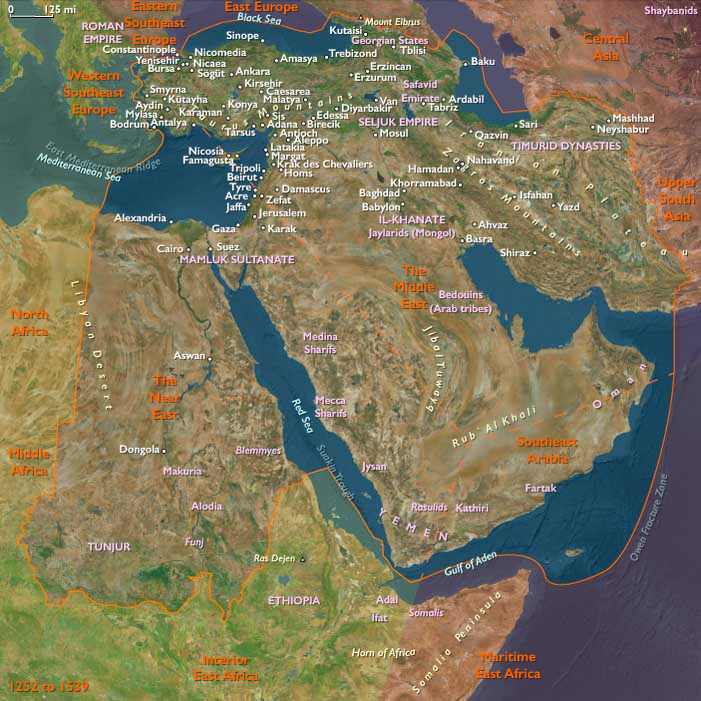
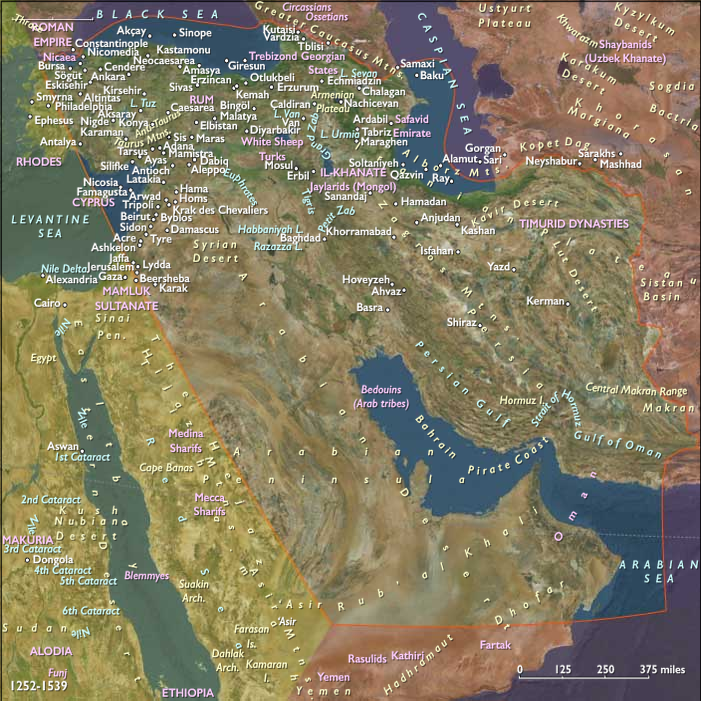
The Middle East includes Iraq, Iran, Syria, Armenia, Georgia, Azerbaijan, eastern Jordan, most of Turkey’s central and eastern uplands (including Cilicia), eastern Saudi Arabia, northern Oman, Qatar, Bahrain, the UAE, northeastern Cyprus, and all but southernmost Lebanon.
-
Anchors: the Tigris–Euphrates basin, the Iranian plateau with Azerbaijan–Tabriz, the Caucasus (Armenia–Georgia–Azerbaijan), the Cilician uplands and Syrian plains, the Persian Gulf rim (Hormuz, al-Ahsa, Bahrain, Oman), and northeastern Cyprus as a crusader–Mamluk frontier node.
Climate and Environmental Shifts
-
Transition from the Medieval Warm Period to the Little Ice Age (~1300) brought more variable rainfall: steppe margins and uplands suffered droughts, but irrigated zones (Khuzestan, Tigris–Euphrates alluvium, northern Syria, Fars) remained productive with careful canal upkeep.
-
Plagues, especially the Black Death (1347–1351), devastated urban populations in Tabriz, Baghdad, Aleppo, and Damascus, undermining tax bases and military manpower.
Societies and Political Developments
-
Ilkhanate and Successor States:
-
Founded in 1256, the Ilkhanate encompassed Iran, Iraq, Azerbaijan, Armenia, and eastern Anatolia.
-
Under Ghazan (r. 1295–1304) and Öljeitü (r. 1304–1316), Islam became the state religion, reforms standardized taxes, and monumental capitals rose at Tabriz and Sultaniyya.
-
Collapse after 1335 led to regional successor dynasties: the Jalayirids (Baghdad–Tabriz), Chobanids (Azerbaijan), and Muzaffarids (Fars–Isfahan). By the 1380s–1390s, Timur’s invasions shattered them, culminating in victories over Jalayirids and Muzaffarids by 1395.
-
-
Mamluk Syria and Cilicia:
-
Mamluks defeated Mongols at ʿAyn Jālūt (1260) and absorbed the Syrian coast, toppling the Crusader states: Antioch (1268), Tripoli (1289), and Acre (1291).
-
Cilician Armenia, long allied with crusaders, fell to the Mamluks in 1375, ending the kingdom.
-
Northeastern Cyprus remained in Latin hands under the Lusignan dynasty, serving as a crusader–commercial outpost until Ottoman advance.
-
-
Caucasus (Armenia, Georgia, Azerbaijan):
-
Georgia endured Mongol suzerainty and fragmentation; Timurid raids (from 1386) devastated Kartli and Kakheti but church culture persisted.
-
Armenia was divided between Ilkhanid and Turkmen spheres, later overrun by Timur.
-
-
Eastern Jordan and Eastern Arabia:
-
Bedouin and tribal emirates balanced between Ilkhanid, Mamluk, and local suzerainty.
-
In al-Ahsa and Qatif, the Jarwanids (14th c.) controlled pearls and trade.
-
-
Oman and Hormuz:
-
The Nabhani dynasty held the Omani interior; coastal ports came under Hormuz, which relocated to an island base c. 1301.
-
By the 14th century Hormuz had become the preeminent Persian Gulf thalassocracy, taxing Gulf trade and controlling routes between India, Iran, and Arabia.
-
Economy and Trade
-
Agriculture:
-
Mesopotamia’s canals supported dates, wheat, and flax when maintained.
-
Fars, Isfahan, and Azerbaijan produced cotton, silk, and fruit.
-
Syrian plains yielded grain, olives, and fruits under iqṭāʿ assignments.
-
-
Maritime trade:
-
Hormuz dominated Gulf tolls, channeling Indian pepper, cottons, and spices northward, and exporting Arabian horses, pearls, and dates.
-
Omani and Bahraini ports linked fisheries and pearl-beds to wider circuits.
-
-
Overland caravans:
-
Tabriz–Sultaniyya–Rayy–Khurasan remained Silk Road arteries, routing Chinese silks and Central Asian horses westward.
-
Aleppo and Damascus linked the Indian Ocean–Persian Gulf circuits with Mediterranean trade (Genoese, Venetian).
-
-
Currency: Ilkhanid monetary reforms under Ghazan stabilized coinage; Mamluks minted dīnārs and dirhams; Hormuz issued its own copper and silver for Gulf trade.
Subsistence and Technology
-
Hydraulics: canal dredging on the Tigris–Euphrates, qanāt networks in Iran, water-lifting wheels in Syria and Fars.
-
Military: steppe cavalry and mamluk armies; siege artillery and early gunpowder bombs appeared in late-14th-century warfare.
-
Craft industries: Syrian glass and textiles, Persian inlaid metalwork and miniature painting, Armenian manuscript arts.
Movement and Interaction Corridors
-
Silk Road trunks: Tabriz ⇄ Baghdad ⇄ Aleppo ⇄ Damascus; branches to Sultaniyya and Khurasan.
-
Persian Gulf: Hormuz ⇄ Basra ⇄ Wasit and Hormuz ⇄ Oman ⇄ India, timed to the monsoon.
-
Caucasus passes: Darial and Derbent funneled steppe nomads and caravans.
-
Cilicia–Levant routes: Sis ⇄ Aleppo–Damascus for trade and crusader/Mamluk conflicts.
-
Northeastern Cyprus: Lusignan harbors (Famagusta, Kyrenia) tied to Genoese and Venetian networks.
Belief and Symbolism
-
Islam:
-
Ilkhanid Islamization fused Persianate culture with Mongol rulership; Sufi orders (Suhrawardiyya, Kubrawiyya) proliferated.
-
Mamluks institutionalized Sunni madrasas and waqf endowments in Damascus, Aleppo, and Jerusalem.
-
-
Christianity:
-
Armenian and Georgian churches endured under Mongol, Mamluk, and Timurid pressures.
-
Northeastern Cyprus and Cilician Armenia hosted Latin cathedrals and monasteries.
-
-
Judaism: thriving communities in Baghdad, Damascus, and Tabriz engaged in scholarship and commerce.
Adaptation and Resilience
-
Political layering: successor dynasties (Jalayirids, Muzaffarids) maintained irrigation and caravan routes after Ilkhanid collapse.
-
Route redundancy: if Levantine ports faltered, trade diverted via Hormuz–Tabriz or the Black Sea (Trebizond).
-
Urban–Sufi–guild networks: mediated crisis during plague years, sustaining social cohesion.
-
Maritime resilience: Hormuz’s dominance ensured Gulf commerce continued despite upheavals inland.
Long-Term Significance
By 1395, the Middle East had reconfigured into polycentric powers:
-
Mamluk Syria consolidated Sunni legitimacy and Mediterranean trade.
-
Jalayirids and Muzaffarids carried Ilkhanid legacies until Timur’s conquests.
-
Hormuz anchored the Persian Gulf as a global maritime crossroad.
-
Armenia, Georgia, and Cilicia suffered fragmentation and invasion but preserved ecclesiastical traditions.
-
Northeastern Cyprus remained Latin, a final outpost of crusader Christendom.
This constellation — Persianate successor courts, Mamluk Levant, Gulf thalassocracy, and Caucasian frontier polities — defined the region’s transition into the 15th century under Timurid shockwaves and the oncoming Ottoman challenge.
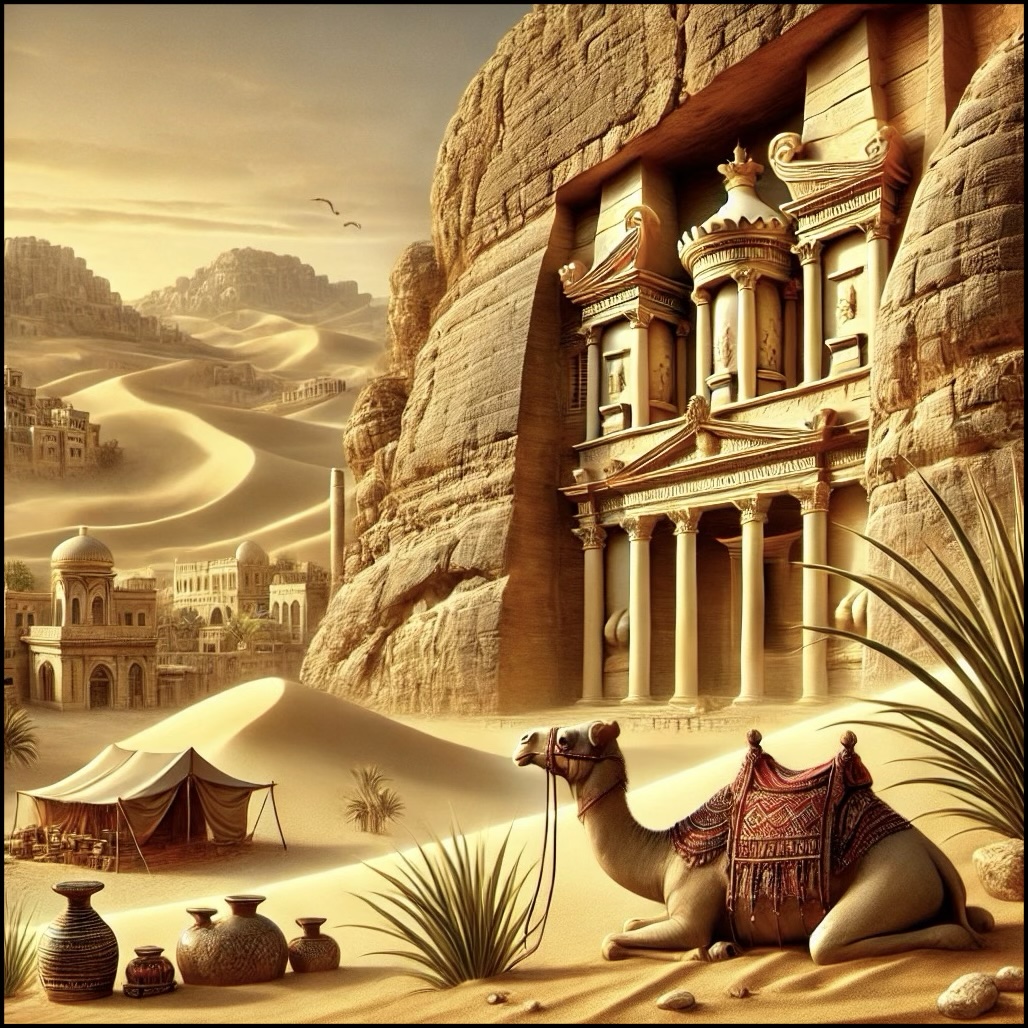
Middle East (with civilization) ©2024-25 Electric Prism, Inc. All rights reserved.
People
Groups
- Armenian people
- Jews
- Christians, Armenian Apostolic Orthodox
- Christians, Maronite
- Islam
- Muslims, Sunni
- Muslims, Shi'a
- Sufism
- Abbasid Caliphate (Baghdad)
- Turkmen people
- Christians, Roman Catholic
- Roman Empire, Eastern: Komnenos dynasty, restored
- Rûm, Sultanate of
- Antioch, Principality of
- Tripoli, County of
- Georgia, (Bagratid) Kingdom of
- Nabhani dynasty
- Damascus, Ayyubid Dynasty of
- Aleppo, Ayyubid Emirate of
- Teutonic Knights of Acre (House of the Hospitalers of Saint Mary of the Teutons in Jerusalem)
- Cyprus, Kingdom of
- Armenian Kingdom of Cilicia, or Little Armenia
- Golden Horde, Khanate of the (Mongol Khanate)
- Egypt and Syria, Mamluk Bahri Sultanate of
- Il-khanate
- Jarwanid dynasty
- Muzaffarids (Iran)
- Jalayirid Sultanate
- Golden Horde, Khanate of the (Kipchak Khanate)
- Egypt and Syria, Mamluk Burji Sultanate of
Topics
- Crusades, The
- Mongol Invasion of the Abbasid Caliphate
- Baghdad, Siege of
- Mongol invasions of the Levant
- Ain Jalut, Battle of
- Acre, Siege of
- Little Ice Age (LIA)
- Little Ice Age, Warm Phase I
- Black Death, or Great Plague
- Timur (Tamerlane), Conquests of
- Timur's invasions of Georgia
Commodoties
- Weapons
- Gem materials
- Glass
- Domestic animals
- Grains and produce
- Fibers
- Textiles
- Strategic metals
- Money
- Spices
Subjects
- Commerce
- Writing
- Architecture
- Painting and Drawing
- Environment
- Conflict
- Mayhem
- Faith
- Government
- Scholarship
- Custom and Law
- Human Migration
Regions
Subregions
Related Events
Showing 10 events out of 46611 total
Years: 1252 - 1395
Middle East (with civilization) ©2024-25 Electric Prism, Inc. All rights reserved.
People
Groups
- Armenian people
- Jews
- Christians, Armenian Apostolic Orthodox
- Christians, Maronite
- Islam
- Muslims, Sunni
- Muslims, Shi'a
- Sufism
- Abbasid Caliphate (Baghdad)
- Turkmen people
- Christians, Roman Catholic
- Roman Empire, Eastern: Komnenos dynasty, restored
- Rûm, Sultanate of
- Antioch, Principality of
- Tripoli, County of
- Georgia, (Bagratid) Kingdom of
- Nabhani dynasty
- Damascus, Ayyubid Dynasty of
- Aleppo, Ayyubid Emirate of
- Teutonic Knights of Acre (House of the Hospitalers of Saint Mary of the Teutons in Jerusalem)
- Cyprus, Kingdom of
- Armenian Kingdom of Cilicia, or Little Armenia
- Golden Horde, Khanate of the (Mongol Khanate)
- Egypt and Syria, Mamluk Bahri Sultanate of
- Il-khanate
- Jarwanid dynasty
- Muzaffarids (Iran)
- Jalayirid Sultanate
- Golden Horde, Khanate of the (Kipchak Khanate)
- Egypt and Syria, Mamluk Burji Sultanate of
Topics
- Crusades, The
- Mongol Invasion of the Abbasid Caliphate
- Baghdad, Siege of
- Mongol invasions of the Levant
- Ain Jalut, Battle of
- Acre, Siege of
- Little Ice Age (LIA)
- Little Ice Age, Warm Phase I
- Black Death, or Great Plague
- Timur (Tamerlane), Conquests of
- Timur's invasions of Georgia
Commodoties
- Weapons
- Gem materials
- Glass
- Domestic animals
- Grains and produce
- Fibers
- Textiles
- Strategic metals
- Money
- Spices
Subjects
- Commerce
- Writing
- Architecture
- Painting and Drawing
- Environment
- Conflict
- Mayhem
- Faith
- Government
- Scholarship
- Custom and Law
- Human Migration
Regions
Subregions