
Mediterranean Southwest Europe (844–855 CE): Intellectual Flourishing …
Years: 844 - 855
Mediterranean Southwest Europe (844–855 CE): Intellectual Flourishing in Rome and Jewish Cultural Center in Lucena
The era 844–855 CE in Mediterranean Southwest Europe sees significant intellectual developments in Rome, facilitated by cultural ties to the East, alongside the consolidation of Jewish cultural life in Al-Andalus.
Intellectual Revival in Ninth-Century Rome
During this era, Rome experiences a notable intellectual revival, greatly influenced by its cultural connections with the Greek-speaking East and the Frankish courts. Figures such as Anastasius the Librarian (d. c. 878 CE) emerge as prominent international scholars, bridging Eastern and Western intellectual traditions. Anastasius, known for his erudition and diplomatic connections, symbolizes Rome’s renewed significance as a vibrant intellectual hub during the ninth century.
Lucena: Center of Andalusian Jewry
In Al-Andalus, the city of Lucena, reputedly founded by Jews centuries earlier, reaches prominence as the foremost cultural center of Andalusian Jewry by the mid-ninth century. Known for its scholarly and religious achievements, Lucena emerges as a unique all-Jewish city under Muslim rule, fostering a rich intellectual tradition and significantly influencing Jewish life throughout the Islamic world.
Continued Cultural Interaction and Religious Pluralism
Throughout Iberia, the coexistence and interaction among Jews, Mozarabs, and Muslims remain vibrant, facilitating cultural exchange and intellectual growth. Lucena’s prominence highlights the integral role of Jewish communities in maintaining scholarship, commerce, and intercultural dialogue within the broader context of Islamic Iberia.
Carolingian Stability and Papal Influence
In Italy, Carolingian governance under Lothair I maintains relative stability following the Treaty of Verdun (843 CE), though political fragmentation increasingly characterizes the broader Carolingian Empire. The papacy retains significant authority, continuing its diplomatic role and reinforcing Rome's intellectual vitality through active engagement with Eastern traditions and Frankish influences.
Economic Prosperity and Technological Continuity
Economic activity across Mediterranean Southwest Europe benefits from ongoing technological developments such as the widespread use of the Catalan forge. Continued enhancements in iron production support agricultural productivity, military strength, and urban craftsmanship, underpinning regional stability and prosperity.
Legacy of the Era
The era 844–855 CE is marked by significant cultural and intellectual developments, particularly the intellectual revival in Rome and Lucena's prominence as a center of Jewish culture. These developments underscore the vibrant multicultural interactions defining the region’s historical trajectory during the ninth century.
People
Groups
- Berber people (also called Amazigh people or Imazighen, "free men", singular Amazigh)
- Jews
- Moors
- Christianity, Chalcedonian
- Rome, Duchy of
- Islam
- Al-Garb Al-Andalus
- al-Andalus (Andalusia), Muslim-ruled
- Mozarabs
- Roman Empire, Eastern: Isaurian dynasty
- Abbasid Caliphate (Kufa)
- Papal States (Republic of St. Peter)
- Córdoba, Umayyad Emirate of
- Francia Occidentalis (West Francia, or France), Kingdom of
- Lotharingia, Kingdom of
Commodoties
Subjects
- Architecture
- Painting and Drawing
- Decorative arts
- Faith
- Government
- Scholarship
- Custom and Law
- Technology
- Metallurgy
Regions
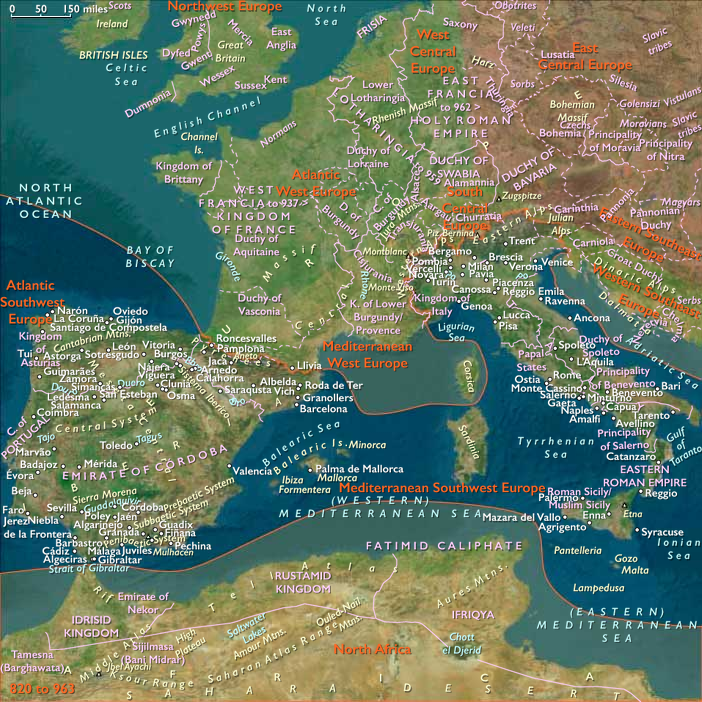
Subregions
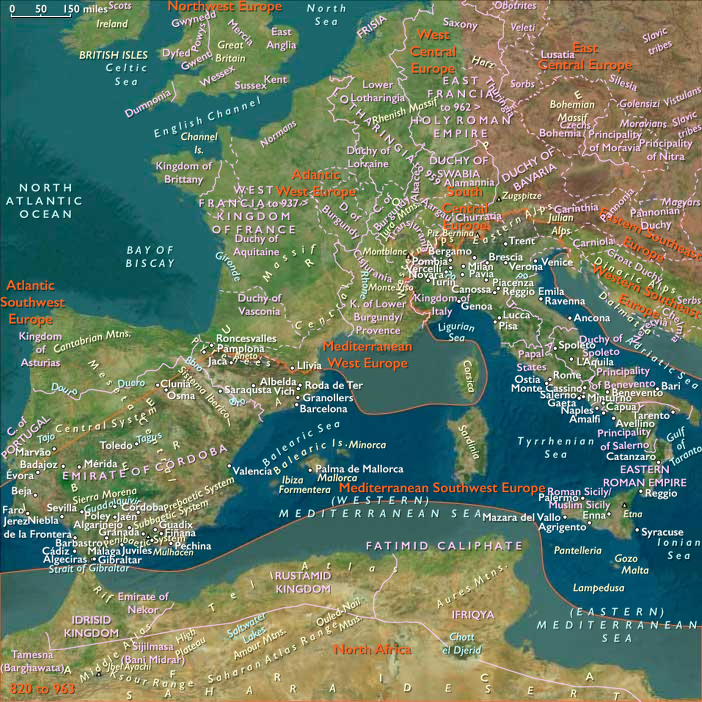
Years: 844 - 855
People
Groups
- Berber people (also called Amazigh people or Imazighen, "free men", singular Amazigh)
- Jews
- Moors
- Christianity, Chalcedonian
- Rome, Duchy of
- Islam
- Al-Garb Al-Andalus
- al-Andalus (Andalusia), Muslim-ruled
- Mozarabs
- Roman Empire, Eastern: Isaurian dynasty
- Abbasid Caliphate (Kufa)
- Papal States (Republic of St. Peter)
- Córdoba, Umayyad Emirate of
- Francia Occidentalis (West Francia, or France), Kingdom of
- Lotharingia, Kingdom of
Commodoties
Subjects
- Architecture
- Painting and Drawing
- Decorative arts
- Faith
- Government
- Scholarship
- Custom and Law
- Technology
- Metallurgy
Regions
Subregions