
Mediterranean Southwest Europe (832–843 CE): Carolingian Fragmentation, …
Years: 832 - 843
Mediterranean Southwest Europe (832–843 CE): Carolingian Fragmentation, Umayyad Prosperity, and Cultural Dynamism
The era 832–843 CE in Mediterranean Southwest Europe is characterized by emerging political fragmentation within the Carolingian Empire, sustained cultural and economic prosperity under the Umayyad emirate in Al-Andalus, and continued vibrancy among Mozarab and Jewish communities.
Carolingian Fragmentation and Treaty of Verdun
Following the reign of Louis the Pious (r. 814–840 CE), the Carolingian Empire faces significant internal divisions. Upon his death in 840 CE, disputes among his sons lead to a prolonged conflict that culminates in the Treaty of Verdun (843 CE), dividing the empire into separate territories. Italy becomes part of the kingdom awarded to Lothair I, establishing a pattern of political fragmentation and regional autonomy that will define subsequent centuries.
Continued Prosperity in Umayyad Iberia
In Iberia, under Emir Abd al-Rahman II (r. 822–852 CE), Al-Andalus maintains robust cultural and economic growth. Córdoba continues its ascent as a center of intellectual, artistic, and commercial excellence, bolstered by extensive infrastructure projects and vibrant urban culture. The emirate attracts scholars, artisans, and merchants, further enhancing the region’s cosmopolitan atmosphere.
Mozarab Communities and Cultural Influence
Mozarab communities remain influential, preserving their Christian traditions while actively engaging in Islamic intellectual and cultural environments. Mozarabs significantly contribute to scholarly pursuits, translation efforts, and artistic exchanges, reinforcing their role as cultural intermediaries between Islamic and Christian worlds, particularly in cities such as Toledo, Córdoba, and Seville.
Jewish Contributions and Religious Pluralism
The Jewish community continues to thrive under Umayyad rule, playing a vital role in trade, finance, and intellectual life. Their sustained contributions, along with those of Mozarabs and Muslims, create an atmosphere of remarkable religious and cultural pluralism, making Al-Andalus a beacon of coexistence and scholarly interaction during this era.
Economic Stability and Technological Progress
Technological advances, particularly through the widespread use of the Catalan forge, continue supporting economic prosperity across Mediterranean Southwest Europe. The enhanced iron production significantly bolsters agriculture, military effectiveness, and urban crafts, contributing to overall regional stability and prosperity.
Legacy of the Era
The era 832–843 CE highlights growing Carolingian political fragmentation, juxtaposed with sustained prosperity and cultural dynamism under the Umayyad emirate in Iberia. The period's vibrant cross-cultural exchanges and continued economic advancement deeply shape the evolving medieval landscape of Mediterranean Southwest Europe.
People
Groups
- Berber people (also called Amazigh people or Imazighen, "free men", singular Amazigh)
- Jews
- Moors
- Christianity, Chalcedonian
- Rome, Duchy of
- Islam
- Al-Garb Al-Andalus
- al-Andalus (Andalusia), Muslim-ruled
- Mozarabs
- Roman Empire, Eastern: Isaurian dynasty
- Abbasid Caliphate (Kufa)
- Francia (Carolingians)
- Papal States (Republic of St. Peter)
- Córdoba, Umayyad Emirate of
Commodoties
Subjects
- Architecture
- Painting and Drawing
- Decorative arts
- Faith
- Government
- Scholarship
- Custom and Law
- Technology
- Metallurgy
Regions
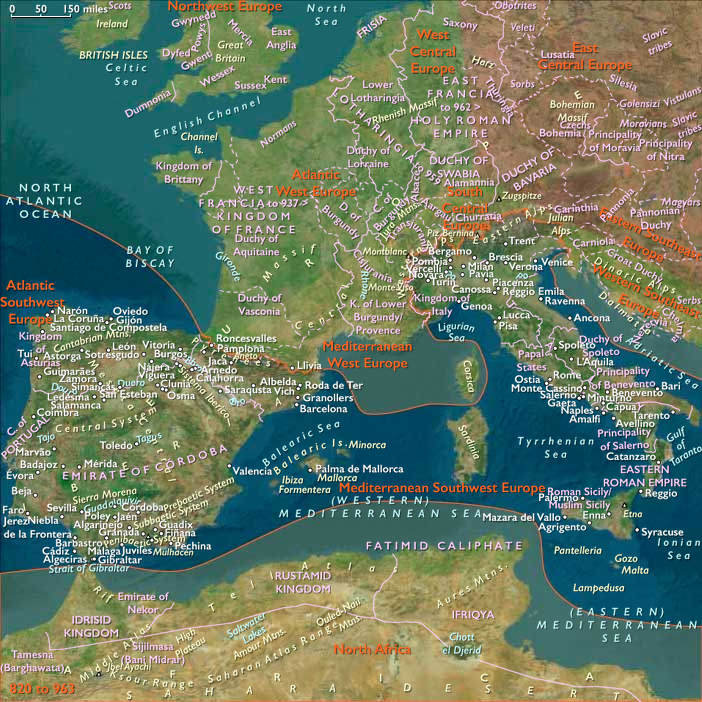
Subregions
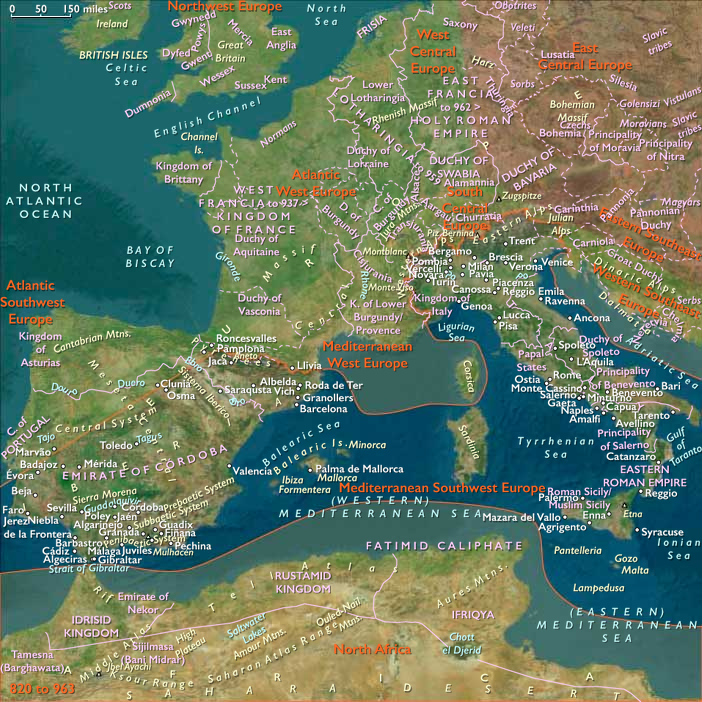
Related Events
Showing 4 events out of 4 total
Years: 832 - 843
People
Groups
- Berber people (also called Amazigh people or Imazighen, "free men", singular Amazigh)
- Jews
- Moors
- Christianity, Chalcedonian
- Rome, Duchy of
- Islam
- Al-Garb Al-Andalus
- al-Andalus (Andalusia), Muslim-ruled
- Mozarabs
- Roman Empire, Eastern: Isaurian dynasty
- Abbasid Caliphate (Kufa)
- Francia (Carolingians)
- Papal States (Republic of St. Peter)
- Córdoba, Umayyad Emirate of
Commodoties
Subjects
- Architecture
- Painting and Drawing
- Decorative arts
- Faith
- Government
- Scholarship
- Custom and Law
- Technology
- Metallurgy
Regions
Subregions