
The Viking Conquest of Dorestad and Rorik's …
Years: 850 - 850
The Viking Conquest of Dorestad and Rorik's Rule in Frisia (850)
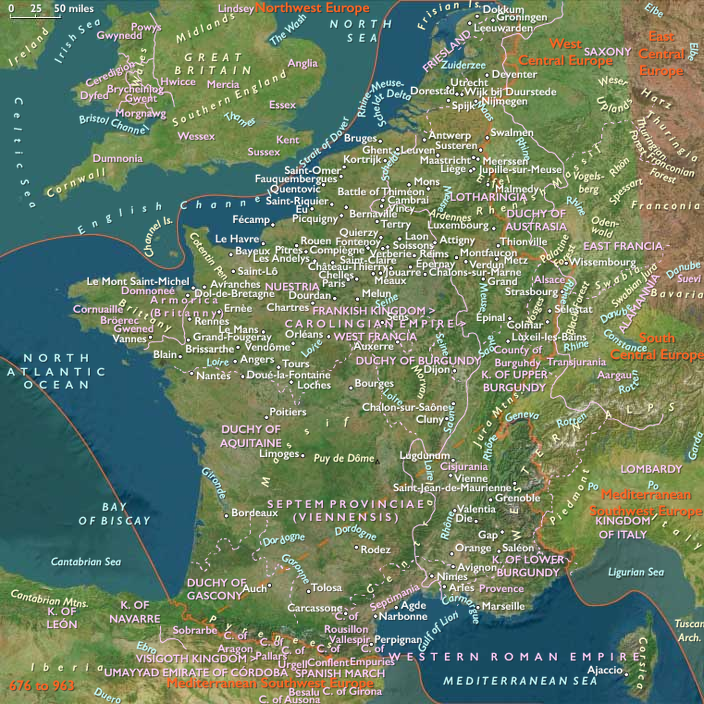
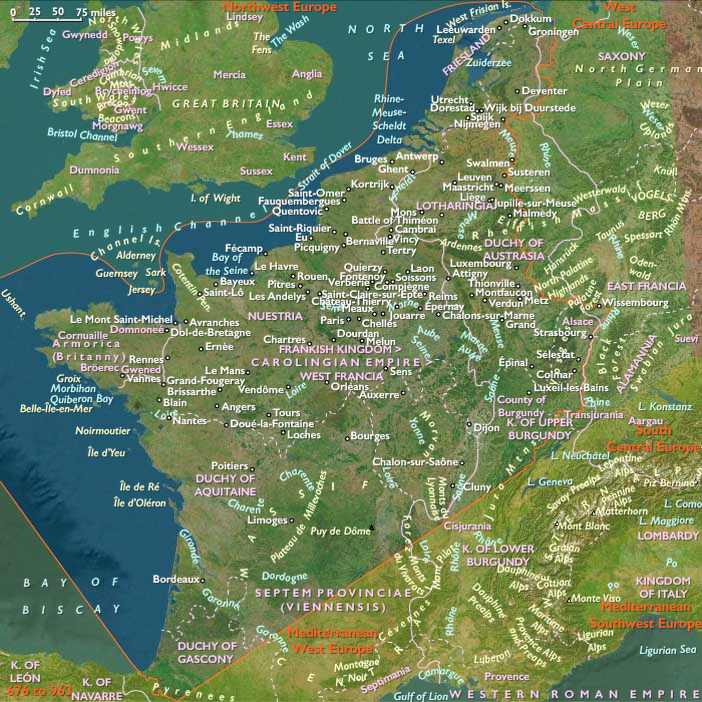
By 850, the Danish Viking leaders Godfrid Haraldsson and Rorik, cousins and members of the Danish royal family, launch a major campaign against the Frankish-controlled Low Countries, targeting Frisia and its wealthy trading centers.
Godfrid and Rorik’s Campaign Against Lothair I
- Godfrid Haraldsson, having once been a baptized ally in Lothair I’s retinue, had returned to Denmark after falling out with the emperor in the 840s.
- He joins forces with his cousin, Rorik, and together they raid Dorestad and Utrecht, two of the most important commercial centers in Northern Europe.
- Rorik seizes control of Frisia, while Godfrid devastates Flanders and Artois, before returning to Denmark for the winter.
Lothair I’s Response: Recognizing Rorik as a Vassal (850)
- After Rorik and Godfrid conquer Dorestad and Utrecht, Emperor Lothair I is forced to acknowledge Rorik as ruler of most of Frisia.
- Instead of attempting to oust the Vikings militarily, Lothair grants Rorik de facto control, ensuring that Frisia remains nominally within the Frankish realm.
- As a sign of Lothair’s sovereignty, coins minted at Dorestad continue to bear his name, symbolizing that the region is still officially under imperial control, even though Rorik exercises practical authority.
The Decline of Dorestad
- Though once a prosperous trade hub, Dorestad had already begun to decline economically due to:
- Increased Viking attacks that had weakened its commercial activity.
- Shifting trade routes, particularly as the importance of riverine trade moved to other Frankish cities.
- The silting of the Rhine, which made access to the port increasingly difficult.
- By leaving Dorestad in Viking hands, Lothair suffers little financial loss, as the city was already waning in influence.
The Significance of Rorik’s Rule in Frisia
- This marks a shift from sporadic Viking raids to political integration, as Norse leaders assume semi-independent rule under Frankish overlordship.
- The tolerance of Viking rulers like Rorik in Frisia foreshadows the later granting of Normandy to Rollo in 911, when the Franks again choose pragmatic accommodation over outright warfare.
- Viking control over Frisia and Dorestad allows them to continue launching attacks deeper into Frankish lands, further weakening Carolingian power.
By 850, Rorik and Godfrid’s conquest of Dorestad and Frisia signals the growing Viking influence in the Carolingian world, as Norse leaders transition from raiders to rulers, using their foothold in Frisia to expand their political and military power in Northwestern Europe.
Locations
People
Groups
- Polytheism (“paganism”)
- Christianity, Chalcedonian
- Frisians
- Denmark, Kingdom of
- Vikings
- Frankish, or Carolingian (Roman) Empire
- Danes (Scandinavians)
Topics
Commodoties
Subjects
Regions
Subregions
Related Events
Showing 10 events out of 54153 total
Years: 850 - 850
Locations
People
Groups
- Polytheism (“paganism”)
- Christianity, Chalcedonian
- Frisians
- Denmark, Kingdom of
- Vikings
- Frankish, or Carolingian (Roman) Empire
- Danes (Scandinavians)
Topics
Commodoties
Subjects
Regions
Subregions