
The freemen and freedmen known as Stellinga …
Years: 841 - 841
September
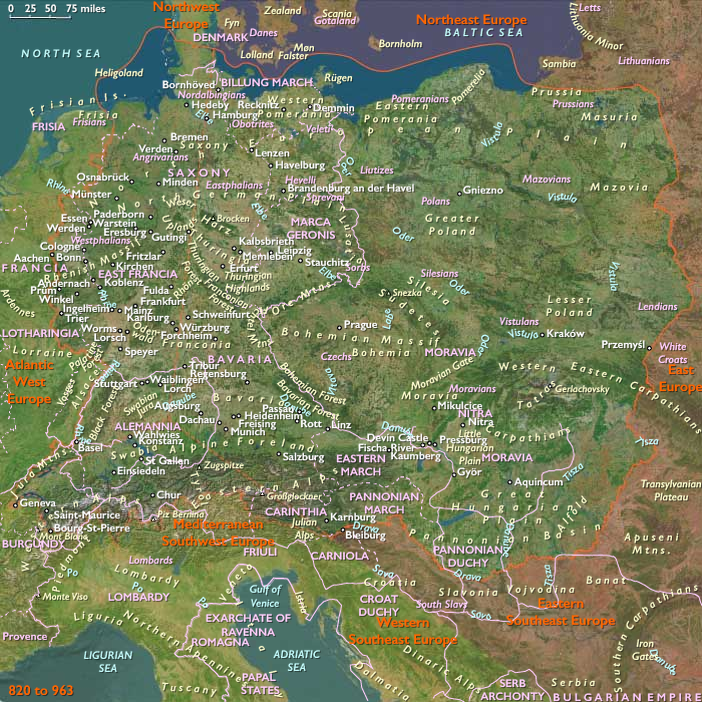
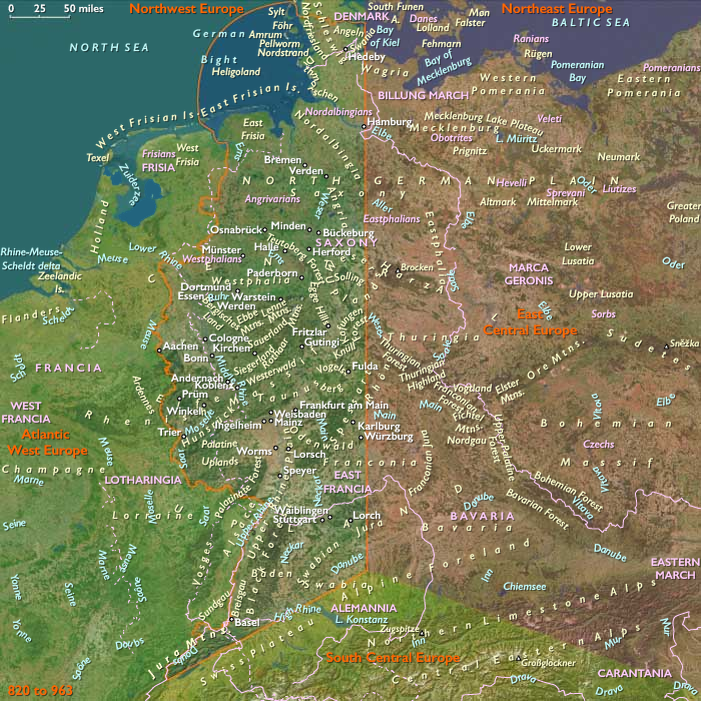
The freemen and freedmen known as Stellinga ("companions, comrades"), during the civil war of 840–843 in the Carolingian Empire between the heirs of Louis the Pious, have the support of Lothair I, who has promised to grant them the rights they had had when formerly pagan and whom they in turn have promised to support for the throne of East Francia.
Saxony, on the eve of the Stelling uprising, is divided into two noble factions: the Saxons supportive of Hattonid influence (and thus of imperial unity) and the Saxones sollicitati, who in 839 had allied with Louis the German in his invasion of Alemannia.
When Louis the Pious died, the German Louis had deposed the Hattonid leader Banzleib from his royal offices and bestowed them on the Abbey of Corvey.
Among Louis's chief supporters in Saxony are the Ecbertiner and the Bardonids.
Having patronized new families and removed from power old ones, Louis the German has made the Saxon aristocracy his organ of government there and forced his foes, such as Lothair, to look to the lower classes for support in Saxony.
The chief sources for the Stellinga are the Annales Xantenses, Annales Bertiniani (written by Prudentius of Troyes), Annales Fuldenses (written by Rudolf of Fulda), and the Historiae of Nithard.
Gerward, author of the Annales Xantenses, wrote under the year 841 that "throughout all of Saxony the power of the slaves rose up violently against their lords. They usurped for themselves the name Stellinga ... [a]nd the nobles of that land were violently persecuted and humiliated by the slaves."
Both Nithard and the Annales Bertiniani indicate that an anti-Christian reaction was prevalent among the Stellinga.
Lothair and his young son Lothair II at Speyer late in 841 meet the leaders of the Stellinga uprising, among other Saxon notables who are loyal to him.
Louis the German, however, marches against the Saxon "freedmen seeking to oppress their lawful lords" and "crushed [them] ruthlessly by sentencing the ringleaders to death".
Locations
People
Groups
Topics
Commodoties
Subjects
Regions
Subregions
Related Events
Showing 10 events out of 54260 total
Years: 841 - 841
September
Locations
People
Groups
Topics
Commodoties
Subjects
Regions
Subregions