
Central Asia (1396–1539 CE): Timurid Courts, Steppe …
Years: 1396 - 1539
Central Asia (1396–1539 CE): Timurid Courts, Steppe Confederations, and Silk Road Crossroads
Geographic & Environmental Context
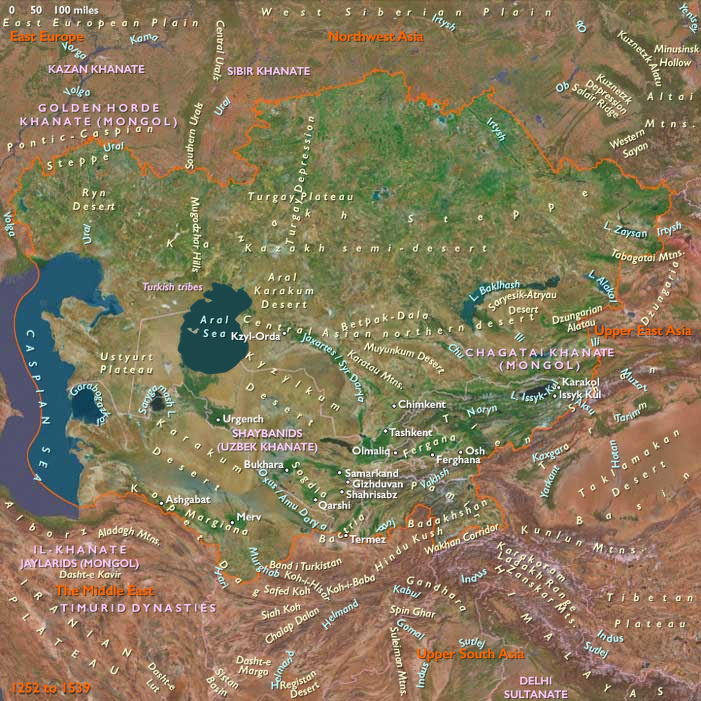
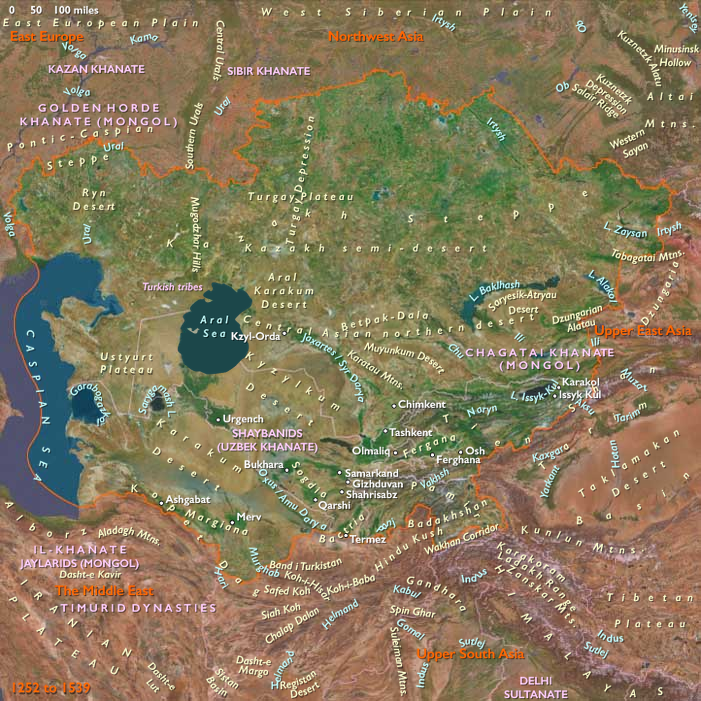
The subregion of Central Asia includes Kazakhstan, Kyrgyzstan, Tajikistan, Turkmenistan, and Uzbekistan. Anchors span the Kazakh steppe, the Karakum and Kyzylkum deserts, the irrigated Syr Darya and Amu Darya valleys, the oases of Samarkand, Bukhara, Khiva, and Merv, and the mountain arcs of the Tien Shan, Pamirs, and Altai. From the Caspian littoral through desert basins to alpine pasture, this zone mediated caravans, horse herds, and riverine oasis farming.
Climate & Environmental Shifts
During the Little Ice Age, winters were longer and colder, especially on the steppe and in the Tien Shan. Summer droughts recurred in desert–steppe transition zones, stressing pasture. Irrigated oases endured occasional river avulsions and silting, but canal upkeep stabilized yields. Pastoralists shifted herds in response to snowpack and spring pasture flush, while mountain communities relied on glacier-fed water for valley fields.
Subsistence & Settlement
-
Nomadic steppe peoples (Turko-Mongol, Kazakh ancestors, Uzbeks): Herded horses, sheep, camels, and cattle; mobile yurts clustered in seasonal camps; fermented mare’s milk (kumis) and herded dairy/meat supplied staples.
-
Oasis farmers: Along Syr Darya, Zarafshan, Kashkadarya, and Amu Darya—irrigated wheat, barley, melons, vines, cotton, and fruit orchards; gardens surrounded mudbrick cities.
-
Mountain valleys (Tien Shan, Pamirs): Mixed herding and terrace farming; barley, pulses, and fruit; yak and sheep flocks on summer pastures.
-
Desert fringes: Salt and caravan waystations; qanats and wells supported date palms and cereals in Khwarezm and Merv.
Technology & Material Culture
-
Steppe toolkit: Felt yurts, composite bows, sabers, lances, lamellar armor; saddles, stirrups, and horse trappings.
-
Oasis craft: Brick madrasas, mosques, and domes; glazed tiles, calligraphy, miniature painting. Irrigation canals, norias, and qanats; workshops for metalwork, silk weaving, and ceramics.
-
Timurid arts: Samarkand and Herat flourished with monumental madrasas, observatories, and illustrated manuscripts under Timurid patronage.
-
Caravan equipment: Bactrian camels, pack horses, and covered carts; waystations with wells and caravanserais.
Movement & Interaction Corridors
-
Silk Road arteries: From Samarkand and Bukhara west to Persia and the Caspian; eastward into Moghulistan and China; south into Khorasan and India.
-
Steppe corridors: Mounted nomads raided and traded across Kazakh steppe into Russia, Siberia, and Xinjiang.
-
Timurid campaigns: Controlled Transoxiana (Samarkand, Bukhara, Herat) and exerted influence into Persia and India.
-
Uzbek migrations: In early 16th century, Uzbek tribes under Muhammad Shaybani moved into Transoxiana, supplanting Timurids.
-
Kazakh khanates: Emerged on the steppe, consolidating power and pastoral networks.
Cultural & Symbolic Expressions
-
Timurid culture: Samarkand, under Ulugh Beg, hosted observatories and schools; poetry in Persian and Turkic flourished; Herat became a Persianate cultural capital.
-
Islamic institutions: Mosques, Sufi lodges, and shrines structured spiritual life; Naqshbandi order spread widely across Bukhara and Ferghana.
-
Nomadic traditions: Oral epics, heroic genealogies, and shamanic vestiges persisted; feasting, horse games, and clan rites structured politics.
-
Syncretism: Steppe rituals coexisted with Islamic law in khanates; Sufi saints’ shrines became pilgrimage foci for both nomads and townspeople.
Environmental Adaptation & Resilience
-
Nomads: Rotated pastures seasonally; diversified herds (horses for war, camels for caravans, sheep/goats for daily needs); moved camps to avoid dzud (winter livestock die-offs).
-
Farmers: Maintained irrigation, rotated cereals with pulses and cotton, preserved surpluses in granaries.
-
Caravan systems: Used redundancy—multiple routes to avoid banditry, salt desert hazards, or snowbound passes.
-
Communal practices: Clan and guild structures buffered shocks; Sufi networks provided charity in lean years.
Technology & Power Shifts (Conflict Dynamics)
-
Timurid decline: After Timur’s death (1405), successors held Samarkand and Herat but fragmented by mid-15th century.
-
Ulugh Beg (1394–1449): Promoted science and architecture; assassinated in dynastic struggle.
-
Uzbek conquest (1500s): Muhammad Shaybani Khan took Samarkand and Bukhara (1500–1501), ending Timurid control; later fell to Shah Ismail of the Safavids (1510), but Uzbeks reestablished in Transoxiana.
-
Babur (1483–1530): Timurid prince displaced by Uzbeks; turned to Kabul and in 1526 founded the Mughal dynasty in India after Panipat.
-
Kazakh Khanate: Formed c. 1460s on the steppe, challenging Uzbek and Nogai neighbors.
-
Turkmen confederations: Managed Karakum–Caspian corridors, raiding and trading with Persia.
Transition
By 1539 CE, Central Asia had shifted from Timurid florescence to Uzbek ascendancy. Samarkand and Bukhara remained centers of Islamic scholarship and trade, but Babur had already carried Timurid legacy into India. Steppe khanates (Kazakh, Uzbek) jostled over grazing and caravan control. Sufi networks, irrigated oases, and nomadic camps coexisted in a region poised between Persian, Russian, Chinese, and Indian spheres of influence.
People
Groups
- Polytheism (“paganism”)
- Tajik people
- Iranian peoples
- Arab people
- Persian people
- Zoroastrians
- Khwarezm
- Buddhism
- Margiana
- Jews
- Buddhism, Mahayana
- Christians, Eastern (Diophysite, or “Nestorian”) (Church of the East)
- Oghuz Turks
- Chagatai Khanate, Western
- Chinese Empire, Ming Dynasty
- Timurid Empire
- Chinese Empire, Ming Dynasty
- Bukhara, Uzbek (Shaybanid) Khanate of
- Khiva, Khanate of (Khwarezm)
Topics
- Younger Subboreal Period
- Iron Age, Near and Middle East
- Mongol Conquests
- Mongol Invasion of Central Asia
- Eastern Architecture: 1396 to 1540
Commodoties
- Weapons
- Hides and feathers
- Gem materials
- Domestic animals
- Grains and produce
- Textiles
- Ceramics
- Strategic metals
- Lumber
- Money
- Manufactured goods
- Spices
Subjects
Regions
Subregions
Years: 1396 - 1539
People
Groups
- Polytheism (“paganism”)
- Tajik people
- Iranian peoples
- Arab people
- Persian people
- Zoroastrians
- Khwarezm
- Buddhism
- Margiana
- Jews
- Buddhism, Mahayana
- Christians, Eastern (Diophysite, or “Nestorian”) (Church of the East)
- Oghuz Turks
- Chagatai Khanate, Western
- Chinese Empire, Ming Dynasty
- Timurid Empire
- Chinese Empire, Ming Dynasty
- Bukhara, Uzbek (Shaybanid) Khanate of
- Khiva, Khanate of (Khwarezm)
Topics
- Younger Subboreal Period
- Iron Age, Near and Middle East
- Mongol Conquests
- Mongol Invasion of Central Asia
- Eastern Architecture: 1396 to 1540
Commodoties
- Weapons
- Hides and feathers
- Gem materials
- Domestic animals
- Grains and produce
- Textiles
- Ceramics
- Strategic metals
- Lumber
- Money
- Manufactured goods
- Spices
Subjects
Regions
Subregions