
Bayezid's advances have meanwhile attracted the attention …
Years: 1399 - 1399
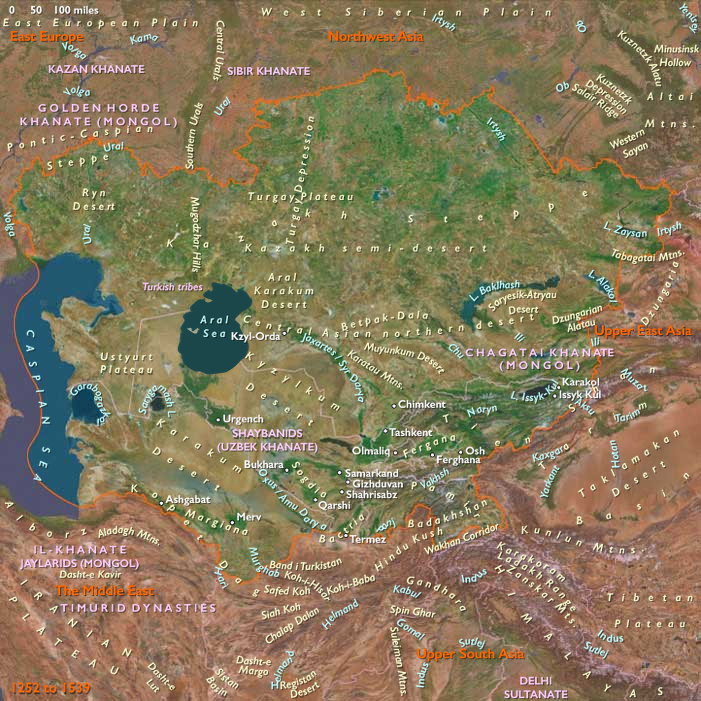
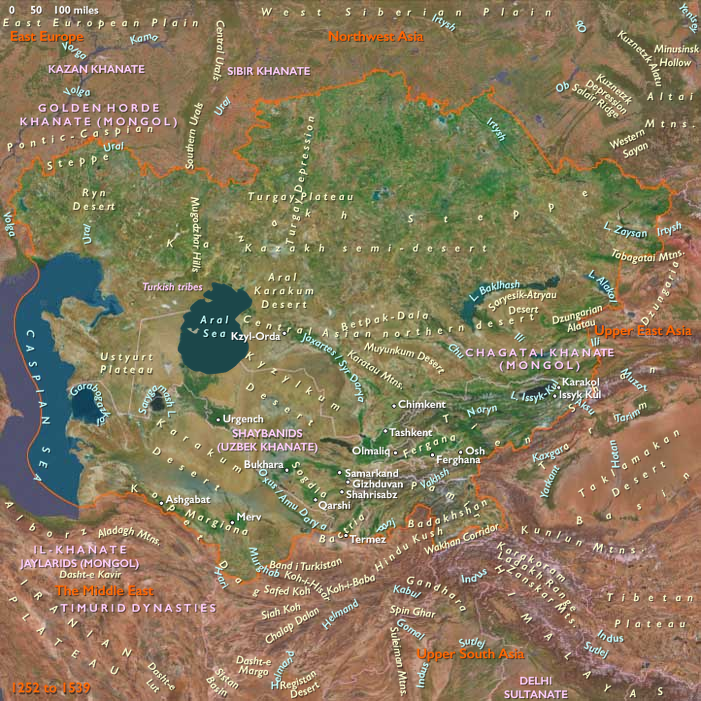
Bayezid's advances have meanwhile attracted the attention of Timur, who has been building a powerful Tatar empire in Central Asia, Iran, Afghanistan, and Mesopotamia and whose invasion of India in late 1398, though successful, had been halted by his fear of the rising Ottoman power on his western flank.
Timur’s armies had left Delhi in early January 1399.
In April he had returned to his own capital beyond the Oxus (Amu Darya).
Immense quantities of spoils were taken from India.
According to Ruy Gonzáles de Clavijo, ninety captured elephants were employed merely to carry precious stones looted from his conquest, so as to erect a mosque at Samarkand--what historians today believe is the enormous Bibi-Khanym Mosque.
Ironically, the mosque had been constructed too quickly and will suffer greatly from disrepair within a few decades of its construction.
After years of insulting letters have passed between Timur and Bayezid, Timur, encouraged by several Turkmen princes who had fled to his court when their territories were taken by Bayezid, decides to destroy Bayezid's empire before resuming his campaigns in India.
He sets out before the end of 1399 on what is to be his last great expedition, in order to punish the Mamluk sultan of Egypt and the Ottoman sultan Bayezid for their seizures of certain of his territories.
Timur's stated motivation for attacking Bayezid and the Ottoman Empire is the restoration of the authority of the Seljuqs, who Timur sees as the rightful rulers of Anatolia as they had been granted rule by Mongol conquerors, illustrating again Timur's interest with Genghizid legitimacy.
Locations
People
Groups
- Islam
- Turkmen people
- Mongols
- Delhi, Sultanate of (Tughluq Dynasty)
- Ottoman Empire
- Timurid Empire
- Tatars
- Egypt and Syria, Mamluk Burji Sultanate of
Topics
Commodoties
Subjects
Regions
Subregions
Years: 1399 - 1399
Locations
People
Groups
- Islam
- Turkmen people
- Mongols
- Delhi, Sultanate of (Tughluq Dynasty)
- Ottoman Empire
- Timurid Empire
- Tatars
- Egypt and Syria, Mamluk Burji Sultanate of
Topics
Commodoties
Subjects
Regions
Subregions