
The Treaty of Verdun (843) and the …
Years: 832 - 843
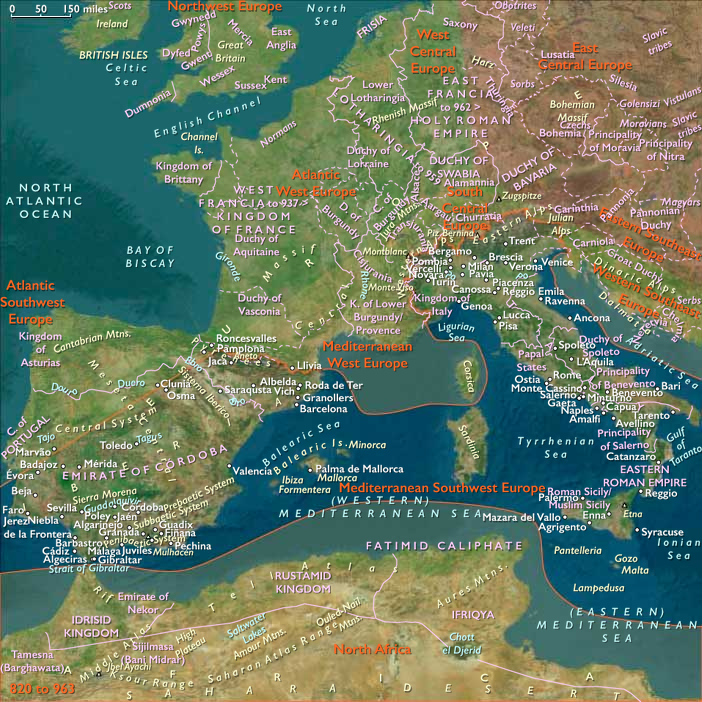
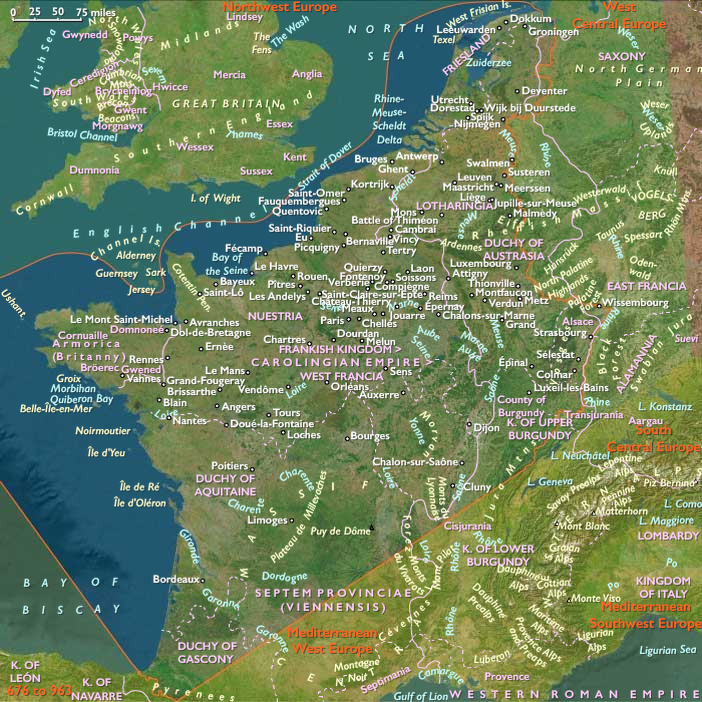
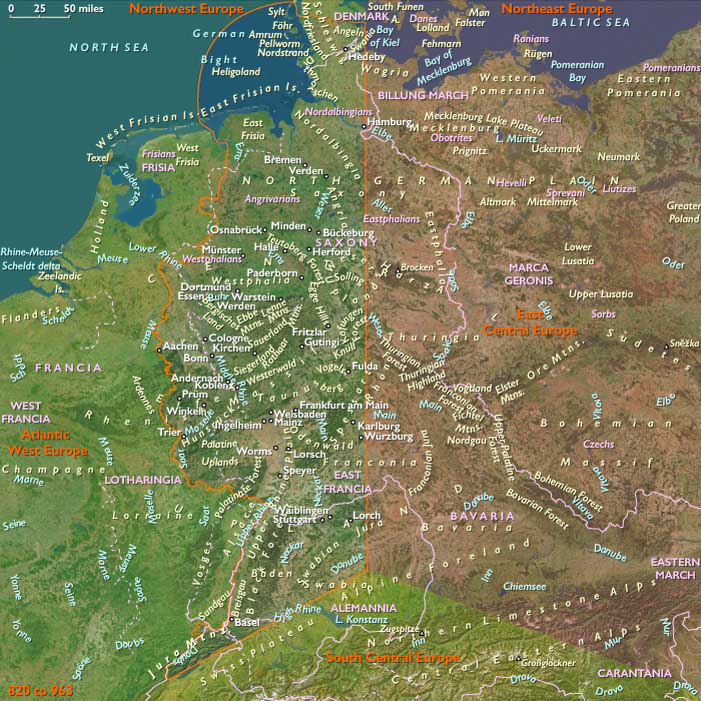
The Treaty of Verdun (843) and the Division of the Carolingian Empire
Following the death of Emperor Louis the Pious in 840, his eldest son, Lothair I, asserts his claim to overlordship over his brothers' kingdoms and supports his nephew Pepin II’s claim to Aquitaine. However, his brothers, Louis the German and Charles the Bald, reject his authority, leading to civil war among Charlemagne’s grandsons.
The Civil War and the Battle of Fontenay (841)
- Lothair I faces a major defeat at the Battle of Fontenay (841) at the hands of Louis the German and Charles the Bald, who form an alliance against him.
- Their alliance is sealed with the Oath of Strasbourg (842), a key historical document written in both Old French and Old High German, symbolizing the growing linguistic and cultural divide between the eastern and western realms.
The Treaty of Verdun (843): A Formal Division
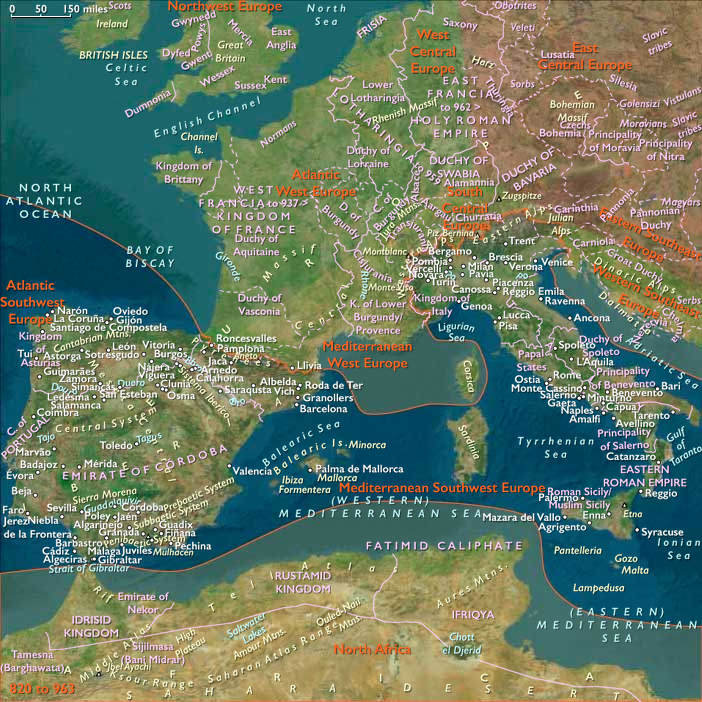
With his military position weakened, Lothair agrees to negotiate, leading to the Treaty of Verdun (843), which permanently divides the Carolingian Empire among the three surviving sons of Louis the Pious:
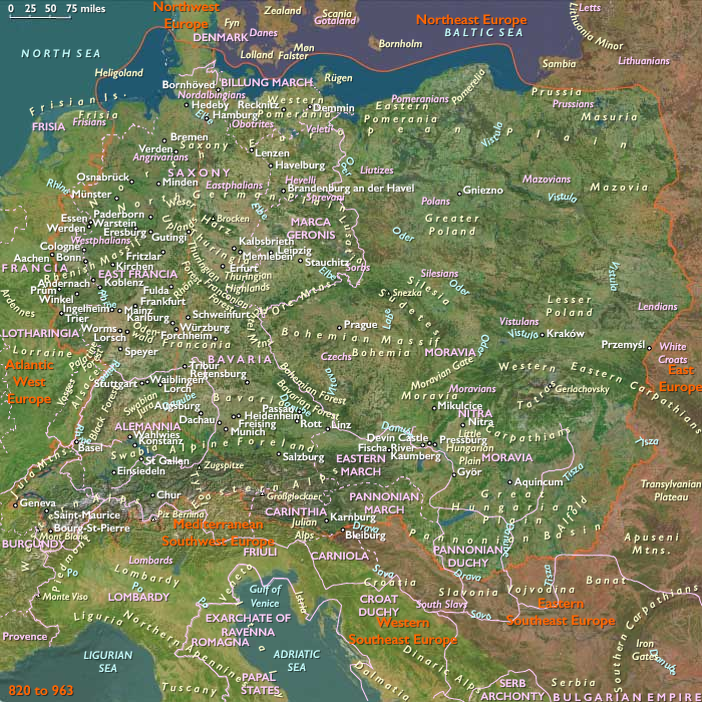
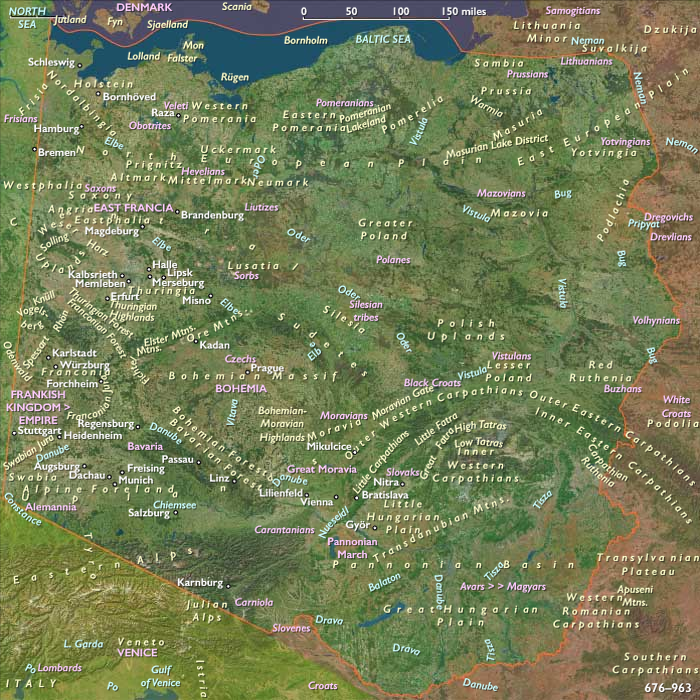
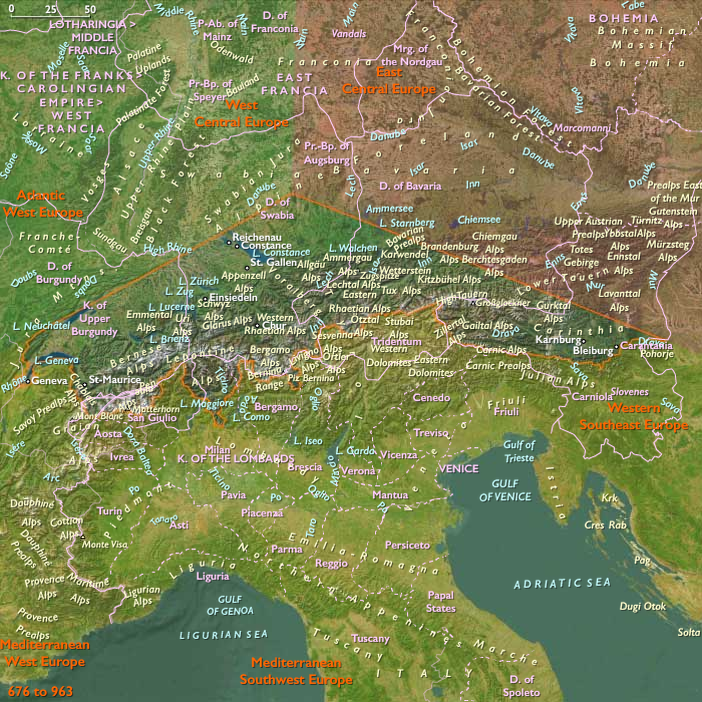
- Louis the German receives the East Frankish Kingdom (East Francia), encompassing the lands of German-speaking peoples:
- Saxony, Eastern Francia, Alemannia, Bavaria, and Carinthia
- Frankfurt-am-Main becomes the capital of East Francia
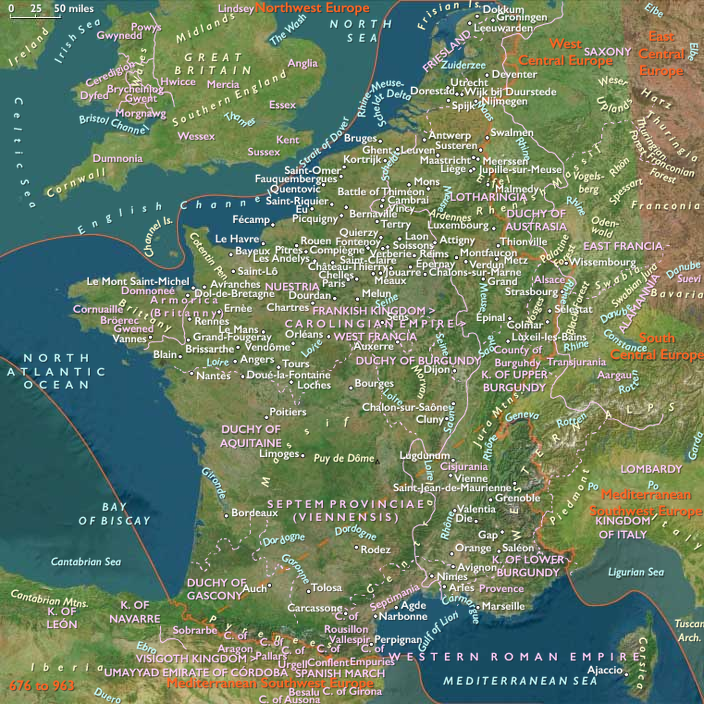
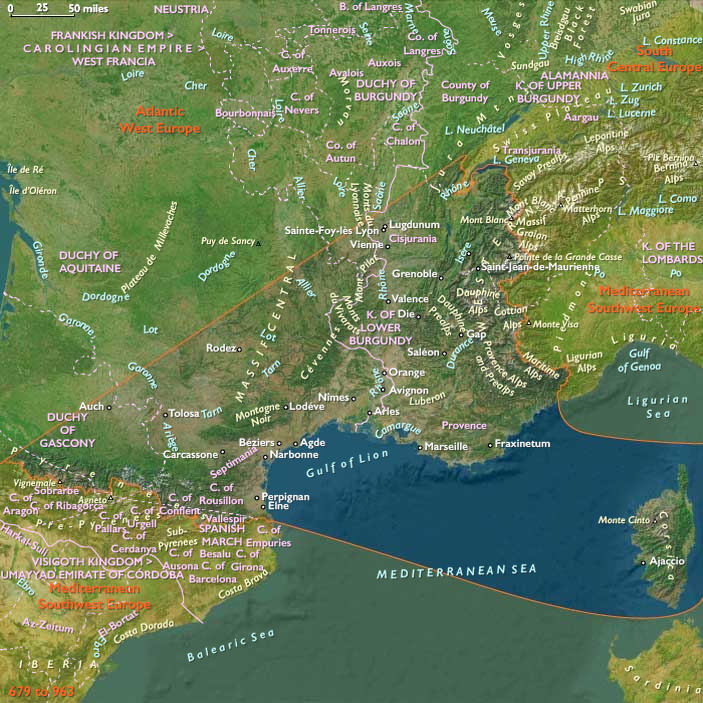
- Charles the Bald receives the West Frankish Kingdom (West Francia), comprising French-speaking territories:
- Western Francia, Aquitaine, Gascony, Brittany, and the Spanish Marches
- This kingdom evolves into medieval France
- Lothair I retains Middle Francia, the imperial title, and control over:
- Italy, Provence, Burgundy, and Lotharingia (Lorraine)
- However, Middle Francia proves politically fragile and will be partitioned further after Lothair’s death in 855.
The Frankish Tradition of Partible Inheritance
The Treaty of Verdun is often interpreted as the beginning of the Carolingian Empire’s decline, but it actually reflects the Frankish adherence to the Germanic tradition of partible inheritance, rather than primogeniture(inheritance by the eldest son).
- Unlike later medieval monarchies that favored single-heir succession, the Franks divided their realms among all male heirs, ensuring that each son received a kingdom rather than ruling as a vassal.
- This tradition continued to fragment the Carolingian realm, leading to the eventual emergence of the distinct kingdoms of France, Germany, and Italy.
Legacy of the Treaty of Verdun
The Treaty of Verdun is one of the most consequential agreements in European history, as it:
- Sets the foundation for modern France and Germany by establishing the linguistic and political divide between the French-speaking West and German-speaking East.
- Marks the beginning of the Holy Roman Empire, as the imperial title becomes linked to Italy rather than Francia.
- Prefigures the dissolution of Charlemagne’s empire, as further partitions and dynastic struggles weaken centralized rule.
While Charlemagne’s vision of a unified Christian empire ultimately proves unsustainable, the Treaty of Verdun shapes the political map of medieval Europe, influencing its kingdoms, conflicts, and cultures for centuries to come.
People
Groups
- Franks
- Saxons
- Germans
- Alamannia
- Christianity, Chalcedonian
- Vasconia, Duchy of
- Francia (Carolingians)
- Italy, Carolingian Kingdom of
- Marca Hispanica
- Aquitaine, (Carolingian) Kingdom of
- Bavaria, Carolingian Duchy of
- Frankish, or Carolingian (Roman) Empire
- Saxony, Duchy of
- Brittany, Kingdom of
- Carantania, Margraviate of
- Francia Occidentalis (West Francia, or France), Kingdom of
- Francia Orientalis (East Francia), Kingdom of
- Francia Media (Middle Francia), Kingdom of
Topics
Commodoties
Subjects
Regions
Subregions
- East Central Europe
- Western Southeast Europe
- South Central Europe
- Mediterranean West Europe
- Mediterranean Southwest Europe
- Atlantic West Europe
- West Central Europe
Years: 832 - 843
People
Groups
- Franks
- Saxons
- Germans
- Alamannia
- Christianity, Chalcedonian
- Vasconia, Duchy of
- Francia (Carolingians)
- Italy, Carolingian Kingdom of
- Marca Hispanica
- Aquitaine, (Carolingian) Kingdom of
- Bavaria, Carolingian Duchy of
- Frankish, or Carolingian (Roman) Empire
- Saxony, Duchy of
- Brittany, Kingdom of
- Carantania, Margraviate of
- Francia Occidentalis (West Francia, or France), Kingdom of
- Francia Orientalis (East Francia), Kingdom of
- Francia Media (Middle Francia), Kingdom of
Topics
Commodoties
Subjects
Regions
Subregions
- East Central Europe
- Western Southeast Europe
- South Central Europe
- Mediterranean West Europe
- Mediterranean Southwest Europe
- Atlantic West Europe
- West Central Europe