
East Europe
Related Events
Filter results
Showing 10 events out of 1819 total
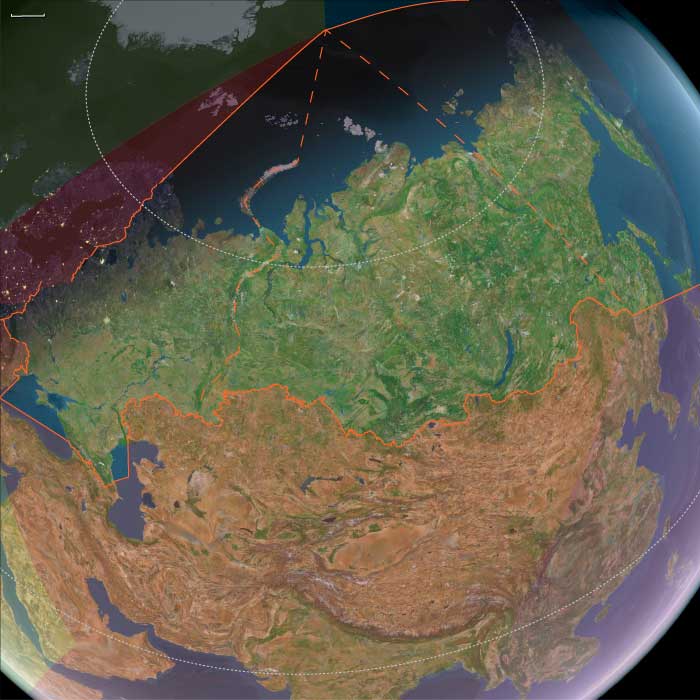
The Great Crossroads, one of the twelve divisions of the globe, is centered on Eurasia, with its northernmost extent meeting Northern Oceania and The Atlantic World at the North Pole. This vast region excludes the eastern, western, and southern extremities of the Eurasian landmass, which spans a significant portion of the Earth's surface.
The Ural Mountains, running approximately north to south, serve as the traditional boundary between Europe and Asia, as well as between Russia proper and Siberia.
For the purposes of this framework, The Great Crossroads includes Mongolia; western China, including Xinjiang and the Tibetan Plateau; the northern half of the Indian subcontinent; Afghanistan; the Iranian Plateau; Mesopotamia; eastern Arabia; the northern Levant; northeastern Cyprus; western and southwestern Anatolia; the Caucasus; Eastern Europe; Siberia; the Eastern Balkans; Eastern Scandinavia; the Baltic Sea basin; and Middle Europe.
- The southwestern boundary runs diagonally from south-central Germany, through the eastern Alps, the Balkans, and western Asia, terminating in the southern third of the Arabian Peninsula in the vast desert known as the Rub’ al Khali.
- The southern boundary divides South India from North India, following the generally recognized demarcation that includes the Narmada River, and separates the Indian Ocean-facing southeastern Arabian coast from the Persian Gulf-focused eastern Arabia.
- The southeastern boundary runs diagonally from the Bay of Bengal, following India’s border with Myanmar, marking the division between South Asia and both Southeast Asia and Eastern Asia.
Narrow results by searching for a word or phrase or select from one or more of a dozen filters.
The Moderns are taller, more slender, and less muscular than the Neanderthals, with whom they share—perhaps uneasily—the Earth.
Though their brains are smaller in overall size, they are heavier in the forebrain, a difference that may allow for more abstract thought and the development of complex speech.
Yet, the inner world of the Neanderthals remains a mystery—no one knows the depths of their thoughts or how they truly expressed them.
Migrants from Central Asia and the Middle East are believed to have colonized Europe, moving northwestward over time.
By the time anatomically modern humans first enter Europe, Neanderthals are already well-established in the region. The question of whether these two populations interbred remains a subject of ongoing debate.
Evidence suggests that modern humans and Neanderthals coexisted in various regions, including the Iberian Peninsula and the Middle East, where interbreeding may have contributed Neanderthal genes to early Paleolithic Europeans and, ultimately, to modern European populations.
Regardless of whether interbreeding occurred, it is generally believed that early human populations took refuge in hypothetical Ice Age shelters, later repopulating Europe as the glaciers receded—forming the ancestral foundation of present-day European populations.
An alternative theory proposes that modern Europeans primarily descend from Neolithic populations originating in the Middle East, whose migrations into Europe are well documented.
The debate over the origins of Europeans has often been framed as a question of cultural diffusion versus demic diffusion.
Both archaeological and genetic evidence strongly support demic diffusion—the idea that a population spread from the Middle East over the last 12,000 years, gradually replacing or assimilating earlier groups.
However, some researchers have challenged this view using the genetic concept of Time to Most Recent Common Ancestor (TMRCA). This approach has been used to argue in favor of cultural diffusion, suggesting that technological and cultural advancements spread without significant population movement.
The debate remains ongoing, with scholars examining the complex interplay between migration, gene flow, and cultural exchange in shaping Europe's early populations.
The development of stone tools appears to have progressed in gradual steps until around 50,000 to 40,000 years ago.
Each successive Homo species—from H. habilis to H. ergaster to H. neanderthalensis—began at a higher technological level than its predecessor. However, once a phase began, further innovation remained slow, reflecting a culturally conservative approach to tool-making.
Around 50,000 BP, however, modern human culture began to evolve at a significantly faster pace. While Neanderthal populations typically displayed little variation in their tool-making techniques, the Cro-Magnon immigrants introduced increasingly refined and specialized flint tools, such as knives, blades, and skimmers.
Additionally, Cro-Magnons expanded beyond stone, pioneering the use of bone tools, marking a major advancement in prehistoric technology.
Modern human culture begins to evolve at an accelerated pace, marking a significant shift in behavior and innovation.
Some anthropologists, notably Jared Diamond, author of The Third Chimpanzee, describe this period as a "Great Leap Forward." During this time, modern humans adopt new cultural and technological practices, including:
- Burying their dead, often with grave goods, suggesting ritual or symbolic thought,
- Crafting clothing from hides, improving survival in colder climates,
- Developing advanced hunting techniques, such as trapping pits or driving animals off cliffs, and
- Creating cave paintings and other forms of artistic expression.
As human culture advances, different populations begin to introduce novelty into existing technologies. Unlike earlier hominins, modern humans show regional variations in artifacts such as fish hooks, buttons, and bone needles, demonstrating a previously unseen diversity of tools and personal items.
Anthropologists identify several key markers of modern human behavior, including:
- Tool specialization,
- Adornment with jewelry and symbolic imagery (such as cave drawings),
- Organized living spaces,
- Elaborate rituals, including burials with grave gifts,
- Exploration of harsh or previously uninhabited environments, and
- The development of barter trade networks.
Debate continues over whether these advancements were the result of a sudden cognitive "revolution"—sometimes called "the big bang of human consciousness"—or whether they emerged through a more gradual evolutionary process.
During this period, Neanderthals are gradually being displaced as modern humans expand into Europe.
The slow pace of human migration into Europe suggests that Homo sapiens and Neanderthals may have been in continuous competition for territory over an extended period.
Neanderthals, with their larger, more robust frames, were likely physically stronger than modern Homo sapiens. Having inhabited Europe for over 200,000 years, they were also better adapted to cold climates, giving them a potential survival advantage in harsh Ice Age conditions.
Northeastern Eurasia (49,293 – 28,578 BCE): Upper Pleistocene I — Steppe, Ice, and the Making of the Northern Corridor
Geographic and Environmental Context
During the late Pleistocene, Northeastern Eurasia extended from the Ural Mountains to the Pacific, encompassing the mammoth-steppe plains of East Europe and Western Siberia, the Altai–Yenisei uplands, and the Amur–Okhotsk–Bering frontier of Northeast Asia.
It was not a single region but a triadic system of worlds:
-
East Europe, the western steppe edge, framed by the Don, Dnieper, and Oka valleys — a land of loess terraces and braided rivers supporting dense megafaunal herds.
-
Northwest Asia, the Siberian interior, from the Urals through the Ob–Irtysh–Yenisei corridor to the Altai, where glacial basins and intermontane valleys served as refugia amid vast permafrost plains.
-
Northeast Asia, the Pacific rim and Beringian shelf, where tundra-steppe met coastal polynyas, bridging the continents long before human migration reached the New World.
Across these subregions, the environment graded from continental aridity in the west to maritime cold along the Pacific — a spectrum of adaptation that tied Eurasia together along its northern rim.
Climate and Environmental Shifts
The interval encompassed alternating Dansgaard–Oeschger warmings and Heinrich cold pulses leading into the Last Glacial Maximum.
-
In East Europe, permafrost advanced to the Dnieper and Don basins; vegetation alternated between steppe grassland and dwarf-shrub tundra.
-
In Northwest Asia, continental cold and aridity dominated; the Ob and Yenisei braided into unstable channels; loess and dust storms swept the forelands of the Urals and Altai.
-
In Northeast Asia, cold was tempered by oceanic moisture. Ice-edge upwellings in the Okhotsk and Bering seas sustained rich marine ecosystems, even as inland basins froze.
Periodic interstadial thaws re-greened the valleys, drawing herds northward and humans with them; stadials drove retreat to riverine refugia.
The result was a dynamic equilibrium of expansion and contraction rather than a single glacial standstill.
Lifeways and Settlement Patterns
All three worlds supported high-latitude foraging economies built on mobility, storage, and memory of place.
-
In East Europe, loess-terrace camps overlooked reindeer and mammoth migration corridors. Semi-recurrent bases at Kostenki, Sungir, and along the Dnieper combined hunting, butchery, and craft production.
-
In Northwest Asia, the Altai foothills and Minusinsk Basin hosted recurrent winter shelters, while open Ob–Yenisei valleys served for summer mammoth and bison hunts.
-
In Northeast Asia, river-mouth camps and coastal flats supported dual economies of inland big-game and maritime sealing and fishing. Seasonal movements linked river confluences, upland passes, and shelf-edge hunting grounds.
Each subregion achieved local stability through broad prey portfolios and cyclical mobility tuned to glacial rhythms.
Technology and Material Culture
A shared Upper Paleolithic technological grammar spanned the entire northern corridor:
-
Blade and microblade industries, adapted to portable composite weapons, formed the technological backbone from the Don to the Anadyr.
-
Bone, antler, and ivory were fashioned into points, awls, harpoons, and eyed needles — evidence for tailored fur clothing and cold-weather dwellings.
-
Obsidian sources in the Altai and Kamchatka and flint quarries in the Don basin anchored far-flung exchange networks.
-
Personal adornment — beads of tooth, ivory, shell, and amber — and ochre burials underscored enduring symbolic systems linking the Eurasian north to the rest of the Upper Paleolithic world.
The breadth of these parallels reveals not isolation but interoperability across extreme distance.
Movement and Interaction Corridors
Northeastern Eurasia was defined by movement — the continual negotiation between ice, water, and wind.
-
The Steppe–River Network: Don–Volga–Ural–Ob–Yenisei channels allowed seasonal following of herds and diffusion of tool types and ornaments.
-
The Altai–Mongolia Crossroads: A mountainous hinge connecting western and eastern populations, where genetic and cultural exchanges mixed Siberian and East Asian lineages.
-
The Amur–Okhotsk–Bering Rim: Shelf and river corridors provided both overland and coastal pathways toward Beringia, the eventual gateway to the Americas.
These arteries made the northern fringe not an end of settlement but a conveyor of innovation and populationbetween continents.
Cultural and Symbolic Expressions
Symbolic behavior mirrored subsistence breadth.
Engraved bones, ivory figurines, and ochred burials appear in all three subregions, expressing a shared spiritual engagement with animals and ancestors.
Altai and Don sites yield portable art and ivory figures, while the Amur and Lena valleys preserve carved bone and antler motifs of reindeer and mammoth.
Fire-ringed hearths and ritual hearth renewals suggest continuity of place and group identity across generations.
In these expressions, the northern peoples joined the global Upper Paleolithic symbolic sphere while imprinting it with an Arctic signature of endurance and cyclical return.
Environmental Adaptation and Resilience
Resilience depended on technological insulation, ecological diversity, and social connectivity.
Fur clothing, hide shelters, and stored fuel allowed wintering at 60–70° N; seasonal migration between coast, river, and plateau distributed risk; and wide alliance networks permitted exchange of mates, materials, and knowledge across immense ranges.
When one valley froze, another thawed — and people already knew the way.
Genetic and Linguistic Legacy
Populations rooted in this corridor carried the genetic foundations of later Arctic and Beringian peoples.
From East Europe through the Altai to the Amur, gene flow linked Eurasia’s west and east, seeding the ancestry of the First Americans and shaping linguistic substrates later echoed in circumpolar families.
Northeastern Eurasia thus became the cradle of the circumpolar continuum — a trans-Beringian cultural ecology that would persist for tens of millennia.
Transition Toward the Last Glacial Maximum
By 28,578 BCE, ice sheets and permafrost deepened, narrowing the habitable band to river valleys and steppe oases.
Yet humans remained throughout, their territories contracting but not vanishing.
The East European plains anchored the west, the Altai–Yenisei belt sustained the interior, and the Amur–Bering coast reached outward toward a new continent.
Northeastern Eurasia therefore stands as a model of The Twelve Worlds principle: its subregions were self-contained in ecology yet outward-looking in connection, bound less by shared geography than by the long, unbroken thread of movement — the first great northern highway of the human story.
East Europe (49,293 – 28,578 BCE) Upper Paleolithic I — Mammoth-Steppe Hunters and River-Terrace Camps
Geographic and Environmental Context
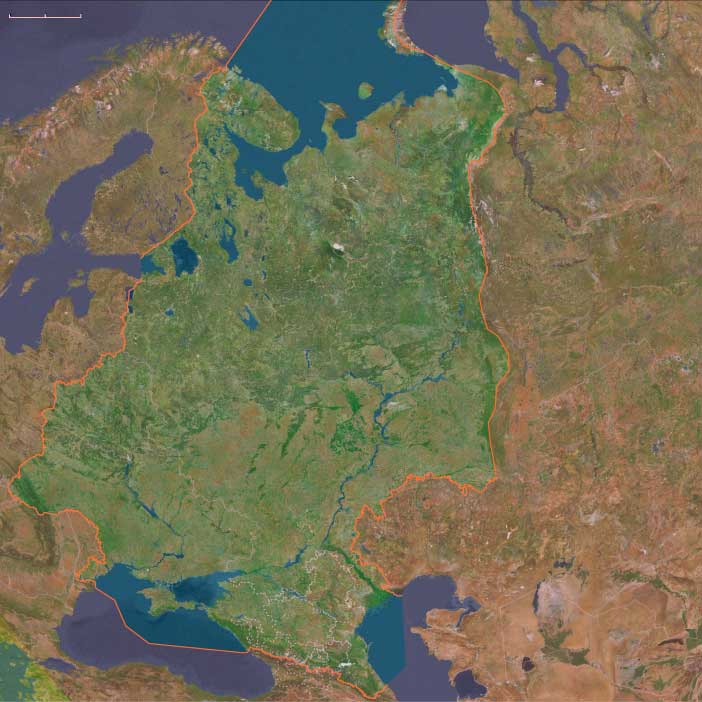
East Europe includes Belarus, Ukraine, and European Russia west of the Urals (including the forest, forest-steppe, and steppe zones and the Russian republics west of the Urals).
-
Anchors: Don terraces around Kostenki–Borshchevo, Oka–Klyazma reaches near Sungir, Dnieper middle valley, Upper Dvina headwaters, and open Pripet margins.
-
Periglacial steppe–tundra stretched across Ukraine–southern Russia; braided rivers cut high loess bluffs.
Climate & Environmental Shifts
-
Peak Last Glacial Maximum: cold, arid, windswept; permafrost pressed south; sea levels low on the Black Sea shelf.
Subsistence & Settlement
-
Foragers targeted mammoth, bison, horse, reindeer on river benches and valley shoulders; fishing and waterfowl were seasonal supplements.
-
Semi-recurrent base camps on loess promontories (wind-shelter, visibility, dry footing) with hearths and butchery floors.
Technology & Material Culture
-
Blade–microblade industries; burins/scrapers in high-quality cherts; bone/ivory points and needles for tailored cold-weather clothing.
-
Personal ornaments (ivory, drilled teeth), extensive ochre use. (Classic burials at Sungir predate this span but signal the regional tradition.)
Movement & Interaction Corridors
-
Don–Oka–Dnieper trunkways structured seasonal mobility; interfluve saddles linked watersheds; reindeer/mammoth migration routes guided hunting calendars.
Cultural & Symbolic Expressions
-
Portable engraved bone/ivory animal imagery; ochred burials and curated ornaments suggest shared Ice-Age symbolic repertoires across Inner Eurasia.
Environmental Adaptation & Resilience
-
High mobility, broad prey portfolios, winter windbreaks, and tailored hides enabled survival in severe periglacial regimes.
Transition
By 28,578 BCE, foragers had mapped terrace ecologies and river corridors that would organize later deglacial movements and exchanges.
Migration from the Black Sea area into Europe started some around forty-five thousand years ago, probably along the Danubian corridor.