A dramatic and rapid rise in global sea-levels of around fourteen meters is linked by coral off the South Pacific island of Tahiti to the collapse of massive ice sheets fourteen thousand six hundred years ago.
An Aix-Marseille University-led team, including Oxford University scientists Alex Thomas and Gideon Henderson, confirmed that a dramatic and rapid rise in global sea-levels of around fourteen meters occurred at the same time as a period of rapid climate change known as the Bølling oscillation.
The Bølling oscillation, a warm interstadial period between the Oldest Dryas and Older Dryas stadials, at the end of the last glacial period, is used to describe a period of time in relation to Pollen zone Ib—in regions where the Older Dryas is not detected in climatological evidence, the Bølling-Allerød is considered a single interstadial period.
The beginning of the Bølling is also the high-resolution date for the sharp temperature rise marking the end of the Oldest Dryas at 14,670 BP and the beginning of the so-called Humid Period in North Africa.
The region that will later become the Sahara is wet and fertile, its aquifers full.
During the Bølling warming high latitudes of the Northern hemisphere warmed as much as 15 degrees Celsius in a few tens of decades.
The team has used dating evidence from Tahitian corals to constrain the sea level rise to within a period of three hundred and fifty years, although the actual rise may well have occurred much more quickly and would have been distributed unevenly around the world's shorelines.
A leading theory is that the ocean's circulation changed so that more heat was transported into Northern latitudes.
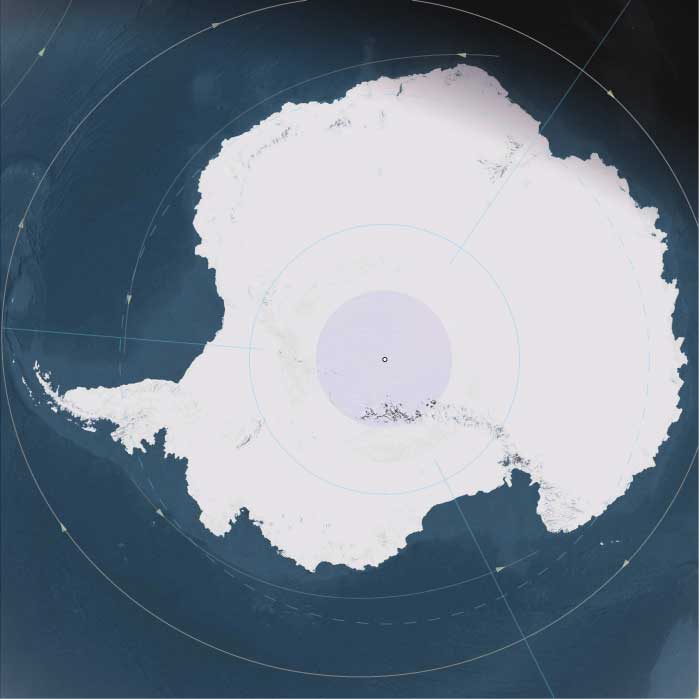
A considerable portion of the water causing the sea-level rise at this time must have come from melting of the ice sheets in Antarctica, which sent a 'pulse' of freshwater around the globe.
However, whether the freshwater pulse helped to warm the climate or was a result of an already warming world remains unclear.