
North Polynesia
Related Events
Filter results
Showing 10 events out of 83 total
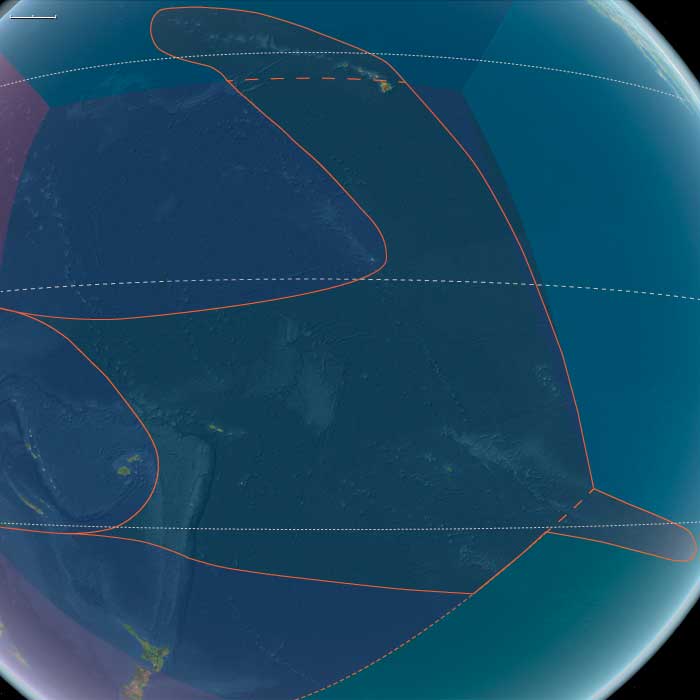
Northern Oceania encompasses Northeast Asia, North Polynesia, and Northwestern North America.
Its southeastern boundary extends from 48.1896851°N, approximately 75 miles south of the Alberta-Saskatchewan-Montana junction, to the Pacific Ocean at Cape Mendocino. To the immediate northwest of this line lies the Pacific Northwest.
In Canada, Alberta and British Columbia form the border with the United States, while to the north lie Nunavut, the Northwest Territories, Yukon, and Alaska.
The eastern boundary at 110°W was originally designated as the Fourth Meridian of the Dominion Land Survey. However, due to the limitations of early surveying techniques, the meridian was placed slightly west of this longitude. Since 1905, the Fourth Meridian has served as the entire boundary between Alberta and Saskatchewan and continues northward as the dividing line between Nunavut and the Northwest Territories above 70°N.
Northern Oceania's western boundary, at 130°E, roughly aligns with the division between Siberia and the Russian Far East, corresponding to Russia’s Siberian and Far Eastern federal districts. This boundary terminates above the Amur River, which has historically marked the border between Russia and China’s Heilongjiang province. The northernmost point of China, in Mohe City, lies along this river.
The southwestern boundary separates most of Japan’s northernmost major island, Hokkaido, from Honshu and the rest of the Japanese archipelago.
HistoryAtlas contains 401 entries for Northern Oceania from the Paleolithic period to 1899.
Narrow results by searching for a word or phrase or select from one or more of a dozen filters.
Polynesia (49,293 – 28,578 BCE): Upper Paleolithic I — Volcanic Arcs, Reef Foundations, and the Architecture of Isolation
Geographic & Environmental Context
During the later Pleistocene, the Polynesian sector of the Pacific was a scattered domain of volcanic peaks, emerging atolls, and widening reef flats—a geography still entirely devoid of humans but already constructing the natural architecture that would one day sustain them.
The region spanned three great arcs of islands:
-
The Hawaiian–Emperor chain in the north, including Oʻahu, Maui, Molokaʻi, Kauaʻi, Niʻihau, and Midway, where high volcanic forms dominated the subtropics.
-
The central–western archipelagos—Tonga, Samoa, the Cook and Society Islands, the Marquesas, Tuvalu, and Tokelau—a mixture of high volcanic islands, raised limestone platforms, and embryonic atolls.
-
The eastern fringe—future Pitcairn and Rapa Nui—where lone volcanic edifices rose from deep ocean basins, linked only by the great South Pacific gyres and currents.
Sea level stood ~100 m lower than today, exposing vast coastal benches and broad shelves around high islands. Many modern lagoons lay dry, their reef rims fossilized in the air; others built episodically with interglacial warm phases. Across the region, reef, volcano, and ocean interacted in long cycles of uplift and subsidence—the slow choreography that would, over tens of millennia, produce the Polynesian Triangle’s intricate geography.
Climate & Environmental Shifts
The epoch was framed by full glacial conditions—cooler sea-surface temperatures, stronger trade winds, and a sharply defined dry season.
-
Atmosphere and Ocean: Strengthened trades drove upwelling along many leeward coasts, favoring cool, nutrient-rich nearshore waters. Seasonal dust episodes and winter surf reworked coastal benches, while the intertropical convergence zone (ITCZ) oscillated northward and southward with orbital rhythms.
-
Late-Glacial Variability: Even within the long glacial, brief mild interstadials brought short-lived reef growth spurts and pulses of vegetation recovery. Cooler phases depressed the coral-algal community but expanded coastal steppe and dry scrub.
-
Volcanic Activity: Continuous effusive volcanism in the Hawaiian Big Island and intermittent eruptions in the Societies, Marquesas, and Cooks rejuvenated landscapes, built fresh lava plains, and created ephemeral crater lakes and ash-fed soils.
Overall, Polynesia’s climate oscillated between cool, windy glacial stability and short warming pulses that allowed the reef crest and forest line to advance and retreat in rhythm with the global climate.
Biota & Baseline Ecology (No Human Presence)
Every island was its own closed laboratory of evolution.
-
Marine Life:
Coral communities fluctuated with sea level and temperature, but even under glacial suppression, shallow fringing reefs persisted. Fish, mollusk, turtle, and seabird populations were immense, their only predators sharks and seals. On outer banks like Midway, Tokelau, and Tuvalu, monk seals and turtles bred in numbers far exceeding modern densities. -
Terrestrial Life:
The higher islands—Hawaiʻi, Tahiti, Samoa, the Marquesas—carried dense montane forests in windward belts and dry woodland or grass steppe on leeward slopes. Cloud forests crowned the summits, capturing mist even under glacial dryness. Each island hosted unique, isolated assemblages of birds, insects, and plants, evolving in splendid isolation. -
Avian Realms:
Seabird supercolonies occupied cliffs and stacks, fertilizing soils with guano and enriching nearshore ecosystems. On atolls and cays, the air was dense with terns, boobies, and petrels—an avian kingdom uninterrupted by human disturbance.
Environmental Processes & Dynamics
-
Reef and Lagoon Evolution: Lower sea levels exposed broad reef flats, which weathered into limestone benches; with each brief warming, corals recolonized and built new terraces—a staircase of future lagoons.
-
Volcano–Erosion Cycles: Heavy rainfall on high islands carved deep amphitheaters (e.g., Waiʻanae, Koʻolau, and Tahiti’s ancient calderas), while aridity on leeward slopes preserved lava plains and dunes.
-
Marine Productivity: Upwelling zones around island chains created feeding grounds for pelagic fish and whales; kelp-like macroalgae likely formed dense nearshore beds in cooler zones, anchoring early “reef forest” ecologies.
-
Atmospheric Circulation: Persistent trades sculpted the cloud belts that would later define Polynesian ecological duality—lush windward valleys and dry leeward coasts.
Long-Term Significance
By 28,578 BCE, Polynesia’s physical and biological foundations were firmly in place:
-
Volcanic arcs had matured into high-island chains with deep, fertile amphitheaters and developing river networks.
-
Coral reef systems, though suppressed by glacial cooling, had established their long-term frameworks, ready to surge during Holocene sea-level rise.
-
Forest and reef ecologies had stabilized into enduring zonations—ridge forests, dry scrub, coastal strand, reef-flat, and pelagic edge—that would persist through the Holocene.
The epoch thus created Polynesia’s essential blueprint: a world of towering volcanic islands, expanding reef terraces, seabird-sustained fertility, and unbroken ecological isolation.
In the ages to come, these formations would become the living stage for one of Earth’s greatest human voyaging traditions—a future civilization built upon the deep-time architecture of glacial Polynesia.
North Polynesia (49,293 – 28,578 BCE): Upper Paleolithic I — Volcanic High Islands, Reef Beginnings, and Seabird Kingdoms
Geographic & Environmental Context
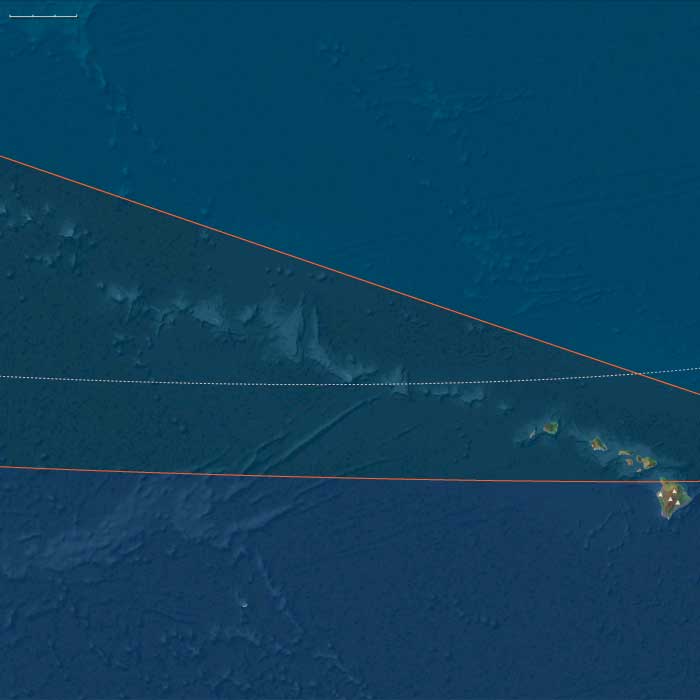
North Polynesia includes the Hawaiian Islands chain except Hawaiʻi Island (the Big Island) — principally Oʻahu, Maui, Kauaʻi, Molokaʻi, Lānaʻi, Niʻihau — plus Midway Atoll.
-
Anchors: Oʻahu’s twin shield ranges (Koʻolau, Waiʻanae) with deeply incised gulches; Kauaʻi–Niʻihau as the older high-island pair; Maui Nui as a broad, shallow platform with multiple emergent peaks; Midway Atoll as a carbonate cap on the subsiding Emperor–Hawaiian chain.
-
Sea level sat well below modern during glacial maxima, exposing wide reef flats and coastal benches.
Climate & Environmental Shifts
-
Late Pleistocene glacial climate: cooler SSTs, stronger trade-wind seasonality; broad coastal steppe–scrub around high-island skirts.
-
Episodic dust, stronger winter surf; reef growth pulsed between coolings.
Biota & Baseline Ecology (No Human Presence)
-
Seabird rookeries dense on offshore stacks and atolls (proto-Midway); Hawaiian monk seals hauled out on remote beaches.
-
Native forests atop ridges were a mosaic of cloud forest and dry woodland; streams were clear, with endemic fish/invertebrates.
Long-Term Significance
This epoch set the geomorphic template: high islands with fertile amphitheaters, narrow coastal plains, and nascent reef systems—conditions that would later support intensive Polynesian agro-ecologies.
Polynesia (28,577 – 7,822 BCE): Late Pleistocene–Early Holocene Transition — Emerging Arcs, Drowned Plateaus, and Reef Foundations
Geographic & Environmental Context
During the Late Pleistocene and early Holocene, Polynesia—stretching from the Hawaiian archipelago across Samoa, Tonga, the Cook and Society Islands, to the far eastern outliers of Pitcairn and Rapa Nui—remained entirely unpeopled, a scattered constellation of volcanic and reefed islands rising above the world’s largest ocean.
At the Last Glacial Maximum (c. 26,500–19,000 BCE), global sea levels stood more than 100 m lower than today, exposing wide coastal shelves and tightening inter-island channels. As ice sheets melted, deglaciation flooded ancient shorelines, transforming basins into lagoons and seamounts into isolated atolls.
-
North Polynesia (Oʻahu, Maui Nui, Kauaʻi–Niʻihau, Midway Atoll): the Maui Nui shelf—once a single island—became a cluster of channels; Midway’s rim expanded as new lagoons formed.
-
West Polynesia (Hawaiʻi Island, Tonga, Samoa, Tuvalu–Tokelau, Cook, Society, and Marquesas): reefs and barrier lagoons built up around volcanic peaks, while low atolls appeared as sea level rose.
-
East Polynesia (Pitcairn, Rapa Nui, and nearby seamounts): the farthest outposts of the Pacific, geologically young and ecologically self-contained, fringed by narrow reef flats and rich upwelling zones.
Across this immense realm, oceanic currents—the South and North Equatorial and the Kuroshio–Equatorial Counter-flow system—created predictable gyres, establishing the hydrological backbone that would later sustain Polynesian voyaging.
Climate & Environmental Shifts
The epoch was one of oscillation and renewal:
-
Last Glacial Maximum (26,500–19,000 BCE): cooler seas and exposed shelves expanded coastal plains; coral growth slowed under lowered sea level.
-
Bølling–Allerød interstadial (c. 14,700–12,900 BCE): warmth and rainfall increased; reefs surged upward in “catch-up” growth; lagoons and barrier formations matured.
-
Younger Dryas (12,900–11,700 BCE): brief cooling flattened reef accretion and restricted mangroves; trade-wind aridity spread in leeward belts.
-
Early Holocene (after 11,700 BCE): steady warming and sea-level stabilization allowed coral terraces, mangroves, and strand forests to reach near-modern equilibrium.
By 7822 BCE, the Pacific climate engine had achieved its Holocene rhythm—warm, humid, and oceanically stable.
Biota & Baseline Ecology (No Human Presence)
Polynesia’s ecosystems reached pristine balance under rising seas:
-
Reefs and lagoons flourished with coral, mollusks, crustaceans, and reef fish (parrotfish, surgeonfish, mullet); spur-and-groove structures and back-reef ponds became marine nurseries.
-
Coastal vegetation—pandanus, beach heliotrope, ironwood, and grasses—rooted in guano-enriched sands; strand forests stabilized dunes.
-
Cloud-forests cloaked high islands such as Tahiti and Savaiʻi, while dry leeward slopes supported shrub and palm mosaics.
-
Seabirds nested in immense colonies; turtles hauled out on beaches; marine mammals frequented newly formed bays.
All existed in predator-free isolation, each island a laboratory of speciation and resilience.
Geomorphic & Oceanic Processes
As the sea rose, island landscapes underwent continuous re-sculpting:
-
Reef accretion kept pace with transgression, forming the first true atoll rings.
-
Maui Nui’s plateau fragmented into separate islands; Hawaiʻi Island’s volcanic plains met new coasts.
-
Eastern high islands (Rapa Nui, Pitcairn) gained fertile volcanic soils through slow weathering; storm surges and wave reworking created terraces and embayments.
-
Sediment deltas at stream mouths formed early estuarine wetlands—future sites for Polynesian fishponds and irrigated terraces.
Symbolic & Conceptual Role
For millennia these lands remained beyond the human horizon—unimagined yet forming the ecological architecture that would one day welcome voyagers. Their mountains, lagoons, and reefs became the stage on which later Polynesian societies would enact origin stories of sea and sky.
Environmental Adaptation & Resilience
Natural resilience was inherent:
-
Coral reefs tracked rising seas through vertical growth, preventing ecological collapse.
-
Guano-fertilized soils accelerated vegetative colonization after storm disturbance.
-
Cloud-forest hydrology maintained water flow even in drier pulses.
These feedbacks produced long-term equilibrium between land, sea, and atmosphere—the defining ecological rhythm of Polynesia.
Long-Term Significance
By 7,822 BCE, Polynesia had become a fully modern oceanic system: drowned plateaus transformed into lagoons and atolls; coral terraces and forest belts stabilized; seabird and reef ecologies reached peak diversity.
Though still empty of humankind, the region now possessed every element—predictable currents, fertile reefs, sheltered bays, and stable climates—that would, tens of millennia later, make it the natural cradle of the world’s greatest voyaging tradition.
North Polynesia (28,577 – 7,822 BCE): Upper Paleolithic II — Deglaciation, Rising Seas, and Reef Terraces
Geographic & Environmental Context
North Polynesia includes the Hawaiian Islands chain except Hawaiʻi Island (the Big Island) — principally Oʻahu, Maui, Kauaʻi, Molokaʻi, Lānaʻi, Niʻihau — plus Midway Atoll.
-
Anchors: Windward Oʻahu reef benches; Maui Nui’s now-flooding inter-island shelf (tightening channels between Maui–Molokaʻi–Lānaʻi); Kauaʻi–Niʻihau cliff coasts; Midway’s expanding lagoon rim.
Climate & Environmental Shifts
-
Deglaciation lifted sea level >100 m, drowning paleo-shorelines and pushing reefs landward into new terraces and embayments.
-
Bølling–Allerød warming then Younger Dryas snapback produced stepwise reef catch-up; Early Holocenewarmth stabilized growth.
Biota & Baseline Ecology (No Human Presence)
-
Reef accretion built coral terraces and spur-and-groove formations; nearshore lagoons teemed with parrotfish, surgeonfish, and mullet.
-
Seabird nutrient inputs (guano) enriched dune vegetation; coastal strand forests established on emerging sand spits.
Long-Term Significance
The migrating shoreline created productive lagoons and sheltered landings—future hubs for waʻa (canoe) anchorages and fishpond siting.
Polynesia (7,821 – 6,094 BCE): Early Holocene — Thermal Optimum Seas and Islands in Equilibrium
Geographic & Environmental Context
During the Early Holocene, Polynesia—extending from the Hawaiian archipelago across Samoa, Tonga, and the Society Islands to the still-forming volcanic ridges of what would become Rapa Nui and Pitcairn—remained entirely unpeopled yet ecologically self-organized.
The global thermal optimum (c. 8,000–6,000 BCE) raised sea-surface temperatures and stabilized wind and current systems across the tropical Pacific.
High islands such as Oʻahu, Tahiti, and Savaiʻi bore deep belts of cloud forest, while their leeward coasts supported expanding reef-lagoon mosaics.
Emergent atolls and carbonate platforms—Tuvalu, Tokelau, and Midway—stood as low, gleaming rims on a still-rising ocean, already threaded by trade-wind-driven nutrient circuits.
Climate & Environmental Shifts
The Early Holocene Optimum produced the warmest and most stable Pacific climate of the Quaternary.
-
Sea levels continued their post-glacial rise, reaching only a few meters below present; newly drowned coastal shelves became lagoons and barrier-reef arcs.
-
Trade winds and monsoonal convergence zones settled into predictable rhythms, ensuring orographic rain on windward mountains and long dry seasons on leeward coasts.
-
ENSO activity was weak or absent; the Pacific climate engine ran with near-mechanical reliability.
These steady conditions allowed ecosystems to mature without major disturbance for more than a millennium.
Biota & Baseline Ecology (Before Human Arrival)
Polynesia at this stage was a realm of maximal endemic richness and ridge-to-reef productivity:
-
Forests: dense montane and mesic stands of hardwoods, Pandanus, and tree ferns cloaked volcanic slopes; lowlands carried palm and coastal scrub communities.
-
Freshwater systems: perennial streams sculpted alluvial fans and fed wetland complexes behind beach ridges—later to become ideal taro-pond basins.
-
Reefs and lagoons: coral growth kept pace with sea-level rise; fish biomass, clam beds, and crustacean diversity peaked; guano from seabird colonies fertilized nearshore flats.
-
Seabird rookeries blanketed outer islets, coupling marine nitrogen to terrestrial fertility.
-
Atolls and low islands: thin soils supported grasses, heliotropes, and mangrove thickets along brackish lagoons—incipient blueprints for future habitation.
Geomorphic and Oceanic Processes
A gentle post-glacial transgression reshaped Polynesia’s coastlines: drowned river mouths became estuaries and bay-head deltas; reef crests migrated upward; mangroves and peat lenses accumulated behind storm ridges.
Volcanic islands such as Hawaiʻi Island, Tahiti, and Rarotonga continued to build and erode simultaneously, feeding rich sediment to deltas.
Across the central Pacific, the South Equatorial Current and its counterflows organized enduring biological highways, prefiguring the navigation corridors of future voyagers.
Regional Profiles
-
North Polynesia (Hawaiian chain except Hawaiʻi Island): Warm seas and reliable trades sustained lush cloud-forest belts, valley wetlands, and stable lagoon fisheries.
-
West Polynesia (Hawaiʻi Island, Samoa, Tonga, Society Islands, Cook Islands, Tuvalu–Tokelau, Marquesas): Reef–valley coupling reached perfection—mountain rainfall feeding coastal productivity.
-
East Polynesia (Pitcairn group, Rapa Nui, and outlying ridges): Newly emergent volcanic highlands and surrounding seamounts hosted pioneer flora—ferns, grasses, and mosses—and rapidly accreting coral rims.
Together these arcs formed a climatic and ecological continuum, unbroken by storm or current.
Environmental Adaptation & Resilience
Without humans, natural feedback loops maintained equilibrium:
-
Cloud-forest evapotranspiration recycled rainfall; mangroves trapped sediment and built new ground.
-
Coral reefs tracked sea-level rise through vertical accretion, preserving lagoon depth and productivity.
-
Seabirds, turtles, and migratory fish redistributed nutrients across thousands of kilometers.
Disturbance—occasional cyclone or lava flow—was localized and quickly absorbed, strengthening rather than destabilizing ecosystem complexity.
Long-Term Significance
By 6,094 BCE, Polynesia had reached its pre-human ecological zenith.
Across every island chain, the ridge-to-reef continuum—from cloud forest to stream to reef flat—operated in perfect balance.
These conditions provided the environmental templates for later Polynesian agriculture, aquaculture, and navigation.
The Early Holocene thus marked an age of formation rather than transformation—a prolonged prelude in which the ocean composed its stage for the human voyaging worlds to come.
North Polynesia (7,821 – 6,094 BCE): Early Holocene — Cloud Forests, Stable Currents, and Lagoon Productivity
Geographic & Environmental Context
North Polynesia includes the Hawaiian Islands chain except Hawaiʻi Island (the Big Island) — principally Oʻahu, Maui, Kauaʻi, Molokaʻi, Lānaʻi, Niʻihau — plus Midway Atoll.
-
Anchors: Koʻolau windward amphitheaters and perennial streams; Maui Nui channels (Auʻau, Pailolo) with strong tidal jets; Kauaʻi’s deep valleys (Waimea, Hanalei); Midway’s carbonate rim.
Climate & Environmental Shifts
-
Early Holocene thermal optimum: warmer SSTs, relatively stable trades; consistent winter swell.
-
Orographic rainfall intensified cloud-forest belts; lowland wetlands formed behind beach ridges.
Biota & Baseline Ecology (No Human Presence)
-
Expansion of endemic lowland and mesic forests (pandanus, hardwoods)—before later human-driven shifts.
-
Anchialine ponds and estuarine inlets matured—ideal for future fishpond (loko iʻa) engineering.
Long-Term Significance
A high-productivity mosaic (ridge forest–valley stream–reef lagoon) emerged—an environmental “blueprint” for later integrated ridge-to-reef food systems.
Polynesia (6,093 – 4,366 BCE): Middle Holocene — Reef Highstands and Wetland Worlds
Geographic & Environmental Context
During the Middle Holocene, Polynesia lay fully within the tropical Pacific’s zone of climatic stability, a realm of volcanic high islands, coral-fringed atolls, and emergent reef terraces that would one day host the most far-flung human oceanic network on Earth.
Its principal sectors—North Polynesia (the Hawaiian Islands chain north of Hawaiʻi Island and Midway Atoll), West Polynesia (from Hawaiʻi Island and Tonga through Samoa, Tuvalu, Tokelau, the Cook Islands, the Society Islands, and the Marquesas), and East Polynesia (the Pitcairn group and Rapa Nui)—shared a geography shaped by rising seas, maturing reefs, and widening lagoons.
A global Hypsithermal warm phase elevated sea levels several meters above modern, drowning coastal flats and converting valley mouths into estuarine embayments and back-reef wetlands. Barrier reefs stabilized into continuous arcs; headlands were planed by surf; and new island shelves accumulated sand and coralline rubble that would, millennia later, become settlement plains, loʻi fields, and canoe landings.
Climate & Environmental Shifts
The Middle Holocene brought warm, humid stability punctuated by episodic extremes.
Trade-wind systems strengthened, but Kona-type storms occasionally brought heavy rainfall and flash floods to leeward coasts.
Sea-surface temperatures across the equatorial Pacific were slightly higher than today; ENSO variability remained subdued, maintaining predictably wet windward slopes and calmer leeward seasons.
Reef productivity surged as carbonate accretion kept pace with sea-level rise, while newly flooded coastal depressions matured into perennial wetland complexes of reeds, sedges, and brackish pools.
Biota & Baseline Ecology (Before Human Arrival)
No humans yet inhabited these islands, but ecological succession reached a remarkable equilibrium.
-
Back-reef lagoons and estuaries teemed with mullet, milkfish, gobies, prawns, and mollusks.
-
Dune–strand vegetation—Scaevola, Heliotropium, pandanus, and grasses—anchored beaches against the swell.
-
Montane forests of Metrosideros, Cheirodendron, and tree ferns blanketed the volcanic uplands of the high islands.
-
Seabird rookeries flourished on outer islets and atolls, their guano fertilizing leeward flats and enriching nearshore reefs.
-
In East Polynesia, the young volcanic soils of Rapa Nui and the Pitcairn group supported early colonization by ferns, mosses, and coastal scrub, forming self-sustaining nutrient cycles long before human arrival.
The result was a ridge-to-reef continuum—mountain cloud forest, mid-slope woodland, coastal wetland, reef crest, and open ocean—all functioning in dynamic balance.
Geomorphological Processes and Marine Systems
Across the Polynesian arc, reef highstands defined this era.
Raised coral terraces ringed older islands; back-reef ponds became permanent lagoons; and valley mouth wetlands expanded behind natural barrier bars.
Sediment from intensified rainfall and vegetation expansion enriched lagoons with fine silts, building natural levees later ideal for agriculture.
The alignment of tidal channels, reef passes, and sand spits fixed the geographic templates for the fishponds, irrigated taro basins, and canoe channels that would appear millennia later.
Movement & Interaction Corridors (of Nature, Not Yet of Humans)
Though human navigation had not yet reached Polynesia, the Pacific’s biological highways were already in motion.
Pelagic fish, marine turtles, and migratory seabirds linked these archipelagos ecologically; floating pumice, driftwood, and seeds rode trans-oceanic currents between the Marquesas, Tuamotus, and Hawaiʻian waters, maintaining genetic exchange among reef and shoreline species.
The same predictable wind and current systems that structured these movements—the trades, the westerlies, and the counter-equatorial flow—would later serve as the navigational framework for human voyagers.
Environmental Adaptation & Resilience
These mid-Holocene island ecosystems demonstrated extraordinary resilience.
When storm surges breached spits or hurricanes leveled strand vegetation, rapid recolonization by pioneer plantsrestored dunes within a few seasons.
Reefs self-repaired through coral regrowth, while inland wetlands re-established drainage after flood scouring.
Interlinked food webs—from seabirds to reef fish to mangrove detritivores—created ecological redundancy that stabilized productivity through climatic oscillations.
Long-Term Significance
By 4,366 BCE, Polynesia had achieved its modern physiographic and ecological foundations.
Sea-level highstands had sculpted enduring lagoon and wetland systems; volcanic slopes and reef platforms had matured into stable, fertile environments.
Though unpeopled, the region already embodied the structural harmony—ridge-to-reef integration, lagoon fertility, and predictable marine corridors—that would later underlie the success of Polynesian agriculture, aquaculture, and navigation.
In these centuries, the ocean prepared its own stage: reef, tide, and wind composing the geography of future voyaging and settlement.
North Polynesia (6,093 – 4,366 BCE): Middle Holocene — Reef Highstands and Coastal Wetland Expansion
Geographic & Environmental Context
North Polynesia includes the Hawaiian Islands chain except Hawaiʻi Island (the Big Island) — principally Oʻahu, Maui, Kauaʻi, Molokaʻi, Lānaʻi, Niʻihau — plus Midway Atoll.
-
Anchors: Leeward Oʻahu pocket beaches; Maui Nui bay-head deltas; Kauaʻi–Niʻihau leeward limestone benches; Midway lagoon passes.
Climate & Environmental Shifts
-
Hypsithermal period: modest sea-level highstand created wide back-reef ponds and wetlands; episodic droughts alternated with Kona-storm winters.
Biota & Baseline Ecology (No Human Presence)
-
Estuarine fish (mullet, milkfish) and invertebrates flourished in calm lagoons; freshwater prawns and gobies occupied stream mouths.
-
Dune–strand flora stabilized shorelines; seabirds remained abundant roosting on outer islets and atolls.
Long-Term Significance
Coastal wetlands and back-reef ponds that later become loʻi (taro pondfields) and fishpond basins reached mature form.
Polynesia (4,365 – 2,638 BCE): Late Neolithic — Predictable Seas and Awaiting Worlds
Geographic & Environmental Context
Polynesia spans a vast triangle across the central and eastern Pacific, encompassing three distinct environmental realms:
-
North Polynesia, including the Hawaiian Islands chain (except Hawaiʻi Island) and Midway Atoll.
-
West Polynesia, extending from Hawaiʻi Island through Tonga, Samoa, Tuvalu, Tokelau, the Cook Islands, the Society Islands, and the Marquesas.
-
East Polynesia, comprising the Pitcairn Islands and Easter Island (Rapa Nui).
Across this expanse, volcanic high islands alternated with atolls and raised coral platforms, forming ecological mosaics of ridges, streams, lagoons, and reefs.
In the west and north, basaltic uplands captured trade-wind rains, while eastern islands—more isolated and younger—remained sparsely vegetated and edged by nutrient-rich marine shelves.
Each island system formed a self-contained world linked by atmospheric rhythms and the open ocean’s consistent pulse.
Climate & Environmental Shifts
Throughout this epoch, the Pacific trade-wind system stabilized, its regularity shaping future patterns of navigation.
-
In North Polynesia, gentle but persistent rainfall sustained perennial streams; winter surf reworked reef passes and sand spits.
-
In West Polynesia, inter-island visibility and seasonal swell windows became predictably cyclical, forging the basis of later star-path navigation.
-
In East Polynesia, the South Pacific Gyre moderated temperatures and rainfall, while weak ENSO variation fostered long-term stability in coastal processes.
The overall climate pattern was one of gentle equilibrium—ideal for the development of ridge-to-reef ecosystems later adapted to human use.
Biota & Baseline Ecology (before human arrival)
All three subregions remained uninhabited during this epoch.
-
North Polynesia’s humid valleys nourished dense ferns and native forests whose runoff enriched productive reefs and lagoons.
-
West Polynesia maintained high-diversity reef crests, extensive seabird rookeries, and intact coastal woodlands.
-
East Polynesia’s young volcanic soils bore pioneer grasses and shrubs, while seabirds and marine mammals formed nutrient linkages across land and sea.
In each, avian colonies and reef systems underpinned ecological productivity, generating food webs that would later sustain human settlement. The interdependence of ridge, stream, and reef defined a continuum of life stretching from mountain mist to coral flat.
Societies and Political Developments
No permanent human communities yet occupied Polynesia. The landscapes existed as ecological laboratories, refining the environmental patterns that would later shape human adaptation.
Isolated from continental biomes, these islands evolved as closed systems, each displaying an early balance between soil formation, plant succession, and marine fertility—conditions that would invite settlement millennia later.
Economy and Trade
Absent of humans, there was no economy or trade in the human sense; yet natural exchanges thrived.
Guano from seabirds fertilized uplands, basaltic runoff fed nearshore plankton blooms, and seasonal upwelling transported marine nutrients across thousands of kilometers.
These were the proto-economies of nature—flows of energy and matter that prefigured the human cultivation and exchange systems of the later Holocene Pacific.
Belief and Symbolism (prospective foundations)
Though uninhabited, Polynesia’s landscapes already held symbolic potential.
Towering volcanic peaks, thundering surf, and the night sky’s unbroken clarity formed the visual grammar that would later underlie Polynesian cosmology—the concept of a living ocean, sky pathways, and island genealogies rooted in stone and star alike.
The geography itself preserved the template for sacred space, awaiting the narratives that human voyagers would eventually inscribe upon it.
Adaptation and Resilience
These ecosystems demonstrated extraordinary resilience.
Windward forests regenerated after storms; coral reefs recovered rapidly from sediment influx; atoll lagoons adjusted dynamically to sea-level fluctuations.
The feedback systems that stabilized these islands over millennia created a naturally buffered environment—one later mirrored by Polynesian ridge-to-reef stewardship practices such as loʻi kalo irrigation and loko iʻa fishpond construction.
Long-Term Significance
By 2638 BCE, Polynesia’s seas, skies, and island chains had matured into one of Earth’s most predictable and interconnected oceanic systems.
Its climatic stability, ecological richness, and clear navigational horizons provided the perfect preconditions for human exploration.
When settlement finally came, Polynesian societies would inherit not a wilderness, but a finely tuned set of living laboratories—each island a self-sustaining microcosm of the Pacific world, pre-adapted for the synthesis of ecology, navigation, and culture that would define Oceania’s later civilizations.