
Related Events
Filter results
Showing 4 events out of 4 total
Melanesia (964 – 1107 CE): Fortified Villages, Grade Rituals, and the Web of Canoe Exchange
Geographic and Environmental Context
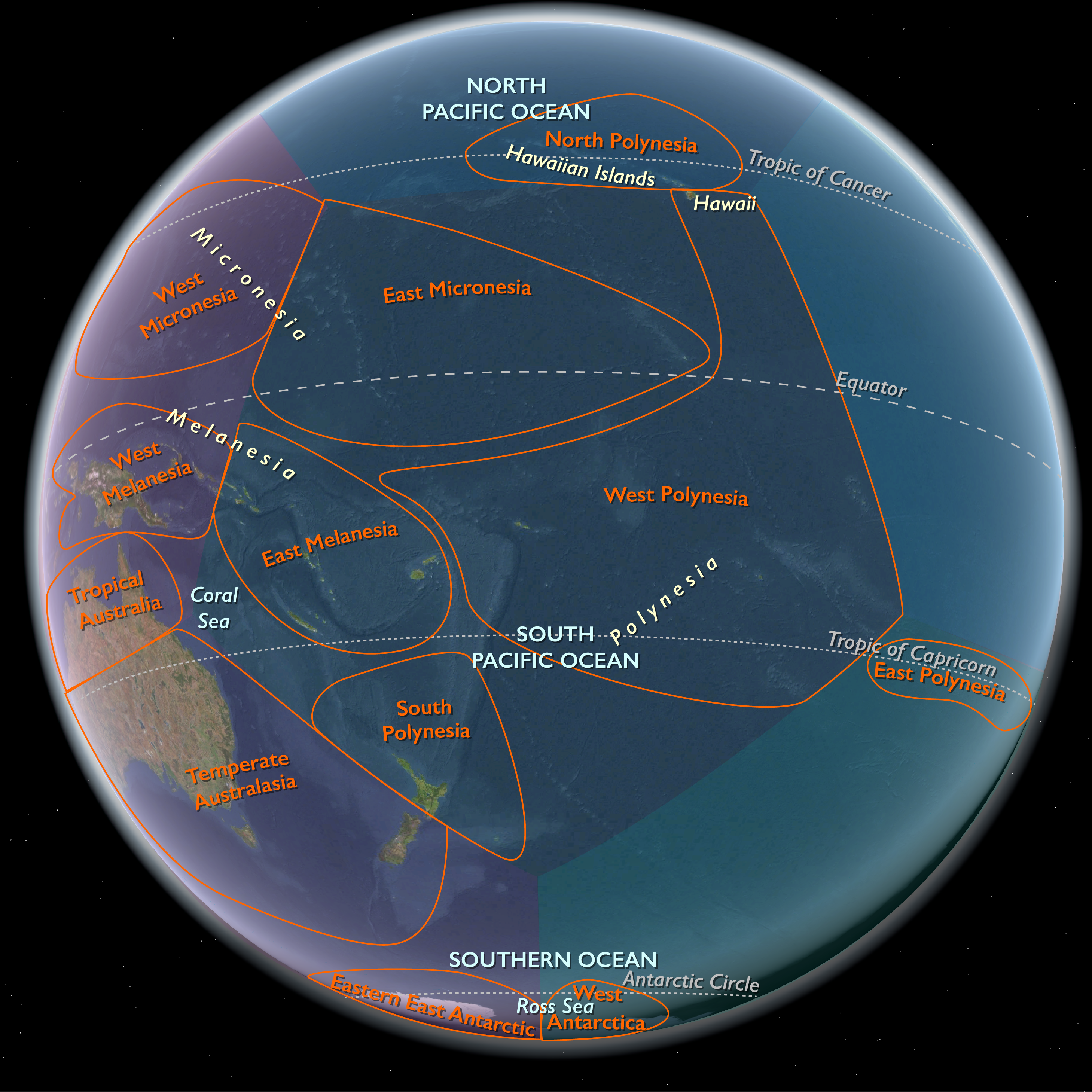
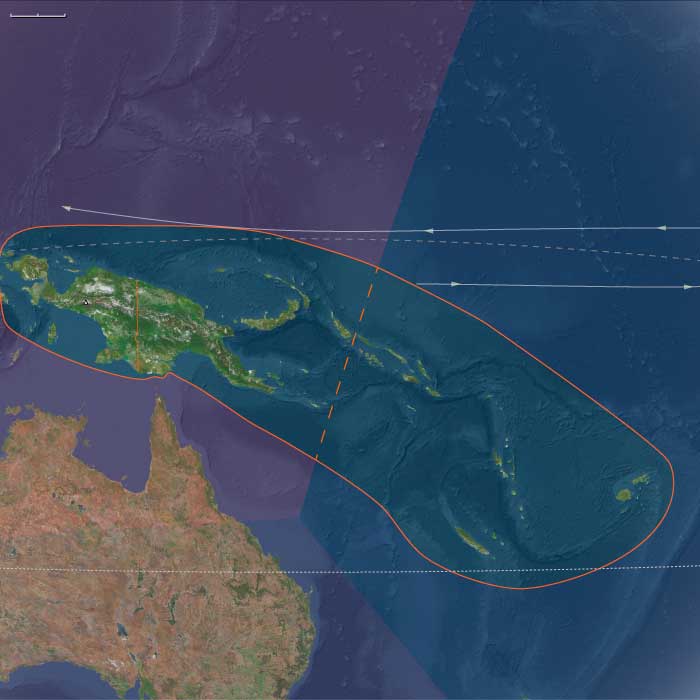
Melanesia in the Lower High Medieval Age stretched from the Bismarck Archipelago and New Guinea Highlands eastward through Vanuatu, Fiji, New Caledonia, and the Solomon Islands.
This vast arc of islands combined high volcanic interiors and reef-bound coasts, creating a spectrum of ecological niches—dense highland valleys, fertile alluvial plains, mangrove-fringed estuaries, and lagoon-rich archipelagos.
Across the region, canoe corridors stitched together hundreds of communities, carrying goods, marriages, and ceremonies across seas and straits.
Climate and Environmental Shifts
The Medieval Warm Period brought generally warm, stable conditions, favoring population growth on fertile high islands and consistent reef productivity.
Seasonal winds and predictable currents extended the reach of inter-island navigation, while El Niño-linked droughts and cyclones intermittently tested resilience—pressures offset by diversified subsistence and reciprocal exchange.
Societies and Political Developments
Across Melanesia, societies evolved toward greater population density, fortification, and ceremonial hierarchy, though expressed differently in east and west.
-
West Melanesia (New Guinea and Bismarck region):
In the Highlands, ridge-top villages fortified with palisades and ditches became common. Big-men stabilized rival clans through pig feasts, marriage payments, and compensation rituals.
Along the Sepik and Ramu rivers, men’s cult houses (haus tambaran) expanded as political centers, adorned with painted façades and carved ancestor figures.
Coastal Papuan Gulf communities developed stilt-house settlements and ceremonial economies built on sago, shells, and ritual boards, linking estuary to interior.
In the Bismarcks and Massim Islands, maritime chiefdoms consolidated around canoe fleets, obsidian workshops, and gift-exchange systems—the early precursors of the later kula. -
East Melanesia (Vanuatu, Fiji, Solomons, New Caledonia):
In Fiji, fortified hill settlements on Viti Levu and Vanua Levu marked heightened warfare and territorial competition; alliances formed between coastal and upland chiefdoms.
Vanuatu’s grade-taking societies (nimangki, sukwe) elaborated complex hierarchies through ceremonial pig sacrifices and the accumulation of shell valuables.
The Solomon Islands saw lineage-based chiefdoms coalesce around large ritual houses that anchored ancestral authority.
In New Caledonia, ridge-garden agriculture and first-fruit yam ceremonies reinforced the status of senior lineages, while monumental stone alignments marked ritual landscapes.
Together, these systems balanced warfare and ritual, using feasts and alliances to transform surplus into social order.
Economy and Trade
Melanesian economies rested on a triad of horticulture, pigs, and canoes.
-
Staples: taro, yam, banana, breadfruit, and coconut formed the agricultural base; pigs served as both food and currency of prestige.
-
Highlands ↔ Lowlands exchanges moved pigs, plumes, and stone tools for shells, salt, and sago.
-
Coastal networks traded shell valuables, red feathers, and canoe materials.
-
Obsidian from Talasea in New Britain remained a prized cutting medium distributed widely.
-
Fijian and Vanuatuan canoes linked to the Tonga–Samoa sphere, while northern Solomons and Bismarcks connected toward Micronesia.
Ritual redistribution through feasting and grade ceremonies ensured that political power and ecological security were intertwined: wealth circulated rather than accumulated, reaffirming alliances through generosity.
Subsistence and Technology
Across the archipelagos, technical sophistication deepened:
-
Agricultural engineering: stone terraces, irrigation ditches, and yam mounds diversified risk and maximized fertility.
-
Fishing systems: reef traps, nets, trolling lines, and weirs supplied steady protein.
-
Maritime craft: double-hulled or outrigger canoes with crab-claw sails navigated hundreds of kilometers; canoe-building was both a technical art and a spiritual act.
-
Material culture: basalt and obsidian adzes, carved masks, shell ornaments, and drum-slabs reflected regional styles and ritual identities.
These technologies balanced innovation with ecological restraint, maintaining productivity without overexploiting fragile island resources.
Movement and Interaction Corridors
Melanesia’s seas and rivers functioned as its highways of culture:
-
The Vitiaz Strait connected New Guinea’s north coast with the Bismarcks and Manus.
-
The Bismarck Sea carried obsidian and canoe trade toward New Ireland and the Admiralties.
-
The Lau–Fiji–Tonga triangle integrated East Melanesia into a wider Polynesian orbit, while Bougainville–Buka linked West and East Melanesia.
-
Within archipelagos, ceremonial voyaging circuits bound together clans through marriage, ritual initiation, and exchange feasts.
Movement was rarely purely economic; every voyage was also a reaffirmation of ancestral relationships and sacred geography.
Belief and Symbolism
Religion across Melanesia united ancestor veneration, mana, and ritual exchange.
-
In the Highlands and Sepik, ancestor spirits dwelled in carved effigies and painted boards within men’s houses.
-
In Vanuatu, grade rituals transformed pigs and mats into visible power, with slit-gongs and conch shells calling ancestral presence.
-
Solomon Island ritual houses guarded relics and totemic regalia.
-
New Caledonia’s first-fruit ceremonies sanctified the harvest and social hierarchy.
Across all, mana—spiritual potency—flowed through pigs, shells, and feathers, linking wealth to cosmology.
Adaptation and Resilience
Melanesian societies exemplified ecological balance and social elasticity:
-
Diversified subsistence buffered against drought or cyclone loss.
-
Fortified villages provided security during conflict yet could relocate when resources waned.
-
Feasting and redistribution re-channeled surplus to reduce inequality and famine risk.
-
Canoe voyaging ensured that atolls and reef islands could draw sustenance from larger neighbors.
Ritual law and environmental knowledge were inseparable—each reinforcing the other to maintain stability in a dynamic oceanic world.
Long-Term Significance
By 1107 CE, Melanesia was a woven archipelago of fortified villages, ritual houses, and canoe corridors.
-
West Melanesia anchored the earliest big-man systems and formalized the ceremonial exchange networks that would later crystallize into the kula ring.
-
East Melanesia matured into a constellation of chiefdoms and grade societies whose influence stretched into Polynesia and Micronesia.
This age solidified Melanesia’s enduring character: competitive yet communal, war-ready yet ritually regulated, locally rooted yet oceanically connected.
Its fortified hills, carved drums, and voyaging canoes formed one of the most intricate and resilient social fabrics in the medieval world.
East Melanesia (964 – 1107 CE):
Fortified Hill Settlements, Expanding Canoe Trade, and Intensified Grade Rituals
Geographic and Environmental Context
East Melanesia includes Vanuatu, Fiji, New Caledonia, and the Solomon Islands (excluding Bougainville).
High volcanic islands—Viti Levu, Vanua Levu, Espiritu Santo, Guadalcanal—offered fertile valleys and defensible ridges suited to irrigated horticulture and fortified sites. Atolls and raised limestone islands relied on arboriculture, reef harvesting, and exchange with high islands. Lagoon–reef systems and sailing corridors were the arteries of political and economic life.
Climate and Environmental Shifts
The Medieval Warm Period brought generally warm, reliable rainfall that supported population growth on high islands. Cyclones and occasional droughts continued to stress atolls, reinforcing their dependence on inter-island trade. Seasonal winds improved the reliability and reach of canoe voyages.
Societies and Political Developments
-
Fiji: Fortified hill settlements proliferated on Viti Levu and Vanua Levu, signaling heightened warfare and competition for irrigated taro lands. Powerful lineages coordinated coastal–inland alliances with ritual legitimacy.
-
Vanuatu: Grade-taking societies (nimangki, sukwe) elaborated rank through pig tusks and shell valuables. Chiefs consolidated authority via ceremonial feasts and inter-island partnerships.
-
Solomon Islands (excl. Bougainville): Clan chiefdoms intensified; larger ritual houses and shrines anchored power. Malaita and Guadalcanal lineages balanced rivalry with dense alliance and marriage ties.
-
New Caledonia: Agricultural intensification—ridge gardens, stone alignments, mulching—supported growth. Senior lineages coordinated labor; ceremonial structures underscored prestige.
Economy and Trade
Staples included taro pondfields, yam gardens, bananas, breadfruit, coconuts; pigs remained key ceremonial wealth, with chickens supplementing diets.
Canoe networks moved shell ornaments, pig tusks, red-feather regalia, fine mats, adze stone, sennit cordage, and dried fish.
Cross-regional ties: eastern Fiji ⇄ Tonga–Samoa exchanged canoes, mats, ornaments; northern Vanuatu/Solomons ⇄ Micronesia passed shell valuables and sailing knowledge. Ritual feasts redistributed surplus and fused exchange with politics.
Subsistence and Technology
Stone-faced terraces, irrigation ditches, and mulched yam gardens expanded. Reef/lagoon netting, trolling, and line fishing produced surpluses; smoking and drying extended storage. Outrigger and double-hulled canoes with crab-claw sails grew larger and more seaworthy. Obsidian tools, basalt adzes, decorated shells, and drum-slabs signified rank and craft excellence.
Movement and Interaction Corridors
Ceremonial voyaging stitched together Vanuatu, Fiji, and Solomon polities. The Lau–Tonga–Samoa triangle drew Fijian canoes and goods into a widening West Polynesian sphere. Northern Solomons–Micronesia corridors moved shell valuables and forest goods; marriage voyages cemented alliances as surely as trade.
Belief and Symbolism
Mana and tabu infused land, sea, pigs, and shell valuables. Vanuatu grade rituals transformed surplus into rank; slit-gongs and conch trumpets amplified ceremony. Solomon ritual houses embodied lineage authority and housed ancestral regalia. In New Caledonia, first-fruit yam rituals sanctified fertility and cosmic balance. Red feathers, tusks, and shells were spiritual as well as political power.
Adaptation and Resilience
Multi-resource subsistence (gardens + arboriculture + reef fisheries) buffered shocks. Fortified hill settlements offered security in conflict. Feasting and grade ceremonies redistributed staples after cyclone or drought. Canoe voyaging let atolls draw on high-island surpluses, sustaining cultural resilience.
Long-Term Significance
By 1107 CE, East Melanesia formed a mature interaction sphere of fortified chiefdoms, elaborate grade rituals, and robust canoe networks:
Fiji crystallized as a center of fortified polities tied to Polynesian expansion; Vanuatu perfected grade systems that converted surplus into enduring authority; the Solomons intensified ritual-house cults within alliance webs; New Caledonia’s ridge gardens and yam rituals anchored Kanak cultural foundations—setting the stage for deeper Polynesian and Micronesian entanglements.
Melanesia (1108 – 1251 CE): Island Chiefdoms and Maritime Frontiers
Between 1108 and 1251 CE, the islands of Melanesia flourished within a stable, warm, and fertile Pacific world. From the terraced valleys of New Guinea to the coral lagoons of Fiji, societies balanced horticulture, fishing, and exchange across a mosaic of cultures. This age, marked by the Medieval Warm Period’s steady climate, fostered dense populations, complex ritual orders, and vigorous inter-island trade. Melanesia stood as the vital middle ocean between the highlands of New Guinea and the emerging chiefdoms of Polynesia—a world of cultivated gardens, navigated seas, and sacred exchanges.
Geographic and Environmental Context
Melanesia extended from the high mountain ranges of New Guinea through the Bismarck Archipelago, Bougainville, and the Solomon Islands, to Vanuatu, New Caledonia, and Fiji.
This vast archipelagic region encompassed every environment of the tropical Pacific—fertile highlands, forested slopes, river deltas, volcanic islands, and reef-fringed lagoons.
-
New Guinea’s highlands supported intensive agriculture in enclosed valleys.
-
The Solomon chain and Vanuatu offered fertile coasts and interior forests.
-
Fiji, positioned between Melanesia and Polynesia, acted as both cultural bridge and maritime hub.
The combination of mountain and sea fostered intricate systems of exchange, where each island’s ecological distinctiveness became a foundation for interdependence.
Climate and Environmental Shifts
The Medieval Warm Period provided long intervals of consistent rainfall and moderate warmth.
Highland gardens flourished; coastal fisheries remained abundant.
Cyclones periodically struck the low islands, but geographic dispersion and adaptive exchange minimized impact.
El Niño–driven droughts occasionally challenged subsistence in New Guinea and the Solomons, prompting diversification of crops and storage practices.
Overall, the period’s stability allowed agricultural intensification and demographic growth across the region.
Societies and Political Developments
By this age, Melanesia was a landscape of chiefdoms, ritual confederacies, and emerging coastal hierarchies.
-
In New Guinea, highland communities expanded in number and density, governed by big-man systems in which prestige arose from generosity, feasting, and ritual authority rather than hereditary rule.
-
On the coasts and offshore islands, stratified chiefly systems developed, with hereditary leaders controlling trade and sacred knowledge.
-
Bougainville and the northern Solomons formed connective frontiers, blending Melanesian and Polynesian institutions through marriage and exchange.
-
In Vanuatu, decentralized kin groups emphasized clan governance but acknowledged powerful ritual leaders.
-
Fiji moved toward more formalized hierarchies, building fortified villages and developing proto-chiefly networks that foreshadowed later state-like polities.
-
New Caledonia retained distinct, lineage-based structures emphasizing land rights and collective ritual.
These systems varied in scale but shared a unifying principle: authority flowed from the management of land, exchange, and spiritual power.
Economy and Trade
Agricultural diversity anchored Melanesian prosperity.
Highlands and larger islands cultivated yams, taro, bananas, and sugarcane, supplemented by sweet potato and breadfruit on lower islands.
Pig husbandry underpinned both diet and ceremonial exchange, while fishing and reef harvesting supplied abundant protein.
Trade networks bound this economy together:
-
Highland–coastal exchange carried pigs, shells, and stone tools along mountain trails.
-
Maritime trade linked island chains through canoes, circulating pottery, mats, tapa cloth, obsidian, pearl shell, and ritual valuables.
-
Fiji’s position made it the pivot between Melanesia and Polynesia; Tongan and Samoan voyagers imported textiles and ceremonial goods while exporting timber, canoes, and mats.
Wealth was measured not in accumulation but in circulation—in feasts, marriages, and gifts that transformed material abundance into spiritual power.
Subsistence and Technology
Technological systems reflected both continuity and refinement.
-
Agriculture: Swidden gardens, irrigated taro terraces, and terraced slopes in New Guinea and Fiji supported dense populations.
-
Animal husbandry: Pigs were the universal wealth animal, feeding ritual economies and defining social rank.
-
Tools: Stone and shell adzes, digging sticks, and bone ornaments remained essential implements.
-
Architecture: Ceremonial houses—elaborate in New Guinea, monumental in the Solomons and Vanuatu—served as centers of clan identity.
-
Canoes: Outrigger and double-hulled vessels connected every coastal society, enabling not just trade but cultural integration across seas that were highways rather than barriers.
Movement and Interaction Corridors
Melanesia’s geography demanded mobility.
-
In the New Guinea highlands, trails linked valleys through exchanges of pigs, shells, and ritual objects.
-
Coastal voyages followed the Huon Gulf and Bismarck archipelago, moving obsidian, pottery, and mythic narratives.
-
Bougainville and the Solomons exchanged ceremonial goods that joined Melanesia to the Polynesian sphere.
-
Fiji and Tonga lay at the crossroads of Pacific voyaging; sailors, traders, and priests moved freely between these regions, spreading crops, technologies, and genealogies.
This fluidity of movement sustained what might be called a Pan-Melanesian world, an interconnected domain of agriculture, exchange, and ritual knowledge.
Belief and Symbolism
Spiritual life permeated every action.
Ancestor veneration formed the core of belief: the dead were ever-present, guiding fertility, weather, and social harmony.
Mana, or spiritual potency, flowed through chiefs, sacred stones, and ritual exchanges.
Ceremonial feasts, pig offerings, and dances reaffirmed the bond between living communities and their ancestral guardians.
Ritual houses displayed carvings and masks depicting mythic beings—figures of creation, fertility, and warfare.
In Fiji and parts of the Solomons, the merging of Melanesian and Polynesian cosmologies introduced new deities and ceremonial complexity, blending sea and land traditions.
Religion was not separate from governance; it was its essence—authority expressed through the stewardship of sacred relations between people and nature.
Adaptation and Resilience
Melanesian societies demonstrated profound resilience.
Agricultural diversity cushioned against cyclones and drought; inter-island exchange provided redundancy; ritual and kinship bound communities in mutual support.
When environmental shocks occurred, leadership—whether of chiefs or big-men—was measured by the ability to redistribute food and renew ritual order.
The fusion of land, lineage, and spirituality produced adaptive systems capable of absorbing stress without collapse.
Long-Term Significance
By 1251 CE, Melanesia was a dynamic and cohesive world of island chiefdoms and highland confederacies.
-
In the New Guinea highlands, populous agricultural societies and complex ceremonial systems defined inland life.
-
Along the coasts and islands, hierarchical polities integrated Melanesian and Austronesian traditions.
-
Fiji and neighboring archipelagos acted as bridges between Melanesia and Polynesia, sharing crops, myths, and navigational skills that would shape the Pacific for centuries.
With its mosaic of horticulture, voyaging, and ritual exchange, Melanesia stood as a living continuum between the ancient agricultural heartlands of New Guinea and the expansive maritime civilizations of Polynesia—a testament to the Pacific’s enduring ingenuity and ecological intelligence.
East Melanesia (1108 – 1251 CE): Vanuatu, Fiji, and the Solomon Polities
Geographic and Environmental Context
East Melanesia includes Vanuatu, Fiji, the French special collectivity of New Caledonia, and the nation called the Solomon Islands (excluding Bougainville, which belongs to West Melanesia).
-
The islands were geologically diverse: volcanic high islands like Viti Levu and Espiritu Santo supported agriculture, while coral atolls and reef systems sustained fishing communities.
-
The Solomon Islands featured rugged interiors and fertile coastal plains.
-
Fiji served as a crossroads between Melanesia and Polynesia, both culturally and geographically.
Climate and Environmental Shifts
-
The Medieval Warm Period brought relatively stable warm and wet conditions, fostering agricultural expansion.
-
Cyclones periodically struck, but island diversity allowed communities to adapt through dispersal and trade.
-
Marine ecosystems remained rich, sustaining large fishing populations.
Societies and Political Developments
-
Chiefdoms and village polities expanded, with hereditary leaders exercising authority over land, exchange, and ritual.
-
In Fiji, social complexity increased, foreshadowing later hierarchical chiefdoms, with fortified settlements and inter-island alliances.
-
Vanuatu and the Solomon Islands maintained decentralized polities, though powerful chiefs gained authority through control of resources and ritual knowledge.
-
New Caledonia developed distinct social traditions, emphasizing kinship-based governance.
-
Interactions with Polynesian voyagers influenced eastern Fiji, introducing new crops, rituals, and artistic traditions.
Economy and Trade
-
Horticulture centered on yams, taro, bananas, and breadfruit, supplemented by coconuts and sweet potatoes.
-
Fishing was essential, supported by reef harvesting and deep-sea voyaging.
-
Inter-island trade circulated pottery, shell valuables, pigs, and ritual items.
-
Fijian exchange systems linked Melanesian and Polynesian spheres, carrying goods like tapa cloth, mats, and canoes.
Subsistence and Technology
-
Swidden agriculture and irrigated taro terraces were practiced across larger islands.
-
Ocean-going canoes sustained both local exchange and long-distance connections, especially in Fiji.
-
Stone and shell tools remained widespread; adzes and ornaments reflected both utility and prestige.
-
Fortified villages with earthworks and palisades became common in Fiji and parts of the Solomon Islands.
Movement and Interaction Corridors
-
Fiji’s position made it a maritime crossroads, with routes to Tonga, Samoa, and other Polynesian islands.
-
Vanuatu and the Solomon Islands exchanged pottery, pigs, and ritual valuables across archipelagos.
-
New Caledonia maintained links with Vanuatu and the southern Solomons.
-
Canoe voyages facilitated alliances, marriage networks, and the spread of ritual traditions.
Belief and Symbolism
-
Ancestor veneration remained central, with rituals tied to land, fertility, and warfare.
-
Ritual leaders and chiefs claimed mana (sacred power) through control of ceremonies and sacred sites.
-
Ceremonial exchanges of pigs, mats, and ornaments reinforced both political power and spiritual legitimacy.
-
Art and ritual objects carried symbolic motifs connecting humans, ancestors, and nature.
Adaptation and Resilience
-
Crop diversity and inter-island exchange buffered against cyclones and local scarcity.
-
Fortifications enhanced security during periods of competition and raiding.
-
Kinship-based governance provided social cohesion and adaptability.
-
Maritime orientation ensured resilience through shared ritual and exchange networks.
Long-Term Significance
By 1251 CE, East Melanesia had developed into a region of thriving chiefdoms, fortified settlements, and dynamic exchange networks. Fiji emerged as a pivotal crossroads between Melanesia and Polynesia, while Vanuatu, the Solomons, and New Caledonia sustained resilient horticultural and maritime societies. The region’s blend of horticulture, canoe voyaging, and ritual authority anchored its enduring role in the wider Pacific world.