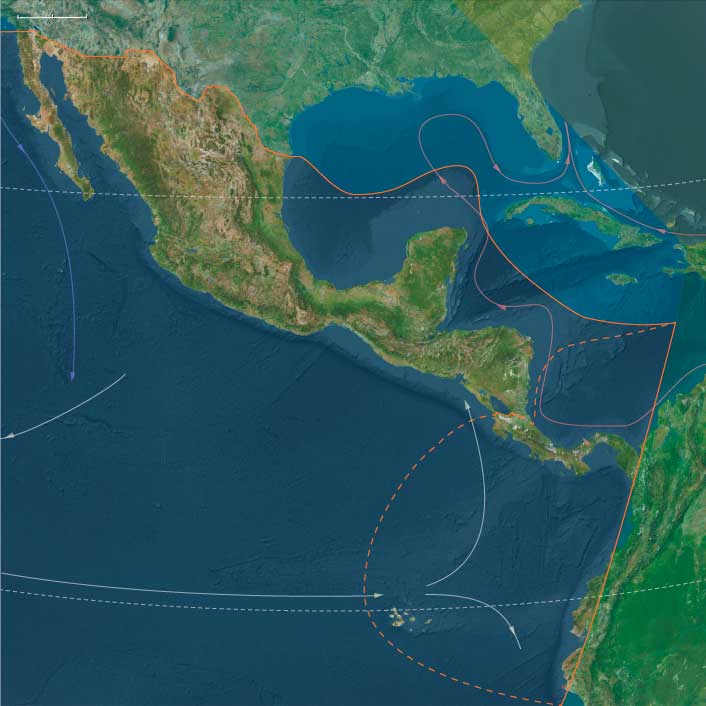
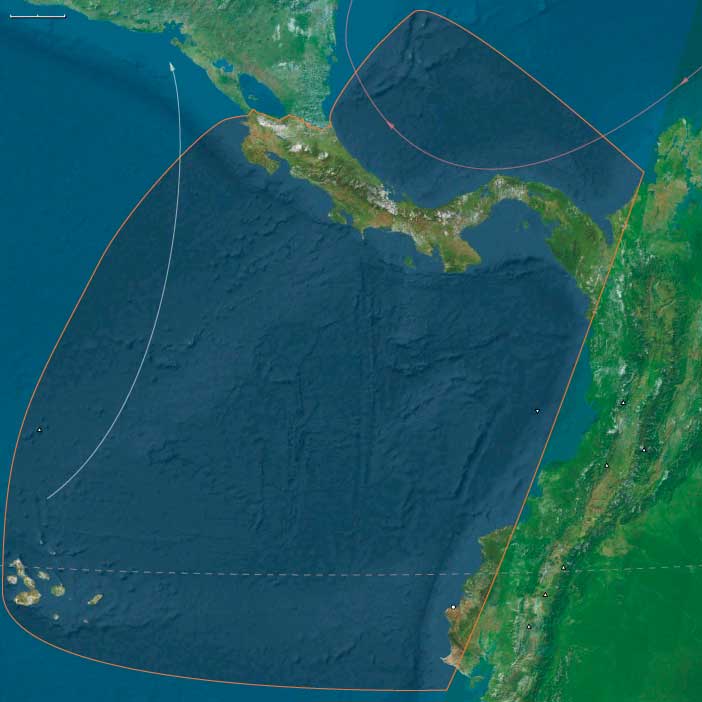
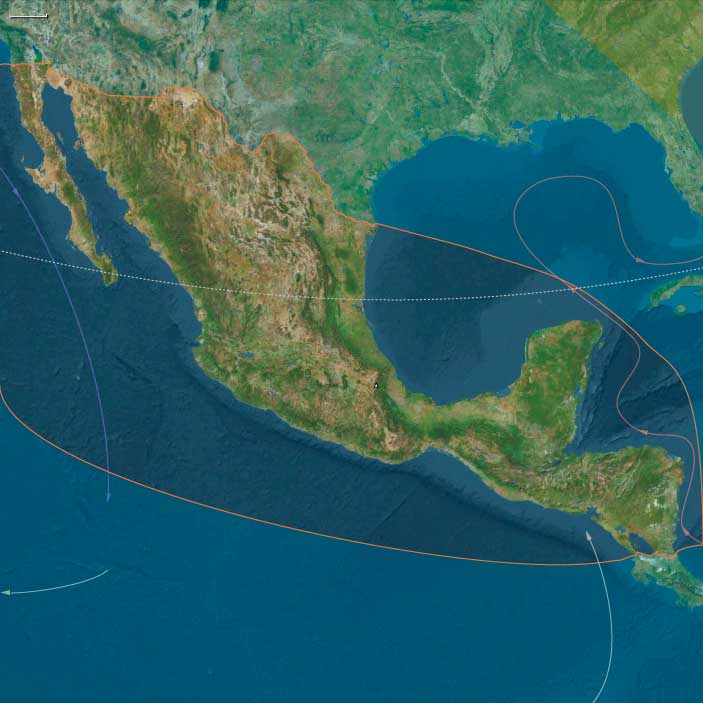
Middle America, a region of the Americas, is bordered by the United States to the north, Colombia to the southeast, the Caribbean Sea to the east and the Pacific Ocean to the west and south. Central America consists of eight countries: Mexico, El Salvador, Costa Rica, Belize, Guatemala, Honduras, Nicaragua and Panama
The Mesoamerican biodiversity hotspot extends from northern Guatemala to central Panama. Due to the presence of several active geologic faults and the Central America Volcanic Arc, there is a great deal of seismic activity in the region, such as volcanic eruptions and earthquakes, which has resulted in death, injury and property damage.
In the Pre-Columbian era, Central America was inhabited by the indigenous peoples of Mesoamerica to the north and west and the Isthmo-Colombian peoples to the south and east. Following the Spanish expedition of Christopher Columbus' voyages to the Americas, Spain began to colonize the Americas. From 1609 to 1821, the majority of Central American territories (except for what would become Belize and Panama, and including the modern Mexican state of Chiapas) were governed by the viceroyalty of New Spain from Mexico City as the Captaincy General of Guatemala. On August 24, 1821, Spanish Viceroy Juan de O'Donojú signed the Treaty of Córdoba, which established New Spain's independence from Spain. On September 15, 1821, the Act of Independence of Central America was enacted to announce Central America's separation from the Spanish Empire and provide for the establishment of a new Central American state. Some of New Spain's provinces in the Central American region (i.e. what would become Guatemala, Honduras, El Salvador, Nicaragua and Costa Rica) were annexed to the First Mexican Empire; however, in 1823 they seceded from Mexico to form the Federal Republic of Central America until 1838.