Yongzheng Emperor
5th Qing Emperor of China
Years: 1678 - 1735
The Yongzheng Emperor (13 December 1678 – 8 October 1735), born Yinzhen, is the fifth emperor of the Manchu-led Qing Dynasty and the third Qing emperor from 1722 to 1735.
A hard-working ruler, Yongzheng's main goal is to create an effective government at minimal expense.
Like his father, the Kangxi Emperor, Yongzheng uses military force to preserve the dynasty's position.
Suspected by historians to have usurped the throne, his reign is known as despotic, efficient, and vigorous.
Although Yongzheng's reign is much shorter than the reigns of both his father (the Kangxi Emperor) and his son (the Qianlong Emperor), his sudden death is probably brought about by a heavy workload.
Yongzheng continues an era of peace and prosperity; he cracks down on corruption and waste, and reforms the financial administration.
During his reign, the formulation of the Grand Council begins, an institution that has an enormous impact on the future of imperial China.
Related Events
Filter results
Showing 10 events out of 12 total
Indian opium has become a major global commodity under the British, who dominate the trade.
Opium's peculiar properties make it the ideal trade good during this age, combining the reliable demand of a basic food with the logistics of a luxury good.
As an addictive drug, opium requires a daily dose, giving it the inelastic demand of a basic foodstuff.
Long distance sea-trade in bulk foods is beyond the capacity of current maritime technology, but opium has the low weight and high markup of a luxury good like cloves or pepper.
Compounding its extraordinary profitability, China's Yongzheng emperor reacts to the rise of mass addiction by banning opium in 1729 and thus denying China the opportunity to produce opium locally to undercut the high price of Indian imports.
A syndicate of Indian merchants up the Ganges River at Patna holds a monopoly over the Bengal opium trade, making cash advances to peasant farmers and selling the processed opium to Dutch, British and French merchants.
Forces of the British East India Company in 1764 march inland from their port at Calcutta to conquer Bengal.
They soon discover the financial potential of India's richest opium zone.
The Company assumes control of a well-established opium industry involving peasant producers, merchants, and long-distance traders.
British exports of Indian opium to China increase from fifteen tons in 1720 to seventy-five tons in 1773, in which year the British governor-general of Bengal abolishes the Indian opium syndicate at Patna and establishes a colonial monopoly on the sale of opium.
Opium not only solves the fiscal crisis that accompanied the British conquest of Bengal; it remains a staple of colonial finances, providing from six to fifteen percent of British India's tax revenues throughout the nineteenth Century.
More important, opium exports are an essential component of a triangular trade that is the foundation of Britain's status as a world power.
The Kangxi emperor at the Chinese New Year of 1722 celebrates his long and prosperous reign by inviting many elders to a great banquet at the court.
That winter he falls ill while staying at the imperial villa of Ch'ang ch'un yüan, in the northwestern outskirts of Peking, where on December 20 he dies.
Usually counted among the ablest monarchs ever to govern the vast Chinese empire, he had reigned for sixty-one years and laid the foundation for a long period of political stability and economic prosperity in China.
Yin-chen, as the fourth son of the previous emperor, is not immediately in line for the throne; but when the designated heir apparent became mentally deranged, the future Yongzheng emperor had seen an opportunity to seize the throne and began to intrigue against his brothers.
Several of the chronicles of the period allege that the Yongzheng emperor murdered his father.
In any case, he succeeds to the throne by having military support in Peking when his father dies.
Nian Gengyao’s father Nian Xialing had served as Viceroy of Huguang from 1692 to 1704.
Nian Gengyao himself had in 1700 become a Jinshi (a successful candidate in the imperial examination) and had been selected a bachelor of the Hanlin Academy.
The Banner company to which the Nian family belonged had in March 1709 been assigned to serve Yinzhen, later the Yongzheng Emperor.
A sister of Nian Gengyao became a concubine of Yinzhen about the same time.
Nian had been appointed Governor of Sichuan in October 1709 and had gradually come to the notice of the Kangxi Emperor.
During the sixteen years of his administration, he had quelled several uprisings of the aborigines west of Sichuan.
He had been made Governor-general of Sichuan in 1718 and had been given power to direct military affairs.
Following the appointment of Yinti, another of Kangxi's sons, as Border Pacification General-in-chief, there had been suggestions about Nian's loyalty to Yinzhen.
As General Who Secures the West, Nian Gengyao had taken an active part in supplying Yinti's campaign in Tibet against Tsewang Rabtan.
He had been granted an audience with the elderly Emperor at Rehe in June 1721 and subsequently raised to the rank of Governor-general of Sichuan and Shaanxi.
The new emperor displays a great amount of trust in Han Chinese officials, and appoints many of his protégés to prestigious positions.
After Yinzhen’s ascension to the throne as the Yongzheng Emperor, he grants an audience to Nian Gengyao early in 1723 and awards him a minor hereditary rank and the title of Grand Guardian, and makes his elder brother Nian Xiyao Governor of Guangdong.
As reward for his help in ejecting the Dzungars from Tibet, Nian is elevated z few months later to a duke of the third class.
The Emperor is uncharacteristically informal with him and promotes friendship between Nian and Longkedo, an eminent Manchu-Chinese official.
Longkedo, the third son of Tong Guowei and the younger brother of Kangxi Emperor's third Empress consort, Empress Xiaoyiren, Longkodo had been the Minister in charge of Lifan Yuan during the late Kangxi years, and, concurrently, the General Commandant of the Gendarmerie in Beijing, thus having the military power to control the capital region in times of crises.
His military power makes him an obvious scapegoat in conspiracies, and the Yongzheng Emperor is deeply suspicious of him.
The biggest mystery surrounding Longkodo is the exclusive attention given him by the late Kangxi Emperor during his dying days.
His military support had ensured a non-violent transfer of power between Kangxi and Yongzheng.
After Yongzheng ascended the throne, Longkodo had been given a position on the four-person imperial council, and is the President of the Board of Governance.
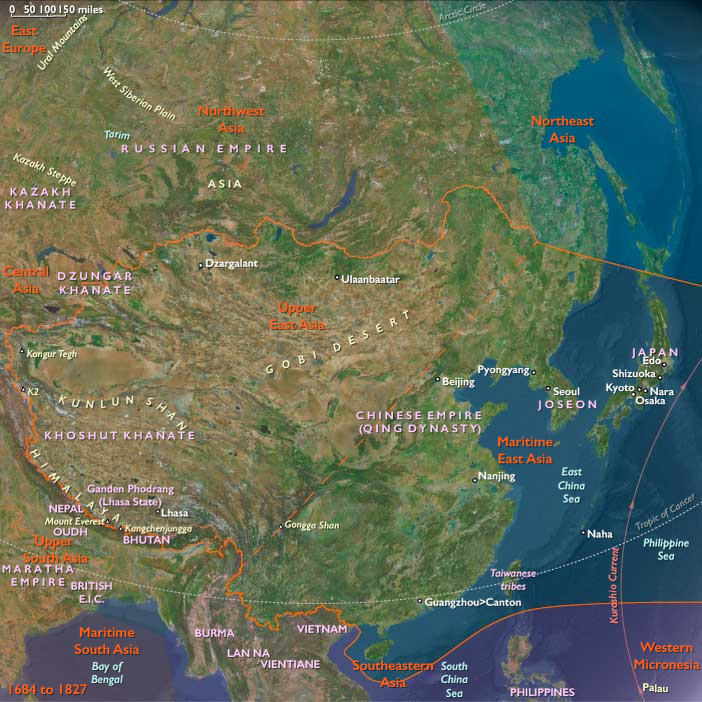
Nian becomes commander-in-chief of the forces sent in 1723, to quell the uprising of the Khoshotes of Qinghai under Lobdzan Dandzin.
With the help of the general Yue Zhongqi, Nian wins several victories over the rebels and in a few months quells the revolt, adding Qinghai to the Qing empire.
Nian is thereupon raised to a duke of the first class.
Yongzheng is a hardworking administrator who rules with an iron hand.
His first big step towards a stronger regime had come when he returned the State Examination System back to its original standards.
He cracks down in 1724 on illegal exchange rates of coins, which are being manipulated by officials to fit their financial needs.
Those who are found in violation of new laws on finances are removed from office, or in extreme cases, executed.
When Nian makes a visit to Beijing in late 1724, and pays his respects to the Emperor, he is given additional honors and privileges normally granted to a Prince of the Blood.
His attitude, however, arouses hatred and jealousy, and many officials submit reports hostile to Nian.
The Gǔjīn Túshū Jíchéng ("Complete Collection of Illustrations and Writings from the Earliest to Current Times"), a vast encyclopedic work written in China during the reigns of Qing emperors Kangxi and Yongzheng, completed in 1725, had been headed initially by scholar Chen Menglei, and later by Jiang Tingxi.
One of the Yongzheng Emperor's brothers had patronized the project for a while, although Yongzheng contrives to give exclusive credit to his father Kangxi instead.
It contains eight hundred thousand pages and over one hundred million Chinese characters.
Topics covered include natural phenomena, geography, history, literature and government.
It is meanwhile discovered that Nian had engaged in secret correspondence with Yintang, the Emperor's brother and political rival.
His plea for leave being denied, Nian is, at the end of May, transferred to the post of Tartar General at Hangzhou.
The armies he once commanded come under the control of Yue Zhongqi.
As accusations accumulate from his former friends and officials, Nian is in a few months progressively degraded in rank until he becomes merely a bannerman-at-large.
In November, he is arrested and taken under escort to Beijing.
Nian’s crimes are enumerated under ninety-two headings, and early in 1726 he is sentenced to be executed.
The Emperor grants him the privilege of committing suicide but his eldest son, Nian Fu, is beheaded and his other sons are banished.
Nian Gengyao is credited with three works on military tactics: General Nian's Art of War among others, but all were apparently written by others and falsely attributed to him.
Sixty-six copies of the five thoisand and twenty-volume long Gujin Tushu Jicheng (Complete Collection of Illustrations and Writings from the Earliest to Current Times) are printed in 1726, necessitating the crafting of two hundred and fifty thousand movable type characters cast in bronze, spanning around ten thousand rolls.
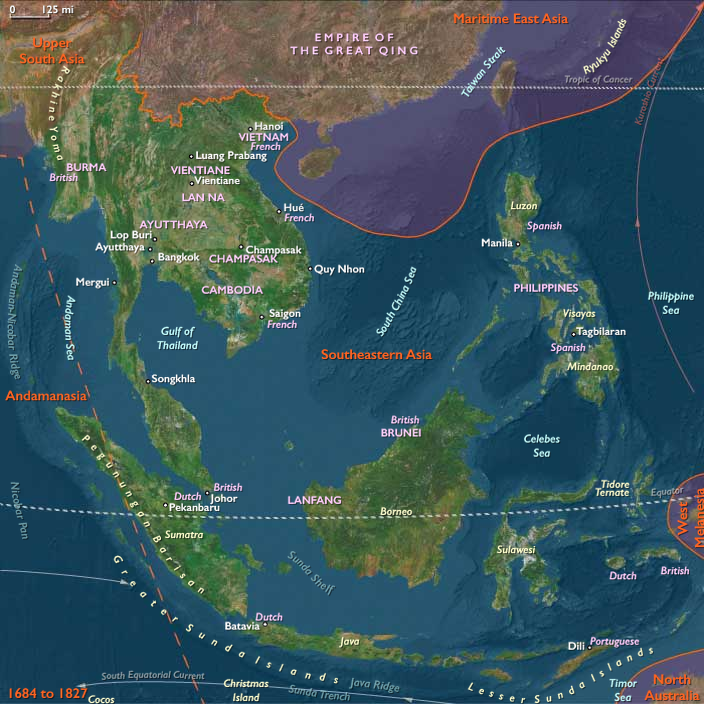
The Qing incorporate additional territory in the northwest.
Qing imperial residents are stationed in Lhasa starting in 1727, and command Qing garrisons in Tibet.
An increasingly toughened stance is taken in cases of corrupt officials, and Yongzheng has led the creation of a Grand Council, which will grow to become the de facto cabinet for the rest of the dynasty’s existence.
The first years of Yongzheng's reign have been spent consolidating his power.
He has imprisoned or executed some of his brothers and their supporters and undermined the power of the others.
Longkedo, for example, is disgraced and executed in 1728 for reasons that remain shrouded in mystery.
Yongzheng's espionage system is so efficient that every action of his ministers is said to have been reported to him.
He even tampers with the imperial records from the last years of his father's reign and the first years of his own, ordering the suppression of any accounts unfavorable to himself or favorable to his opponents.
More significant is his removal of the Imperial princes from control of the Eight Banners, the major Qing military units.
When the Yongzheng emperor had ascended the throne, three of the Eight Banners had been controlled directly by the throne, but the rest had been under the rule of Qing princes.
Fearing that they could use this control for personal advantage—as the Yongzheng emperor had done in his own ascension to the throne—he compels all the princes to attend a special palace school, where they are indoctrinated with the idea of subservience to the throne.
As a result, the Eight Banners will remain loyal throughout the existence of the dynasty.
The Yongzheng emperor in 1729 increases the administrative centralization of the government.
The Grand Secretariat is replaced as the top ministerial body by the previously informal Grand Council.
The five or six members of the Grand Council work directly with the Emperor, who confers with them every day.
Their business is handled quickly and secretly.
The Emperor thus personally scrutinizes and directs all important matters of government.
Opium, now imported into China at a rate of two hundred chests a year, has by 1729 become such a problem that the emperor, disturbed by madak smoking at court and carrying out the government's role of upholding Confucian virtue, issues an edict prohibiting the smoking of opium and its domestic sale, except under license for use as medicine.
The ban punishes sellers and opium den keepers, but not users of the drug.
This is the first edict of its kind, representing a new official awareness of the dangers, whether socioeconomic or physiological, of opium addiction.