William Herschel
British astronomer and composer of German and Czech-Jewish origin
Years: 1738 - 1822
Frederick William Herschel, KH, FRS (German: Friedrich Wilhelm Herschel; 15 November 1738 – 25 August 1822) was a British astronomer and composer of German and Czech-Jewish origin..
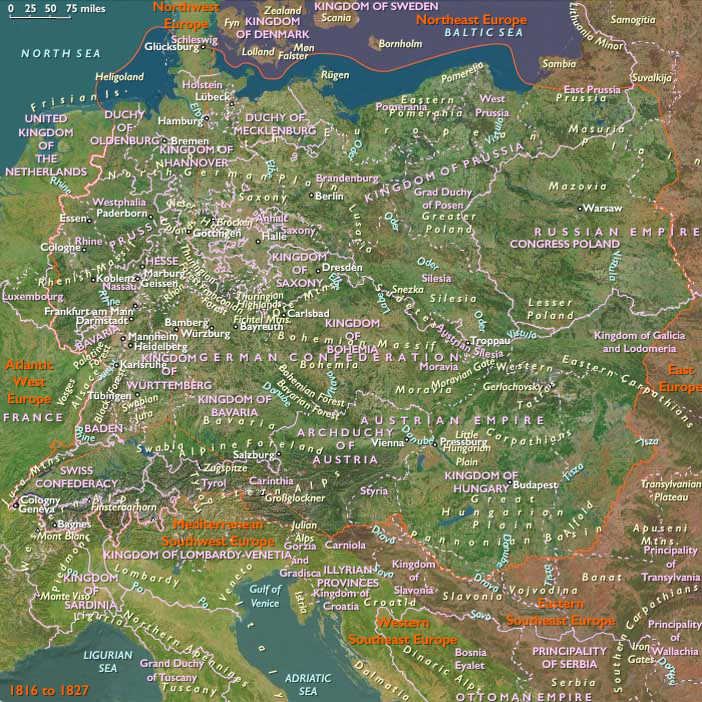
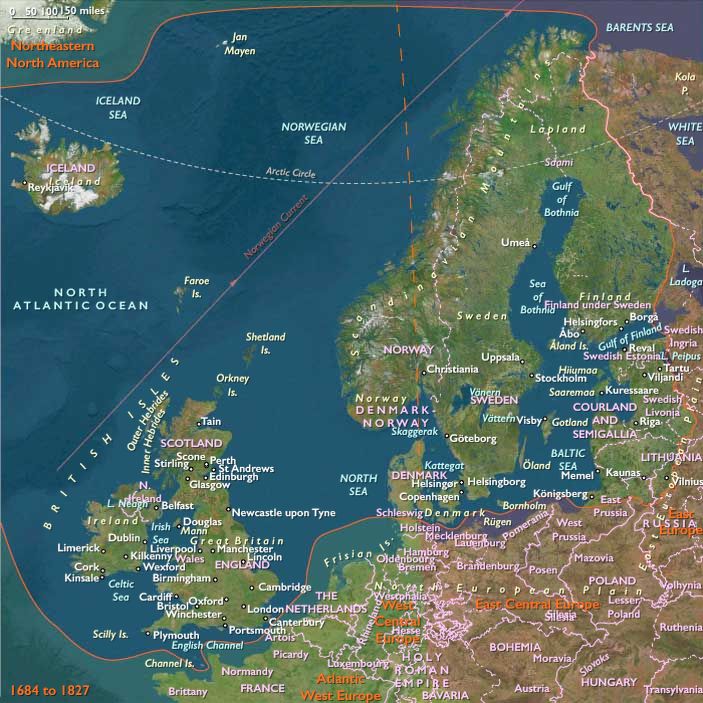
Born in the Electorate of Hanover, Herschel follows his father into the Military Band of Hanover, before migrating to Great Britain in 1757 at the age of nineteen.
Herschel constructs his first large telescope in 1774, after which he spends nine years carrying out sky surveys to investigate double stars.
The resolving power of the Herschel telescopes reveal that the nebulae in the Messier catalogue are clusters of stars.]
Herschel publishes catalogues of nebulae in 1802 (2,500 objects) and in 1820 (5,000 objects). In the course of an observation on March 13, 1781, he realizes that one celestial body he has observed is not a star, but a planet, Uranus.
This is the first planet to be discovered since antiquity and Herschel becomes famous overnight.
As a result of this discovery, George III appoints him Court Astronomer.
He is elected as a Fellow of the Royal Society and grants are provided for the construction of new telescopes.
Herschel pioneers the use of astronomical spectrophotometry as a diagnostic tool, using prisms and temperature measuring equipment to measure the wavelength distribution of stellar spectra.
Other work include an improved determination of the rotation period of Mars, the discovery that the Martian polar caps vary seasonally, the discovery of Titania and Oberon (moons of Uranus) and Enceladus and Mimas (moons of Saturn).
In addition, Herschel discovers infrared radiation.
Herschel is made a Knight of the Royal Guelphic Order in 1816.
He is the first President of the Royal Astronomical Society when it is founded in 1820.
He dies in August 1822, and his work is continued by his only son, John Herschel.