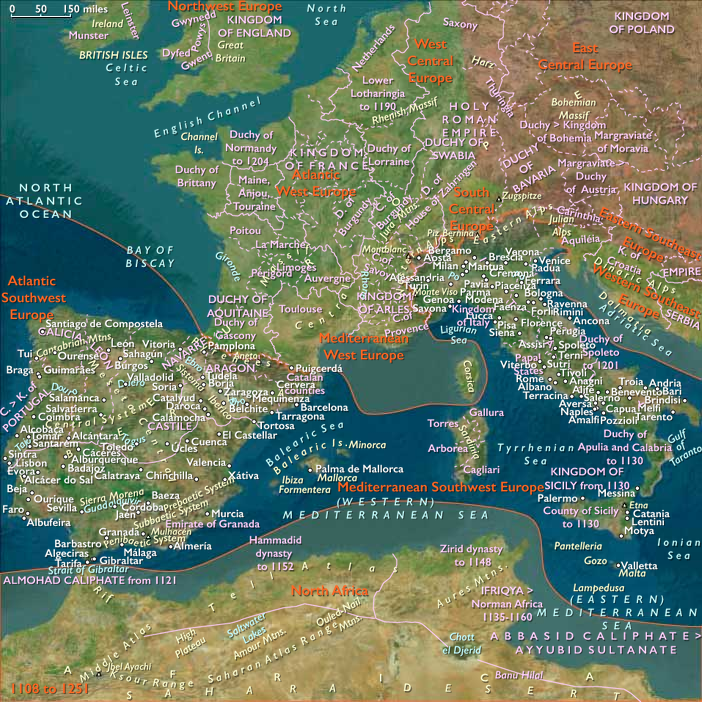
The accession, on May 17, 1198 of three-year-old Frederick Roger of Hohenstaufen, a child who had become also the Holy Roman Emperor Frederick II in 1197 following the death of his father, German Emperor Henry IV, had greatly affected the immediate future of Sicily.
For a land so used to centralized royal authority, the king's young age had caused a serious power vacuum.
On the death of Frederick’s mother Constance of Sicily, who had been in her own right queen of Sicily, Frederick’s uncle Philip of Swabia had moved to secure Frederick's inheritance by appointing Markward von Anweiler, margrave of Ancona, regent in 1198.
Meanwhile, Pope Innocent III had reasserted papal authority in Sicily, but had recognized Frederick's rights.
The pope is to see papal power decrease steadily over the next decade and is to be unsure about which side to back at many junctures.
The Hohenstaufens’ grip on power, however, is not secure.
Walter III of Brienne, having in 1200 married the daughter of Tancred of Sicily and sister and heiress of the deposed King William III of Sicily, had decided to claim the kingdom, in June 1201 defeating an army led by the chancellor Walter of Palearia and Dipold of Vohburg at Capua.
Markward having been been killed, Frederick had fallen under the control of William of Capparone, an ally of the Pisans.
In 1204, Dipold besieges Walter in the fortress of Terracina, but Walter breaks the siege and puts Dipold to flight.