The Middle East: 40–51 CE
Parthian Rivalries and Roman Regional Strategies
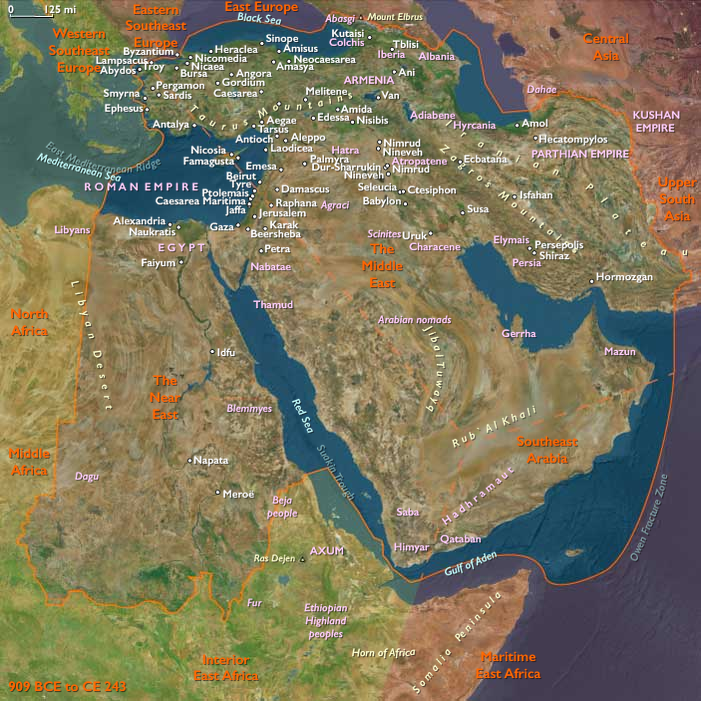
Between 40 and 51 CE, the Parthian Empire again descends into internal strife, exacerbated by external Roman intervention. In 40 CE, Emperor Caligula dispatches forces to strengthen Rome's grip over client states and indirectly assert influence over Armenia. His assassination in 41 CE and the accession of Claudius usher in a pragmatic shift in Roman eastern policy, characterized by strategic restraint and careful diplomacy rather than overt military campaigns.
Parthia’s Artabanus II dies around 38 CE, leading to further instability. His successor, Vardanes I, ascends the throne but faces immediate opposition from his brother, Gotarzes II, sparking a destructive civil war. Throughout the early 40s CE, the two brothers engage in intermittent conflicts, with Vardanes briefly securing dominance before his assassination in 45 CE. Gotarzes II regains power but continues to contend with widespread aristocratic unrest and regional rebellions.
Seizing upon Parthian disarray, Rome employs diplomatic maneuvers, indirectly supporting rival claimants to maintain Parthian internal divisions while preserving a manageable frontier. In 49 CE, the Parthian nobility invites Meherdates, a hostage prince raised in Rome, to challenge Gotarzes. Meherdates, however, suffers defeat, securing Gotarzes' tenuous rule until his death in 51 CE.
Amid these conflicts, Rome consistently focuses its influence on Armenia, which remains pivotal to regional stability. The kingdom alternates between pro-Roman and pro-Parthian rulers, reflecting the ongoing, careful diplomatic tug-of-war. Thus, by 51 CE, the Middle East continues as a theater of indirect conflict, shaped by Parthian dynastic rivalries and Rome’s strategic emphasis on diplomatic intervention rather than outright conquest.