Usman dan Fodio
Sultan of Sokoto
Years: 1754 - 1817
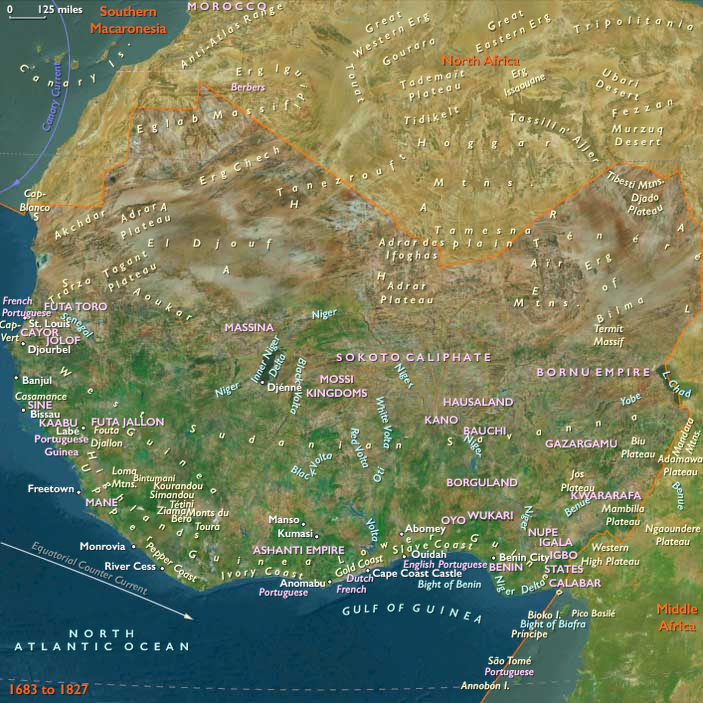
Shaihu Usman dan Fodio, born Usuman ɓii Foduye, (also referred to as Shaikh Usman Ibn Fodio, Shehu Uthman Dan Fuduye, Shehu Usman dan Fodio or Shaikh Uthman Ibn Fodio) (1754, Gobir – 1817, Sokoto) is a religious teacher, writer and Islamic promoter, and the founder of the Sokoto Caliphate.
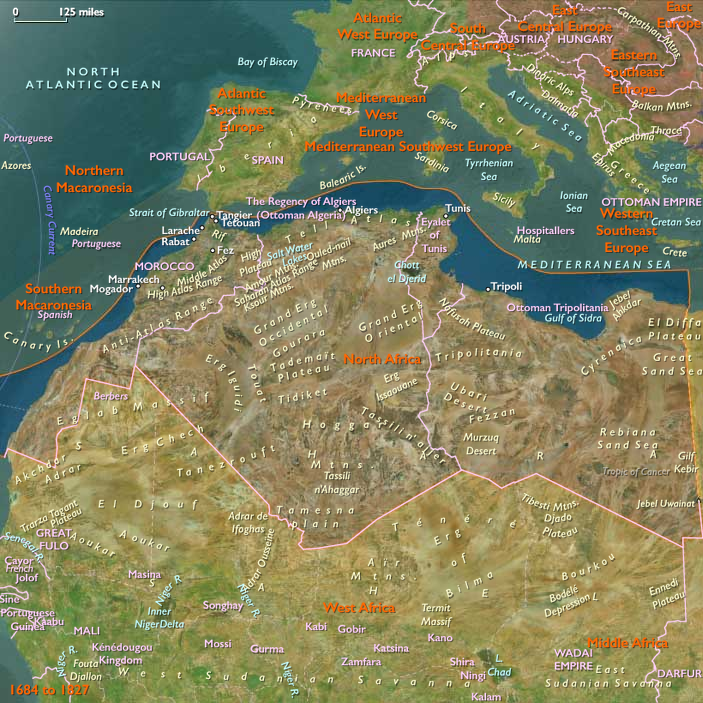
Dan Fodio is one of a class of urbanized ethnic Fulani living in the Hausa States in what is today northern Nigeria.
He is a leader who follows the Sunni Maliki school of Jurisprudence and the Qadiri branch of Sufism.
A teacher of the Maliki school of law, he lives in the city-state of Gobir until 1802 when, motivated by his reformist ideas and suffering increasing repression by local authorities, he leads his followers into exile.
This exile begins a political and social revolution that spreads from Gobir throughout modern Nigeria and Cameroon, and is echoed in a jihad movement led by the Fula ethnic group across West Africa.
Dan Fodio declines much of the pomp of rulership, and while developing contacts with religious reformists and jihad leaders across Africa, he soon passes actual leader ship of the Sokoto state to his son, Muhammed Bello.
Dan Fodio writes more than a hundred books concerning religion, government, culture, and society.
He develops a critique of existing African Muslim elites for what he sees as their greed, paganism, violation of the standards of Sharia law, and use of heavy taxation.
He encourages literacy and scholarship, for women as well as men, and several of his daughters emerge as scholars and writers.
His writings and sayings continue to be much quoted today, and are often affectionately referred to as Shehu in Nigeria.
Some followers consider dan Fodio to have been a mujaddid, a divinely inspired "reformer of Islam".
Dan Fodio's uprising is a major episode of a movement described as the Fulani hegemonies in the seventeenth, eighteenth, and nineteenth centuries.
It follows the jihads successfully waged in Futa Bundu, Futa Tooro, and Fouta Djallon between 1650 and 1750, which led to the creation of those three Islamic states.
In his turn, Shehu inspires a number of later West African jihads, including those of Seku Amadu, founder of the Masina Empire, El Hadj Umar Tall, founder of the Toucouleur Empire (who marries one of dan Fodio's granddaughters), and Modibo Adama, founder of the Adamawa Emirate.