Ulugh Beg
Timurid ruler
Years: 1394 - 1449
Ulugh Beg (Persian: Mīrzā Muhammad Tāraghay bin Shāhrukh Uluġ Beg) (March 22, 1394 in Sultaniyeh (Persia) – October 27, 1449 (Samarkand)) is a Timurid ruler as well as an astronomer, mathematician and sultan.
His commonly known name is not truly a personal name, but rather a moniker, which can be loosely translated as "Great Ruler" or "Patriarch Ruler" and is the Turkic equivalent of Timur's Perso-Arabic title Amīr-e Kabīr.
His real name is Mīrzā Mohammad Tāraghay bin Shāhrokh.
Ulugh Beg is also notable for his work in astronomy-related mathematics, such as trigonometry and spherical geometry.
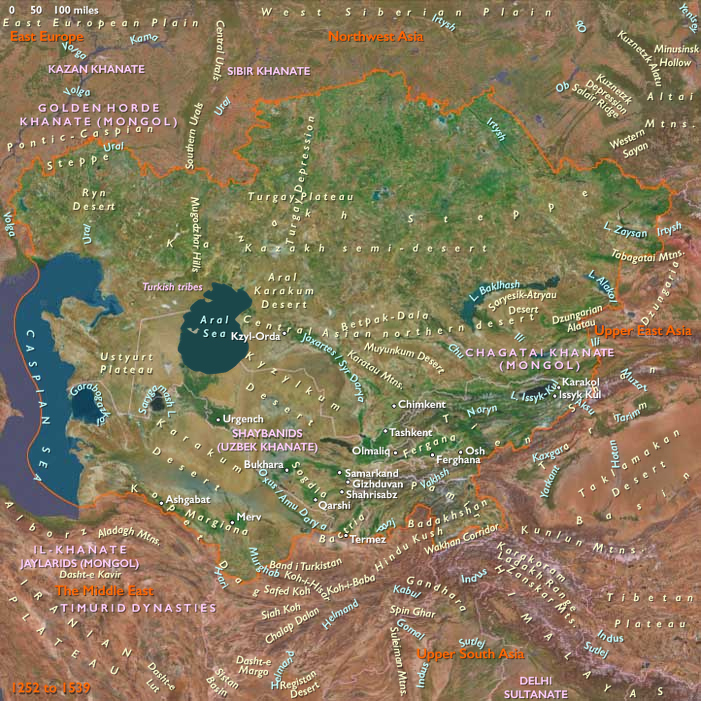
He builds the great Ulugh Beg Observatory in Samarkand between 1424 and 1429.
It is considered by scholars to have been one of the finest observatories in the Islamic world at the time and the largest in Central Asia.
He also builds the Ulugh Beg Madrasah (1417–1420) in Samarkand and Bukhara, transforming the cities into a cultural center of learning in Central Asia.
He is also a mathematics genius of the 15th century — albeit his mental aptitude is perseverance rather than any unusual endowment of intellect.
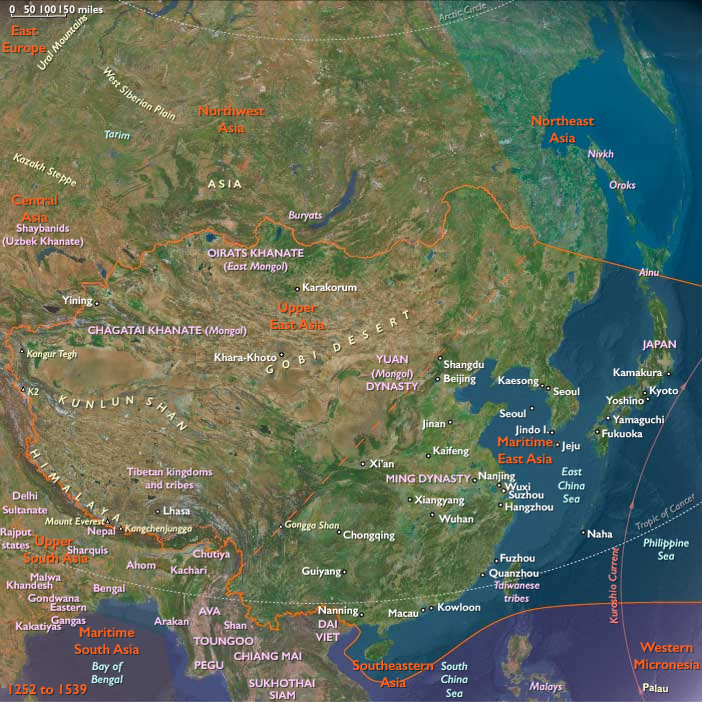
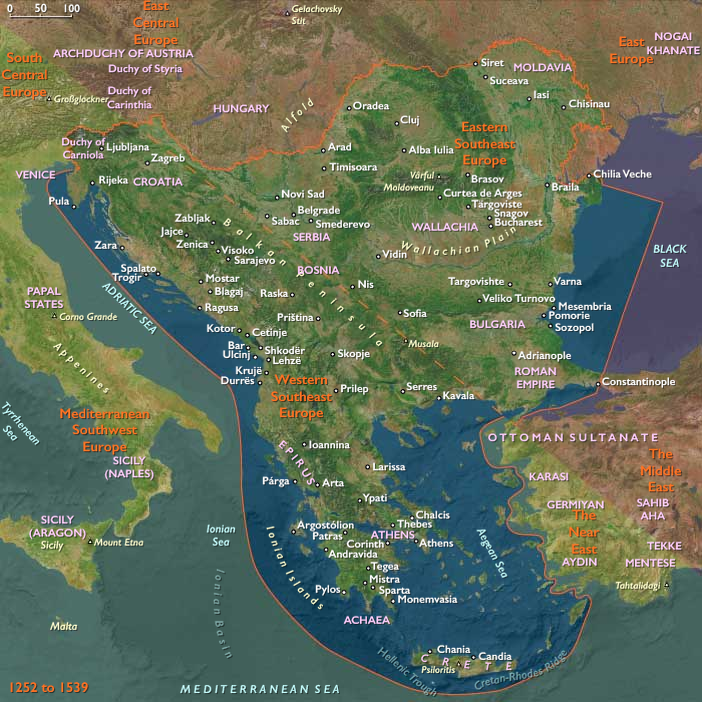
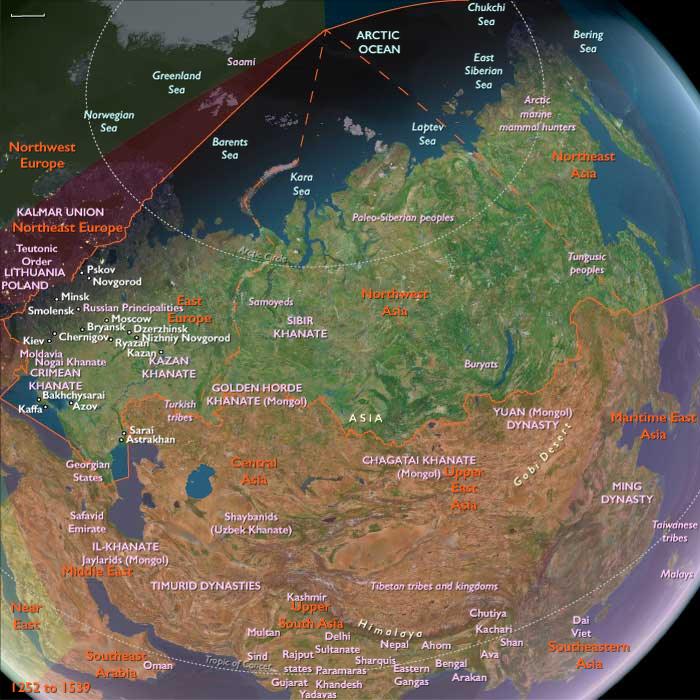
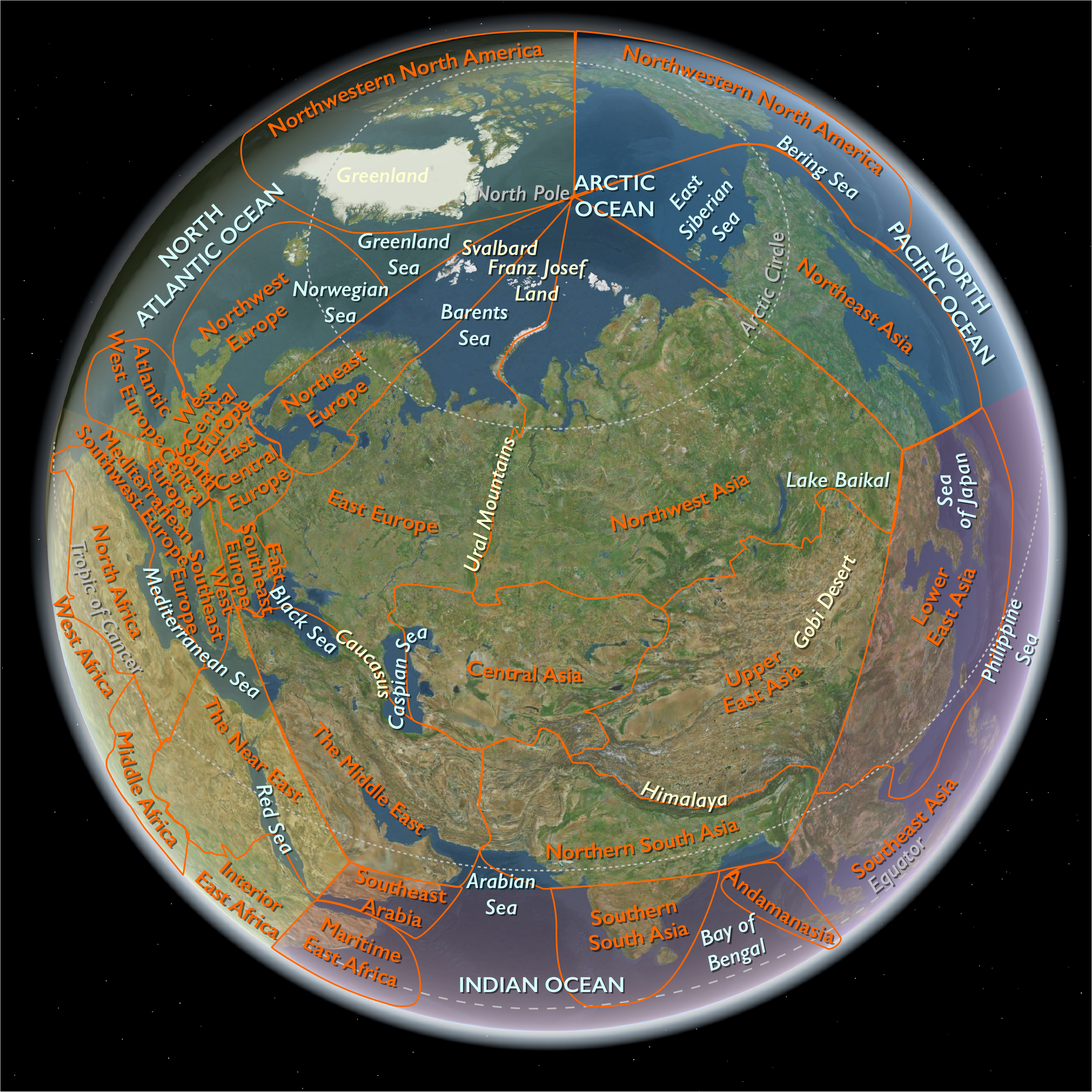
He rules Uzbekistan, Tajikistan, Turkmenistan, Kyrgyzstan, and southern Kazakhstan for almost half a century from 1411 to 1449 and occupies the Herat province in Afghanistan for a short time in 1448.