Tycho Brahe
Danish astronomer
Years: 1546 - 1601
Tycho Brahe (14 December 1546 – 24 October 1601), born Tyge Ottesen Brahe (de Knudstrup), is a Danish nobleman known for his accurate and comprehensive astronomical and planetary observations.
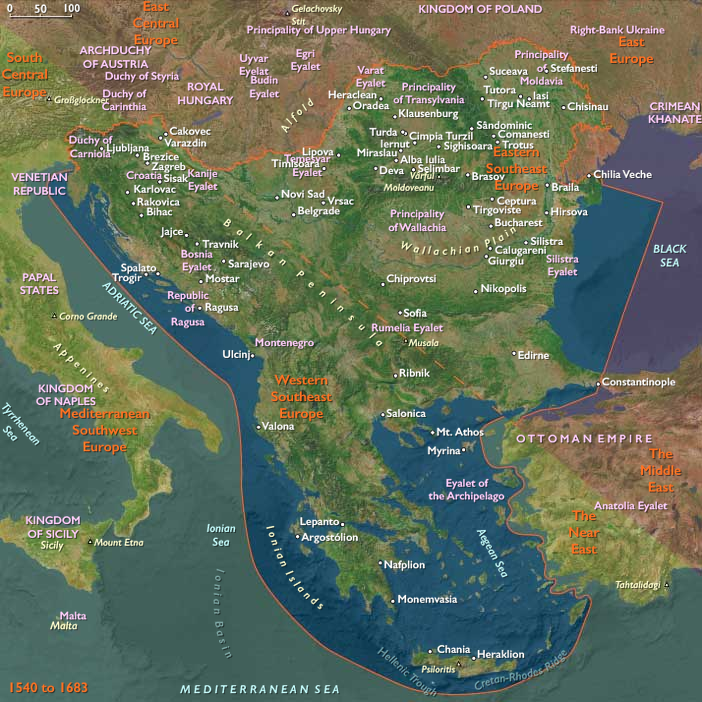
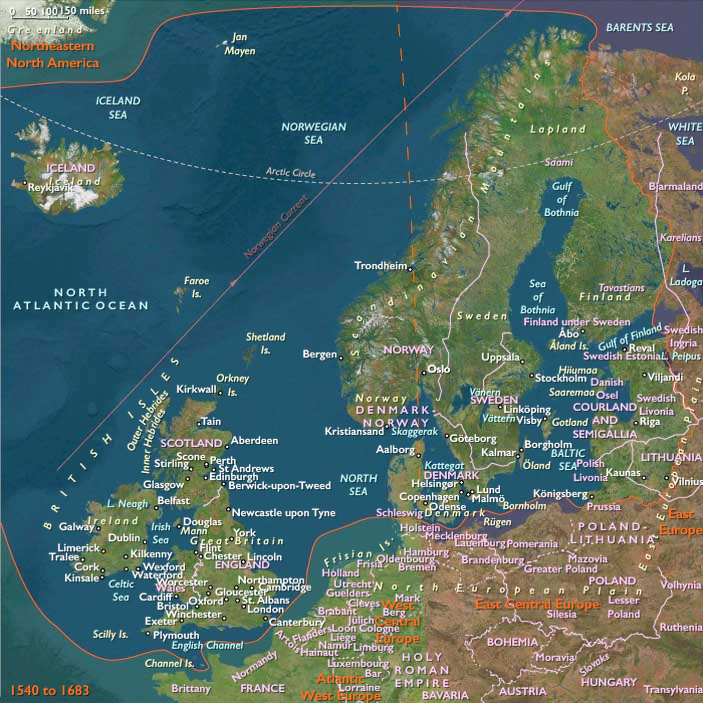
Coming from Scania, at this time part of Denmark, today part of modern-day Sweden, Tycho is well known in his lifetime as an astronomer and alchemist.
His Danish name "Tyge Ottesen Brahe" is pronounced in Modern Standard Danish as [ˈtˢyːə ˈʌd̥əsn̩ ˈb̥ʁɑː].
He adoptsthe Latinized name "Tycho Brahe" (usually pronounced /ˈtaɪkoʊ ˈbrɑː/ or /ˈbrɑːhiː/ in English) from Tycho (sometimes written Tÿcho) at around age fifteen, and he is now generally referred to as "Tycho", as is common in Scandinavia in his time, rather than by his surname "Brahe".
(The incorrect form of his name, Tycho de Brahe, appeared only much later.)
Tycho Brahe is granted an estate on the island of Hven and the funding to build the Uraniborg, an early research institute, where he builds large astronomical instruments and takes many careful measurements.
After disagreements with the new king in 1597, he is invited by the Bohemian king and Holy Roman emperor Rudolph II to Prague, where he becomes the official imperial astronomer.
He builds the new observatory at Benátky nad Jizerou.
Here, from 1600 until his death in 1601, he is assisted by Johannes Kepler.
Kepler will later use Tycho's astronomical information to develop his own theories of astronomy.
As an astronomer, Tycho worked to combine what he saw as the geometrical benefits of the Copernican system with the philosophical benefits of the Ptolemaic system into his own model of the universe, the Tychonic system.
Tycho is credited with the most accurate astronomical observations of his time, and the data is used by his assistant Kepler to derive the laws of planetary motion.
No one before Tycho had attempted to make so many planetary observations.