Tipu Sultan
ruler of the Sultanate of Mysore
Years: 1750 - 1799
Tipu Sultan (November 1750, Devanahalli – 4 May 1799, Seringapatam), also known as the Tiger of Mysore, is the ruler of the Sultanate of Mysore.
He is the son of Hyder Ali, an officer in the Mysorean army, and his second wife, Fatima or Fakhr-un-Nissa.
He is given a number of honorific titles, and i referred to as Sultan Fateh Ali Khan Shahab, Tipu Saheb, Bahadur Khan Tipu Sultan or Fatih Ali Khan Tipu Sultan Bahadur.
During Tipu's childhood, his father rises to take power in Mysore, and Tipu takes over rule of the kingdom upon his father's death.
In addition to his role as ruler, he was a scholar, soldier, and poet.
He is a devout Muslim but the majority of his subjects are Hindus.
At the request of the French, he builds a church, the first in Mysore.
He is proficient in many languages.
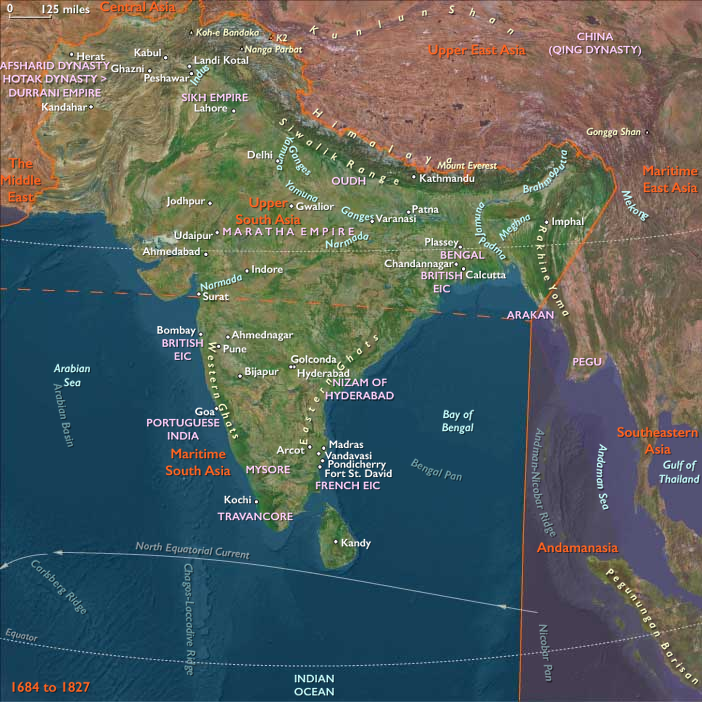
In alliance with the French in their struggle with the British, and in Mysore's struggles with other surrounding powers, both Tipu Sultan and Hyder Ali use their French-trained army against the Marathas, Sira, rulers of Malabar, Coorg, Bednur, Carnatic, and Travancore.
He wins important victories against the British in the Second Anglo-Mysore War, and negotiates the 1784 Treaty of Mangalore with them after his father had died the previous year.
He engages in expansionist attacks against his neighbors, and harshly puts down rebellions within his territories, deporting whole populations into confinement in Seringapatam.
He remains an implacable enemy of the British, bringing them into renewed conflict with an attack on British-allied Travancore in 1789.
In the Third Anglo-Mysore War, Tipu is forced into a humiliating peace, losing a number of previously conquered territories, such as Malabar and Mangalore.
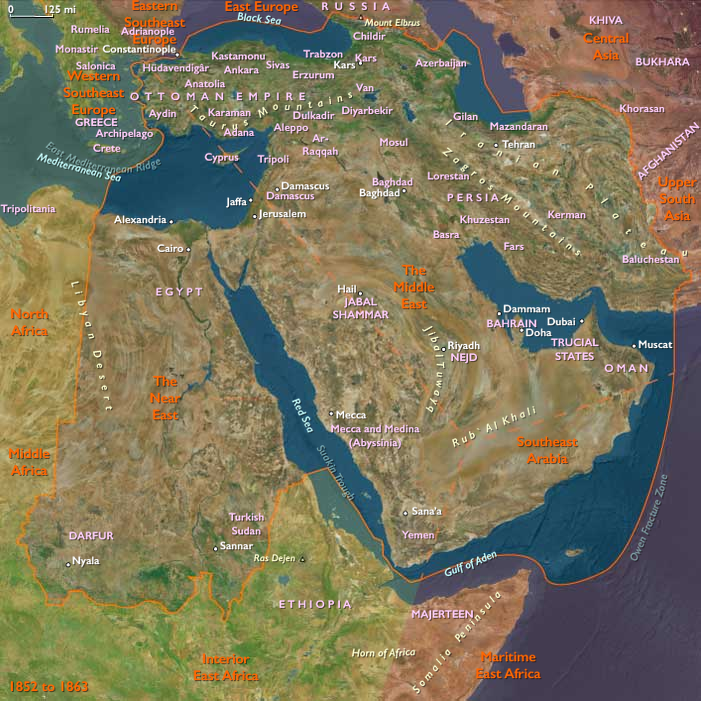
He sends embassies to foreign states, including the Ottoman Empire and France, in an attempt to rally opposition to the British.
In the Fourth Anglo-Mysore War, the combined forces of the British East India Company and the Nizam of Hyderabad defeat Tipu and he is killed on 4 May 1799, defending the fort of Seringapatam.
Tipu's treatment of conquered subjects, non-Muslims, and prisoners of war, is controversial, and continues to be a subject of debate.
He introduced a number of administrative and military innovations to Mysore (including the expansion of rocket technology), and introduced and promoted a more widespread use of Persian and Urdu languages in southern India.