Thurisind
king of the Gepids
Years: 500 - 560
Thurisind (Latin: Turisindus, died c. 560) is king of the Gepids, an East Germanic Gothic people, from c. 548 to 560.
He is the penultimate Gepid king, and succeeds King Elemund by staging a coup d'état and forcing the king's son into exile.
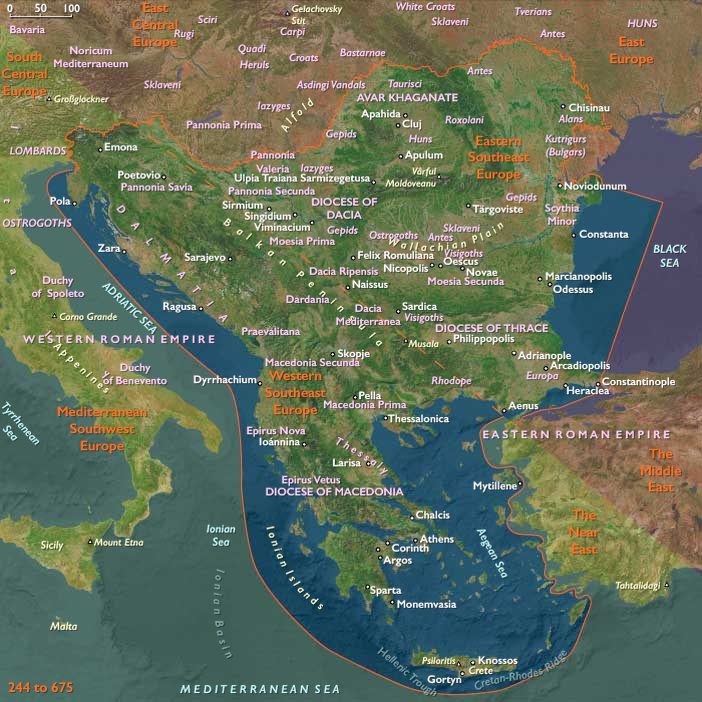
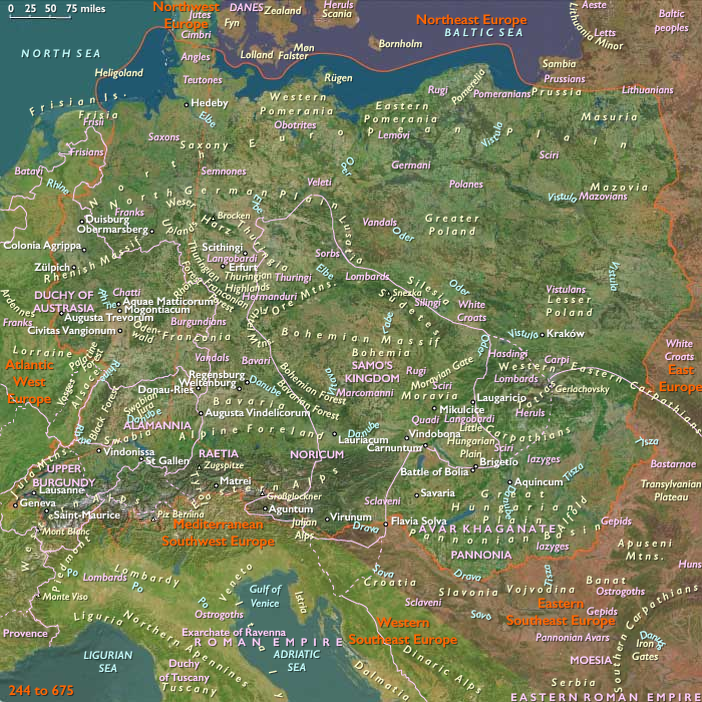
Thurisind's kingdom, known as Gepidia, is located in Central Europe and has its centerin Sirmium, a former Roman city on the Sava River (now the town of Sremska Mitrovica, Serbia).
His reign is marked by multiple wars with the Lombards, a Germanic people who had arrived in the former Roman province of Pannonia under the leadership of their king, Audoin.
Thurisind also has to face the hostility of the Byzantine Empire, which is resentful of the Gepid takeover of Sirmium and anxious to diminish Gepid power in the Pannonian Basin, a plain covering most of modern Hungary and partly including the bordering states.
The Byzantines' plans to reduce the Gepids' power take effect when Audoin decisively defeats Thurisind in 551 or 552.
The Byzantine Emperor Justinian forces a peace accord on both leaders so that equilibrium in the Pannonian Basin can be sustained.
Thurisind loses his eldest son, Turismod, in the Battle of Asfeld, during which the prince was killed by Alboin, son of Audoin.
In about 560, Thurisind dies and is succeeded by his remaining son Cunimund, who is killed by Alboin in 567.
Cunimund's death marks the end of the Gepid Kingdom and the beginning of the conquest of their territories by the Lombards' allies, the Avars, a nomadic people migrating from the Eurasian Steppe.