Theodore Roosevelt
26th President of the United States of America
Years: 1858 - 1919
Theodore "Teddy" Roosevelt (October 27, 1858 – January 6, 1919) is the 26th President of the United States of America (1901–1909).
He is noted for his exuberant personality, range of interests and achievements, and his leadership of the Progressive Movement, as well as his "cowboy" persona and robust masculinity.
He is a leader of the Republican Party and founder of the short-lived Progressive ("Bull Moose") Party of 1912.
Before becoming President, he holds offices at the city, state, and federal levels.
Roosevelt's achievements as a naturalist, explorer, hunter, author, and soldier are as much a part of his fame as any office he held as a politician.
Roosevelt is 42 years old when sworn in as President of the United States in 1901, making him the youngest president ever; he beats out the youngest elected president, John F. Kennedy, by only one year.
Roosevelt is also one of only three sitting presidents to have won the Nobel Peace Prize.
Born into a wealthy family in New York City, Roosevelt is a sickly child who suffers from asthma and stays at home studying natural history.
To compensate for his physical weakness, he embraces a strenuous life.
Home-schooled, he becomes an eager student of nature.
He attends Harvard University, where he studies biology, boxes and develops an interest in naval affairs.
In 1881, one year out of Harvard, he is elected to the New York State Assembly, where he becomes a leader of the reform faction of his Republican party (the "GOP").
His The Naval War of 1812 (1882) establishes his professional reputation as a serious historian; he writes numerous books on hunting, the outdoors, and current political issues, as well as frontier history.
In 1884, his wife and his mother died on the same day.
He leaves politics and goes to the frontier, becoming a rancher in the "Badlands" in the Dakotas.
Returning home, he runs for mayor in 1886, finishing third with 60,000 votes.
He later gains fame by taking vigorous charge of the city police.
At the national level, he is a leader in civil service reform.
The Spanish–American War breaks out in 1898 while Roosevelt is, effectively, running the Department of the Navy.
He promptly resigns and forms the Rough Riders – a volunteer cavalry regiment that fights in Cuba.
The war hero is elected governor in 1898 and in 1900 is nominated for vice president.
He successfully energizes the GOP base as a highly visible campaigner to reelect President William McKinley on a platform of high tariffs, the gold standard, imperialism, prosperity at home and victory abroad.
In 1901, President William McKinley is assassinated and Roosevelt becomes President.
Roosevelt attempts to move the Republican Party (GOP) toward Progressivism, including trust busting and increased regulation of businesses.
Roosevelt coins the phrase "Square Deal" to describe his domestic agenda, emphasizing that the average citizen will get a fair share under his policies.
As an outdoorsman and naturalist, he promotes the conservation movement.
On the world stage, Roosevelt's policies are characterized by his slogan, "Speak softly and carry a big stick".
Roosevelt is the force behind the completion of the Panama Canal; sends the Great White Fleet on a world tour to demonstrate American power; and negotiates an end to the Russo-Japanese War, for which he wins the Nobel Peace Prize.
At the end of his second term, Roosevelt promotes his friend William Howard Taft for the 1908 Republican nomination.
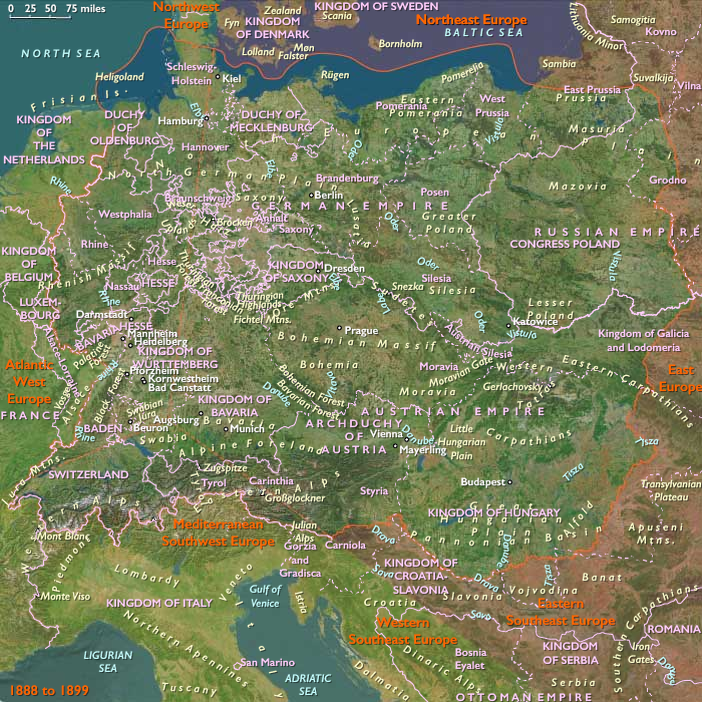
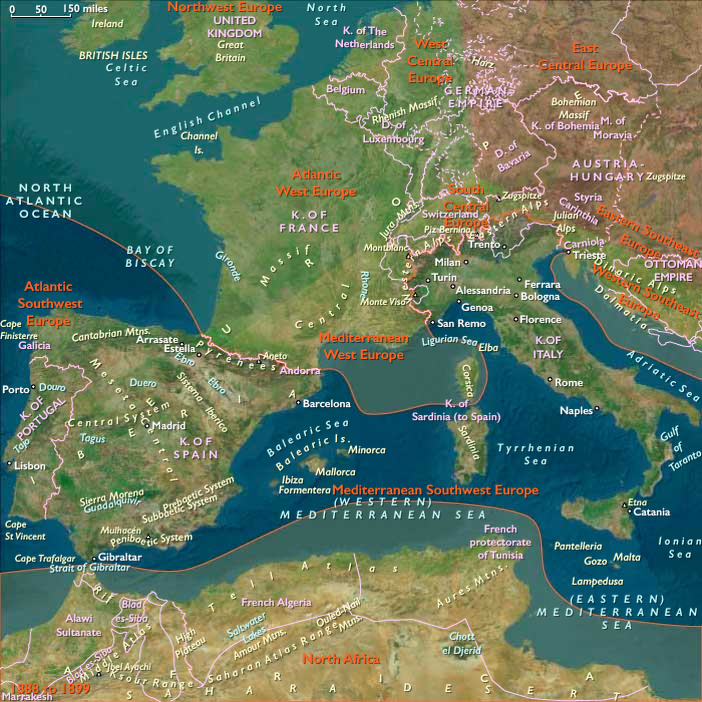
He tours Africa and Europe.
On his return in 1910, he breaks bitterly with President Taft on issues of progressivism and personalities.
In the 1912 election, Roosevelt tries and fails to block Taft's renomination.
He launches the Bull Moose Party that calls for far-reaching progressive reforms.
He loses to Democrat Woodrow Wilson, as the Taft conservatives gain control of the Republican party for decades to come.
Roosevelt leads a major expedition to the Amazon jungles but contracts diseases that ruin his health.
He dies relatively young at the age of 60.
Roosevelt has consistently been ranked by scholars as one of the greatest U. S. Presidents.