The Middle East: 1852–1863 CE
Ottoman Authority and Sectarian Conflicts
Between 1852 and 1863, the Ottoman Empire struggles to maintain authority amid escalating sectarian conflicts, notably in Mount Lebanon. The Double Qaimaqamate arrangement, which separates administrative authority into Christian and Druze regions, exacerbates tensions rather than easing them. European powers—Britain supporting the Druze and France backing the Maronites—further inflame rivalries, and by 1860, violence erupts into full-scale conflict, resulting in the massacre of thousands of Christians. The crisis prompts international intervention, leading to the establishment of the Mutasarrifate of Mount Lebanon in 1861, governed by a non-Lebanese Christian administrator appointed by the Ottoman sultan and overseen by European powers.
Saudi Arabia: Consolidation under Faisal
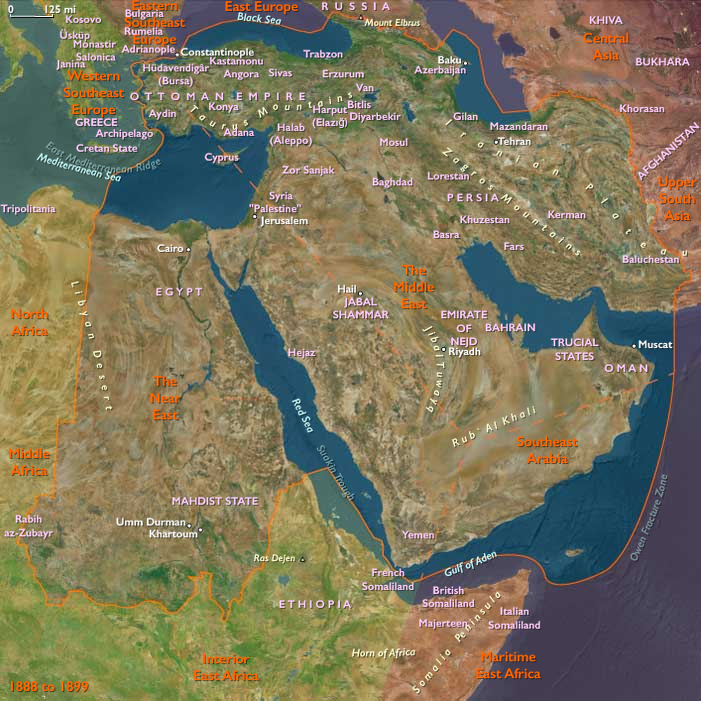
In central Arabia, Faisal ibn Turki Al Saud further consolidates Al Saud authority from Riyadh, bringing relative stability after decades of internal strife. Faisal skillfully manages relations with both Ottoman and British interests, leveraging the Al Saud dynasty’s religious authority rooted in Wahhabism. Despite his efforts, occasional revolts and Ottoman intrigue continue to challenge his rule, notably in eastern Arabia, where the Ottomans maintain intermittent attempts to reassert their influence.
Persian Decline Amidst Foreign Domination
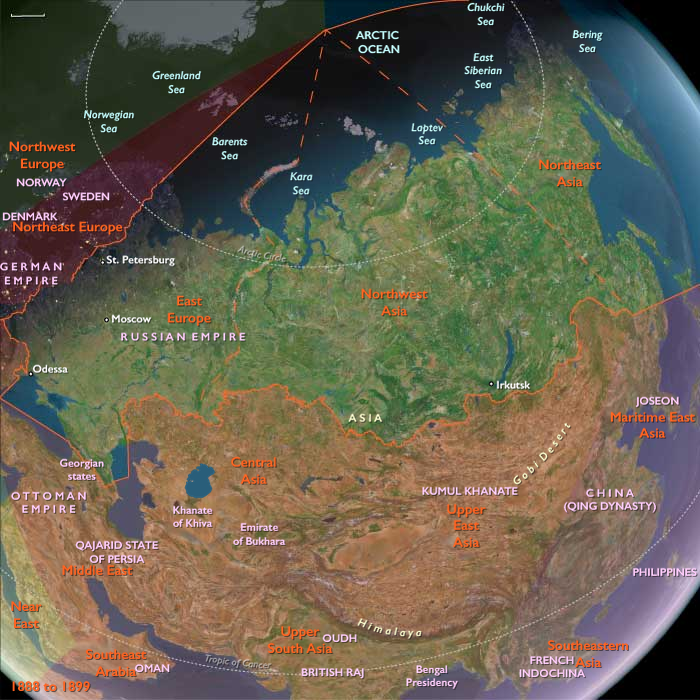
The Qajar Dynasty in Persia, under Naser ad-Din Shah, remains vulnerable to foreign pressures from Britain and Russia. These two empires use diplomatic and economic leverage to gain concessions, significantly weakening Persian sovereignty. The Shah’s administration, despite efforts at modernization, continues to suffer from internal corruption and regional uprisings, limiting effective governance. Britain's and Russia's deepening involvement leads to increased economic dependency, leaving Persia's political autonomy severely compromised.
Oman’s Maritime Trade and British Influence
Said bin Sultan al-Busaidi continues Oman's prosperous maritime commerce, maintaining strong diplomatic and commercial relationships, particularly with Britain. His domains in East Africa, notably Zanzibar, thrive as essential trade hubs, further cementing Oman's strategic importance to British interests. Said’s policies maintain Omani autonomy while carefully navigating international tensions, ensuring continued economic prosperity and internal stability.
Stability and Rivalries in the Persian Gulf
The Al Thani consolidate their control in Qatar, significantly bolstered by Wahhabi ideological alignment, firmly establishing their independence from the Al Khalifa of Bahrain. Meanwhile, in Abu Dhabi, the Al Nahyan family enhances its power and regional influence, building alliances with British and Omani interests. This period witnesses Qatar and Abu Dhabi solidifying their distinct identities and territorial integrity, setting foundations for future regional prominence.
Russian Influence and Armenian National Awakening
Russian rule continues to consolidate in the Caucasus, with significant reforms reshaping local governance and society. Armenians, benefiting from Russian stability, experience an increase in national consciousness, driven by educational reforms and economic opportunities. Russian control, while fostering relative peace, also deepens cultural transformations, leading to the growth of secular Armenian nationalism.
Legacy of the Era
The era from 1852 to 1863 witnesses intensified sectarian and geopolitical tensions across the Middle East, prompting significant international intervention and internal restructuring. The establishment of the Mutasarrifate in Lebanon, the consolidation of Al Saud control, Persia's ongoing vulnerabilities, and the steady rise of Gulf emirates define a transformative period whose legacies influence regional dynamics well into the future.