Tamar of Georgia
Queen of Georgia
Years: 1160 - 1213
Tamar the Great (c. 1160 – 18 January 1213), of the Bagrationi dynasty, is Queen Regnant of Georgia from 1184 to 1213.
Tamar presides over the "Golden age" of the medieval Georgian monarchy.
Her position as the first woman to rule Georgia in her own right is emphasized by the title mep'e ("king"), commonly afforded to Tamar in the medieval Georgian sources.
Tamar is proclaimed heir apparent and co-ruler by her reigning father George III in 1178, but she faces significant opposition from the aristocracy upon her ascension to full ruling powers after George's death.
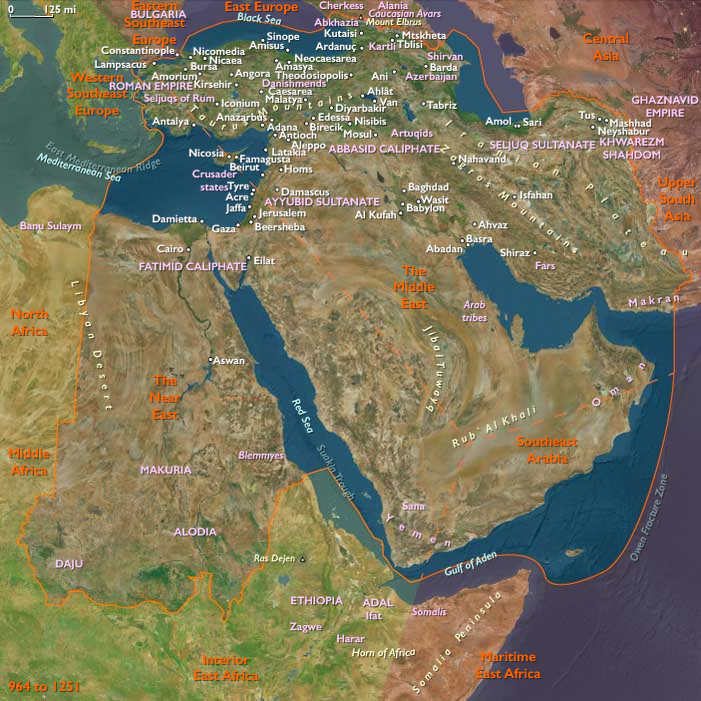
Tamar is successful in neutralizing this opposition and embarks on an energetic foreign policy aided by the downfall of the rival powers of the Seljuqid and Byzantine empires.
Relying on a powerful military élite, Tamar is able to build on the successes of her predecessors to consolidate an empire that dominates the Caucasus until its collapse under the Mongol attacks within two decades after Tamar's death.
Tamar is married twice, her first union being from 1185 to 1187, to the Rus' prince Yuri, whom she divorces and expels from the country, defeating his subsequent attempts at coups.
For her second consort, Tamar chooses, in 1191, the Alan prince David Soslan, by whom she has two children, George and Rusudan, the two successive monarchs on the throne of Georgia.
Tamar's association with the period of political and military successes and cultural achievements, combined with her role as a female ruler, has led to her idealization and romanticization in Georgian arts and historical memory.
She remains an important symbol in Georgian popular culture and has been canonized by the Georgian Orthodox Church as the Holy Righteous Queen Tamar, with her feast day commemorated on 14 May (O.S.
1 May).