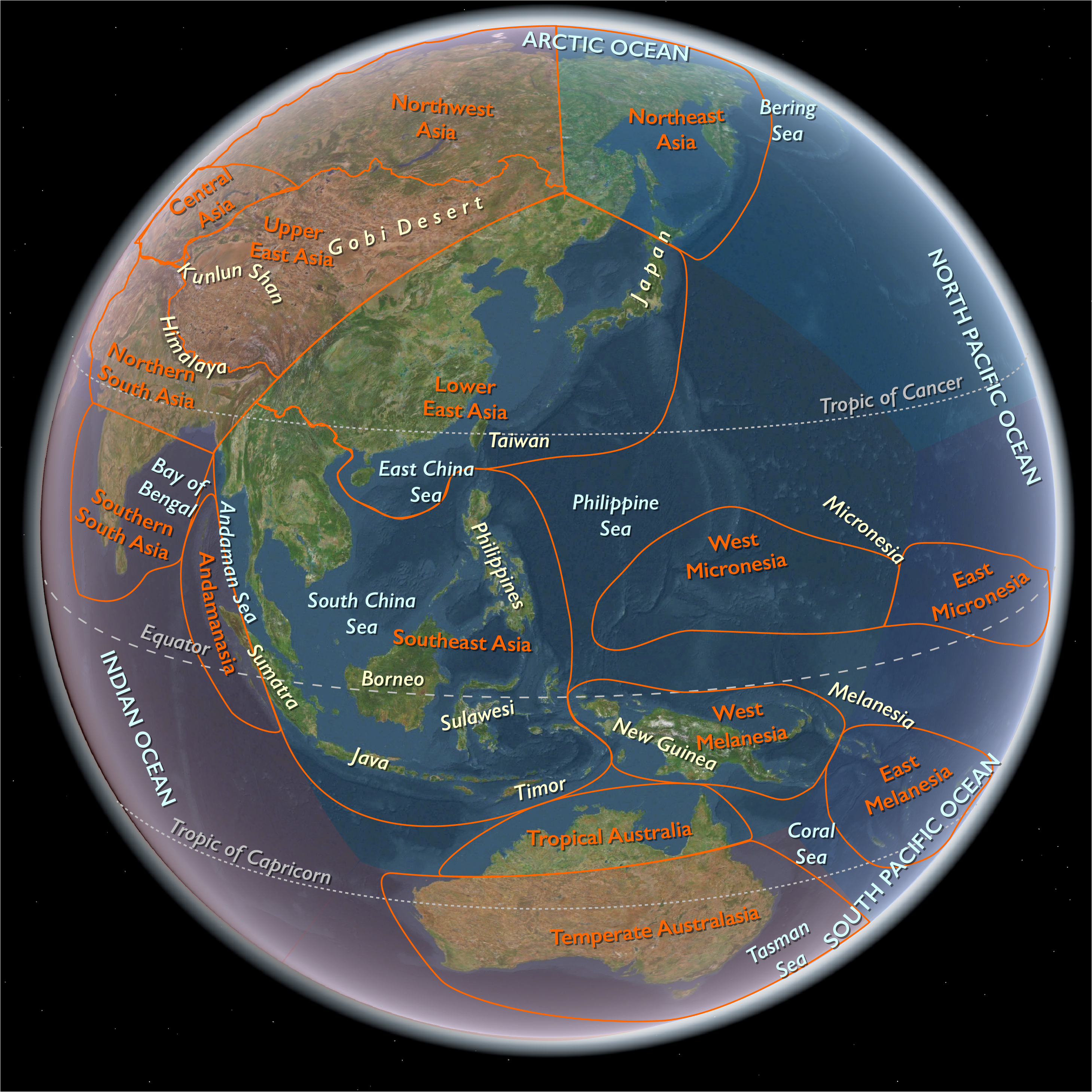
Taira no Kiyomori
Japanese samurai and governor
Years: 1118 - 1181
Taira no Kiyomori (1118 – March 20, 1181) is a military leader of the late Heian period of Japan.
He establishes the first samurai-dominated administrative government in the history of Japan.
Related Events
Filter results
Showing 8 events out of 8 total
Japan's feudal era is characterized by the emergence and dominance of a ruling class of warriors, the samurai, which will form the military nobility of pre-industrial Japan.
The Taira and Minamoto clans join forces to rule Japan after defeating the warrior monks of the Enryakuji Temple near Kyoto.
Taira no Tadamori, a Taira clan samurai, father of Taira no Kiyomori, and member of the Kebiishi (Imperial police force), is also governor of the provinces of Harima, Ise, Bizen, and Tajima.
He consolidates the influence of the Taira clan at the Imperial Court, and is said to have been the first samurai to serve the Emperor directly, at Court.
The cloistered emperor Toba dies in 1156, and his deposed eldest son Sutoku elects to leave the monastery and regain his place on the imperial throne, currently occupied by his twenty-eight-year-old brother Shirakawa II.
Two factions of the imperial family, one favoring Sutoku, the other favoring Shirakawa, turn to the powerful Minamoto and Taira families, rival samurai orbushi clans, for help.
To settle the court dispute, the samurai clans apply military force in an action known as the Hogen War, aiding the victory of Shirakawa and his adherents, who drive Sutoku into exile and kill most of his supporters.
Minamoto no Yoshitomo, along with Taira no Kiyomori, supports the Emperor Go-Shirakawa and Fujiwara no Tadamichi, while his father Minamoto no Tameyoshi, then head of the Minamoto clan, with his young son Minamoto no Tametomo and Taira no Tadamasa, sides with the retired Emperor Sutoku and Fujiwara no Yorinaga.
Minamotono Tameyoshi, although he is most famous for his involvement in the Hōgen Rebellion, is also said to have intervened in a number of other conflicts earlier in his life.
Around 1113, the ongoing rivalry between the warrior monks of Mii-dera and Enryaku-ji erupted into outright violence in the streets of Kyoto.
Though the palace guard mobilized quickly to protect the Emperor, it is said that Tameyoshi, with a handful of mounted samurai, drove the mobs away himself.
Upon being defeated in the Hōgen Rebellion, Tameyoshi takes the tonsure and is released into the custody of his son Minamoto no Yoshitomo, who then has him beheaded.
This is an unprecedented breaking of Buddhist values in Japan, yet no one in the court berates Yoshitomo for his actions at the time until after his death.
Minamoto no Yoshitomo becoes head of his clan after the death of his father and together with Taira no Kiyomori, succeeds in establishing the two samurai clans as major new political powers in Kyoto.
Emperor Shirakawa II had abdicated on September 5, 1158, in favor of his son, but his abdication had implied no cession of political or other powers to his successor.
He has attempted to continue the long-customary practice of ruling in actuality from a cloistered position, but real power has begun to be wielded by the heads of the Taira and Minamoto clans, the leading samurai families.
The simmering feud between the two clans, long suspicious of one another, has escalated as jealousy and friction increases and the Minamotos plot to rid themselves of their rivals at the imperial court.
In late 1159, Taira no Kiyomori, head of the Taira clan and supporter of Emperor Nijō, had left Kyōto with his family on a personal pilgrimage.
This has left his enemies, Fujiwara no Nobuyori and the Minamoto clan, a perfect opportunity to effect an uprising.
Fujiwara no Nobuyori and Minamoto no Yoshitomo see an opportunity to effect changes they seek in the government in early January 1160.
With a force of roughly five hundred men, they attack in the night, kidnapping former emperor Emperor Go-Shirakawa, and setting fire to the Palace.
They also abduct and imprison the current emperor, Emperor Nijō, who supports their enemies, the Taira clan and Fujiwara no Michinori.
They next attack the manor house of Michinori, setting it too aflame and killing all those inside, with the exception of Michinori himself, who is captured later and decapitated.
Nobuyori forces Emperor Nijō to name him imperial chancellor, completing one of the first important steps towards gaining power over his rivals.
However, Taira no Kiyomori returns soon afterwards, with his son Taira no Shigemori and a small force.
The Minamoto, reinforced with men from Kamakura led by Yoshitomo's eldest son Minamoto no Yoshihira, are the larger force but are unprepared, and hesitate at Kiyomori's return.
The Taira are thus allowed to return to their family's mansion in the Rokuhara district, where they plan tactics and strategies, and gain many more warriors.
At the end of January, the Taira smuggle the Emperor Nijō and his empress consort out of the Sanjō Palace and into the Rokuhara mansion, disguised as a lady in waiting.
Meanwhile, the Taira also help the former emperor Emperor Go-Shirakawa escape from the Minamoto as well.
Minamoto no Yoshitomo and his men prepare to defend the Palace on the morning of February 5, against the inevitable Taira assault.
The defense holds out for a time, until a portion of the Taira feign a retreat, luring Minamoto warriors out of the Palace, and giving the rest of their force an opportunity to rush the gates and, soon afterward, drive the Minamoto out.
Yoshitomo's men are then obliged to attack the Rokuhara mansion.
Failing in their assault, they flee Kyoto, meeting resistance along the way from the warrior monks of Mount Hiei who they had attacked in decades past.
Although Yoshihira had fled the battle, and lives peacefully, in disguise, for a time in Kyoto, he is soon captured and killed by Taira no Kiyomori, the head of the enemy faction.
The Tairas emerge victorious to become the effective rulers of Japan.
At the direction of Taira-no-Kiyomori, the Tairas kill rival clan leader Minamoto-no-Yoshitomo, together with all his kinsmen at court, sparing only four young sons.
One of these, the thirteen-year-old Yoritomo, is taken hostage and raised in Kwanto, in eastern Japan, by Hojo Tokimasa, a Taira relative.
Taira no Kiyomori seizes Minamoto wealth and land, and will eventually form the first of four samurai-dominated governments during the feudal history of Japan.
The Genpei War is the culmination of a decades-long conflict between the Minamoto and Taira clans over dominance of the Imperial court, and by extension, control of Japan.
In the Hōgen Rebellion and in the Heiji Rebellion of earlier decades, the Minamoto had attempted to regain control from the Taira and failed.
The Taira had then begun a series of executions, intended to eliminate their rivals.
In 1177, relations between the Taira clan and the retired Emperor Go-Shirakawa had become highly strained, and the latter had attempted a coup d'état to oust the Daijō Daijin (prime minister), Taira no Kiyomori.
Kiyomori had defeated the former emperor and abolished the Insei system, provoking strong anti-Taira sentiment in so doing.
After the abdication of Emperor Takakura, Taira no Kiyomori, reviving the Fujiwara practice of using the regency to dominate the Japanese government, puts his grandson, Antoku (then only two years of age), on the throne on March 21, 1180.
Go-Shirakawa's son, Prince Mochihito, feels that he has been denied his rightful place on the throne.
Charging Kiyomori with causing suffering, despoiling graves and destroying Buddhist Law, Mochihito supports the Minamoto clan in their conflict against the Taira.
At the same time, Minamoto no Yorimasa leads the Minamoto clan in supporting Mochihito's bid for the Imperial Throne.
In the clashes between the Minamoto and Taira clans that have gone on for decades, Yorimasa had tried to stay out of politics, and had avoided taking sides, although he had participated in the Hogen Rebellion in 1156.
For a time, he had even been friends with Taira no Kiyomori.
During the Heiji Rebellion of 1160, he had leaned just enough in favor of the Taira to allow them to overthrow the Minamoto.
However, by the time he officially retired from military service in Kiyomori's army in 1179, Yorimasa had changed his mind about opposing his own clan.
He has entered the Buddhist priesthood.
In May 1180, he sends out an appeal to other Minamoto leaders, and to temples and monasteries (Enryakuji, Miidera and others) that Kiyomori has offended; he asks for aid against the Taira, in the name of Prince Mochihito.
Kiyomori, in the hope of promoting trade with Song Dynasty China, moves the seat of imperial power to Fukuhara (modern day Kobe) in June, and on the fifteenth of this month, Prince Mochihito flees Kyoto to take refuge in Mii-dera, a Buddhist temple located at the foot of Mount Hiei, in the city of Ōtsu.
Learning of the prince’s flight, Kiyomori sends men after Mochihito, who retreats to Mii-dera, at the foot of Mount Hiei, but discovers that the warrior monks of Mii-dera, for various political reasons, cannot rely on the support of any other monasteries.
Thus, …
…Mochihito flees once more, along with a small Minamoto force, across the River Uji, to the Phoenix Hall of the Byōdō-in.
There they are caught by the Taira forces, and the Battle of Uji is fought.
The bridge is the site of much of the fighting, and the planks are famously smashed to impair the ability of the Taira to cross, but eventually the Minamoto are forced back into the Phoenix Hall.
Yorimasa, suffering defeat at Uji, commits suicide at Byōdō-in.
His ritual suicide by seppuku is the earliest recorded instance of a samurai's suicide in the face of defeat.
Mochihito escapes to Nara, but is captured on his way and killed soon afterwards.