Tabinshwehti
2nd king of the Toungoo Dynasty of Burma (Myanmar)
Years: 1516 - 1550
Tabinshwehti (April 16, 1516 – April 30, 1550) is king of the Toungoo Dynasty of Burma (Myanmar) from 1530 to 1550, and the founder of theToungoo Empire.
His military campaigns (1534–49) create the largest kingdom in Burma since the fall of Pagan Empire in 1287.
His administratively fragile kingdom proves to be the impetus for the eventual reunification of the entire country by his successor and brother-in-law Bayinnaung.
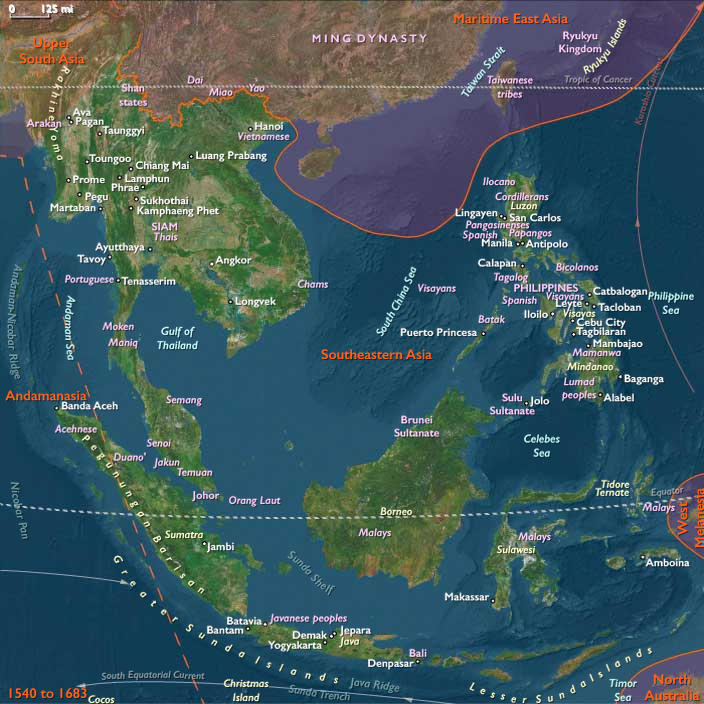
Based out of their small landlocked principality in the Sittaung valley, Tabinshwehti and his deputy Bayinnaung begin their military campaigns in 1534 against the Hanthawaddy Kingdom, and conquer the wealthier but disunited kingdom by 1541.
He then leverages the coastal kingdom's wealth, manpower and access to Portuguese mercenaries and firearms, and extends his rule to the ancient capital of Pagan (Bagan) in 1544.
However, his attempts to build an East-West empire fall short in Arakan (1545–47) and in Siam (1547–49).
He actively courts the support of ethnic Mons of Lower Burma, many of whom are appointed to the highest positions in his government and armed forces.
His chief queen and chief primate are Mons.
He moves the capital to Pegu (Bago).
The king is assassinated on his thirty-fourth birthday on the orders of Smim Sawhtut, one of his close advisers.
The kingdom he has built up falls apart immediately after his death, which Bayinnaung will have to restore in the next two years.
He is one of the most celebrated kings in Burmese history.
The Tabinshwehti nat is one of the thirty-seven nats (spirits) worshiped in Myanmar.