Suleiman I of Persia
Shahanshah of Iran
Years: 1648 - 1694
Sam Mirza, later known by his first dynastic name of Safi II, and thereafter known by his more famous second dynastic name of Suleiman I, is the eighth Safavid shah (king) of Iran, ruling from November 1, 1666, to July 29, 1694.
Related Events
Filter results
Showing 4 events out of 4 total
The Middle East: 1672–1683 CE
Ottoman Military Setbacks
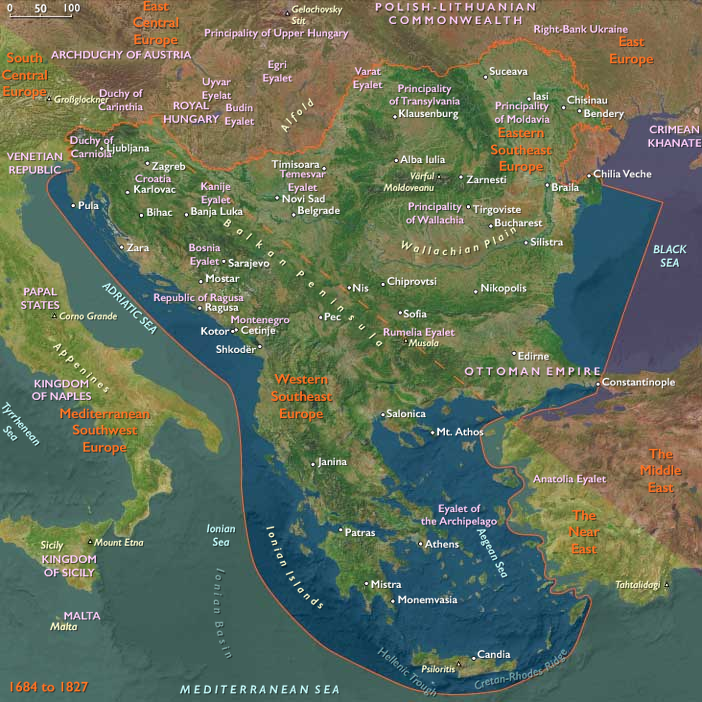
During this period, the Ottoman Empire, under Sultan Mehmed IV, experiences major military setbacks, most notably the failure of the siege of Vienna in 1683. The unsuccessful attempt to capture Vienna marks a significant turning point, prompting the formation of the Holy League, a coalition of European powers determined to roll back Ottoman gains in Central Europe. Internally, the empire faces continued administrative and economic challenges, exacerbated by military strains and widespread dissatisfaction among its provinces.
Omani Consolidation in East Africa
Under Imam Sultan bin Saif II al-Ya'aruba, Omani naval dominance and trade networks in the Persian Gulf and Indian Ocean are further strengthened. Omani control firmly established in key ports such as Zanzibar and Mombasa facilitates increased trade, notably in ivory and spices, enhancing Oman's economic prosperity and regional political influence. Omani authority consolidates through diplomatic relationships and strategic military fortifications.
Safavid Cultural and Economic Continuity
In Safavid Iran, Shah Suleiman I continues policies that maintain internal stability, though without significant territorial expansion or military confrontation. Isfahan remains a vibrant cultural and commercial hub, its markets bustling with traders from East and West. The Safavid administration supports arts and architecture, sustaining the empire’s cultural legacy despite gradual signs of administrative complacency and weakening central authority.
Aleppo as a Thriving Commercial Hub
Aleppo continues to flourish as a prominent commercial nexus during this period. Its markets attract diverse international merchants and maintain robust exchanges in textiles, spices, and luxury goods, solidifying its role as a key economic center. Despite broader geopolitical tensions, Aleppo's economic resilience and cultural vitality endure, facilitating cross-cultural exchanges between Europe, Persia, the Ottoman Empire, and the broader Arab world.
Legacy of the Era
The era 1672–1683 is defined by significant military shifts, notably the Ottoman failure at Vienna, marking a turning point that would redefine European-Ottoman relations. Oman solidifies its regional influence through strategic maritime control and economic growth, while Safavid Iran maintains its cultural prominence despite underlying administrative vulnerabilities. Aleppo's sustained economic prosperity underscores its crucial role as a crossroads of trade and culture, reflecting broader patterns of resilience and adaptation across the Middle East.
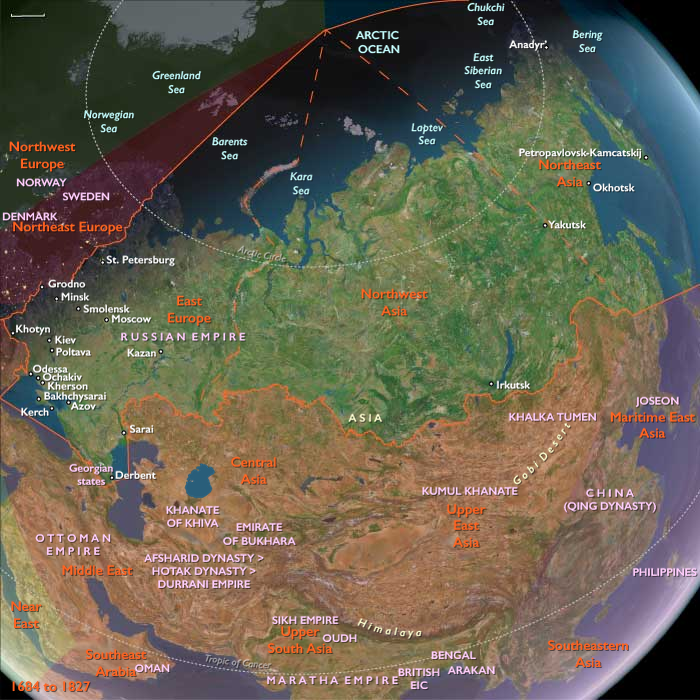
The Near and Middle East (1684 – 1827 CE)
Empires in Decline, Pilgrimage Routes in Turmoil, and the Return of Reforming Powers
Geography & Environmental Context
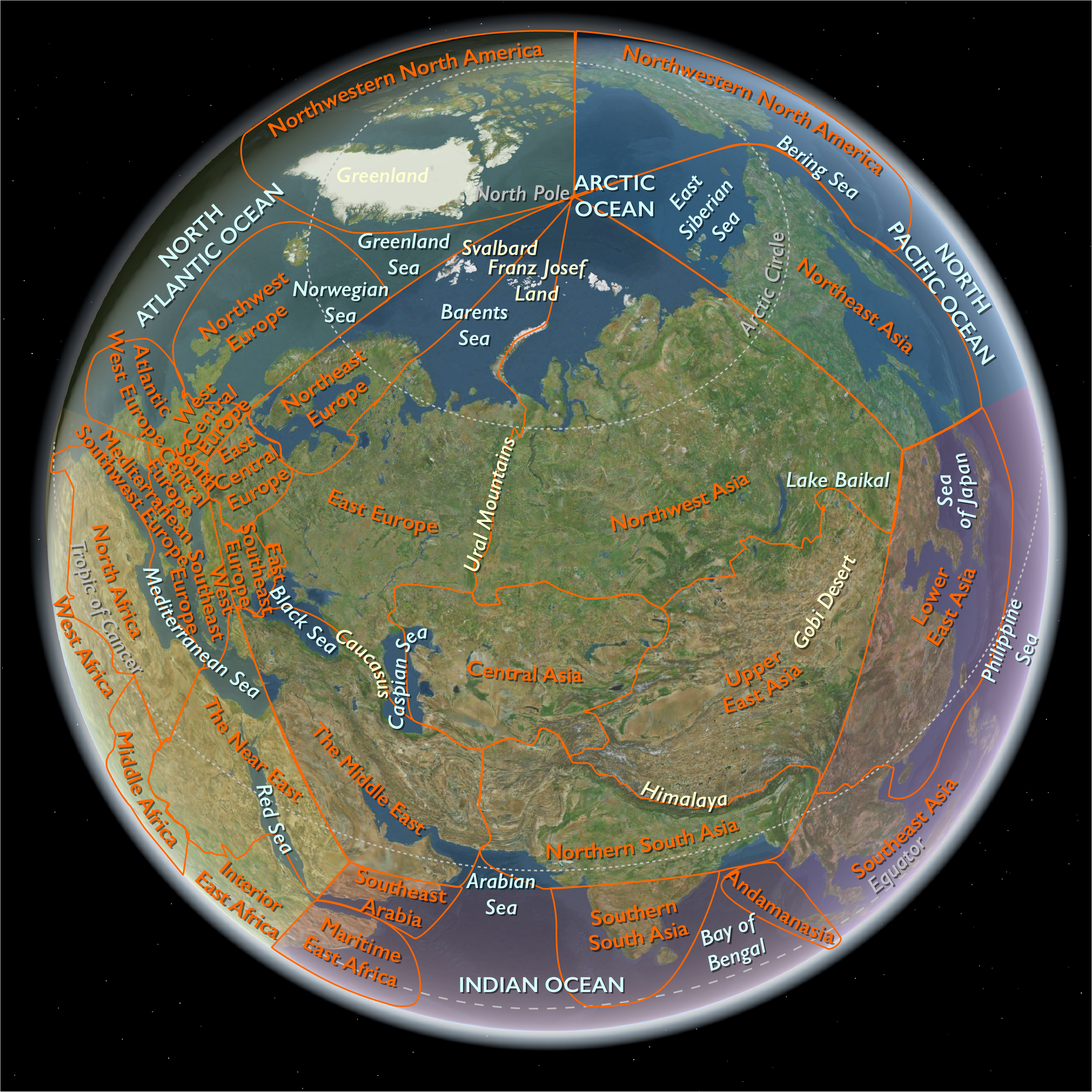
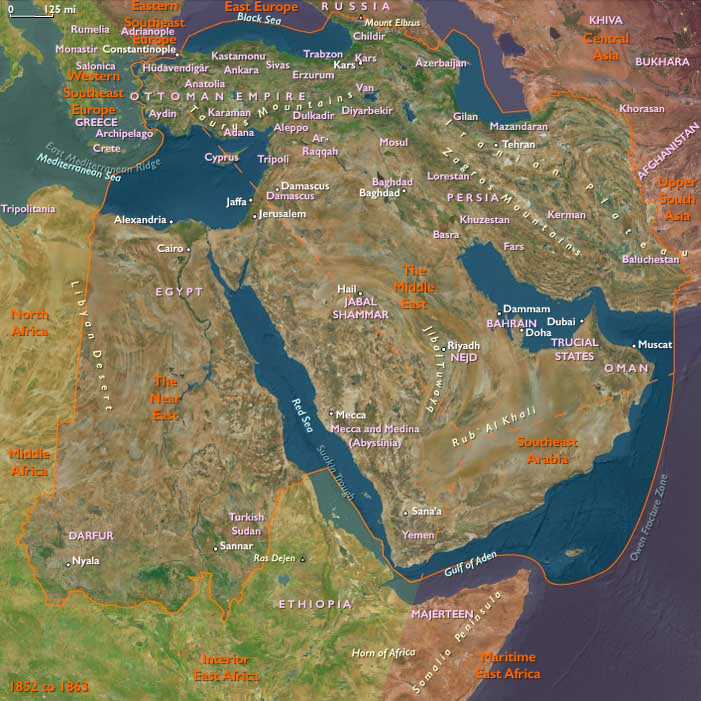
The Near and Middle East spanned the eastern Mediterranean, the Arabian Peninsula, Mesopotamia, Persia, and the Caucasus—a crossroads from the Nile to the Hindu Kush. Its three interlocking subregions—the Near East(Egypt, Hejaz, Yemen, Levant, Sudan, southwestern Turkey, and Cyprus), the Middle East (Iraq, Iran, Syria, Armenia, Georgia, Azerbaijan, eastern Arabia, and most of Anatolia), and Southeast Arabia (southern Oman, eastern Yemen, and Socotra)—together formed a vast zone of deserts, deltas, plateaus, and pilgrimage corridors. Major anchors included the Nile, Tigris–Euphrates, and Zagros–Caucasus uplands; the Red Sea, Persian Gulf, and Arabian Seacoasts; and the high valleys of Yemen and Oman that bridged Africa and Asia.
Climate & Environmental Shifts
The late Little Ice Age imposed alternating drought and flood.
-
Mesopotamia and Iran endured erratic rains and destructive river floods.
-
Egypt oscillated between low- and high-Nile years; plague and famine shadowed poor floods.
-
Hejaz and Yemen suffered water scarcity punctuated by torrential storms.
-
Caucasus winters grew harsher; earthquakes at Tabriz (1721), Shiraz (1824), and along the Levantine Riftreshaped towns.
-
Dhofar and Hadhramawt relied on fickle khareef monsoons, while Socotra was struck by periodic cyclones.
Despite volatility, canal maintenance, terrace farming, and nomadic mobility preserved regional resilience.
Subsistence & Settlement
-
Mesopotamia & Iran: Irrigated grains, dates, and silk; qanats and canals remained vital to subsistence and taxation.
-
Caucasus & Anatolia: Pastoralism and mountain farming—wine, fruit, and grain—supported caravan towns like Tiflis, Yerevan, and Aleppo.
-
Levant & Egypt: Terrace agriculture (olives, vines, citrus) complemented Nile wheat, barley, and sugar.
-
Arabian littoral: Date groves, pearling, and fishing from Basra to Muscat linked desert to sea.
-
Yemen & Oman: Terraced grains, coffee, and frankincense; mixed herding in uplands.
-
Sudan: Millet and sorghum in river belts tied to Egypt’s provisioning system after Muḥammad ʿAlī’s conquest (1820–1821).
Urban centers—Cairo, Baghdad, Isfahan, Damascus, Tehran, Muscat, Sanaʿa, and Tiflis—functioned as nodes of governance, trade, and craft.
Technology & Material Culture
-
Agrarian infrastructure: Qanats, canals, and dikes remained the hydraulic spine; terrace systems in Yemen and Palestine embodied millennia of continuity.
-
Crafts & manufactures: Persian silks and carpets; Aleppine cottons; Damascene soap; Cairene brassware; Georgian and Armenian metallurgy.
-
Architecture: Ottoman domes, Safavid and Qajar mosques, Armenian churches, and Yemeni tower-houses defined skylines.
-
Maritime innovation: Omani dhows and Red Sea sambuks maintained oceanic trade; firearms and artillery modernized gradually through Ottoman and Persian reforms.
-
Printing & learning: The French expedition to Egypt (1798–1801) introduced presses and surveying; by the 1820s Muḥammad ʿAlī’s workshops were producing cotton gins, arms, and canal plans.
Movement & Interaction Corridors
-
Caravan arteries: Aleppo–Mosul–Baghdad; Isfahan–Tabriz–Yerevan–Baku; Basra–Shiraz–Hormuz–Muscat.
-
Pilgrimage routes: Cairo and Damascus caravans converged on Mecca until disrupted by Wahhabi–Saʿūdī control (1803–1812); Egyptian forces restored Ottoman sovereignty (1811–1818).
-
Maritime spheres: Omani fleets projected power across the Indian Ocean to Zanzibar; Hadhrami merchants spread to Gujarat, Southeast Asia, and the Swahili coast.
-
Caspian & Black Sea fronts: Russian expansion brought forts and commerce, drawing Persia into treaties (Gulistan 1813, Turkmenchay 1828).
-
Nile & Sudan corridors: River convoys moved grain and troops; Khartoum and Sennar became extensions of Cairo’s fiscal reach.
Cultural & Symbolic Expressions
-
Ottoman provinces: Sunni institutions, Sufi lodges, and urban guilds organized civic life; Coptic, Armenian, Greek, and Jewish communities sustained schools and trade.
-
Persia: Shiʿism remained the ideological core from Safavid through Qajar eras; Isfahan and Tehran mosques, gardens, and miniatures embodied Persian identity.
-
Caucasus: Islamic and Christian traditions coexisted; oral epics preserved frontier memory.
-
Arabian coasts: Poetry, pearling songs, and mosque schools reflected maritime Islam.
-
Hejaz & Yemen: Pilgrimage festivals, Sufi orders, and coffee rituals intertwined devotion and commerce.
-
Egypt: Al-Azhar scholars debated governance; after 1798, the Arabic press and translation offices of Muḥammad ʿAlī inaugurated modern intellectual life.
Environmental Adaptation & Resilience
-
Nomadic transhumance adjusted to drought belts from Arabia to Iran.
-
Oasis and terrace restoration maintained food security.
-
Maritime adaptation: Oman’s sea routes and Gulf pearling offset inland disruption.
-
Pilgrim provisioning: Waqf-funded cisterns, markets, and bakeries sustained caravans.
-
Irrigation renewal: In Egypt, canal repair and proto-barrage planning sought to stabilize Nile floods and expand cotton cultivation.
Political & Military Shocks
-
Safavid collapse (1722): Afghan incursions toppled Isfahan; Ottoman and Russian invasions followed.
-
Nader Shah (1736–1747): Restored Persian power, campaigned in India and the Caucasus.
-
Qajar consolidation (1794–1827): Centralized Iran but ceded territory to Russia.
-
Ottoman strain: Frontier wars with Russia; Wahhabi revolt in Arabia; provincial autonomy in Syria and Egypt.
-
Muḥammad ʿAlī’s rise (1805): Eliminated Mamluks (1811), reformed army and monopolies, annexed Sudan (1820–1821).
-
Omani revival: The Al Bu Saʿid dynasty (from 1749) rebuilt fleets, expelled Portuguese remnants, and dominated Gulf trade.
-
European encroachment: Consuls, treaties, and naval patrols—French in the Levant, British in the Gulf and Red Sea—tightened economic dependence though not yet direct rule.
Transition
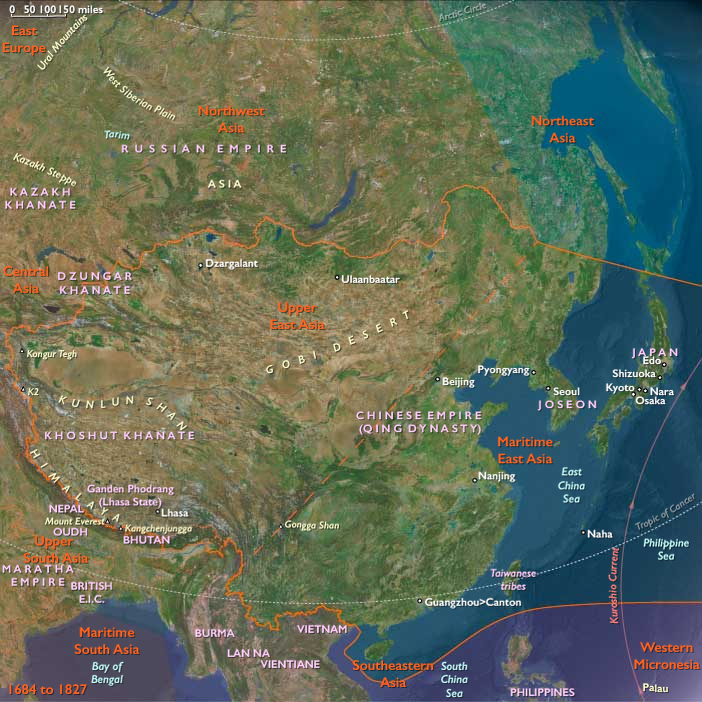
Between 1684 and 1827 CE, the Near and Middle East transformed from a network of venerable Islamic empires into a patchwork of reforming provinces and maritime powers under growing Eurasian pressure. The Safavids vanished, the Qajars struggled with Russia, and the Ottomans faced internal revolt and European diplomacy. Oman extended Arab reach to East Africa, while Muḥammad ʿAlī’s Egypt pioneered modern bureaucratic reform.
By 1827, caravan and monsoon still ordered daily life, yet behind their continuity loomed the industrial powers of Europe—ready to recast these crossroads into the geopolitical heart of the nineteenth-century world.
The Middle East (1684–1827 CE): Ottoman Decline, Safavid Collapse, and the Rise of New Powers
Geography & Environmental Context
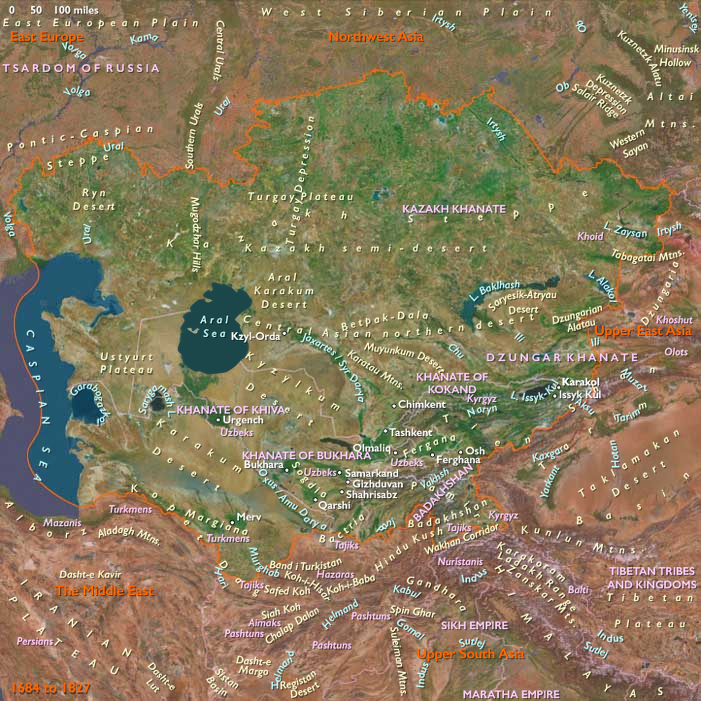
The Middle East includes Iraq, Iran, Syria, Armenia, Georgia, Azerbaijan, Qatar, Bahrain, the United Arab Emirates, most of Turkey (except the European part and southwest Anatolia), eastern Jordan, all but southernmost Lebanon, eastern Saudi Arabia, and northern Oman. Anchors include the Tigris–Euphrates basin (Mesopotamia), the Zagros and Caucasus ranges, the Iranian Plateau, the Caspian littoral, the Syrian Desert, and the Persian Gulf and Caspian Sea coasts. This geography spans irrigated river valleys, steppe corridors, semi-arid plateaus, and mountain enclaves linking Anatolia, Persia, and Arabia.
Climate & Environmental Shifts
The period fell within the late Little Ice Age, producing cooler winters in Anatolia, Armenia, and the Caucasus, alongside recurrent droughts in Mesopotamia and Iran. Floods along the Tigris and Euphrates periodically devastated farmlands, while earthquakes struck Tabriz (1721) and Shiraz (1824). Pastoral nomads in Arabia, Iran, and the Caucasus moved widely to buffer drought, while irrigation in Mesopotamia and northern Iran faltered under war and neglect but revived when political stability returned.
Subsistence & Settlement
-
Mesopotamia: Date groves, rice paddies, and cereal fields along the Tigris–Euphrates remained staples; tribal confederations dominated countryside around Ottoman Baghdad.
-
Iranian Plateau: Dryland farming (wheat, barley) and oasis gardening (fruit, melons) sustained populations; silk in Gilan and rice in Mazandaran anchored Caspian subsistence.
-
Caucasus (Armenia, Georgia, Azerbaijan): Pastoralism, viticulture, and orchards flourished in upland valleys; caravan towns like Tiflis and Yerevan mediated exchange.
-
Anatolia & Syria: Grain, olives, and vines in uplands; Aleppo and Damascus remained provisioning and craft centers despite periodic crises.
-
Persian Gulf & Oman: Fishing, date cultivation, and pearling dominated, with maritime trade sustaining settlements from Basra to Muscat.
Technology & Material Culture
Agriculture relied on qanats, canals, and animal-powered irrigation. Fortresses and caravanserais dotted plateau routes; mosques, madrasas, and Armenian and Georgian churches anchored towns. Persian silk textiles, Azerbaijani carpets, and Aleppine cottons were prized. Gunpowder weapons, artillery, and fortress improvements spread, though unevenly. Maritime craft ranged from Ottoman galleys to Omani dhows controlling Indian Ocean lanes.
Movement & Interaction Corridors
-
Caravan routes: Linked Aleppo to Mosul and Baghdad; Isfahan to Tabriz, Yerevan, and Baku; Basra to the Gulf; Shiraz and Yazd to Hormuz/Muscat.
-
Persian Gulf: Omani seafaring extended across the Arabian Sea; Basra exported dates and grain; pearl fisheries tied Bahrain and Qatar to Indian and European markets.
-
Caspian trade: Connected Gilan’s silk and Astrakhan’s markets; Russian expansion brought new garrisons and merchants.
-
Imperial contest zones: Anatolia and the Caucasus saw repeated wars; Iraq oscillated between Ottoman and Persian control.
Cultural & Symbolic Expressions
-
Ottoman provinces: Islam anchored society through mosques, Sufi lodges, and guilds; Armenian and Syriac Christians maintained schools and churches; Jewish communities thrived in Aleppo and Baghdad.
-
Safavid Iran: Shi‘ism remained state religion; Isfahan’s mosques and gardens expressed grandeur, though after the Safavid collapse, Qajar art and architecture reshaped Persian identity.
-
Caucasus: Christian Orthodoxy (Georgian, Armenian) coexisted with Islam; mountain oral epics and shrine pilgrimages preserved memory.
-
Arabian littoral: Tribal poetry, pearl-diver songs, and Omani mosque schools expressed maritime identity.
Environmental Adaptation & Resilience
-
Nomadic strategies: Tribal migrations across steppe and desert balanced drought and grazing.
-
Oasis and qanat systems: Managed water for cereals and orchards; local repair after war was critical.
-
Silk, carpet, and date economies: Offered export resilience when crops failed.
-
Maritime trade: Oman and Gulf ports buffered against inland disruption by maintaining Indian Ocean routes.
Transition
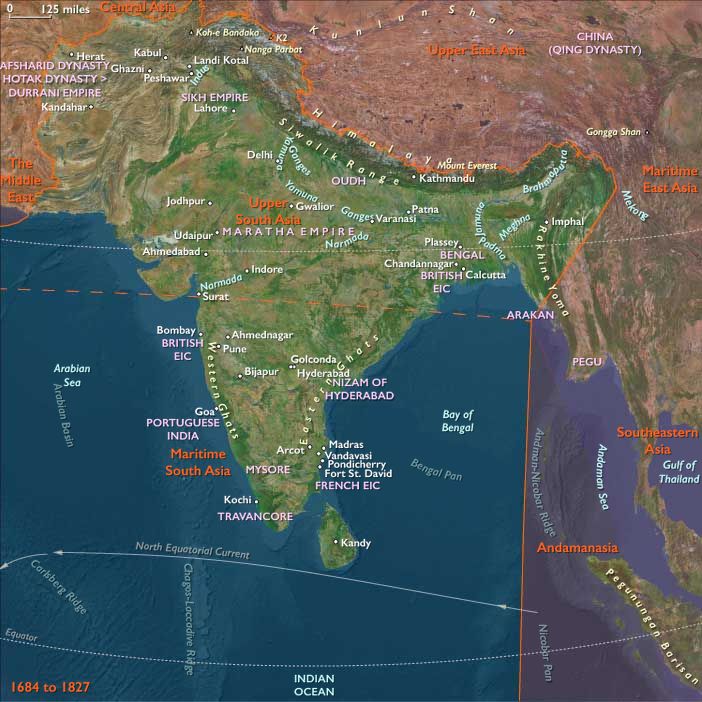
Between 1684 and 1827, the Middle East was a contested imperial borderland. The Safavid dynasty collapsed (1722); Afghans, Ottomans, and Russians fought over Iran and the Caucasus. Nader Shah briefly restored Persian power (1736–1747), raiding into India and the Caucasus. The Qajar dynasty (from 1794) consolidated Iran but conceded land to Russia in treaties (Gulistan 1813, Turkmenchay 1828). The Ottoman Empire faced Russian expansion in the Black Sea and Caucasus and Wahhabi revolts in Arabia. Oman emerged as a naval power, dominating the Gulf and East Africa. By 1827, the region was still a mosaic of caravans, mosques, and fortified towns, but the balance of power had tilted toward European and Russian pressures—foreshadowing the 19th-century age of colonial rivalry and reform.
Persia's last two Safavi rulers, Shah Suleiman (1669-94) and Shah Sultan Husayn (1694-1722), are voluptuaries.
The eastern frontiers began to be breached once again, and in 1722 a small body of Afghan tribesmen wins a series of easy victories before entering and taking the capital itself, ending Safavi rule.