Suharto
2nd President of Indonesia
Years: 1921 - 2008
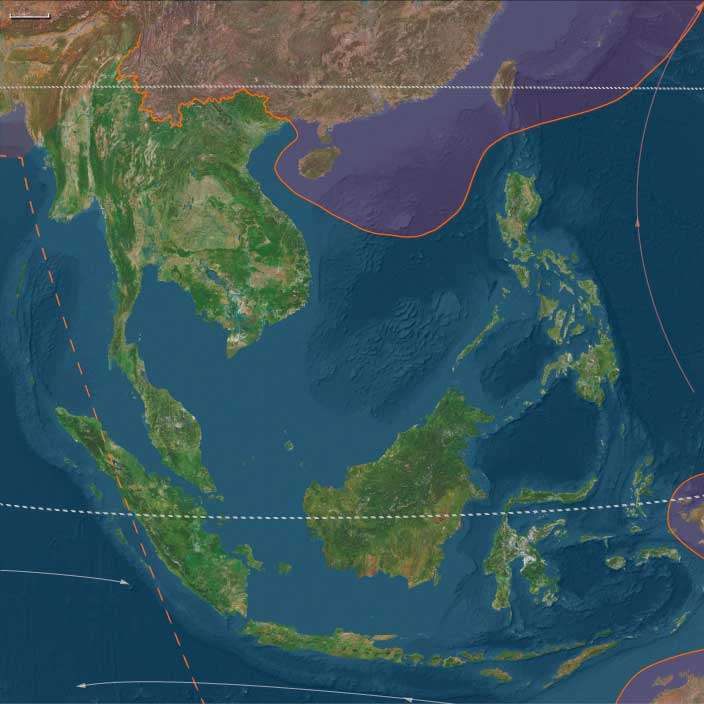
Suharto (June 8, 1921 – January 27, 2008) is the second President of Indonesia, having held the office for 31 years from 1967 following Sukarno's removal until his resignation in 1998.
Suharto was born in a small village, Kemusuk, in the Godean area near Yogyakarta, during the Dutch colonial era.
He grows up in humble circumstances.
His Javanese Muslim parents divorce not long after his birth, and he is passed between foster parents for much of his childhood.
During the Japanese occupation of Indonesia, Suharto serves in Japanese-organized Indonesian security forces.
Indonesia's independence struggle sees him joining the newly formed Indonesian army.
Suharto rises to the rank of Major General following Indonesian independence.
An attempted coup on 30 September 1965 is countered by Suharto-led troops and is blamed on the Indonesian Communist Party.
The army subsequently leads an anti-communist purge, and Suharto wrests power from Indonesia's founding president, Sukarno.
He is appointed acting president in 1967 and President the following year.
Support for Suharto's presidency is strong throughout the 1970s and 1980s but erodes following a severe financial crisis that leads to widespread unrest and his resignation in May 1998.
Suharto dies in 2008.
The legacy of Suharto's 31-year rule is debated both in Indonesia and abroad.
Under his "New Order" administration, Suharto constructs a strong, centralized and military-dominated government.
An ability to maintain stability over a sprawling and diverse Indonesia and an avowedly anti-Communist stance wins him the economic and diplomatic support of the West during the Cold War.
For most of his presidency, Indonesia experiences significant economic growth and industrialization, dramatically improving health, education and living standards.
Indonesia's invasion and occupation of East Timor during Suharto's presidency results in at least 100,000 deaths.
By the 1990s, the New Order's authoritarianism and widespread corruption aere a source of discontent.
In the years after his presidency, attempts to try him on charges of corruption and genocide fail because of his poor health and because of lack of support within Indonesia.