Sterling Price
American lawyer, planter, and politician and Confederate general
Years: 1809 - 1867
Sterling Price (September 20, 1809 – September 29, 1867) is a lawyer, planter, and politician from the U.S. state of Missouri, who serves as the 11th Governor of the state from 1853 to 1857.
He also serveds as a United States Army brigadier general during the Mexican-American War, and a Confederate Army major general in the American Civil War.
Price is best known for his victories in New Mexico and Chihuahua during the Mexican conflict, and for his losses at the Battles of Pea Ridge and Westport during the Civil War -- the latter being the culmination of his ill-fated Missouri Campaign of 1864.
Following the war, Price takes his remaining troops to Mexico rather than surrender, unsuccessfully seeking service with the Emperor Maximillian there.
He ultimately returnsto Missouri, where he dies in poverty and is buried in St. Louis.
Related Events
Filter results
Showing 10 events out of 16 total
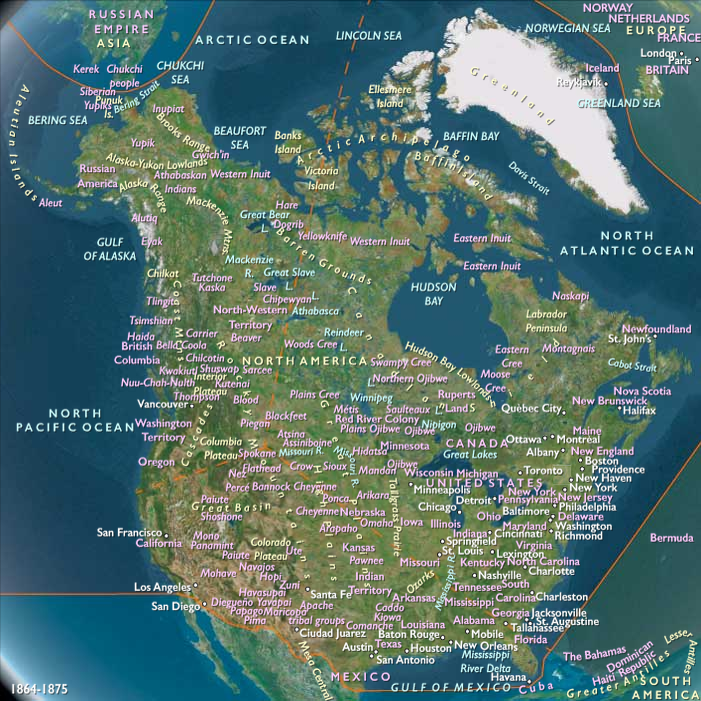
U.S. Brigadier General Stephen Watts Kearney, having departed in July 1846 immediately upon receiving news of the war with Mexico, leads the seventeen hundred Missouri volunteers of the grandly titled Army of the West from Fort Leavenworth, Kansas, down the Santa Fe Trail into New Mexico.
Kearny's orders are to secure the territories Nuevo México and Alta California.
In Santa Fe, Governor Manuel Armijo wants to avoid battle, but on August 9, Catholic priests, Diego Archuleta (the young regular-army commander), and the young militia officers Manuel Chaves and Miguel Pino force him to muster a defense.
However, on August 14, before the American army was even in view, he had decided not to fight.
When Pino, Chaves, and some of the militiamen insisted on fighting, Armijo had ordered the cannon pointed at them.
The New Mexican army had retreated to Santa Fe, and Armijo had fled to Chihuahua.
Kearny and his troops encountered no Mexican forces when they arrived on August 15.
Kearny and his force enter Santa Fe and claim the New Mexico Territory for the United States without a shot being fired.
Establishing a civil government under ex-Missourian Santa Fe trader Charles Bent, Kearney divides his command into three forces: one, commanded by Colonel Sterling Price, to occupy New Mexico; a second, under Alexander William Doniphan, to capture Chihuahua; and the third, his own, to occupy California.
American officers with a background in law draw up a temporary legal system for the territory called the Kearny Code.
Along the way, the combined forces beat back a force of some fifteen hundred New Mexicans and Pueblo at Santa Cruz de la Cañada and at Embudo Pass.
The insurgents retreat to Taos Pueblo, where they take refuge in the thick-walled adobe church.
During the ensuing battle, the U.S. breach a wall of the church and direct cannon fire into the interior, inflicting many casualties and killing about one hundred and fifty rebels.
They capture four hundred more men after close hand-to-hand fighting.
Only seven Americans die in the battle
The First Battle of Mora ends in a New Mexican victory.
New Mexican rebels will engage U.S. forces three more times in the following months.
The actions are known as the Battle of Red River Canyon, the Battle of Las Vegas, and the Battle of Cienega Creek.
Price has suppressed the Taos Revolt by mid-February.
Alexander Doniphan’s now-rested Missouri Volunteers had meanwhile set off for Chihuahua City on February 8.
Lyon angrily declares war on Jackson’s State Guard under the command of General Sterling Price in June, despite Lincoln’s assurance to Southerners in his first inaugural address that the North would not initiate aggression.
Jackson responds by openly declaring for the Confederacy and calling for outright insurrection.
Lyon mounts a campaign to drive him from the state.
The first major battle west of the Mississippi River, the Battle of Wilson's Creek, is fought on August 10, 1861, with a Confederate victory.
Lyon, hearing of a large Rebel force moving against him, had moved on August 1 to intercept them.
His men had moved into position undetected on the night of August 9 and surprise the Confederates in the morning at Wilson's Creek, near Springfield.
Directing troops on foot leading his horse, Lyon is struck in the leg and his horse killed by a hail of bullets.
He is later struck again, grazed on the right side of his head.
Staggering to the rear with the aid of another officer, Lyon reforms for a second assault.
Taking a mount from an aide, he impetuously leads the charge of the 2nd Kansas and is killed by a bullet in the chest at close range; his Major Sturgis assumes command.
The Confederates under General Price launch a third unsuccessful assault upon ”Bloody Hill”; when they fall back to regroup, Sturgis orders a hasty retreat to Springfield, unpursued by the exhausted Confederates.
In six hours of fighting, the Federals have suffered 1,317 killed, wounded and missing.
The Confederate casualties are 1,230.
The Battle of Wilson's Creek, in which Lyon has earned the distinction of being the first general to die in the Civil War, is the second major land battle of the war.
The Confederate Missouri State Guard, having consolidated forces in the northern and central part of the state, marches, under the command of Maj. Gen. Sterling Price, on the unionist stronghold of Lexington, Missouri, where Col. James A. Mulligan commands the entrenched Union garrison of about thirty-five hundred men.
Price's men first encounter Union skirmishers on September 13 south of town and push them back into the fortifications.
Price, having bottled the Union troops up in Lexington, decides to await his ammunition wagons, other supplies, and reinforcements before assaulting the fortifications.
By the 18th, Price is ready and orders an assault.
The Missouri State Guard moves forward in the face of heavy Union artillery fire and pushes the enemy back into their inner works.
On the 19th, the Rebels consolidate their positions, keep the Yankees under heavy artillery fire and prepare for the final attack.
Early on the morning of the 20th, Price's men advance behind mobile breastworks, made of hemp, close enough to take the Union works at the Anderson House in a final rush.
Mulligan requests surrender terms after noon, and by 2:00 PM, his men have vacated their works and stacked their arms.
Union casualties are 1,774 to the Confederates' 100.
The capture of Lexington further bolsters Southern sentiment and consolidates Confederate control in the Missouri Valley west of Arrow Rock.
William Clarke Quantrill is among the more notorious of the proslavery men in Kansas: a young former Ohio schoolteacher who had moved to Kansas in 1856 and begun farming, though without much enthusiasm.
Violent by nature, had traveled to Utah with the Federal Army as a teamster in 1858, but left the army there to try his hand at professional gambling.
By the end of 1860 he had returned east.
Living near Lawrence, he had fallen into thievery and murder, had been charged with horse stealing, and began life on the run.
At the outbreak of the war, Quantrill claimed he was a native of Maryland and may have joined the Missouri State Guard under General Sterling Price.
Quantrill had fought eagerly with the Confederate army at Carthage, Wilson's Creek and Lexington, Missouri, but had soon become discouraged by the Confederate leadership, who he feels is soft on Union sympathizers, and his dislike of army discipline had led him to form an independent guerrilla band by Christmas 1861, leading his Bushwackers on thieving raids against Kansas and Missouri farmers and townspeople who favor the Union.
Quantrill’s bushwhacker company begins as a force of no more than a dozen men who stage raids into Kansas, harass Union soldiers, raid pro-Union towns, rob mail coaches, and attac Unionist civilians.
At times they skirmish with the Jayhawkers, undisciplined Union militia from Kansas who raid into Missouri.
The Union forces declare Quantrill's Raiders to be outlaws.
Quantrill's band, although mustered into official Confederate service in 1862 as partisan raiders, continues to operate independently, burning and looting such towns as Olathe.
When the Union Army orders all captured guerrillas to be shot, Quantrill ceases taking prisoners and starts doing the same.
Given the rank of captain, Quantrill earns infamy for murder, robbery and the mutilation of the dead.