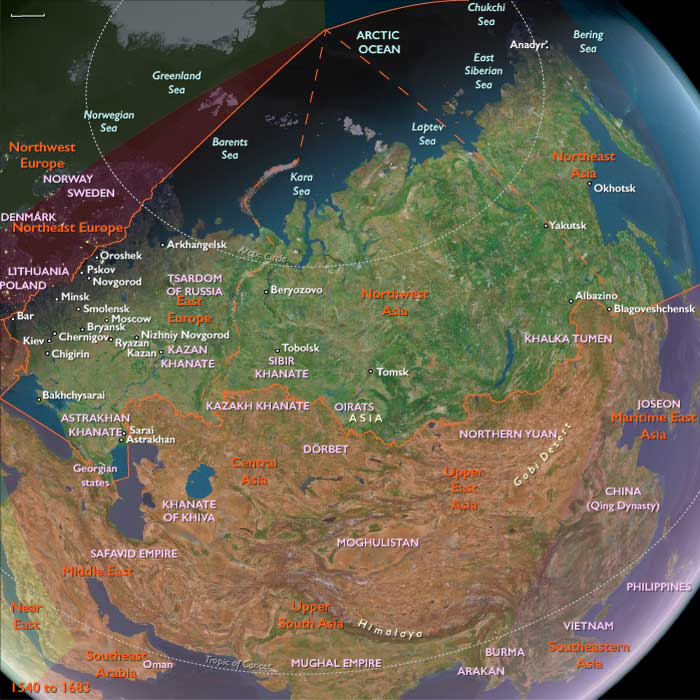
The free settlers of South Russia, the Cossacks, react against the growing centralization of the Russian state; serfs escape from their landlords and join the rebels.
History first notes the Cossack leader Sten'ka Razin (actually Stepan Timofeyevich), chief of the Don Cossacks, as part of a diplomatic mission from the Don Cossacks to the Kalmyks in 1661.
That same year, Razin had gone on a long-distance pilgrimage to the great Solovetsky Monastery on the White Sea for the benefit of his soul.
After that, all trace of him is lost for six years, when he reappears as the leader of a robber community established at Panshinskoye, among the marshes between the rivers Tishina and Ilovlya, from whence he levies blackmail on all vessels passing up and down the Volga.
The long war with Poland in 1654-1667 and Sweden in 1656-1658 has put heavy demands upon the people of Russia.
Taxes have increased as has conscription.
Many peasants hoping to escape these burdens have fled south and joined bands of Razin's marauding Cossacks.
They are also joined by many other disaffected with the Russian government, including people of the lower classes as well as representatives of non-Russian ethnic groups, such as Kalmyks, that are being oppressed.
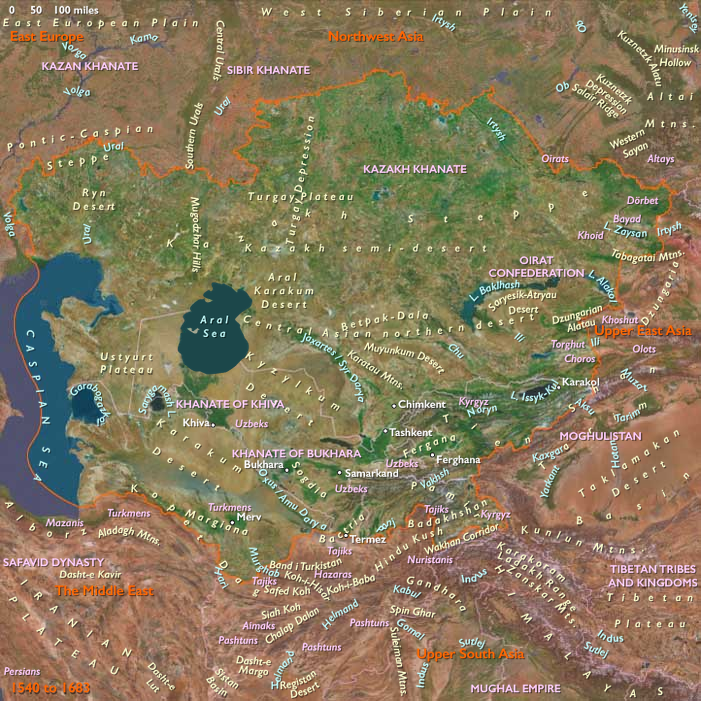
By far the greatest peasant revolt in seventeenth century Europe erupts in 1667 when Razin leads a major uprising against the nobility and the Tsar's bureaucracy in South Russia, beginning by raiding and pillaging the lower Volga valley and trans-Caspian region.
His first considerable exploit is the destruction of the great naval convoy consisting of the treasury barges and the barges of the patriarch and the wealthy merchants of Moscow.
Razin next sails down the Volga with a fleet of thirty-five galleys, capturing the more important forts on his way and devastating the country.