Sigeberht of East Anglia
king of East Anglia
Years: 600 - 634
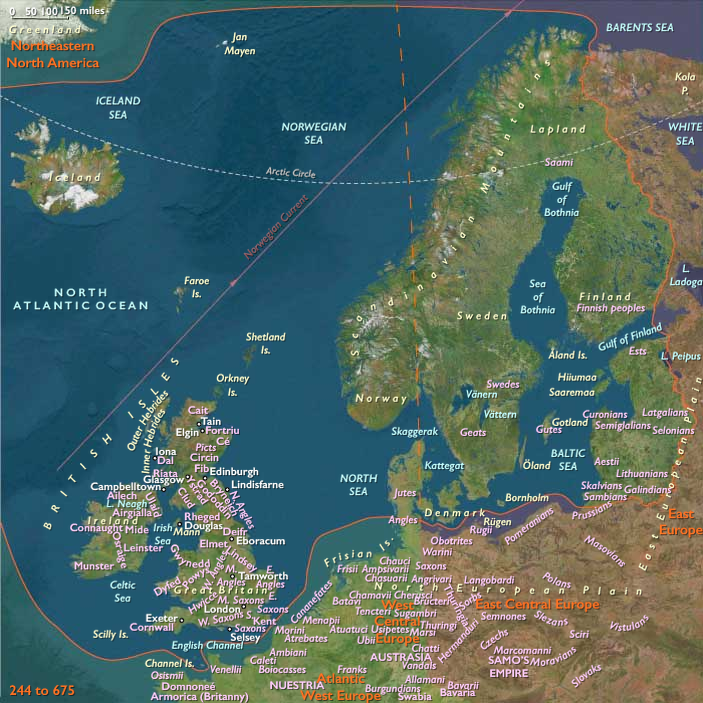
Sigeberht of East Anglia (also known as Saint Sigebert) is a saint and a king of East Anglia, the Anglo-Saxon kingdom which today includes the English counties of Norfolk and Suffolk.
He is the first English king to receive a Christian baptism and education before his succession and the first to abdicate in order to enter the monastic life.
The principal source for Sigeberht is Bede's Ecclesiastical History of the English People, which was completed in the 730s.
Sigeberht is probably either a younger son of Rædwald of East Anglia, or his stepson from Rædwald's marriage to a pagan princess from the kingdom of Essex.
Nothing is known of his life before he is forced into exile in Gaul, which is possibly done in order to ensure that Rædwald's own descendants rule the kingdom.
After his step-brother Eorpwald's assassination in about 627, Sigeberht returns to East Anglia and (perhaps in the aftermath of a military campaign) becomes king, ruling jointly with Ecgric, who may have been either a son of Rædwald's, or his nephew.
During Sigeberht's reign the cause of Christianity in East Anglia is advanced greatly, even though his co-ruler Ecgric probably remains a pagan.
Alliances are strengthened between the Christian kingdoms of Kent, Northumbria and East Anglia.
Sigeberht himself plays an important part in the establishment of the Christian faith in his kingdom: Saint Felix arrives in East Anglia to assist him in establishing his episcopal see at Dommoc, he starts a school for teaching Latin and he grants the Irish monk Saint Fursey a monastery site at Cnobheresburg (possibly Burgh Castle).
He eventually abdicates his power to Ecgric and retires to his monastery at Beodricesworth.
At an unknown date, East Anglia is attacked by a Mercian army led by its king, Penda.
Ecgric and the East Anglians appeal to Sigeberht to lead them in battle, but he refuses and has to be dragged from his monastery to the battlefield.
He refuses to bear arms during the battle, during which both kings are slain and the East Anglian army is destroyed.