Shahrukh Mirza (Timurid dynasty)
Timurid ruler
Years: 1377 - 1447
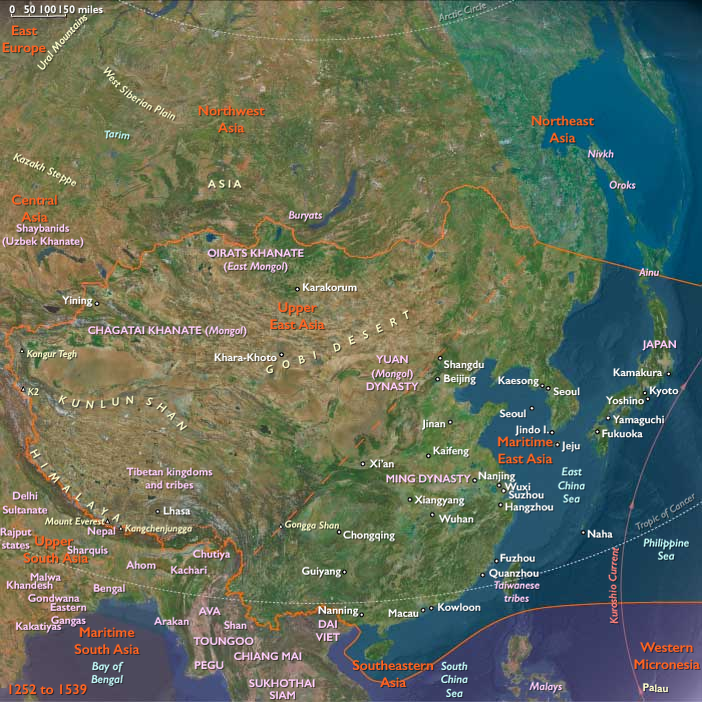
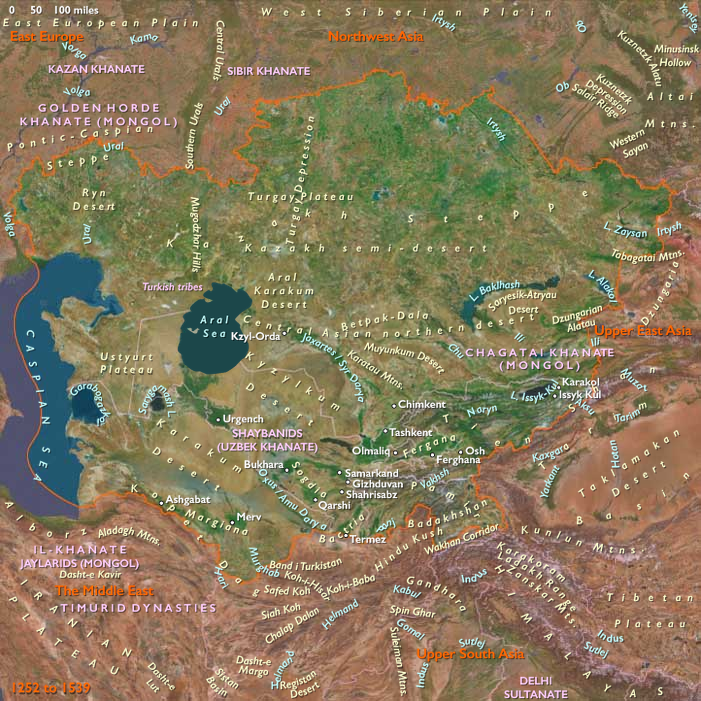
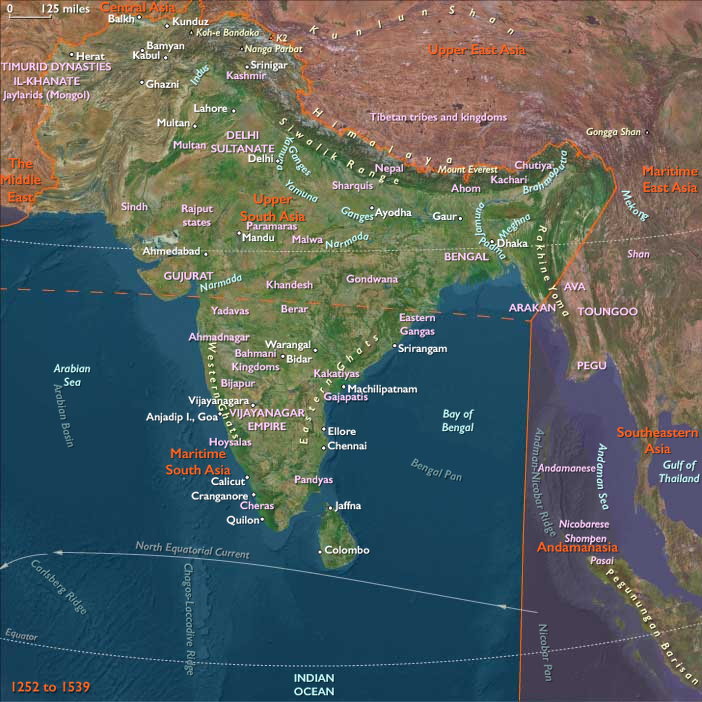
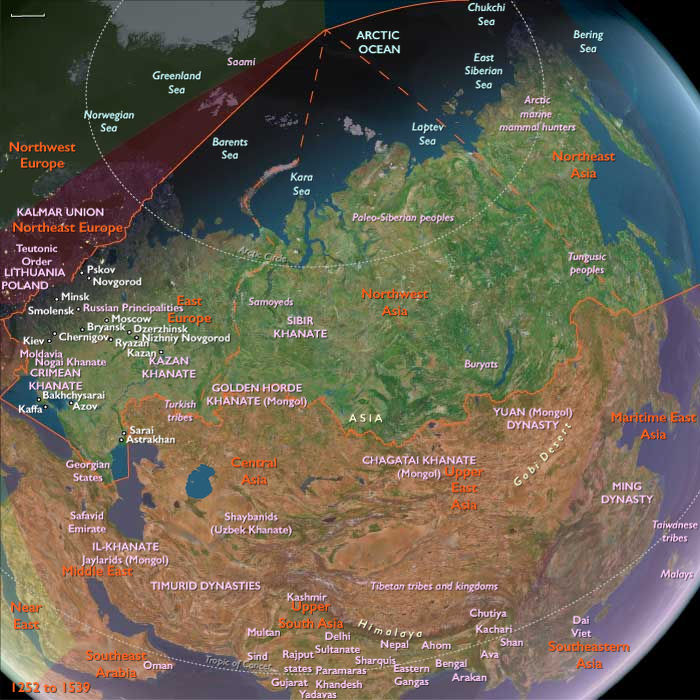
Shāhrukh Mīrzā (August 30, 1377 – March 12, 1447) is the Timurid ruler of the eastern portion of the empire established by the Central Asian warlord Timur (Tamerlane) - the founder of the Timurid dynasty - governing most of Persia and Transoxiana between 1405 and 1447.
Shāhrukh is the fourth and youngest son of Timur and child of one of his Tajik concubines.
After Timur's death in 1405, his empire falls apart with various tribes and warlords competing for dominance.
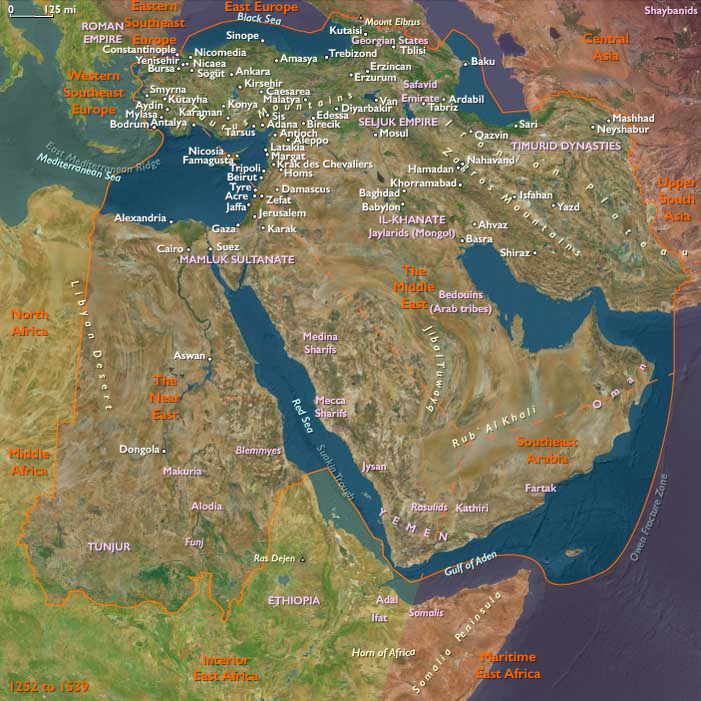
The Black Sheep Turkmen destroy the western empire in 1410 when they capture Baghdad, but in Persia and Transoxiana Shāhrukh is able to secure effective control from about 1409.
His empire controls the main trade routes between East and West, including the legendary Silk Road, and becomes immensely wealthy as a result.
The devastation of Persia's main cities leads to the cultural center of the empire shifting to Samarkand in modern Uzbekistan and Herat in modern Afghanistan.
Shāhrukh chooses to have his capital not in Samarqand, but in Herat.
This is to become the political center of the Timurid empire, and residence of his principal successors, though both cities benefit from the wealth and privilege of Shāhrukh's court, which is a great patron of the arts and sciences.
His wife, Gowhar Shād, funds the construction of two outstanding mosques and theological colleges in Mashhad and Herāt.
The Gowhar-Shād-Mosque is finished in 1418.
The mixed ethnic origins of the ruling dynasty lead to a distinctive character in its cultural outlook, which is a combination of Persian civilization and art, with borrowings from China, and literature written in Persian as well as Chagatay and Arabic.