Sebastião José de Carvalho e Melo, 1st Marquis of Pombal
Portuguese Secretary of State
Years: 1699 - 1782
D. Sebastião José de Carvalho e Melo, 1st Marquis of Pombal, 1st Count of Oeiras (May 13, 1699 – May 8, 1782) is an eighteenth-century Portuguese statesman.
He is Secretary of the State of Internal Affairs of the Kingdom (the equivalent of a Prime Minister today) in the government of Joseph I of Portugal from 1750 to 1777.
Undoubtedly the most prominent minister in the government, he is considered to be its de facto head.
Pombal is notable for his swift and competent leadership in the aftermath of the 1755 Lisbon earthquake.
He implements sweeping economic policies in Portugal to regulate commercial activity and standardize quality throughout the country, and is instrumental in weakening the grip of the Inquisition.
The term Pombaline is used to describe not only his tenure, but also the architectural style adopted in Lisbon after the great earthquake.
Pombal, who is considered an estrangeirado—one of the intellectuals who, in the late seventeenth century and particularly in the eighteenth century, strives to introduce the ideas of the Scientific Revolution and the Enlightenment, as well as other foreign ideas to Portugal— introduces many fundamental administrative, educational, economic, and ecclesiastical reforms justified in the name of "reason" and instrumental in advancing secularization in Portugal.
However, historians will argue that Pombal’s implementation of the ideas of the "Enlightenment", while far-reaching, was primarily a mechanism for enhancing autocracy at the expense of individual liberty and especially an apparatus for crushing opposition, suppressing criticism, and furthering colonial economic exploitation as well as intensifying print censorship and consolidating personal control and profit.


Related Events
Filter results
Showing 10 events out of 58 total
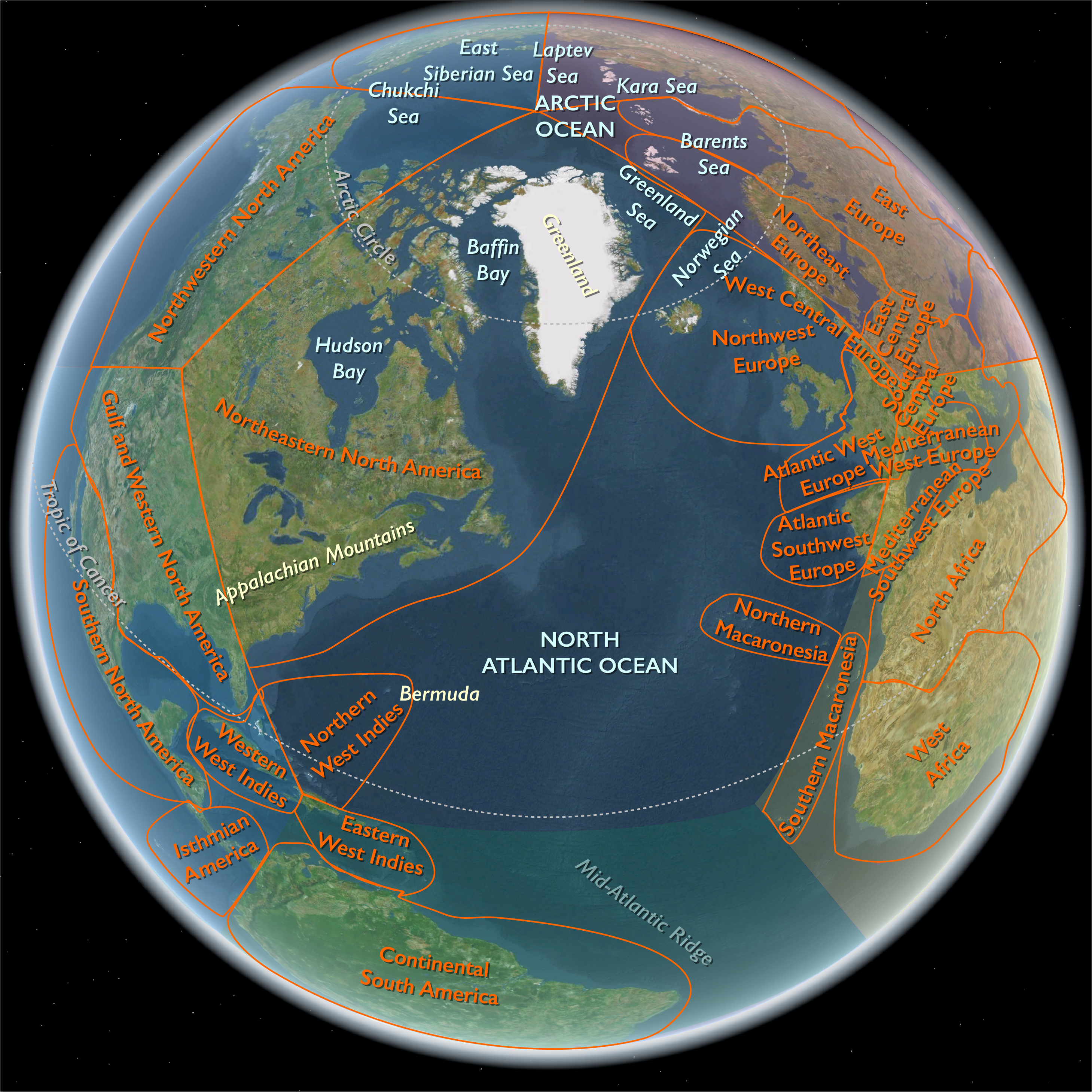
Atlantic Southwest Europe (1684–1827 CE): Port Cities, Iberian Shifts, and the Atlantic Grain–Wine Trade
Geography & Environmental Context
Atlantic Southwest Europe encompasses northern Spain (Galicia, Asturias, Cantabria, and León) and central to northern Portugal, including Lisbon. Anchors include the Galician Rías (Ría de Vigo, A Coruña), the Cantabrian Coast, the Minho and Douro valleys, the Tagus estuary at Lisbon, and the rugged mountains of León and northern Portugal. This is a region of Atlantic-facing coasts, fertile river basins, and upland pastures, with maritime corridors tying Iberia to the broader Atlantic world.
Climate & Environmental Shifts
The tail of the Little Ice Age brought heavy rains and cooler winters. Coastal Asturias and Galicia endured storm surges and erratic fishing seasons. In Portugal, alternating droughts and floods affected the Tagus and Douro, stressing vineyards and grain harvests. The Tambora eruption (1815) caused harvest failures and famines in 1816–1817, driving food shortages and migration. Despite shocks, the region remained buffered by mixed farming and Atlantic fisheries.
Subsistence & Settlement
-
Agriculture: Grain (rye, maize, wheat) dominated northern Spain’s uplands, while vineyards along the Douro Valley produced the famous port wines increasingly exported to Britain. Olive groves and orchards dotted Portugal’s hills.
-
Livestock: Cattle and sheep grazed in León and northern Portugal, supporting cheese and wool exports.
-
Fishing & maritime life: Cod and sardines sustained coasts; Galician fisheries supplied local markets.
-
Urban centers: Lisbon was the linchpin, linking Brazilian sugar, gold, and coffee to Europe; Porto thrived on the wine trade; A Coruña, Santander, Bilbao grew as shipping points for wool, timber, and iron. Rural hamlets persisted in Galicia’s valleys and Portuguese interior, producing subsistence crops and artisanal goods.
Technology & Material Culture
Stone terraces stabilized vineyards in the Douro; irrigation and watermills supported grain processing in León and Galicia. Shipyards along the Tagus and Douro built ocean-going vessels; Portuguese navigational expertise fed the empire. Urban Lisbon rebuilt in grand style after the 1755 earthquake, with wide boulevards and Pombaline architecture. Material culture blended maritime tools, peasant implements, and luxury imports—Brazilian gold funded churches, palaces, and decorative arts.
Movement & Interaction Corridors
-
Transatlantic links: Lisbon was Europe’s primary gateway to Brazil, channeling sugar, gold, diamonds, tobacco, and coffee. The Douro–Porto corridor tied hinterland vineyards to British buyers under the Methuen Treaty (1703), which gave Portuguese wines privileged access to English markets.
-
Spanish Atlantic ports: A Coruña, Bilbao, and Santander shipped wool and iron to northern Europe. Galicia supplied emigrants to the Americas.
-
Inland trade: Mules carried wine, wool, and grain over mountain passes to port cities.
-
War disruptions: During the Peninsular War (1807–1814), French invasions disrupted Portugal and northern Spain, but British naval supremacy kept Lisbon and Porto tied into Atlantic commerce.
Cultural & Symbolic Expressions
-
Religion: Catholicism framed life; pilgrimage routes to Santiago de Compostela remained vital. Monasteries in Galicia and León managed estates and provided poor relief.
-
Urban culture: Lisbon’s intellectual salons and Porto’s mercantile guilds reflected Enlightenment currents; Coimbra University fostered reformist thinkers.
-
Folk traditions: Galician bagpipe (gaita) music, Portuguese fado songs, and rural festivals preserved local identity.
-
Architecture: Baroque churches in Braga, Porto, and Santiago embodied both religious devotion and mercantile prosperity.
Environmental Adaptation & Resilience
-
Diversification: Maize introduction expanded caloric bases in Galicia and Portugal, reducing famine risk.
-
Vineyard specialization: The Douro’s terraced slopes maximized limited arable land, producing high-value exports.
-
Fisheries: Cod and sardine fisheries provided fallback protein during poor harvests.
-
Charitable networks: Monasteries, confraternities, and parish relief assisted during famines and war dislocation.
Transition
From 1684 to 1827, Atlantic Southwest Europe remained both peripheral and central—a rugged agrarian landscape tied to a global empire through Lisbon and Porto. Portuguese fortunes hinged on Brazil until independence (1822), while Porto’s wine trade locked northern Portugal into Britain’s orbit. Northern Spain’s ports grew modestly, sending wool and emigrants to the Atlantic world, while Galicia remained a land of subsistence peasants and pilgrims. Wars, earthquakes, and famines tested resilience, yet the region adapted through maize, wine, fisheries, and Atlantic trade, foreshadowing new realignments in the 19th century as Iberian empires fragmented and Atlantic economies shifted.
The 1755 Lisbon Earthquake and Pombal’s Radical Reconstruction
On the morning of November 1, 1755, Lisbon was devastated by one of the most destructive earthquakes in European history. The massive tremor, followed by a firestorm and a tidal wave, killed tens of thousands and destroyed most of the city.
The response of Sebastião José de Carvalho e Melo, the Marquis of Pombal, was decisive and transformative, shaping Lisbon’s modern identity and turning it into Europe’s first planned city.
The Disaster: Earthquake, Fire, and Tsunami
- The earthquake, estimated at magnitude 8.5 to 9.0, struck on All Saints' Day, when churches were filled with worshippers.
- Fires ignited by candles and lamps in churches and homes spread uncontrollably, consuming the city.
- A tsunami swept into Lisbon’s harbor and waterfront, destroying ships and drowning thousands.
Pombal’s Immediate Response
Despite the unprecedented scale of destruction, Carvalho, who was in Belém at the time, took swift action. His response demonstrated his effectiveness as a leader:
✔ Emergency Relief Measures
- He improvised hospitals for the injured.
- Controlled prices to prevent profiteering.
- Requisitioned food from the countryside.
- Organized public security, preventing looting and chaos.
✔ Survivor Management and Law Enforcement
- Buried the dead quickly to prevent disease outbreaks.
- Executed looters and criminals publicly, ensuring order.
The Rebuilding of Lisbon: Europe’s First Planned City
After surveying the ruins, Pombal ordered the complete reconstruction of Lisbon, led by:
- Eugénio dos Santos (architect).
- Manuel da Maia (engineer).
Their master plan transformed Lisbon’s city center into a rational, grid-based layout, featuring:
- Long, straight avenues and cross streets for easy navigation.
- Earthquake-resistant buildings, using innovative construction techniques, including wooden frameworks ("gaiola pombalina") designed to absorb seismic shocks.
- Uniform neoclassical architectural styles to give the city a cohesive look.
The rebuilt district, flanked by Praça do Rossio and Praça do Comércio, is known today as the Baixa Pombalina, a symbol of Portugal’s resilience and modernization.
Conclusion: Pombal’s Legacy as a Reformer
Pombal’s bold leadership during the 1755 Lisbon Earthquake demonstrated his Enlightenment ideals and modern governance. His reconstruction of Lisbon set a precedent for urban planning in Europe, while his decisive actions saved lives and restored order. The Baixa Pombalina remains a lasting monument to his vision, ensuring that Lisbon rose from disaster stronger than before.
Pombal’s Educational Reforms: The Foundation of Public Instruction in Portugal
Following the expulsion of the Jesuits in 1759, Sebastião José de Carvalho e Melo, the Marquis of Pombal, undertook sweeping reforms in education, aiming to modernize Portugal’s intellectual infrastructure and establish state-controlled public instruction. He sought to break the Jesuits' hold on education, replacing their scholastic methods with Enlightenment-inspired teaching based on observation and experience.
Key Educational Reforms Under Pombal
✔ Establishing a Public Education System
- Pombal took the first steps toward creating a national public school system, funded by a special tax.
- Schools were set up in major cities, marking a shift from religious to secular education.
✔ Founding of Specialized Schools
- Established Portugal’s first commercial school, focusing on economic and practical training.
- Promoted scientific and technical education, aligning Portugal with contemporary European intellectual trends.
✔ University of Coimbra Reforms
- Blaming the Jesuits for the university’s decline, Pombal reorganized the University of Coimbra to reflect Enlightenment values.
- Created two new departments:
- Mathematics, to advance scientific knowledge and engineering.
- Philosophy, emphasizing rationalism and empirical observation.
- Increased the number of professors in existing faculties.
✔ Modernizing Instructional Methods
- Implemented pedagogical changes based on the works of Luís António Verney and António Nunes.
- Shifted from rote learning to observational and experiential learning.
✔ Scientific and Cultural Advancements
- Established Portugal’s first natural history museum.
- Created a botanical garden for scientific research.
- Built an astronomical observatory, advancing astronomical studies in Portugal.
- Developed laboratories, integrating scientific experimentation into education.
Impact of Pombal’s Educational Reforms
✔ Laid the foundation for Portugal’s modern education system.
✔ Weakened the Church’s influence over education, replacing it with state-run schools.
✔ Introduced Enlightenment ideas into Portuguese academia, fostering scientific and economic progress.
✔ Established new research institutions, bridging Portugal with the broader European intellectual movement.
Conclusion: A Modernizer of Portuguese Education
Pombal’s educational reforms marked a decisive shift from Jesuit-dominated instruction to secular, state-controlled learning. By modernizing the University of Coimbra, founding new schools, and emphasizing science and rationalism, he paved the way for Portugal’s intellectual and economic modernization, leaving a lasting impact on the nation’s academic institutions.
The Economic Reforms of the Marquis of Pombal: Inspired by Colbertism (18th Century)
Sebastião José de Carvalho e Melo, later known as the Marquis of Pombal, served as the chief minister of Portugal under King Joseph I (1750–1777) and implemented sweeping economic reforms inspired by Jean-Baptiste Colbert’s protectionist policies in France. His mercantilist strategies aimed to strengthen the Portuguese economy, promote industrial development, and reduce dependence on foreign imports.
Key Economic Policies Under Carvalho
-
Monopoly Companies and Trade Regulation
- Like Colbert’s system in France, Carvalho granted royal companies monopolies over specific industries.
- He prohibited the export of gold and silver, ensuring that wealth remained within Portugal.
- Several monopoly companies were established to control trade in Brazil and other colonies.
-
Reforming Portuguese Agriculture
- To increase cereal production, Carvalho banned the planting of grape vines in certain regions, prioritizing grain cultivation to combat food shortages.
- At the same time, he protected Portugal’s winemaking industry by:
- Founding the Douro Wine Company (1756), which held a monopoly on the export of Port wine.
- Standardizing wine production and protecting Portuguese wines from foreign competition.
-
Industrial Development and Manufacturing
- Carvalho sought to modernize Portuguese industry, particularly textiles, glassmaking, and fishing.
- He converted the silk industry into a broader textile sector, reducing reliance on imported fabrics.
- The Marinha Grande glass factory was placed under British management, introducing advanced manufacturing techniques to improve production quality.
- A state-supported fishing and processing company was established to develop sardine and tuna fisheries in Portuguese waters.
Impact of Carvalho’s Economic Policies
✔ Strengthened Portuguese industries, particularly in wine, textiles, and glassmaking.
✔ Increased state control over colonial trade, boosting revenues from Brazil and overseas territories.
✔ Reduced Portugal’s dependence on foreign imports, improving the country’s economic self-sufficiency.
❌ Criticized for excessive state intervention, which stifled competition and created economic rigidity.
❌ Provoked opposition from the nobility and foreign merchants, particularly British traders, whose influence in Portugal was diminished.
Conclusion: Carvalho’s Economic Legacy
Carvalho’s Colbertist-inspired economic reforms had lasting effects on Portugal, laying the foundation for industrial and commercial modernization. His mercantilist policies increased state control over trade and production, but their long-term success was limited by resistance from powerful elites and external economic pressures. Despite this, his efforts to strengthen the Portuguese economy through protectionism and industrialization shaped economic policies for decades to come.
Pombal’s Suppression of the Jesuits and His Conflict with the Catholic Church (1759–1760)
After consolidating power, Sebastião José de Carvalho e Melo, the Marquis of Pombal, sought to eliminate the Jesuits, whom he saw as a major obstacle to his Enlightenment-inspired reforms. Accusing them of involvement in the 1758 assassination attempt on King José I, he orchestrated their expulsion from Portugal and its empire in 1759, marking one of the most decisive anti-Jesuit actions in Europe.
The Expulsion of the Jesuits (1759)
- Pombal blamed the Jesuits for plotting against the king, leveraging their influence over the nobility as further justification.
- He searched and confiscated Jesuit properties, shutting down Jesuit-run schools across Portugal and its colonies.
- In 1759, he formally expelled the Society of Jesus from Portugal and all Portuguese overseas territories, including Brazil, India, and Africa.
- The Jesuits were deported to the Papal States, where they were received with suspicion by Pope Clement XIII.
Pombal’s Conflict with the Catholic Church (1760)
Beyond suppressing the Jesuits, Pombal sought to curb the power of the Catholic Church in Portugal, asserting state control over religious affairs:
✔ 1760: Portugal Breaks Relations with the Holy See
- Pombal severed diplomatic ties with the Vatican, challenging papal authority over Portugal’s affairs.
- This move was unprecedented in Catholic Europe at the time.
✔ Arrest of the Bishop of Coimbra
- The Bishop of Coimbra, a vocal opponent of Pombal’s policies, was imprisoned, signaling the state’s dominance over the clergy.
✔ Increased Royal Control Over the Church
- Pombal restricted the Church’s power, placing ecclesiastical affairs under royal oversight.
- He reduced clerical privileges, reinforcing state supremacy over religious institutions.
Consequences of Pombal’s Anti-Jesuit Campaign
✔ Strengthened Royal Absolutism – With the Jesuits and the nobility crushed, Pombal centralized power in the monarchy.
✔ Secularization of Education – Jesuit schools were replaced by state-controlled institutions, advancing secular Enlightenment ideals.
✔ Further Isolation from the Vatican – Portugal’s break with the papacy (1760) marked a radical shift in church-state relations, making Portugal one of the most anti-clerical European states of the era.
Conclusion: Pombal’s Ruthless Modernization
Pombal’s expulsion of the Jesuits (1759) and break with the Holy See (1760) were part of his broader mission to modernize Portugal, reduce clerical influence, and assert state supremacy. His campaign against religious institutions was one of the most extreme in Europe, reshaping Portugal’s political and religious landscape for generations.
The Rise of Sebastião José de Carvalho e Melo, Marquis of Pombal (1750–1777)
With the death of João V in 1750, his indolent son, José I (r. 1750–1777), ascended the Portuguese throne. Rather than actively governing, José I entrusted full control of the state to Sebastião José de Carvalho e Melo, who would later become the Marquis of Pombal.
Carvalho, a shrewd and ambitious statesman, transformed Portugal from a rigid aristocratic society into a modernized, centralized state, using ruthless Enlightenment-inspired reforms to strengthen the economy, weaken the nobility, and build a strong middle class.
Carvalho’s Rise to Power: From Diplomat to Dictator
- Born into a minor noble family, Carvalho defied Portugal’s rigid class system through intelligence, political skill, and a strategic marriage.
- His diplomatic postings in Britain and Austria exposed him to Enlightenment ideals, particularly in:
- Economic modernization.
- Scientific progress.
- Administrative efficiency.
- Returning to Portugal, he became José I’s chief minister, effectively ruling as Portugal’s dictator for nearly three decades.
Pombal’s Enlightenment-Inspired Reforms
Recognizing Portugal’s economic and social stagnation, Pombal launched aggressive reforms to modernize the country:
✔ Economic and Industrial Modernization
- Promoted mercantilist policies and state-run monopoly companies.
- Strengthened manufacturing, agriculture, and trade, reducing reliance on imported goods.
- Founded textile, glass, and paper industries, protecting them with tariffs and subsidies.
✔ Weakened the Aristocracy and Church Power
- Curbed noble privileges, appointing capable commoners to key government positions.
- Expelled the Jesuits in 1759, accusing them of opposing reforms and inciting rebellion.
- Secularized education and administration, making them more state-controlled.
✔ Creation of a Middle Class
- Encouraged trade, entrepreneurship, and skilled labor, laying the foundation for a Portuguese bourgeoisie.
- Promoted scientific and educational reforms, reducing the influence of clerical instruction.
Conclusion: A Ruthless Modernizer
Though Pombal ruled as a near-dictator, his policies transformed Portugal into a more centralized and modernized state. He was admired for his efficiency but feared for his authoritarian methods. His influence dominated José I’s reign, and his legacy shaped Portugal’s political and economic trajectory for generations.
Pombal’s Rise to Power and the Purge of the Nobility (1755–1759)
Following his decisive response to the 1755 Lisbon earthquake, Sebastião José de Carvalho e Melo, the Marquis of Pombal, was elevated to chief minister by King José I, consolidating his power as Portugal’s most influential statesman. With a vision of modernizing and centralizing Portugal, Pombal sought to crush any opposition to his reforms, beginning with the aristocracy.
The 1758 Assassination Attempt on King José I
- On September 3, 1758, an assassination attempt was made on King José I, providing Pombal with the justification to move against the nobility.
- The king was injured but survived, and Pombal swiftly blamed the aristocracy.
- He launched a brutal crackdown, using the attack as a pretext to eliminate his noble rivals.
Pombal’s Suppression of the Nobility
- Around 1,000 nobles were arrested, many of whom were accused of participating in a conspiracy against the king.
- Many confessed under brutal torture, and several were executed.
- The most famous victims were:
- The Távora family, a powerful noble house accused of orchestrating the assassination attempt.
- The Duke of Aveiro, who was also executed.
- Other noble families saw their properties confiscated and their power permanently diminished.
Pombal’s Ultimate Goal: Absolute Monarchy and Modernization
- Pombal used the crisis to eliminate aristocratic influence, transforming Portugal into a centralized state under royal authority.
- With the nobility weakened, Pombal accelerated his Enlightenment-inspired reforms, including:
- Curtailing noble privileges.
- Expanding the role of the state in economics, administration, and education.
Conclusion: The Fall of the Old Aristocracy
The Távora Affair and the 1758 crackdown on the nobility marked a turning point in Portuguese history, as Pombal reshaped Portugal’s social and political order. By annihilating aristocratic opposition, he secured absolute power for the monarchy and himself, ushering in an era of modernization, but also political repression.
José I (king of Portugal, 1750-77) dies in February 1777, and with him goes Pombal's hold on power and his common sense approach of encouraging industrial development.
Pombal's successor as secretary of state for overseas dominions, Martinho de Melo e Castro, is alarmed that the nascent Brazilian factories could make the colony independent and warns that "Portugal without Brazil is an insignificant power."
In January 1785, he orders that they all be "closed and abolished."
Brazilian students at Coimbra in the early 1780s, had pledged themselves to seek independence.
They are influenced greatly by the success of the North American British colonies in forming the United States of America.
In 1786 and 1787, Jose Joaquim Maia e Barbalho of Rio de Janeiro, a Coimbra graduate studying medicine at Montpelier and a critic of the colonial relationship, approaches Ambassador Thomas Jefferson in France.
He tells Jefferson that the students intend to break with Portugal and requests the aid of the United States.
One of the Coimbra graduates is Jose Bonifacio de Andrada e Silva, the patriarch of Brazilian independence.
The failed Minas Conspiracy (Inconfidencia Mineira) of 1789 involves some of the leading figures of the captaincy: tax collectors, priests, military officers, judges, government officials, and mine owners and landowners.
Some had been born in Portugal, several had had their early education with the Jesuits and later studied at Coimbra, a number write poetry that is still read and studied, but what they have most in common are financial problems caused by crown policies that require them to pay their debts, or that cut them out of lucrative gold and diamond contraband trade.
They argue that Brazil has all it needs to survive and prosper and that Portugal is a parasite.
They pledge to lift restrictions on mining; exploit iron ore; set up factories; create a university, a citizens' militia, and a Parliament; pardon debts to the royal treasury; free slaves born in Brazil; and form a union with São Paulo and Rio de Janeiro similar to that of the United States.
The history of the Minas Conspiracy is full of heavy drama.
Revelation of the conspiracy turns brothers, friends, clients, and patrons against each other in an unseemly scramble to escape punishment.
In one sense, the affair foreshadows the nature of future Brazilian revolutionary movements in that it is a conspiracy of oligarchs seeking their own advantage, while claiming to act for the people.
In the end, Lisbon decides to make an example of only one person, a low-ranked second lieutenant (alferes) of the Royal Mineiro Dragoons named Joaquim Jose da Silva Xavier ("Tiradentes").
His execution in 1792 in Rio de Janeiro might well have been forgotten if the nineteenth-century republicans had not embraced him as a symbolic counterpoise to Dom Pedro I, who declares Brazilian independence from Portugal in 1822.
Later, with the establishment of the republic in 1889, every town and city in Brazil will build a Tiradentes square, and the day of his execution, April 21, will become a well-commemorated national holiday.
Nonetheless, because the Minas Conspiracy is marked more by skulduggery than nobility and clarity, its value as a national symbol requires selective interpretation and presentation.
Portugal resolves to watch Brazilians more carefully and reacts forcefully to a nonexistent but suspected plot in Rio de Janeiro in 1794, and to a real, mulatto-led one in Bahia in 1798.
Meanwhile, the French Revolution, the resulting slave rebellion in Haiti, and the fear of similar revolts in Brazil persuades the Brazilian elites that the dream of a United States-style conservative revolution that will leave the slave-based socioeconomic structure intact and in their hands is impossible.
The crown separates the residents of Minas Gerais from the revived coastal sugar producers through policies that set their interests at odds.
Lisbon diverts Brazilian nationalism with greater imperial involvement.
The more the Portuguese squeeze and try to reduce the contraband in gold and diamonds, the more the divergence of interests grows.
In the 1770s, as less gold reaches royal coffers, the crown reacts by imposing a per capita tax (derrama) to make up the difference between the amounts expected and those received.
Meanwhile, competition from British, French, and Dutch colonies pushes the price of Brazilian sugar down lower on the Amsterdam market, reducing still more Portuguese revenues.
Moreover, the decline in available gold affects the contraband trade that the Brazilians have carried on with the Rio de la Plata area, where they exchange their illicit gold for Andean silver.
The Brazilians then used the silver to buy illegal British goods, which they smuggle back into the Spanish domains.
Atlantic Southwest Europe (1744–1755): Enlightenment Influences, Economic Expansion, and Catastrophic Disaster
Between 1744 and 1755, Atlantic Southwest Europe—including northern and central Portugal (with Lisbon), Galicia, Asturias, Cantabria, northern León and Castile, northern Navarre, northern Rioja, and the Basque Country—witnessed significant economic growth, intellectual vitality influenced by Enlightenment ideals, and increased commercial prosperity driven by maritime trade. However, this flourishing era ended abruptly with the catastrophic Lisbon Earthquake of 1755, profoundly reshaping the region’s political, economic, cultural, and social trajectory.
Political and Military Developments
Portuguese Governance and Enlightenment Reform
-
Portugal under King João V (r.1706–1750) and his successor, José I (r.1750–1777), experienced political stability with emerging Enlightenment-inspired reforms. José I's influential minister, Sebastião José de Carvalho e Melo (later Marquis of Pombal), promoted modernization and administrative centralization.
-
Northern Portugal, particularly Porto, benefited from improved governance, infrastructural enhancements, and supportive commercial policies.
Regional Stability in Northern Spain
-
In Spain under King Ferdinand VI (r.1746–1759), northern provinces—including Galicia, Asturias, Cantabria, and the Basque Country—experienced political stability and economic expansion. Local privileges (fueros) continued to underpin strong regional autonomy, providing robust governance and economic benefits.
-
Northern Navarre and the Basque provinces remained politically stable, leveraging local autonomy and economic self-governance to enhance regional prosperity.
Economic Developments: Maritime Prosperity and Trade Growth
Portuguese Maritime Trade Expansion
-
Northern and central Portugal’s maritime economy, centered on Lisbon and Porto, prospered with expanded transatlantic trade, particularly to Brazil. Port wine exports from the Douro region surged, bolstering Porto’s economy and enhancing Lisbon’s international stature as a trading hub.
-
Shipbuilding and fisheries thrived along Portugal’s Atlantic coast, significantly contributing to urban prosperity and expanding merchant classes.
Basque and Cantabrian Commercial Strength
-
The Basque Country, notably Bilbao, emerged as a critical European commercial center, excelling in iron production, shipbuilding, and transatlantic trade.
-
Cantabria, particularly Santander, continued to grow economically, leveraging Atlantic trade routes, maritime industry, and fishing to foster regional prosperity.
Religious and Cultural Developments
Enlightenment and Baroque Cultural Fusion
-
The Enlightenment influenced cultural institutions, fostering intellectual debates and advancements in education, notably at the University of Coimbra in Portugal and in Spanish institutions such as those in Bilbao and Santander.
-
Baroque artistic expression continued to flourish, particularly in architecture, with impressive developments in Lisbon, Porto, Braga, Santiago de Compostela, and Pamplona.
Social and Urban Developments
Urban Expansion and Merchant Class Growth
-
Lisbon, Porto, Bilbao, and Santander saw significant urban growth, fueled by maritime commerce and expanding merchant wealth. Urban infrastructure improved markedly, with public works enhancing civic life.
-
Regional autonomy under fueros strengthened the social cohesion of communities in northern Spanish provinces, emphasizing distinct cultural and political identities.
The Lisbon Earthquake of 1755: Catastrophe and Consequences
On November 1, 1755, Lisbon experienced a catastrophic earthquake—one of Europe's most devastating natural disasters. The quake destroyed vast portions of Lisbon, followed by destructive fires and a massive tsunami that devastated coastal areas. An estimated 40,000 to 50,000 lives were lost in Lisbon alone, with destruction also affecting coastal communities across Portugal, including Cascais, Setúbal, and regions as far north as Porto and Galicia in northwest Spain.
-
Immediate Response and Crisis Management: Minister Sebastião José de Carvalho e Melo swiftly directed emergency responses, organizing relief, controlling disorder, and initiating rapid urban reconstruction. His effective handling greatly increased his political authority, allowing extensive reforms and modernization projects in subsequent years.
-
Regional Impact: Porto, while spared catastrophic damage, faced economic disruptions from interrupted trade and damaged maritime infrastructure. Galicia and other northern coastal regions experienced milder effects but endured temporary trade setbacks due to maritime disruptions.
-
Cultural and Intellectual Effects: The disaster profoundly impacted European intellectual life, prompting debates about divine providence, philosophical skepticism, and human reason. Enlightenment thinkers such as Voltaire and Kant commented extensively on the earthquake’s moral and philosophical implications.
Legacy and Significance
The period 1744–1755 dramatically transformed Atlantic Southwest Europe. Initially marked by stability, economic expansion, and cultural vitality, the era abruptly ended with the 1755 Lisbon earthquake, reshaping political authority in Portugal and sparking profound intellectual reflections across Europe. The catastrophe accelerated administrative centralization, economic modernization, and urban planning innovations, leaving a lasting imprint on the region’s historical trajectory.