Sancho II of León and Castile
King of Castile, Galicia, and León
Years: 1036 - 1072
Sancho II (1036/8 – 7 October 1072), called the Strong (el Fuerte), is King of Castile (1065–72), Galicia (1071–72) and León (1072).
Related Events
Filter results
Showing 10 events out of 16 total
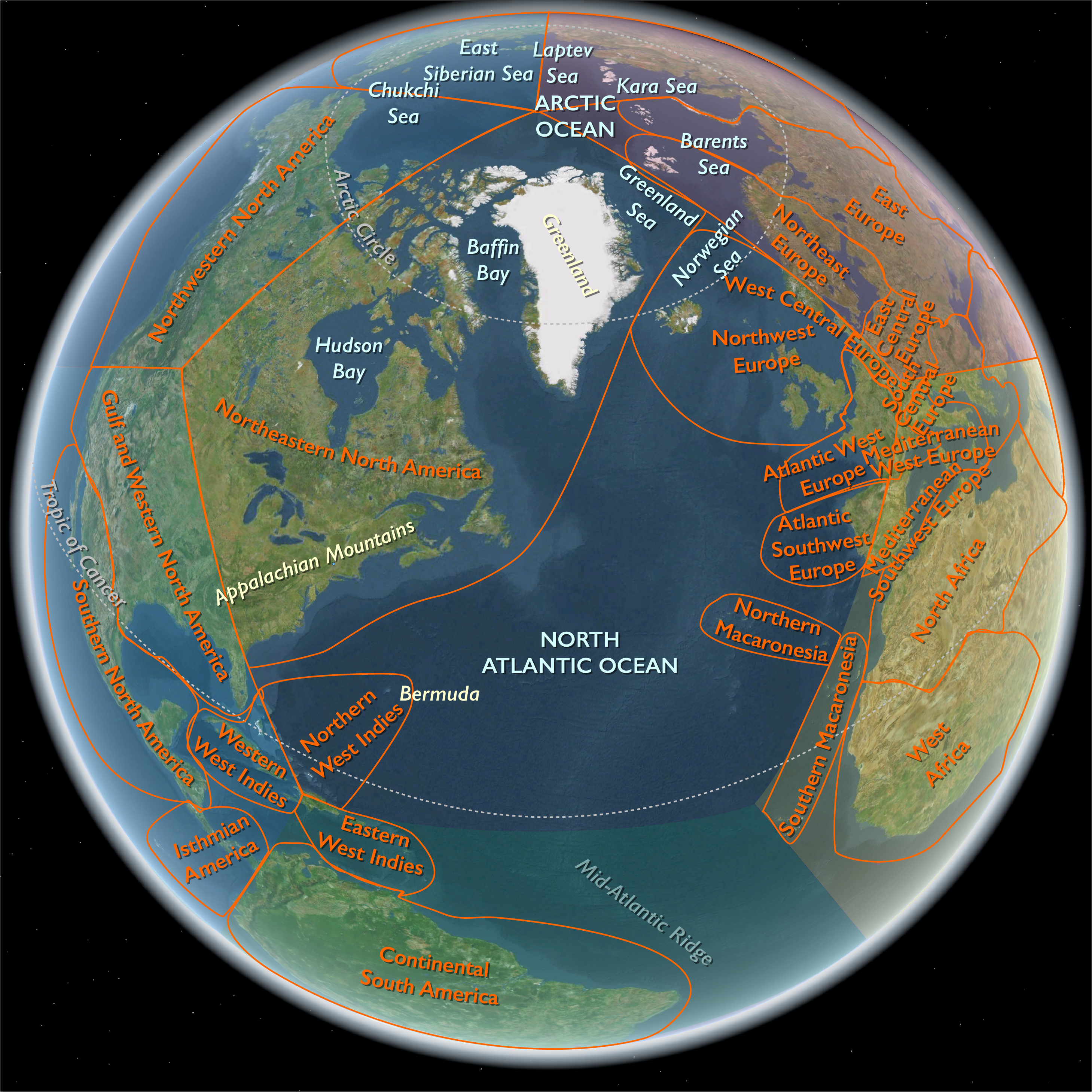
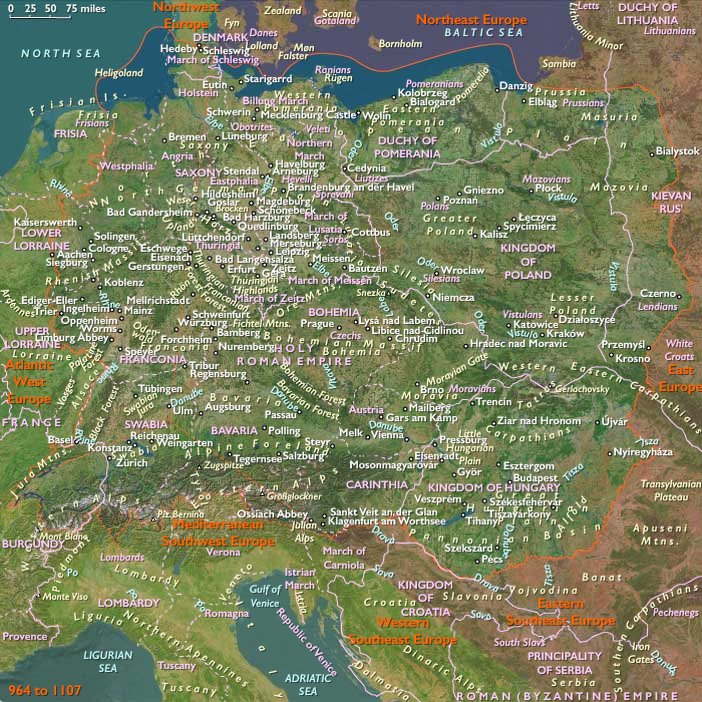
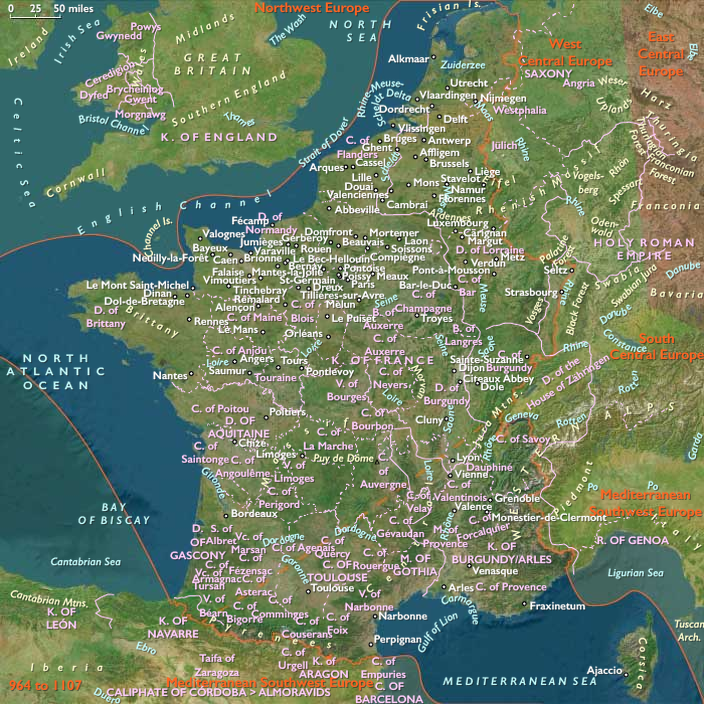
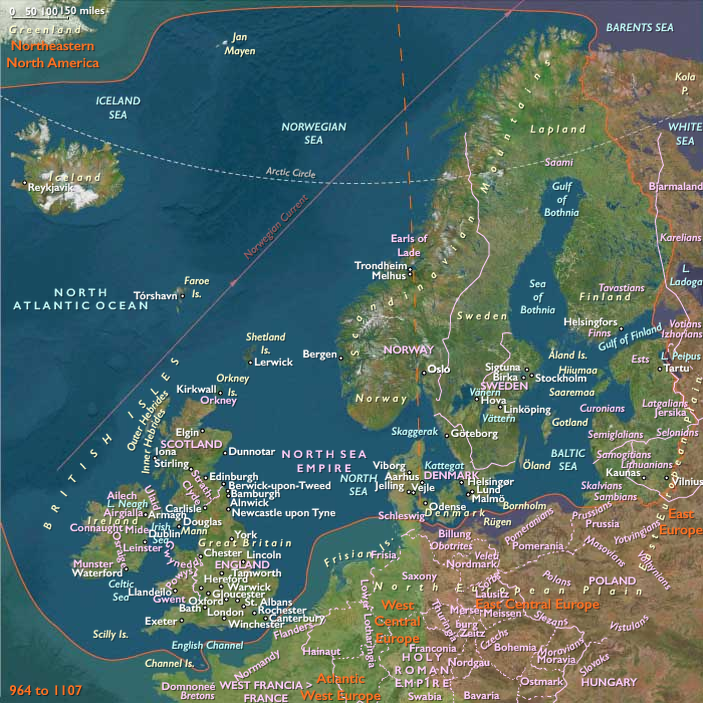
Atlantic Southwest Europe (1060–1071 CE): Ferdinand I’s Legacy, Navarre’s Instability, and Portuguese Foundations
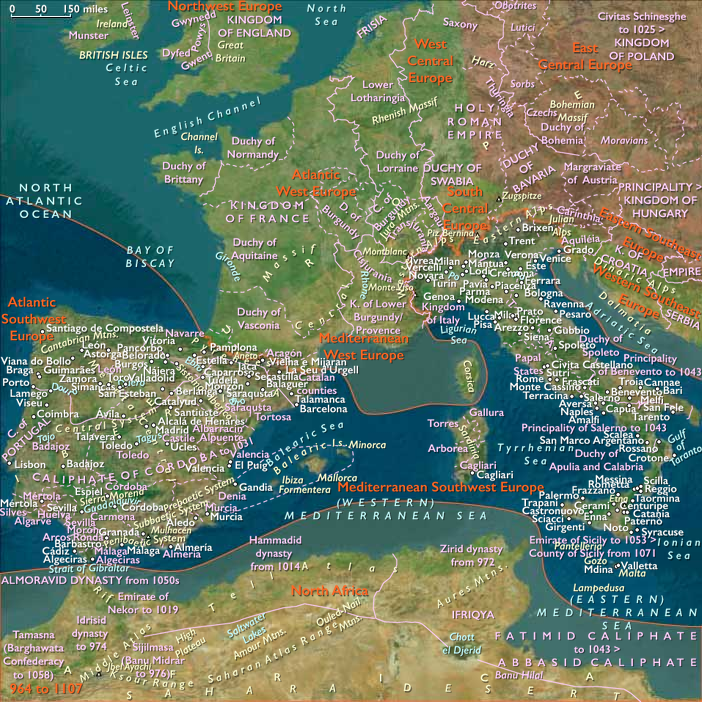
Between 1060 and 1071 CE, Atlantic Southwest Europe—including Galicia, northern and central Portugal, Asturias, Cantabria, and northern Spain south of the Franco-Spanish border (43.05548° N, 1.22924° W)—entered a decisive era characterized by significant political realignments, regional rivalry, and continued cultural flourishing. Under Ferdinand I of León and Castile (1037–1065 CE), the unified kingdom reached its zenith, but Ferdinand’s death in 1065 initiated a complex division of territories among his sons, resulting in intensified fragmentation and rivalry. Navarre, under Sancho IV Garcés (1054–1076 CE), grappled with internal instability and external pressures, diminishing its earlier prominence. Simultaneously, the County of Portugal maintained steady regional autonomy under the capable governance of the Mendes dynasty, continuing to lay firm foundations for future sovereignty. Collectively, these developments significantly shaped regional identities, political dynamics, and economic trajectories.
Political and Military Developments
Ferdinand I’s Peak and Fragmentation (1065 CE)
Under Ferdinand I, León-Castile enjoyed political stability, robust frontier defense, and territorial prosperity. Upon Ferdinand’s death in 1065, his expansive territories were divided among his sons: Sancho II received Castile, Alfonso VI inherited León, and García II received Galicia (including much of northern Portugal). This territorial division immediately intensified rivalry and instability, profoundly reshaping regional power dynamics and governance structures.
Rivalries Among Ferdinand’s Sons
The division triggered fierce competition, notably between Sancho II of Castile (1065–1072 CE) and Alfonso VI of León (1065–1109 CE), with Galicia and northern Portugal under García II caught amid these struggles. Rivalries would significantly shape subsequent political conflicts, alliances, and territorial realignments across Iberia.
Navarre’s Internal Instability and External Pressures
Under Sancho IV Garcés, Navarre faced considerable internal instability, aristocratic dissent, and external threats from neighboring Castile and Aragón. Its regional influence diminished, though careful diplomatic efforts preserved internal cohesion and autonomy, albeit weakened by political uncertainties and territorial encroachments.
Portuguese Regional Stability
Amid regional tensions, the County of Portugal continued to experience consistent stability, cohesion, and effective local governance under descendants of the Mendes family. Their capable frontier management, administrative autonomy, and internal stability significantly strengthened regional identity and cohesion, decisively shaping future Portuguese sovereignty.
Economic Developments
Sustained Economic Prosperity
Despite political fragmentation and rivalries, Atlantic Southwest Europe’s economy remained resilient, supported by robust villa-based agriculture (grain, vineyards, olives), livestock farming, artisanal production, and mining activities—especially gold and silver extraction in Galicia and Asturias. Economic stability significantly mitigated the disruptive effects of regional instability.
Maritime Trade and Pilgrimage Commerce
Coastal settlements, notably Bracara Augusta (Braga), along with smaller northern Portuguese ports, maintained flourishing maritime commerce, reinforcing steady economic connections with Atlantic and Mediterranean markets. Overland trade along pilgrimage routes to Santiago de Compostela further stimulated economic vitality, reinforcing regional prosperity and resilience.
Cultural and Religious Developments
Santiago de Compostela’s Continued Growth
Pilgrimage to Santiago de Compostela remained robust, strengthening Galicia’s economic, spiritual, and cultural prominence across Europe. Pilgrimage routes continued fostering vibrant cultural exchanges, religious devotion, and economic prosperity, significantly reinforcing regional identity and cohesion.
Ecclesiastical Leadership and Community Stability
Influential bishoprics—especially Braga, Lugo, Asturica Augusta, and Santiago de Compostela—provided crucial governance, moral leadership, and educational direction, significantly facilitating community stability and regional resilience amid political fragmentation.
Monastic Scholarship and Cultural Continuity
Monastic communities continued actively promoting scholarly preservation, manuscript production, agricultural innovation, and education, significantly maintaining regional intellectual vibrancy, cultural continuity, and social resilience.
Continued Cultural Syncretism
Integration of orthodox Christianity with local Celtic and Iberian traditions persisted strongly, particularly in rural Galicia, Asturias, and northern Portugal, reinforcing regional distinctiveness and cultural resilience during a period of heightened political instability.
Civic Identity and Governance
Fragmentation and Localized Autonomy
Ferdinand I’s territorial division reinforced local autonomy yet triggered intensified rivalries, significantly reshaping regional governance structures and civic identities. Local aristocracies and communities increasingly navigated autonomy amid instability, profoundly influencing regional civic identities and governance.
Navarre’s Declining Stability
Navarre experienced weakened central governance under Sancho IV Garcés amid internal dissent and external pressures. Yet, its resilient local autonomy and diplomatic caution maintained regional coherence, preserving Basque political identity despite challenging conditions.
Portuguese Regional Cohesion
Under the Mendes dynasty’s leadership, the County of Portugal continued strengthening regional autonomy, territorial stability, and local governance cohesion, significantly shaping civic identity and establishing firm foundations for future national sovereignty.
Notable Tribal Groups and Settlements
-
Astures and Cantabri: Continued providing critical frontier security, local governance, and regional cohesion amid broader León-Castile rivalry and fragmentation.
-
Galicians and Lusitanians: Significantly contributed to regional economic prosperity, cultural resilience, and localized governance stability, particularly supporting Santiago’s pilgrimage tradition and Portuguese territorial integrity.
-
Basques (Navarre): Maintained clear territorial identity and political autonomy despite increasing external pressures and internal dissent, decisively shaping regional governance stability and cultural continuity.
Long-Term Significance and Legacy
Between 1060 and 1071 CE, Atlantic Southwest Europe:
-
Experienced crucial political fragmentation following Ferdinand I’s territorial division, significantly reshaping regional rivalries, alliances, and governance structures.
-
Witnessed intensified rivalry among León, Castile, and Galicia, setting the stage for future political conflicts and territorial consolidations.
-
Sustained Navarre’s autonomy despite internal and external challenges, preserving regional identity amid shifting power dynamics.
-
Further solidified Portuguese regional autonomy and identity, significantly influencing Portugal’s future national emergence.
-
Maintained robust economic resilience, vibrant cultural traditions, ecclesiastical authority, and pilgrimage activity, decisively shaping medieval regional trajectory.
This formative era significantly influenced political structures, regional identities, economic stability, and cultural resilience, profoundly shaping Atlantic Southwest Europe's long-term medieval trajectory and historical legacy.
The War of the Three Sanchos and the Legacy of Sancho the Great
During the 11th century, three grandsons of Sancho III "the Great" of Navarre, all named Sancho, rule over different Spanish kingdoms. These first cousins are:
- Sancho II "the Strong", King of Castile,
- Sancho IV Garcés, King of Navarre,
- Sancho Ramírez, King of Aragon.
Their rivalries and conflicts culminate in the War of the Three Sanchos, a struggle over territorial disputes and regional dominance.
The primary historical source documenting this war is the thirteenth-century Primera Crónica General, which provides a narrative of the events and reflects the fragmentation and power struggles among the Christian kingdoms of Iberia during the Reconquista.
The first attempt by Ramiro I of Aragon to take Graus, the northernmost Muslim outpost in the valley of the Cinca, had taken place in 1055, probably in response to the defeat of García Sánchez III of Navarre at Atapuerca the year before (1054), which had placed Ferdinand I of León and Castile in a commanding position against Ramiro's western border and the Muslim Taifa of Zaragoza to his south.
His first expedition against Graus had failed, and in 1059 Ferdinand had succeeded in extorting parias (tribute) from Zaragoza.
Ramiro marches on Graus again in the spring of 1063, but this time the Zaragozans have with them three hundred Castilian knights under the infante Sancho the Strong and (possibly) his general Rodrigo Díaz de Vivar, better known as El Cid.
The presence of the Cid at the battle is based on a single source, the generally reliable Historia Roderici, which alleges that he was the alférez of Sancho at the time.
Considering the rarity of the Cid's name in the documents of the early 1060s, this is unlikely.
The circumstances of the actual battle are obscure.
Reinhart Dozy argued that Ramiro survived four months after the battle and that neither the Cid nor Sancho took any part in it.
The Fragmentum historicum ex cartulario Alaonis records only that occisus est a mauris in bello apud Gradus (he [Ramiro] was killed by the Moors in war near Graus), with no mention of the Castilians.
The aforementioned Chronica naierensis contains an account generally, though not universally, regarded as a legend: that Sancho Garcés, an illegitimate son of García Sánchez III of Navarre, eloped with the daughter of García's wife, Stephanie (probably by an earlier marriage), who was the fiancée of the Castilian infante Sancho, and that he sought refuge at the court first of Zaragoza, then later of Aragon.
Sancho, to avenge the disruption of his marriage plans, marched against Ramiro and Zaragoza, and Ramiro died in the encounter near "the place called Graus" (loco qui Gradus dicitur) in 1064 or 1070.
According to the Arabic historian al-Turtūshī, Ramiro (misidentified as "Ibn Rudmīr", the son of Ramiro) was assassinated by a Muslim soldier who spoke the Christians' language and infiltrated the Aragonese camp.
Fernando I of Leon had in 1063 sent his son, the infante Sancho, to the aid of his vassal, Ahmad al-Muqtadir, king of the Taifa of Zaragoza when his city of Graus was being besieged by the forces of Ramiro I of Aragon.
Consequently, Ramiro, who was Fernando's brother, had been defeated and killed.
There had ensued a mass slaughter of Christians in the aftermath of that battle.
To appease public support, Ahmad al-Muqtadir has stopped paying his vassal tribute to the Kingdom of Leon.
King Fernando responds in 1065 by launching an expedition into the valley of the Ebro River, devastating the land and defeating al-Muqtadir, once again forcing him into a vassal state.
The expedition continues on towards Valencia, governed by Abd al-Malik ben Abd al-Aziz al-Mansur, with the intent on also turning that city into a vassal state.
The Imperial Title and Death of Ferdinand I of León and Castile (1036–1065 CE)
Ferdinand I of León and Castile is first titled "emperor" not by his own court, but by the notaries of his half-brother, Ramiro I of Aragon. Ramiro’s scribes had previously used the title for Ferdinand’s predecessor, recognizing León’s preeminence among the Christian kingdoms of Iberia.
In a royal Aragonese charter of 1036, before the Battle of Tamarón, Ramiro refers to Ferdinand as "emperor in Castile and in León and in Astorga."
- A similar phrase appears in a 1041 charter, and again in 1061, though with the order reversed: "emperor in León and in Castile", omitting Astorga.
- The first recorded use of the imperial style in Ferdinand’s own documents appears in 1056, in a charter preserved in the cartulary of Arlanza:
"Under the rule of the emperor King Ferdinand and the empress Queen Sancha ruling the kingdom in León and in Galicia as well as in Castile."
On this basis, some historians suggest that Ferdinand had himself crowned emperor in 1056. However, he rarely used the imperial title, employing it only once more in a 1058 document, which refers to him as:
"The most serene prince Lord Ferdinand and his consort Queen Sancha" and later as "this emperor, the aforesaid Ferdinand."
Final Years and Death (1065 CE)
After falling ill during the Siege of Valencia and the Battle of Paterna, Ferdinand I dies on December 24, 1065, in León. He embraces ardent piety in his final moments, laying aside his crown and royal mantle, dressing in the robe of a monk, and placing himself before the altar of the Basilica of San Isidoro, lying on a bier covered in ashes.
The Partition of the Kingdom Among His Children
By his will, Ferdinand divides his kingdom among his three sons and two daughters:
- Sancho II receives Castile.
- Alfonso VI receives León.
- García II is given Galicia, carved out of León as a separate kingdom.
- Elvira receives Toro.
- Urraca receives Zamora.
Ferdinand expresses his desire for peace among his heirs, instructing them to respect the partition. However, his plan quickly unravels: soon after his death, Sancho and Alfonso turn against García, defeating him and setting the stage for further dynastic struggles in the Christian kingdoms of Iberia.
The War of the Three Sanchos (1065–1067 CE)
The War of the Three Sanchos arises in part from the lingering tensions following the division of Sancho III the Great’s empire in 1035. That partition had left Navarre as the dominant kingdom over the “petty kingdoms” (regula) of Castile and Aragon. However, by 1065, Navarre had fallen into vassalage under Castile, which had been joined with León after the death of Ferdinand I.
The Castilian Claim to Bureba and Alta Rioja
Sancho II of Castile, now ruling over Castile and León, covets Bureba and Alta Rioja, territories that his father, Ferdinand I, had helped reconquer from the Caliphate. However, Ferdinand later ceded these lands to his elder brother, García Sánchez III of Navarre, the father of Sancho IV of Navarre.
Sancho of Castile seeks to reclaim these disputed lands, launching a series of frontier raids. In response, Sancho IV of Navarre seeks an alliance with Sancho Ramírez of Aragon, fearing Castilian expansion.
The Conflict and the Role of El Cid
Most of the war takes place in the Burgos and La Rioja regions, reflecting Castile’s aim of recovering key frontier territories. The conflict is also tied to Castile’s capacity to participate in the Reconquista, which had been weakened by the division of Ferdinand’s kingdom in 1065.
During the campaign, Sancho of Castile attempts to extend his influence over the Muslim Taifa of Zaragoza, which pays him parias (tribute).
According to the 12th-century Crónica Najerense, a key battle occurs in which Sancho of Castile’s alférez (standard-bearer), Rodrigo Díaz de Vivar, defeats his Navarrese counterpart, Jimeno Garcés. This victory earns him the nickname "campi doctor" or "master of the field [of battle]", later immortalized in Spanish literature as El Campeador, the legendary El Cid.
The War of the Three Sanchos reflects the ongoing power struggles between the Christian kingdoms of Iberia, as each ruler seeks to expand their domains while weakening their rivals.
The Counterattack of Sancho Ramírez and the Uncertain Outcome (1067 CE)
Between August and September 1067, Sancho Ramírez of Aragon, allied with Sancho IV of Navarre, launches a counteroffensive against Castile, pushing back against Sancho II of Castile’s incursions into Navarre and La Rioja.
However, historical tradition is divided over who emerged victorious:
- The Chronicle of San Juan de la Peña records a Navarrese and Aragonese victory, claiming they routed Castilian forces at Viana.
- The Primera Crónica General, in contrast, attributes victory to Sancho II of Castile, portraying him as triumphant in battle.
The conflicting accounts reflect the political biases of later chroniclers and the uncertainty surrounding the outcome of this phase of the War of the Three Sanchos. Regardless of the victor, the war underscores the intense rivalry between the Christian kingdoms as they competed for dominance in northern Iberia.
The Conclusion of the War of the Three Sanchos (1067 CE)
As the War of the Three Sanchos continues, Sancho II of Castile regains Álava and ...
...the Montes de Oca, and ...
...Pancorbo, as well as the disputed territories of Bureba and Alta Rioja, reclaiming lands that had previously been ceded to Navarre.
Despite these territorial gains, the conflict ultimately ends in a stalemate in 1067, as attention shifts to a new dynastic struggle. The death of Sancha of León, the widow of Ferdinand I, creates an opening for war between Ferdinand’s sons, Sancho II of Castile and Alfonso VI of León, leading to further instability in the Christian kingdoms of Iberia.