Samuel of Bulgaria
Tsar (Emperor) of Bulgaria
Years: 950 - 1014
Samuel is the Tsar (Emperor) of the First Bulgarian Empire from 997 to 6 October 1014.
From 980 to 997, he was a general under Roman I of Bulgaria, the second surviving son of Emperor Peter I of Bulgaria, and co-rules with him, as Roman bestows upon him the command of the army and the effective royal authority.
As Samuel struggles to preserve his country's independence from the Byzantine Empire, his rule is characterized by constant warfare against the Byzantines and their equally ambitious ruler Basil II.
In his early years, Samuel manage sto inflict several major defeats on the Byzantines and to launch offensive campaigns into their territory.
In the late 10th century, the Bulgarian armies conquer the Serb principality of Duklja and lead campaigns against the Kingdoms of Croatia and Hungary.
But from 1001, he is forced mainly to defend the Empire against the superior Byzantine armies.
Samuel dies of a heart attack on October 6, 1014, two months after the catastrophic battle of Kleidion, and Bulgaria is fully subjugated by Basil II four years later, ending the five decades-long Byzantine–Bulgarian conflict.
During Samuel's reign, Bulgaria gains control of most of the Balkans (with the notable exception of Thrace) as far as southern Greece.
He moves the capital from Skopje to Ohrid, which had been the cultural and military center of southwestern Bulgaria since Boris I's rule, and makes the city the seat of the Bulgarian Patriarchate.
Because of that, sometimes his realm is called Western Bulgarian Kingdom or Western Bulgarian Empire.
Although Samuel's reign brings the end of the First Bulgarian Empire, he is regarded as a heroic ruler in Bulgaria.
Related Events
Filter results
Showing 10 events out of 46 total
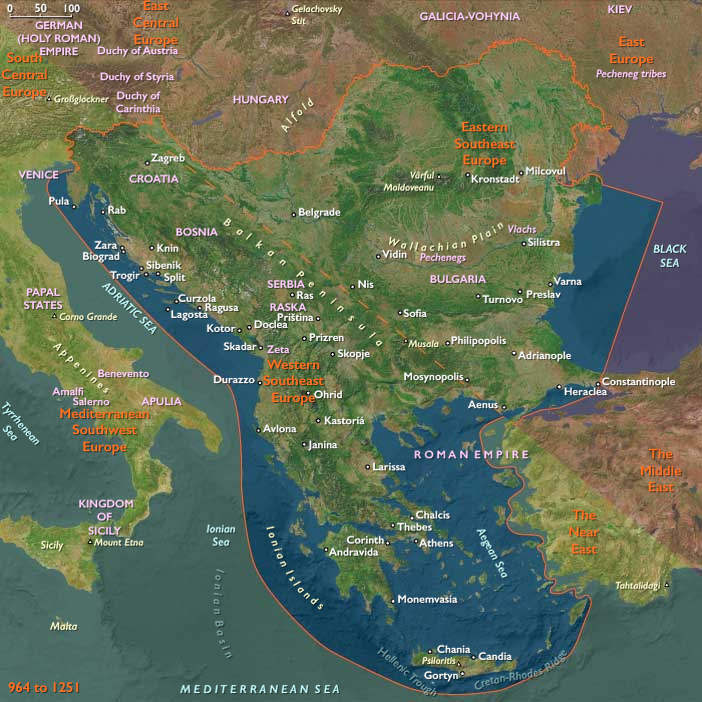
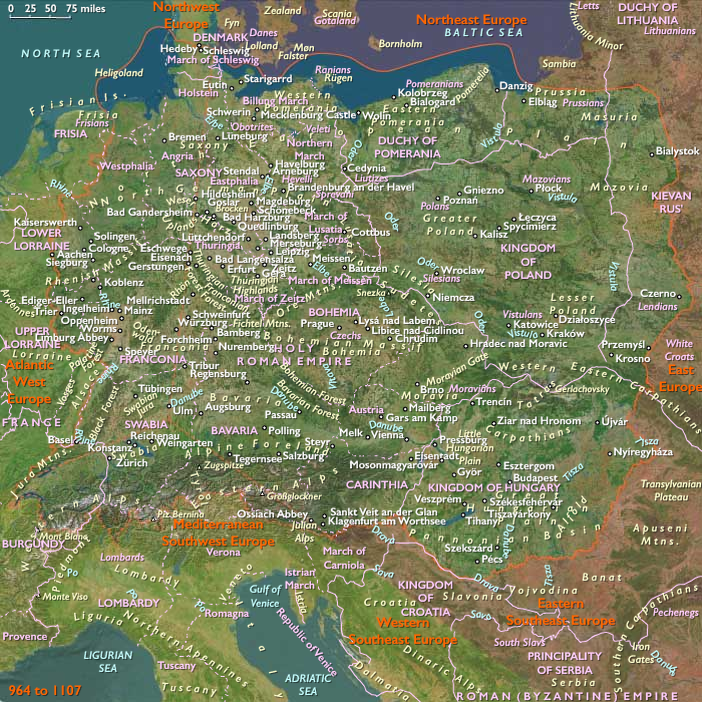
Southeast Europe (964 – 1107 CE): Byzantine Resurgence, Bulgarian Integration, and Adriatic–Danubian Corridors
Geographic and Environmental Context
Southeast Europe in this age stretched from Thrace and the Lower Danube through Macedonia and the Morava–Vardar axis to the Adriatic littoral and Dalmatian islands, encompassing nearly all Bulgaria (except the southwest), Romania and Moldova, northeastern Serbia, northeastern Croatia, extreme northeastern Bosnia, and Greece outside Thrace (Attica, Boeotia, Peloponnese, Epirus).
Core lowlands—Wallachian Plain, Lower Danube, Dobruja, Thracian basins—fed populous centers; Balkan passes (Shipka, Varbitsa), the Carpathian Gates, and the Via Militaris tied Belgrade–Niš–Sofia–Adrianople–Constantinople. To the west, the Via Egnatia linked Dyrrhachium (Durrës) with Thessaloniki, while Adriatic island ports (Zadar, Split, Trogir, Kotor, Ragusa) connected to Italy and the Aegean. Black Sea harbors (Varna, Constanţa) and Danube crossings remained strategic for trade and war.
Climate and Environmental Shifts
The Medieval Warm Period (c. 950–1250) lengthened growing seasons in Thrace and the Danube plain, boosting wheat, barley, and vine production. Flood pulses on the Danube and Maritsa set transport calendars. On the steppe margin, drought swings intensified pressures from Pecheneg and later Cuman nomads, shaping frontier policy and campaigning rhythms.
Societies and Political Developments
Bulgarian Decline and Absorption (10th–early 11th c.)
After Peter I (r. 927–969), Bulgaria faced internal strain and external shocks. Sviatoslav of Rus’ (968–971) seized Preslav, prompting John I Tzimiskes to intervene, defeat Sviatoslav, and annex eastern Bulgaria (971). Resistance shifted west under the Cometopuli; Samuel (r. 997–1014) forged a powerful Ohrid-centered empire. Basil II “Bulgar-Slayer” (r. 976–1025) dismantled it via relentless campaigns (notably Kleidion, 1014); by 1018, Bulgaria was fully integrated into the Byzantine system.
Byzantine Resurgence and Administration
The Macedonian dynasty consolidated the Balkans after 1018, reorganizing conquered lands into themes and reestablishing imperial garrisons and bishoprics from Thrace to the Danube marches. In Greece (outside Thrace)—Attica, Boeotia, the Peloponnese, and Epirus—imperial fiscal and judicial structures stabilized agrarian estates and port cities; rising aristocracies (proto-Komnenian milieu) gained regional weight.
Steppe Pressures and Frontier Politics
The Pechenegs dominated the Lower Danube steppe through the late 10th–11th centuries, raiding imperial and former Bulgarian lands; the empire alternated tribute, alliances, and force—culminating in decisive defeat of the Pechenegs with Cuman support (e.g., Levounion, 1091). Thereafter the Cumans (Polovtsians) became the chief nomadic threat along the Danube and into Wallachia and Moldova.
Western Alignments: Croatia, Serbia, Dalmatia
Croatia preserved kingship but, after dynastic ebb, entered a personal union with Hungary (1102), while its coastal communes bargained with Venice. Serbian principalities (Raška, Zeta) oscillated between imperial suzerainty and local assertion; Vukan’s line advanced late in the period. Dalmatian communes—Zadar, Split, Trogir, Kotor, Ragusa—codified statutes, expanded harbors, and played Byzantium, Hungary, and Venice against one another to preserve autonomy and commerce. Inland, Transylvania developed under Hungarian expansion after 1000, shaping northern Danubian balances.
Economy and Trade
Agrarian Core and Fiscal Integration
In Thrace and the Danube valley, grain, vines, and stock-raising thrived. After 1018, Byzantine praktika registered Bulgar peasantry into imperial tax law, channeling surplus to Adrianople, Thessaloniki, and Constantinople.
Corridors and Markets
-
Danube artery: moved wax, honey, furs, grain, slaves between Rus’/Hungary and Constantinople.
-
Via Militaris: imperial armies and caravans supplied inland garrisons and markets.
-
Via Egnatia: fed Dyrrhachium and Thessaloniki, bridging Adriatic and Aegean.
-
Black Sea ports: Varna, Constanţa connected Balkan produce to Byzantine and Rus’ circuits.
-
Adriatic: Venetian convoys knit Dalmatia to Apulia and Ancona, re-exporting Balkan metals (Bosnian/Serbian silver, iron) and salt (e.g., Pag).
Coinage: Byzantine nomismata and copper issues circulated widely; communal credit and notarial practices matured on the Adriatic.
Subsistence and Technology
Fortification & Arms
Byzantium rebuilt Preslav, fortified Sofia, Skopje, Adrianople, and strengthened Danube palisades. Imperial forces relied on cataphract cavalry and thematic infantry; Bulgarian levies served within imperial formations. Pecheneg/Cuman warfare emphasized horse archery and deep raids.
Rural/Maritime Infrastructures
Stone citadels multiplied in coastal and upland nodes; shipyards produced galleys and cogs for Adriatic convoys; inland estates improved presses, mills, and viticultural terraces.
Movement and Interaction Corridors
-
Danube crossings—Ruse, Silistra, Vidin—were pivotal gates for steppe incursions and imperial counter-marches.
-
Carpathian passes opened Magyar/Hungarian access into Transylvania and the lower Danube.
-
Morava–Vardar and Drina–Sava channels linked inland Balkans to Aegean and Central Europe.
-
Adriatic sea-lanes connected Dalmatia to Venice and Italian markets; Black Sea shipping tied ports to Rus’ and the capital.
Belief and Symbolism
Orthodoxy and Slavic Literacy
Orthodox Christianity, consolidated in Bulgaria under Boris and Simeon, was integrated into the Byzantine patriarchal orbit after 1018. Basil II confirmed the Ohrid Archbishopric’s autonomy, preserving Slavic liturgy and Cyrillic script; scriptoria at Ohrid and Preslav continued hagiography and law-text production.
Bogomilism
A dualist critique of hierarchy spread in 10th–11th centuries, embedding dissent within Balkan society and later influencing heretical currents westward.
Relic Cults and Icons
In Greek and Macedonian lands, icons, relics, and monastic networks reinforced imperial legitimacy and localized sanctity; along the Adriatic, Latin rites coexisted with Orthodox practice, especially in the communes.
Adaptation and Resilience
-
Administrative absorption: Byzantine themes stabilized taxation, justice, and military service in newly integrated Bulgaria.
-
Nomad diplomacy: tribute, alliance, and selective recruitment of Pecheneg/Cuman auxiliaries turned steppe pressures into tools of imperial statecraft.
-
Communal governance: Dalmatian statutes and consulates lowered merchant risk and secured harbor revenues despite great-power rivalries.
-
Cultural continuity: the Ohrid settlement safeguarded Slavic ecclesiastical autonomy and literacy under imperial rule.
Long-Term Significance
By 1107 CE, Southeast Europe had been reshaped into a Byzantine-led but polycentric landscape:
-
Bulgaria—politically integrated into the empire—retained Slavic identity and ecclesiastical autonomy at Ohrid, ensuring cultural survival.
-
Byzantium held Thrace and the Danube frontier, yet constant steppe raids taxed imperial resources even amid the Komnenian recovery.
-
Pecheneg collapse and Cuman ascendancy redefined the northern threat; Hungary advanced in Transylvania, shifting power north of the Danube.
-
Croatia–Hungary alignment (1102), Serbian consolidation, and Dalmatian communal strength set the stage for 12th-century realignments—Venetian maritime assertion, Komnenian strategies, and the eventual rise of the Second Bulgarian Empire.
This age fixed the region’s Orthodox Christian character, embedded Cyrillic literacy, and hardened the Byzantine–steppe frontier while keeping the Adriatic–Danubian–Aegean corridors open—foundations that would structure Balkan politics and commerce for the next century.
Eastern Southeast Europe (964 – 1107 CE): Bulgarian Decline, Byzantine Resurgence, and Steppe Pressures
Geographic and Environmental Context
Eastern Southeast Europe includes Turkey-in-Europe (Thrace), northeastern Greece (Thrace-in-Greece), nearly all of Bulgaria (except its southwestern portion), modern-day Romania and Moldova, northeastern Serbia, northeastern Croatia, and extreme northeastern Bosnia and Herzegovina.
-
Core lowlands: the Lower Danube, Wallachian Plain, and Dobruja coast.
-
Mountain corridors: Balkan passes (Shipka, Varbitsa), the Carpathian Gates into Transylvania, and the Via Militaris linking Belgrade–Niš–Sofia–Adrianople–Constantinople.
-
The Black Sea ports (Varna, Constanţa) and Danube crossings remained vital for trade and war.
Climate and Environmental Shifts
-
The Medieval Warm Period (c. 950–1250) brought longer growing seasons and greater agricultural surpluses in the Danube plain and Thrace.
-
Stable monsoonal rainfall boosted viticulture and wheat production, though steppe drought cycles intensified nomadic incursions.
-
River floods on the Danube and Maritsa structured transport calendars.
Societies and Political Developments
-
First Bulgarian Empire:
-
After Peter I (r. 927–969), internal weakness and external pressures mounted.
-
Rus’ prince Sviatoslav invaded Bulgaria (968–971), capturing Preslav; Byzantine emperor John I Tzimiskes (r. 969–976) intervened, defeating Sviatoslav and annexing eastern Bulgaria (971).
-
Bulgarian resistance persisted in the western Balkans under the Cometopuli brothers; Samuel of Bulgaria (r. 997–1014) built a strong empire from Ohrid, challenging Byzantium across the Danube and Adriatic.
-
Basil II “Bulgar-Slayer” (r. 976–1025) waged relentless wars, culminating in the Battle of Kleidion (1014); by 1018, Bulgaria was fully absorbed into the Byzantine Empire.
-
-
Byzantine Resurgence:
-
The Macedonian dynasty (Basil II, Constantine VIII) secured the Balkans after 1018, establishing themes (administrative districts) in Bulgaria and along the Danube.
-
Constantinople reasserted direct control over Thrace, Adrianople, and the Danubian marches, founding bishoprics and garrisons.
-
-
Steppe Nomads:
-
Pechenegs dominated the Lower Danube steppe in the late 10th–11th centuries, raiding Byzantine and Bulgarian lands.
-
Byzantines suffered major defeats (e.g., Battle of Levounion, 1091) before defeating the Pechenegs with Cuman aid.
-
Cumans (Polovtsians) succeeded them as the principal nomads, raiding the Danube frontier by the late 11th century.
-
-
Romania/Moldova (north of the Danube):
-
Slavic–Romance populations persisted under shifting suzerainties (Bulgarian, Byzantine, Pecheneg).
-
Autonomous principalities in Transylvania developed under Hungarian expansion after 1000.
-
-
Northeastern Serbia / Croatia / Bosnia frontiers:
-
Tributary to Bulgaria, Byzantium, or Hungary in shifting intervals; local župans (chieftains) leveraged Danube–Sava junctions for trade and tribute.
-
Economy and Trade
-
Agriculture: wheat, barley, oats, millet, and vines thrived in Thrace and the Danube valley; stock raising continued in mountain margins.
-
Byzantine land system: after conquest of Bulgaria (1018), imperial fiscal registers (praktika) integrated Bulgar peasants into Byzantine tax law.
-
Trade corridors:
-
Danube linked Rus’, Hungary, and the Balkans to Constantinople.
-
Via Militaris carried imperial armies and caravans.
-
Black Sea ports funneled wax, honey, grain, and slaves southward.
-
-
Coinage: Byzantine nomismata circulated widely; regional markets expanded around Preslav, Adrianople, and Skopje.
Subsistence and Technology
-
Fortifications: Byzantine rebuilt Preslav and fortified Sofia, Skopje, and Adrianople; Danube palisades defended ferries.
-
Military systems: Byzantine cataphract cavalry and thematic infantry dominated post-1018; Bulgarians contributed levies. Steppe nomads relied on horse archery and deep raids.
-
Literacy and scripts: Bulgarian monasteries sustained Cyrillic culture even under Byzantine control; scriptoria at Ohrid and Preslav produced hagiographies and law codes.
Movement and Interaction Corridors
-
Danube crossings: Ruse, Silistra, and Vidin remained contested gateways for Pecheneg and Cuman incursions.
-
Via Militaris tied Constantinople with Belgrade, essential for imperial supply.
-
Carpathian passes opened Magyar access into Transylvania and the Danube plain.
-
Black Sea shipping connected ports to Rus’ merchants and Byzantine markets.
Belief and Symbolism
-
Orthodox Christianity:
-
Consolidated in Bulgaria under Boris and Simeon, then integrated into the Byzantine patriarchate after 1018.
-
Ohrid Archbishopric (granted autonomy by Basil II) preserved Slavic liturgy and Cyrillic texts.
-
-
Bogomilism: Dualist heresy spread in 10th–11th centuries, critiquing wealth and hierarchy, enduring into Balkan medieval society.
-
Byzantine Orthodoxy in Thrace and Macedonia reinforced Constantinople’s legitimacy; icons, relics, and churches marked the landscape.
Adaptation and Resilience
-
Imperial absorption: Byzantine themes stabilized taxation and law in conquered Bulgaria.
-
Nomad diplomacy: Byzantines alternated tribute, alliances, and military campaigns to manage Pechenegs and Cumans.
-
Cultural resilience: Slavic literacy and ecclesiastical autonomy at Ohrid preserved Bulgarian identity under Byzantine rule.
-
Military adaptation: recruitment of Pecheneg and Cuman auxiliaries allowed Byzantium to redirect steppe threats against rivals.
Long-Term Significance
By 1107 CE, Eastern Southeast Europe had been reshaped:
-
Bulgaria was integrated into the Byzantine system, though Slavic identity and the Ohrid Archbishopric ensured cultural survival.
-
Byzantium controlled Thrace and the Danube frontier, though constant steppe raids drained resources.
-
Pecheneg collapse and Cuman rise altered the steppe balance.
-
Hungary extended into Transylvania, shifting power north of the Danube.
This age defined the region’s Orthodox Christian character, embedded Cyrillic literacy, and hardened the Byzantine–steppe frontier dynamics that would endure until the Komnenian revival and the Second Bulgarian Empire in the late 12th century.
The First Bulgarian Empire, after reaching its peak under Simeon, declines in the middle of the tenth century.
Byzantine opposition and internal weakness lead to a loss of territory to the Magyars and the Russians.
Bulgaria remains economically dependent on the Empire, and the widespread Bogomil heresy opposes the secular Bulgarian state and its political ambitions as work of the devil.
Seeking to restore a balance of power in the Balkans, the Byzantines ally with the Kievan Russians under Yaroslav and invade Bulgaria several times in the late tenth century.
Although the Bulgarians expand their territory again briefly under Tsar Samuil at the end of the tenth century, in 1014 the Byzantines under Basil II inflict a major military loss.
By 1018 all of Bulgaria is under Byzantine control.
For nearly two centuries, the Byzantines will rule harshly, using taxes and the political power of the church to crush opposition.
The first and second Crusades pass through Bulgaria in this period, devastating the land.
The Cometopuli brothers, based in the unconquered western regions of the Bulgarian Empire, will lead Bulgarian resistance is led until its fall in 1018 under East Roman (Byzantine) rule and its end as a state.
One of the brothers, Samuel, establishes the Macedonian, or Western Bulgarian, Empire.
A revolt against Constantinople, led by the four sons of Macedonian governor Nicholas, had spread to become a war of liberation.
Samuel is the fourth and youngest son of count (comita) Nikola, a Bulgarian noble, who might have been the Count of Sredets (Sofia), although other sources suggest that he was a regional count somewhere in the region of today Macedonia.
His mother was Ripsimia of Armenia.
The actual name of the dynasty is not known.
“Cometopuli” is the nickname which is used by Byzantine historians to address rulers from the dynasty as its founder.
Samuel and the Cometopuli had risen to power out of the disorder that had occurred in the Bulgarian Empire from 966 to 971.
After Emperor John I Tzimiskes dies on January 11, 976, the Cometopuli launch an assault along the whole border with the Empire.
Within a few weeks, however, David is killed by Vlach vagrants and Moses is fatally injured by a stone during the siege of Serres.
The brothers' actions to the south detain many imperial troops and ease Samuel's liberation of northeastern Bulgaria; the imperial commander is defeated and retreated to Crimea.
Any Bulgarian nobles and officials who had not opposed Constantinople’s conquest of the region are executed, and the war continues north of the Danube until the enemy is scattered and Bulgarian rule is restored.
After suffering these defeats in the Balkans, the Empire descends into civil war.
The commander of the Asian army, Bardas Skleros, rebels in Asia Minor and sends troops under his son Romanus in Thrace to besiege Constantinople.
The new Emperor Basil II does not have enough manpower to fight both the Bulgarians and the rebels and resorts to treason, conspiracy and complicated diplomatic plots.
Basil II makes many promises to the Bulgarians and Scleros to divert them from allying against him.
Aaron, the eldest living Cometopulus, is tempted by an alliance with Constantinople and the opportunity to seize power in Bulgaria for himself.
He holds land in Thrace, a region potentially subject to the imperial threat.
Basil reaches an agreement with Aaron, who asks to marry Basil's sister to seal it.
Basil instead sends the wife of one of his officials with the bishop of Sebaste.
However, the deceit is uncovered and the bishop is killed.
Nonetheless, negotiations proceed and conclude in a peace agreement.
Samuel learns of the conspiracy and the clash between the two brothers is inevitable.
The quarrel breaks out in the vicinity of Dupnitsa on June 14, 976, and ends with the annihilation of Aaron's family.
Only his son, Ivan Vladislav, survives because Samuel's son Gavril Radomir pleads on his behalf.
From this moment on, practically all power and authority in the state is held by Samuel and the danger of an internal conflict has been all but eliminated.
However, another theory suggests that Aaron participated in the battle of the Gates of Trajan which will take place ten years later.
According to that theory, Aaron was killed on June 14, 987 or 988.
Roman is the second surviving son of Emperor Peter I of Bulgaria by his marriage with Maria (renamed Eirene) Lekapene, the granddaughter of the Emperor Romanos I Lekapenos.
It is possible that he had the double name Roman-Simeon, but this may be due to confusion with another man in the sources.
He was born around 930, and had probably visited Constantinople with his mother and older brothers soon after 931.
We know nothing about Roman's life until 968, when he joined his older brother Boris in Constantinople to negotiate a peace agreement between Bulgaria and the Empire, during which they apparently served as honorary hostages at the imperial court.
On their father's abdication in 969, Boris and Roman had returned to Bulgaria, where Boris II had succeeded as emperor.
Roman may have been proclaimed co-emperor in accordance with imperial Greek usage, but the evidence for that is vague.
In Bulgaria, Roman probably had shared his brother's destiny, becoming first a pawn in the hands of Prince Sviatoslav I of Kiev and then in those of the Emperor John I Tzimiskes.
After the latter's victory in 971, Roman had been taken to Constantinople together with his brother's family.
To ensure that the Bulgarian royal dynasty will die out (Boris II apparently has only daughters), the emperor has Roman castrated.
Boris and Roman had remained in honorary captivity at the imperial palace until after the death of the emperor in 976.
At this point the raids of the Kometopouloi into Constantinople’s possessions in Macedonia lead to an imperial stratagem intended to divide the leadership of the still-unconquered Bulgarian lands in the west.
After the Empire’s plan to use Aaron to cause instability in Bulgaria fails, they try to encourage the rightful heirs to the throne, Boris II and Roman, to oppose Samuel.
Basil II hopes that they will win the support of the nobles and isolate Samuel or perhaps even start a Bulgarian civil war.
Temporarily jailed, Boris and Roman are allowed to escape in 977.
During their attempt to cross the Bulgarian border, Boris II is taken for an enemy and killed by a guard who had been misled by Basil’s clothing.
Roman, who is walking some distance behind, manages to identify himself to the Bulgarian patrols, and is taken to Vidin, where he is proclaimed Emperor of Bulgaria.
Samuel becomes his first lieutenant and general and together they gather an army to fight the Empire.
Samuel is certain to eventually succeed Roman.
The new emperor entrusts Samuel with the state administration and becomes occupied with church and religious affairs.
Tsar Samuel, taking advantage of the internal discord currently plaguing Constantinople, begins to extend his control over eastern Bulgaria and lands beyond.
Bulgars under Samuel defeat an invasion by imperial forces in 981 in a battle near Sofia.
Samuel, taking advantage of the internal discord currently plaguing the empire, has begun to extend his control over eastern Bulgaria and lands beyond.
Tsar Samuel has in five years conquered independent Serbia and …
…further extended his power into Albania, …
…northern Greece, and northern Bulgaria.