Samuel de Champlain
French navigator, cartographer, draftsman, soldier, explorer, geographer, ethnologist, diplomat and chronicler
Years: 1580 - 1635
Samuel de Champlain (ca.
1567 or 1580 – December 25, 1635) "The Father of New France", is a French navigator, cartographer, draughtsman, soldier, explorer, geographer, ethnologist, diplomat and chronicler, who founds Quebec City on July 3, 1608.
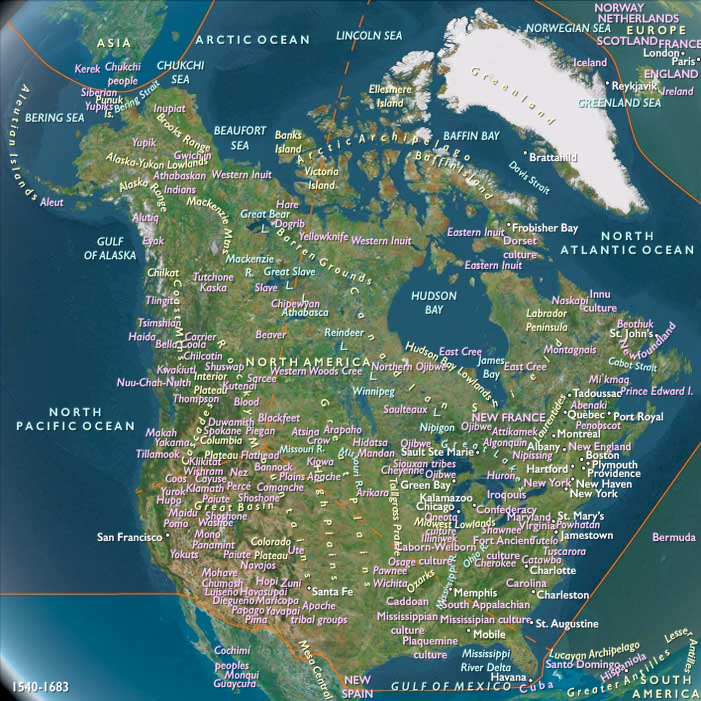
Born into a family of master mariners, Champlain, while still a young man, begins exploring North America in 1603 under the guidance of François Gravé Du Pont.
From 1604-1607, Champlain participates in the exploration and settlement of the first permanent European settlement north of Florida, Port Royal, Acadia (1605).
Then, in 1608, he establishes the French settlement that is now Quebec City.
Champlain is the first European to explore and describe the Great Lakes, and publishes maps of his journeys and accounts of what he has learned from the natives and the French living among the Natives.
He forms relationships with local Montagnais and Innu and later with others further west (Ottawa River, Lake Nipissing, or Georgian Bay), with Algonquin and with Huron Wendat, and agrees to provide assistance in their wars against the Iroquois.
In 1620, Louis XIII orders Champlain to cease exploration, return to Quebec, and devote himself to the administration of the country.
In every way but formal title, Samuel de Champlain serves as Governor of New France, a title that may be formally unavailable to him due to his non-noble status.
He establishes trading companies that send goods, primarily fur, to France, and oversees the growth of New France in the St. Lawrence River valley until his death in 1635.
Champlain is also memorialized as the "Father of New France", and many places, streets, and structures in northeastern North America bear his name, or have monuments established in his memory.
The most notable of these is Lake Champlain, which straddles the border between the United States and Canada.
In 1609 he led an expedition up the Richelieu River and explored a long, narrow lake situated between the Green Mountains of present-day Vermont and the Adirondack Mountains of present-day New York; he named the lake after himself as the first European to map and describe it.