The Near East, 1912 to 1923 CE: War, Resistance, and Colonial Consolidation
Darfur, Sudan, and British Expansion
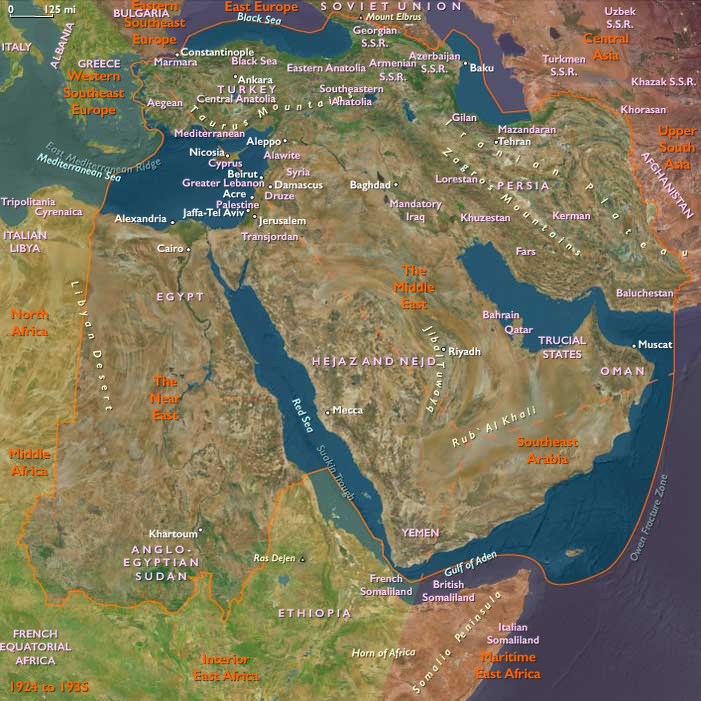
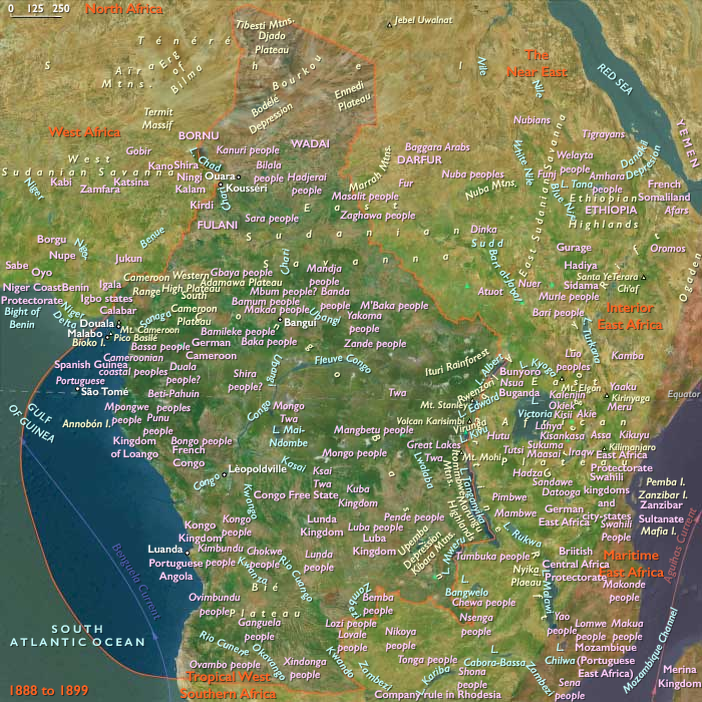
Sudan's western boundary presents significant challenges during this era, especially regarding the status of Darfur. After the collapse of the Mahdiyah, Sultan Ali Dinar reclaims the throne of Darfur, which had been under Egyptian control until 1874, subsequently holding it under nominal Ottoman suzerainty with British approval. When the First World War breaks out in 1914, Ali Dinar declares allegiance to the Ottoman Empire, responding to the Ottoman call for a jihad against Allied forces. Britain, having declared a protectorate over Egypt in the same year, dispatches a military force against Ali Dinar. He is killed in combat in 1916, and Britain formally annexes Darfur into Sudan, thus terminating the historic Fur Sultanate.
Economic and Infrastructure Development
Under the Anglo-Egyptian Condominium, economic developments are largely confined to the settled regions of the Nile Valley. British colonial authorities focus on extending critical infrastructure such as telegraph and railway lines, enhancing administrative and military capabilities within northern Sudan. Nevertheless, remote areas remain largely disconnected from these advancements. The port city of Port Sudan, opened in 1906, effectively replaces Suakin as Sudan's primary maritime outlet, significantly improving trade logistics and accessibility for colonial administrators.
The First World War in Palestine and the Arab Revolt
During the First World War, Palestine becomes a significant theater of conflict as British and Ottoman forces clash. Allied campaigns, particularly those aided by Arab irregular forces led by T.E. Lawrence, famously known as "Lawrence of Arabia," target strategic locations including the Ottoman-controlled Hejaz Railway, a crucial supply and troop route stretching from Damascus to Medina. Lawrence and his Arab allies conduct effective guerrilla warfare, disrupting Ottoman logistics and contributing to the eventual Allied victory in the region.
Egyptian Revolution of 1919
Egypt witnesses widespread nationalist upheaval in 1919, triggered by the British arrest and exile of nationalist leader Saad Zaghlul. Massive protests, strikes, and demonstrations demand independence from British rule. Although Britain suppresses the uprising militarily, it leads to significant political concessions, paving the way for Egypt’s nominal independence in 1922, albeit with continuing British influence over defense, foreign affairs, and the Suez Canal.
Zionism and Arab-Jewish Tensions
The period also sees the significant expansion of Jewish settlement in Palestine, notably through the Third Aliyah (1919-1923), bringing thousands of European Jews fleeing persecution and attracted by the Zionist movement. This influx heightens tensions with the Arab population, culminating in violent Arab-Jewish clashes, most notably the Jaffa Riots of 1921. The British administration's response includes tighter immigration controls and attempts at mediating communal tensions, but these actions fail to resolve underlying conflicts.
The Impact of Colonial Administration
British administrative control in Sudan and the broader Near East during this era solidifies into structured colonial governance systems. British officials dominate key positions, maintaining tight control over political and economic policies. The Condominium framework continues to reflect its inherent ambiguities, as Egyptian influence remains symbolic but substantively marginal. Tensions occasionally arise from local populations, yet organized resistance is significantly diminished following previous suppressions of revolts.
Legacy of the Era: Colonial Consolidation and Regional Boundaries
The period from 1912 to 1923 firmly establishes British dominance in Sudan, Egypt, and Palestine, notably marked by the annexation of Darfur and intensified nationalist movements. Infrastructure and economic advancements, though geographically uneven, bolster British administrative effectiveness but also lay foundations for future disparities and tensions. Colonial rule deeply entrenches divisions and political frameworks, setting the stage for enduring conflicts and nationalist struggles in subsequent decades.