Robert of Courtenay
Emperor of the Latin Empire in Constantinople
Years: 1197 - 1228
Robert of Courtenay (died 1228), emperor of the Latin Empire, or of Constantinople, is a younger son of the emperor Peter II of Courtenay, and a descendant of the French king, Louis VI, while his mother Yolanda of Flanders is a sister of Baldwin and Henry of Flanders, the first and second emperors of the Latin Empire.
Related Events
Filter results
Showing 10 events out of 11 total
Peter II of Courtenay is a son of Peter I of Courtenay (d. 1183), the youngest son of Louis VI of France and his second Queen consort Adélaide de Maurienne.
His mother was Elisabeth de Courtenay, daughter of Renaud de Courtenay (d.1194) and Hawise du Donjon.
Peter had first married Agnes of Nevers, via whom he had obtained the three counties of Nevers, Auxerre, and Tonnerre.
He had taken for his second wife Yolanda of Flanders, a sister of Baldwin and Henry of Flanders, who were afterwards the first and second emperors of the Latin Empire of Constantinople.
Peter had accompanied his cousin, King Philip Augustus, on the crusade of 1190 and fought (alongside his brother Robert) in the Albigensian Crusade in 1209 and 1211, when he took part in the siege of Lavaur.
He was present at the Battle of Bouvines in 1214.
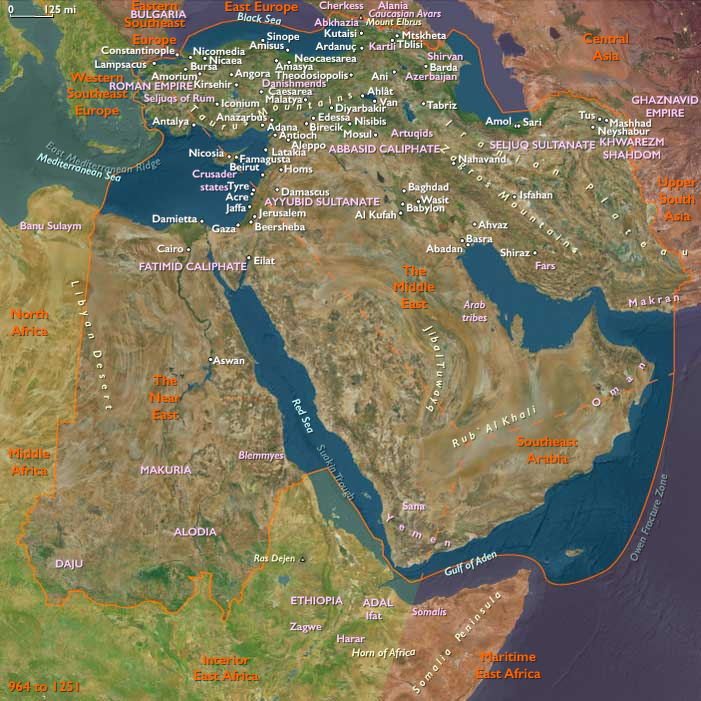
When his brother-in-law, the emperor Henry, died without sons in 1216, Peter had been chosen as his successor, and with a small army had set out from France to take possession of his throne.
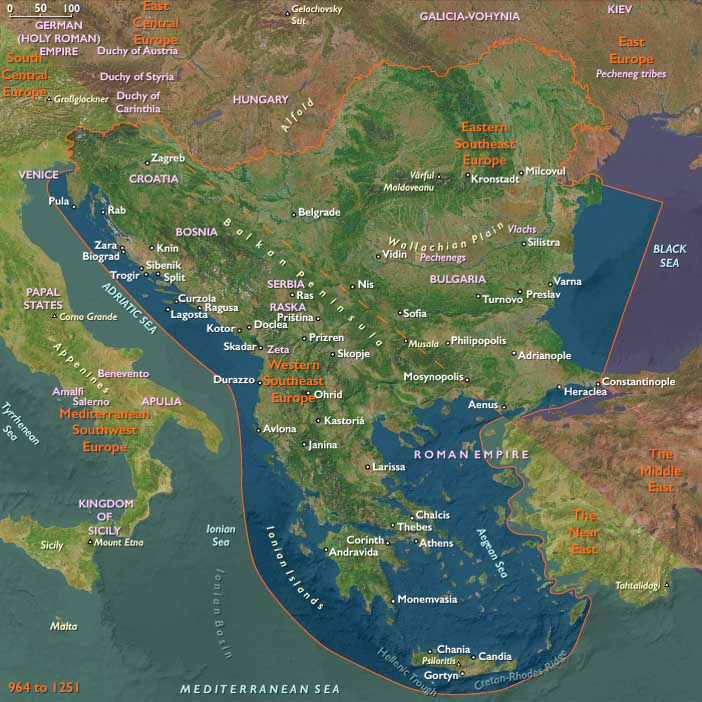
Consecrated emperor at Rome, in a church outside the walls, by Pope Honorius III on April 9, 1217, he had borrowed some ships from the Venetians, promising in return to conquer Durazzo for them; failing in this enterprise, he had sought to make his way to Constantinople by land.
On the journey, he had been seized by the despot of Epirus, Theodore Komnenos Doukas, and imprisoned.
Because his fate is unknown (although he was probably killed), Peter’s wife, Yolanda, who pregnant with her tenth child, had succeeded in reaching Constantinople, rules as regent.
Peter and Yolanda’s oldest son, Philip II, Marquis of Namur, refuses the empire and it falls to his next oldest brother brother Robert, who like, Philip, is still in France.
Peter dies, probably by foul means, after an imprisonment of two years, and thus never governs his empire.
Yolanda has meanwhile allied with the Bulgarians against the various successor states of the Eastern Roman Empire, and has been able to make peace with Theodore I Lascaris of the Empire of Nicaea, who marries her daughter, Marie, shortly before Yolanda’s death in September, 1219.

Robert of Courtenay, an irresponsible youth, had set out to take possession of his distracted inheritance, currently ruled by Conon of Béthune as regent.
Arriving in Constantinople in early 1221, he is crowned emperor on March 25.
Theodore Laskaris, Empire of Nicaea, the center of the Orthodox church and imperial government in exile, had in 1214 concluded a peace treaty with the Latin Empire at Nymphaion, and in 1219 he had married a niece of Emperor Henry.
In spite of predominantly peaceful relations, Theodore had attacked the Latin Empire again in 1220, but peace was restored after he negotiates a settlement with Robert of Courtenay, fourth emperor of the Latin Empire of Constantinople, to whom he betroths his daughter Eudocia.
By his courage and military skill, he has enabled the imperial Greek state not merely to survive, but ultimately to beat back the Latin invasion.
The ruler of a territory roughly coterminous with the old Roman provinces of Asia and Bithynia, Theodore dies in November 1221.
John Doukas Vatatzes, a successful soldier from a military family, is probably the son of the general Basileios Vatatzes, Duke of Thrace, who died in 1193, and his wife, an unnamed daughter of Isaakios Angelos and cousin of the Emperors Isaac II Angelos and Alexios III Angelos.
The Vatatzes family had first become socially prominent in the Komnenian period and had forged early imperial connections when Theodore Vatatzes married the porphyrogenete princess Eudokia Komnene, daughter of Emperor John II Komnenos.
John had been chosen by Theodore as husband for his daughter Irene and as heir to the throne, excluding members of the Laskarid family from the succession.
He ascends the throne of Nicaea as Emperor John III in mid-December 1221.
Robert, surrounded by enemies, has appealed for help to Pope Honorius III and to King Philip II of France; but meanwhile his lands are falling into the hands of the rival Despotate of Epirus and Empire of Nicaea.
After the Nicaeans take Seleucia from the Latins in 1222, the Latin Empire consists only of Constantinople and its environs.
Theodore negotiates a settlement with Robert, to whom he betroths his daughter Eudocia.
Theodore's surviving brothers, Alexios and Isaac, protest the succession, and civil war breaks out.
The struggle for the Nicaean throne ends with the Battle of Poimanenon, fought in the winter of 1223/1224, in which John’s opponents, the two Lascaris brothers, are defeated and blinded in spite of the support they had acquired from the Latin Empire of Constantinople.
This victory opens the way for the recovery of most of the Latin possessions in Asia.
John III, allied in 1224 to Bulgarian ruler Ivan II, had acquired territory in the Aegean and in Asia Minor but had failed to capture Constantinople.
Ivan had subsequently defected to the Latin side, but the Latin emperor Robert, threatened both by Nicaea in Asia and Epirus in Europe, sues for peace, which is concluded in 1225.
According to its terms, the Latins abandon all their Asian possessions except for the eastern shore of the Bosporus and the city of Nicomedia with the surrounding region.
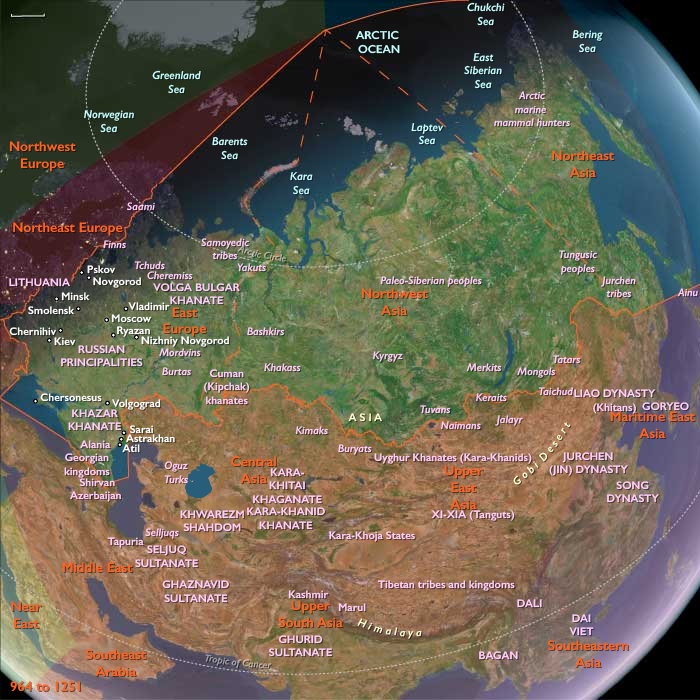
Seljuq sultan 'Ala' ad-Din Kayqubad has meanwhile built on the accomplishments of his father and brother, having conquered most of the Mediterranean littoral up to the frontiers of Syria from 1221 to 1225.
Philip II of Courtenay partakes in the Albigensian Crusade of Louis VIII of France and the siege of Avignon in 1226.
The city falls, but epidemics have ravaged the army.
Philip dies near Saint-Flour in the Auvergne.
As he is unmarried, the margraviate goes to his brother Henry.
The eldest son of the Peter II of Courtenay and Yolanda of Flanders, Philip had inherited Namur as the designated heir on the death of his maternal uncle Philip the Noble, in 1212.
He had had to fight the descendants of Henry IV of Luxembourg, who have not given up their claim to Namur.
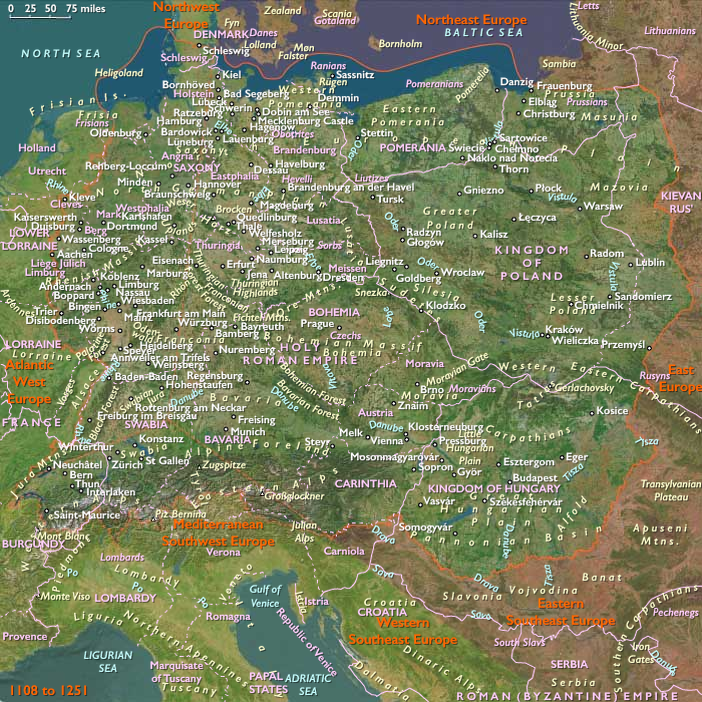
When Cunigunda, a daughter of Frederick I, Duke of Lorraine and the wife of Waleran III, Duke of Limburg, died in 1214, Waleran had soon wed Ermesinda of Luxembourg, and became count jure uxoris there.
Ermesinda claimed Namur and Waleran had added a crown to his coat of arms to symbolize this claim.
In 1223, Waleran had again tried to take Namur from Philip II, but had failed and signed a peace treaty on February 13 in Dinant.
When Philip's father died in 1217, Philip had refused the crown of the Latin Empire of Constantinople and it had fallen to his brother Robert.
The circumstances surrounding the failed negotiations to wed Robert, a weak and incapable ruler, to Eudocia are unclear, but George Akropolites states that the arrangement was blocked on religious grounds by the Orthodox Patriarch Manuel Sarentos: Robert's sister Marie de Courtenay was married to Emperor Theodore I Laskaris.
Accordingly, Robert, already Theodore's brother-in-law, could not also be his son-in-law.
Regardless, Robert had promised again to marry Eudocia but soon repudiated this engagement, and in 1227 (according to William of Tyre Continuator) secretly marries the Lady of Neuville, already the fiancée of a Burgundian gentleman.
Both the new wife of the Emperor and her mother are placed in a manor house owned by Robert.
The unnamed Burgundian gentleman somehow finds out and reportedly organizes a conspiracy against Robert and his new wife.
The knights of Constantinople partaking in the conspiracy proceed to capture the Empress and her mother.
The lips and nostrils of both women are cut off and then thrown to sea.
Robert flees Constantinople following the attack, seeking the assistance of Pope Gregory IX in reestablishing his authority.