Robert III, King of Scots
Years: 1337 - 1406
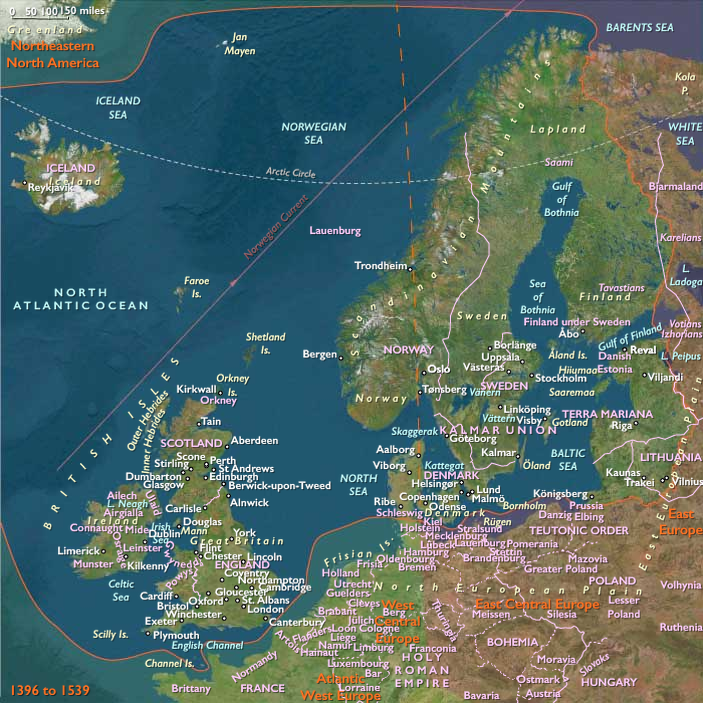
Robert III (August 14, 1337 – April 4, 1406), born John Stewart, is King of Scots from 1390 to his death.
He is known primarily as the Earl of Carrick before ascending the throne at age fifty-three.
He is the eldest son of Robert II and Elizabeth Mure and is legitimated with the marriage of his parents in 1347.
John joins his father and other magnates in a rebellion against his grand-uncle, David II, early in 1363 but submits to him soon afterwards.
He marries Anabella Drummond, daughter of Sir John Drummond of Stobhall before May 31, 1367 when the Steward cedes to him the earldom of Atholl.
In 1368 David creates him Earl of Carrick.
His father becomes king in 1371 after the unexpected death of the childless King David.
In the succeeding years, Carrick is influential in the government of the kingdom but becomes progressively more impatient at his father's longevity.
In 1384, Carrick is appointed the king's lieutenant after having influenced the general council to remove Robert II from direct rule.
Carrick's administration sees a renewal of the conflict with England.
In 1388, the Scots defeat the English at the Battle of Otterburn where the Scots' commander, James, Earl of Douglas, is killed.
By this time Carrick has been badly injured by a horse-kick but the loss of his powerful ally, Douglas, sees a turnaround in magnate support in favor of his younger brother Robert, Earl of Fife and in December 1388 the council transfers the lieutenancy to Fife.
In 1390, Robert II dies and Carrick ascends the throne as Robert III but without authority to rule directly.
Fife continues as lieutenant until February 1393 when power is returned to the king in conjunction with his son David.
At a council in 1399 owing to the king's 'sickness of his person', David, now Duke of Rothesay, becomes lieutenant of the kingdom in his own right but supervised by a special parliamentary group dominated by Fife, now styled Duke of Albany.
After this, Robert III withdraws to his lands in the west and for a time plays little or no part in affairs of state.
He is powerless to interfere when a dispute between Albany and Rothesay arises in 1401 that leads to Rothesay's arrest and imprisonment at Albany's Falkland Castle where Rothesay dies in March 1402.
The general council absolves Albany from blame and reappoints him as lieutenant.
The only impediment now remaining to an Albany Stewart monarchy is the king's only surviving son, James, Earl of Carrick.
In February 1406 the eleven-year-old James and a powerful group of followers clashes with Albany's Douglas allies resulting in the death of the king's counselor Sir David Fleming of Cumbernauld.
James escapes to the Bass Rock in the Firth of Forth accompanied by Henry Sinclair, Earl of Orkney and remains there for a month before boarding a ship bound for France.
The vessel is intercepted near Flamborough Head and James becomes the prisoner of Henry IV of England, whose captive he will remain for the next eighteen years.
Robert III dies in Rothesay Castle on April 4, 1406 shortly after learning of his son's imprisonment and is buried at Paisley Abbey.