Robert II, King of Scots
Years: 1316 - 1390
Robert II (2 March 1316 – 19 April 1390) reigns as King of Scots from 1371 to his death as the first monarch of the House of Stewart.
He is the son of Walter Stewart, 6th High Steward of Scotland and of Marjorie Bruce, daughter of Robert the Bruce and of his first wife Isabella of Mar.
Edward Bruce had been named heir to the throne but he died without legitimate children on December 3, 1318 in a battle near Dundalk in Ireland.
Marjorie by this time had died in a riding accident—probably in 1317.
Parliament decrees her infant son, Robert Stewart, as heir presumptive, but this lapses on 5 March 1324 on the birth of a son, David, to King Robert and his second wife, Elizabeth de Burgh.
Robert Stewart inherits the title of High Steward of Scotland on his father's death on April 9, 1326, and a Parliament held in July 1326 confirms the young Steward as heir should Prince David die without a successor.
In 1329 King Robert I dies and the six-year-old David succeeds to the throne with Sir Thomas Randolph, Earl of Moray appointed Guardian of Scotland.
Edward Balliol, son of King John Balliol, assisted by the English and Scottish nobles disinherited by Robert I, invades Scotland, inflicting heavy defeats on the Bruce party on August 11, 1332, at Dupplin Moor and Halidon Hill on July 10, 1333.
Robert fights at Halidon, where his uncle and former guardian, Sir James Stewart, is killed.
Following this battle, Robert's lands in the west are given by Balliol to his supporter David Strathbogie, the titular Earl of Atholl.
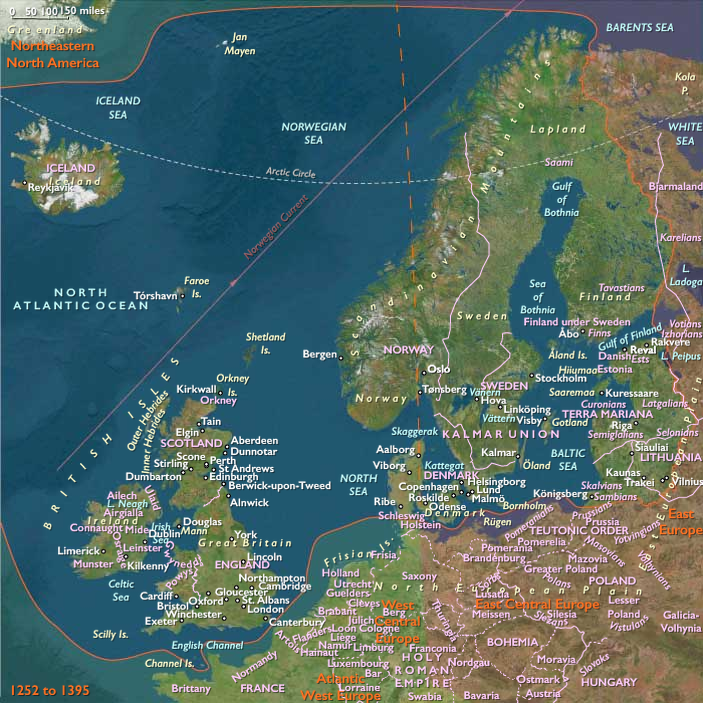
Robert takes refuge in the fortress of Dumbarton Castle in the Clyde estuary to join his uncle, King David.
In May 1334, David escapes to France, leaving Robert and John Randolph, 3rd Earl of Moray, as joint Guardians of the kingdom.
Robert succeeds in regaining his lands but following Randolph's capture by the English in July 1335, his possessions are once again targeted by the forces of Balliol and King Edward III of England.
This may have persuaded Robert to submit to Balliol and the English king and may explain his removal as Guardian by September 1335.
The Guardianship transfers to Sir Andrew Murray of Bothwell but following his death in 1338 Robert is reappointed and retains the office until King David returns from France in June 1341.
Robert accompanies David into battle at Neville's Cross on October 17, 1346, but he and Patrick Dunbar, Earl of March, escape or flee the field and David is taken prisoner.
In October 1357, the king is ransomed for one hundred thousand marks to be paid in installments over ten years.
Robert had married Elizabeth Mure around 1348, legitimizing his four sons and five daughters.
His subsequent marriage to Euphemia de Ross in 1355 produces two sons and two surviving daughters and provides the basis of a future dispute regarding the line of succession.
Robert joins a rebellion against David in 1363, but submits to him following a threat to his right of succession.
In 1364, David presentsa proposal to Parliament that would cancel the remaining ransom debt if it was agreed that a Plantagenet heir would inherit the Scottish throne should he die without issue.
This is rejected and Robert succeeds to the throne at the age of fifty-five following David's unexpected death in 1371.
England still controls large sectors in the Lothians and in the border country, so King Robert allows his southern earls to engage in actions in the English zones to regain their territories, hals trade with England and renews treaties with France.
By 1384, the Scots have retaken most of the occupied lands, but following the commencement of Anglo-French peace talks, Robert is reluctant to commit Scotland to all-out war and obtains Scotland's inclusion in the peace treaty.
Robert's peace strategy is a factor in the virtual coup in 1384 when he loses control of the country, first to his eldest son, John, Earl of Carrick, afterwards King Robert III, and then from 1388 to John's younger brother, Robert, Earl of Fife, afterwards the first Duke of Albany.
Robert II dies in Dundonald Castle in 1390 and is buried at Scone Abbey.