Robert I of France
King of Western Francia
Years: 866 - 923
Robert I (866–923) was the King of Western Francia from 922 to 923.
Before succeeding his brother Odo as king he is the Count of Poitiers, Marquis of Neustria and Orléans and Count of Paris.




Related Events
Filter results
Showing 10 events out of 24 total
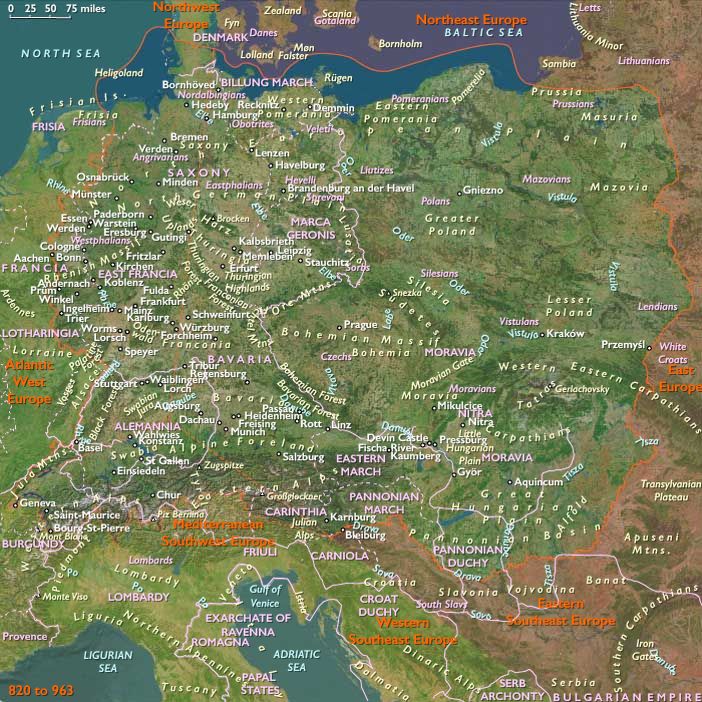
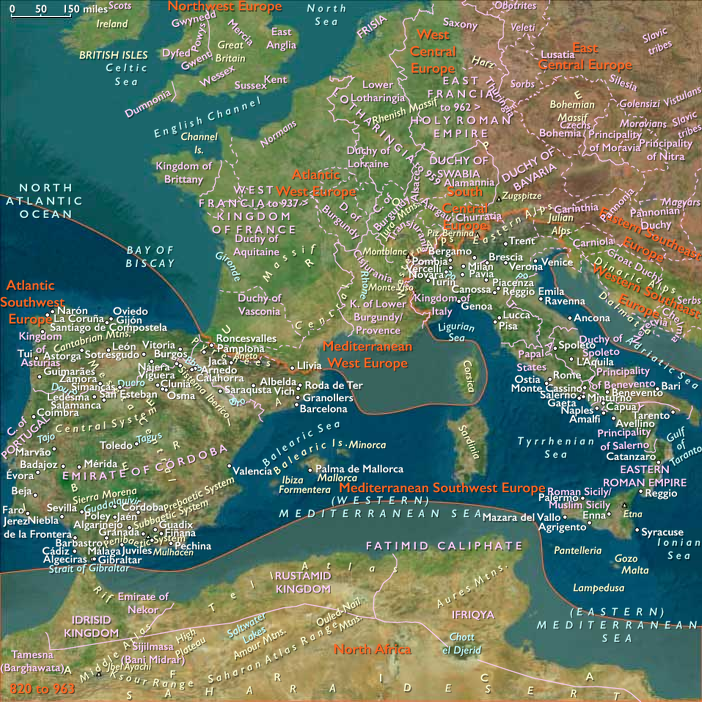
Atlantic West Europe (916–927): Emergence of Regional Powers and Continued Carolingian Decline
Between 916 and 927, Atlantic West Europe witnessed the continued erosion of Carolingian royal authority, the consolidation and expansion of regional powers, especially Normandy, Flanders, Aquitaine, Anjou, and the Burgundian kingdoms, and the beginnings of political stabilization following the era of Viking raids.
Political and Military Developments
-
West Francia: Enduring Instability
- King Charles the Simple (r. 898–922) struggled against increasingly powerful nobles, ultimately losing his throne after being deposed in 922, leading to civil unrest and further fragmentation of royal power.
- Robert I, count of Paris, briefly became king (922–923) but was killed in battle against Charles’ supporters; Rudolph of Burgundy succeeded him, bringing Burgundy into a more prominent political role in West Francia.
-
Normandy: Consolidation under Rollo
- Duke Rollo (r. 911–927) successfully transformed the Viking-controlled territory into the stable Duchy of Normandy, integrating local populations and establishing Rouen as a major center of power and trade.
-
Flanders and Anjou: Strengthening Territorial Control
- Arnulf I of Flanders (r. 918–965) solidified territorial gains, enhancing Flanders' military and economic capabilities, particularly through fortifications and expanding trade networks.
- In Anjou, Fulk I the Red (r. 898–942) reinforced his authority through strategic marriages and aggressive territorial expansion along the Loire.
-
Aquitaine: Stability and Cultural Patronage
- William II of Aquitaine (r. 918–926) continued his predecessor's efforts, reinforcing regional governance, supporting religious institutions, and providing stability in southern and western France.
-
Upper and Lower Burgundy: Internal Stability
- Rudolph II of Upper Burgundy (r. 912–937) managed internal stability, while Lower Burgundy (Provence) under Louis the Blind (until 928) experienced weakening central control, allowing regional nobles greater independence.
Economic and Social Developments
-
Growth of Regional Economies
- Economic revival was evident, particularly in Normandy, Flanders, and Aquitaine, where stability fostered agricultural improvements, trade expansion, and urban growth.
- Rouen, Bruges, Tours, and Nantes strengthened their roles as commercial hubs and fortifications, benefiting from growing local markets and increased political stability.
-
Integration of Viking Settlers
- In Normandy, the integration of Norse settlers encouraged agricultural and commercial development, leading to improved economic conditions and increased cultural blending with local Frankish populations.
Religious and Cultural Developments
-
Expansion of Cluniac Influence
- The Abbey of Cluny, founded in 910, significantly increased its influence, promoting monastic reform and religious independence, particularly across Burgundy, Aquitaine, and the Loire Valley.
-
Monastic and Scholarly Revival
- Monastic centers continued to preserve classical and religious manuscripts, supporting early signs of intellectual revival and education, especially in prominent monasteries like Saint-Martin of Tours and Cluny Abbey.
Legacy and Significance
By 927, Atlantic West Europe was increasingly characterized by powerful regional principalities rather than centralized royal control:
- The weakening Carolingian monarchy ceded practical authority to regional rulers in Normandy, Flanders, Anjou, Aquitaine, and Burgundy.
- The Duchy of Normandy firmly established itself, foreshadowing its later expansionist role, notably the Norman conquest of England in the following century.
- Regional economic stabilization, particularly through revived trade and fortified towns, paved the way for the urban revival of the High Middle Ages.
- Cluniac monasticism deepened religious reform and cultural vitality, significantly shaping medieval European spirituality.
This era set critical foundations for the political, economic, and cultural contours that defined Atlantic West Europe through the High Middle Ages.
The Magyars raid Alsace in 917.
Magyar Raid on Alsace (917): The Eastern Frankish Kingdom Under Attack
In 917, the Magyars, nomadic warriors from the Hungarian plains, launch a raid into Alsace, continuing their devastating incursions into East Francia. This attack is part of a broader wave of Magyar invasions that threaten the crumbling Carolingian realm in the early 10th century.
Context: The Magyar Raids into East Francia
- The Magyars had emerged as a dominant force in Central Europe, taking advantage of the fragmentation of East Francia following the death of Louis the Child (911).
- Lacking a strong central ruler, East Francia was vulnerable to external attacks, and the Magyars frequently raided into Bavaria, Swabia, and Lotharingia.
- The raid on Alsace in 917 follows previous incursions into Germany, Italy, and Burgundy, as the Magyars exploit weak defenses along the Rhine frontier.
The Raid on Alsace
- The Magyars, known for their swift horse-mounted warfare, penetrate deep into Alsace, targeting towns, monasteries, and trade routes.
- The raiders plunder villages and religious sites, taking slaves and loot before retreating to their strongholds in the Hungarian plains.
- The East Frankish nobility struggles to mount a coordinated defense, as the kingdom is divided among powerful dukes, each focused on securing their own territories.
Consequences of the 917 Magyar Raid
-
Continued Weakness of East Francia
- The raid highlights the vulnerability of the eastern frontier, as local rulers fail to repel the invaders effectively.
- The Carolingian system of decentralized rule makes a unified military response difficult, allowing the Magyars to raid almost at will.
-
The Need for Stronger Defenses
- The attacks lead to greater reliance on local ducal leadership, particularly in Bavaria, Swabia, and Franconia, which begin to fortify their regions.
- This foreshadows the rise of the Ottonian dynasty, which will later develop military strategies to counter the Magyar threat.
-
Prelude to Further Magyar Raids
- The Magyar raid of 917 is one of many incursions into East Francia and signals continued instability in the region.
- Their attacks will intensify throughout the 920s and 930s, culminating in the Battle of Lechfeld in 955, where they will finally be defeated by Otto I of Germany.
Conclusion: The Growing Magyar Threat
The 917 raid on Alsace demonstrates the ongoing weakness of the East Frankish kingdom, which is unable to effectively resist the Magyars. The fragmentation of Carolingian authority ensures that these raids will continue, pushing East Francia toward military reform and centralized ducal leadership, ultimately paving the way for the rise of the Holy Roman Empire.
The Decline of Charles the Simple’s Rule and the Rise of Opposition (917–919)
By 917–919, the reign of Charles the Simple, King of West Francia, is increasingly undermined by internal discontent among the nobility. His favoritism toward Hagano, a petty noble of Lotharingian origin and a relative of his first wife, Frederuna, creates widespread resentment among the aristocracy.
The Rise of Hagano and Noble Resentment
- Hagano gains Charles' favor following the death of Queen Frederuna in 917, despite being of minor noble status (mediocris).
- By 918, he is the king’s most trusted advisor, wielding influence over court politics and royal patronage.
- The West Frankish aristocracy despises him, largely because Charles begins transferring monastic beneficesfrom powerful nobles to Hagano, thereby weakening their influence.
- This results in Charles losing noble support, making him increasingly isolated and unable to effectively rule.
The Breakdown of Royal Authority (919)
- The nobility’s dissatisfaction culminates in open defiance in 919, when the West Frankish barons refuse to aid Charles in repelling a Magyar invasion.
- Lotharingian discontent grows, and one of its most powerful nobles, Gilbert (son of Reginar I of Hainaut), shifts his loyalty to Henry the Fowler, King of East Francia.
- According to Flodoard, Gilbert is even elected "prince" (princeps) by the Lotharingian aristocracy, effectively removing Lotharingia from Charles’ control.
- Robert of Neustria, another leading noble, makes an independent treaty with the Vikings, ignoring the king’s authority.
The Beginning of the End for Charles the Simple
- Charles’ alienation of the nobility, particularly by favoring Hagano at their expense, leads to his inability to govern effectively.
- His weakening authority paves the way for open rebellion, and within a few years, his rule will collapse entirely.
- Lotharingia is lost to Henry the Fowler, and West Francia itself becomes unstable, setting the stage for dynastic conflict.
Conclusion: A King Undone by Favoritism and Noble Defiance
Charles the Simple’s loyalty to Hagano and his willingness to alienate his powerful vassals cost him both Lotharingia and the support of the West Frankish nobility. His failure to unite his realm against external threats, including the Magyars and Vikings, ensures that his downfall is only a matter of time.
Robert of Neustria: Guardian of Northern Francia and the Rise of the Robertians (866–921)
Robert of Neustria, born in 866, was the posthumous son of Robert the Strong, Count of Anjou, and the younger brother of King Odo of West Francia. As a leading Frankish noble, he played a crucial role in defending northern Francia from Viking incursions, ultimately setting the stage for the rise of the Capetian dynasty.
Background and Early Career
- Robert’s family, the Robertians, emerged as one of the most powerful noble houses in West Francia, with Paris as their center of power.
- Robert was present at the Siege of Paris in 885, fighting alongside his brother, Odo, against the Viking invasion.
- When Odo became king in 888, he appointed Robert as the ruler of several counties, including Paris, and granted him control over important abbeys.
- Robert also held the prestigious title of Dux Francorum (Duke of the Franks), making him one of the most powerful military commanders in the kingdom.
Loyalty to Charles the Simple (898–921)
- When Odo died in 898, Robert did not claim the West Frankish throne, instead recognizing Charles the Simple as king.
- In return for his loyalty, Charles confirmed Robert in his titles and lands, allowing him to continue his military campaigns against the Vikings.
- As Duke of the Franks, Robert defended northern Francia, leading several victories against Norse invaders.
Robert’s Victory Against the Vikings (921)
- In 921, Robert led an army against a large band of Norse raiders in the Loire Valley, delivering a decisive victory.
- Following their defeat, the Vikings converted to Christianity and settled near Nantes, further integrating Norse elements into West Francia.
- This victory enhanced Robert’s reputation, cementing his status as the kingdom’s foremost defender.
Tensions with Charles the Simple (921 Onward)
- The peace between Robert and Charles remains intact until about 921, when tensions begin to rise.
- Charles, increasingly influenced by his unpopular favorite, Hagano, alienates his nobles, including Robert.
- As Robert’s influence grows, his relationship with Charles deteriorates, setting the stage for conflict between the king and his most powerful vassal.
Legacy and the Rise of the Robertians
- Robert’s leadership in defending Francia from Viking incursions strengthens the Robertian dynasty, which will later culminate in the establishment of the Capetian monarchy in 987.
- His victories over the Norse, particularly in 921, showcase the declining power of the Carolingian kings and the increasing dominance of regional rulers like the Robertians.
- His eventual break with Charles the Simple will lead to open conflict, altering the course of West Frankish history.
Thus, by 921, Robert of Neustria stands as the most powerful noble in West Francia, a loyal defender of the kingdom but also a potential rival to Carolingian rule, foreshadowing the power struggles that will define the future of medieval France.
The Treaty of Bonn, which calls itself a "pact of friendship" (amicitia), is signed between Charles III of France and Henry I of Germany on November 7, 921, in a brisk ceremony aboard a ship in the middle of the Rhine not far from Bonn.
The use of the river, which is the border between their two kingdoms, as a neutral territory has extensive Carolingian precedents and was also used in classical antiquity and in contemporary Anglo-Saxon England.
The treaty recognizes the border of the two realms and the authority of their respective kings.
It confirms the legitimacy of Henry's election by the German princes and of Charles's rule over Lotharingia through the election by its princes.
In the treaty, Henry is titled rex Francorum orientalium (King of the East Franks) and Charles rex Francorum occidentalium (King of the West Franks) in recognition of the division it makes of the former Frankish Empire.
Charles and his bishops and counts sign first, both because he has been king longer and because he is of Carolingian stock.
The Revolt Against Charles the Simple (922): The Breaking Point
By 922, Charles the Simple has increasingly alienated his West Frankish nobles, particularly through his favoritism toward Hagano, a low-ranking Lotharingian noble who had become his closest advisor. The final straw comes when Charles grants the town of Chelles to Hagano, despite the fact that it is already held by Rothilde, daughter of Charles the Bald, prompting the nobility to rise in rebellion.
Growing Resentment Among the Nobility
- Hagano’s influence at court has been a source of noble discontent for years, as Charles granted him monastic benefices and lands at the expense of powerful lords.
- The loss of Richard of Burgundy in 921, one of Charles’ most loyal supporters, further weakens royal authority, leaving Charles politically vulnerable.
- The grant of Chelles to Hagano in 922—directly infringing on Rothilde’s holdings—is seen as an unjust violation of noble rights.
The West Frankish Revolt Against Charles (922)
- Enraged by Hagano’s growing power, the West Frankish barons rise in open rebellion against Charles.
- This revolt is not merely about Chelles, but a culmination of Charles’ alienation of the nobility.
- Charles now faces a full-scale aristocratic uprising, led by Robert of Neustria, the younger brother of King Odo and the most powerful noble in West Francia.
Consequences of the Revolt
- Charles' authority collapses as more nobles join Robert of Neustria, who is soon proclaimed king in opposition to Charles.
- This leads to the final confrontation between the Carolingians and the Robertians, marking a major turning point in the decline of Carolingian rule.
- With the loss of noble support, Charles’ reign is effectively doomed, paving the way for his eventual capture and imprisonment in 923.
Conclusion: The Beginning of the End for Carolingian Rule in West Francia
Charles’ favoritism toward Hagano, coupled with his alienation of the nobility, directly leads to his overthrow in 922. With Robert of Neustria rising in rebellion, the Carolingian dynasty in West Francia is on the brink of collapse, setting the stage for dynastic change and the transition to the Capetian era.
Robert of Neustria Becomes King of the Franks (922) and the Rise of Herbert II of Vermandois
Following the rebellion against Charles the Simple, Robert of Neustria, backed by the Frankish nobility and clergy, successfully forces Charles into exile in Lorraine and is crowned King of the Franks (Rex Francorum) at Reims on June 29, 922. This marks the first successful deposition of a Carolingian ruler in West Francia, further shifting power from the Carolingians to the Robertians.
Herbert II of Vermandois: Expanding Power and Influence
- Herbert II, son of Herbert I of Vermandois and Bertha de Morvois, is deeply aware of his descent from Charlemagne and seeks to expand his territorial and political power.
- Having inherited his father’s domains, Herbert steadily strengthens his position:
- In 907, he acquires the Abbey of St. Medard, Soissons, taking the role of lay abbot, which grants him control over the abbey’s vast income and landholdings.
- His marriage to a daughter of King Robert I secures for him the County of Meaux, further expanding his influence in northern France.
Herbert’s Control Over the Archbishopric of Reims
- In 922, when Seulf is appointed Archbishop of Reims, Herbert II ensures his dominance over the Church by extracting a solemn promise from Seulf that he can nominate his successor.
- This political maneuver effectively places Herbert in control of the most important ecclesiastical office in West Francia, giving him significant influence over royal legitimacy and noble alliances.
The Political Landscape After Robert’s Coronation
- Robert I’s rule is immediately contested by Charles the Simple, who still claims Lotharingia and retains some support.
- Herbert II of Vermandois emerges as one of the most powerful nobles in West Francia, consolidating his holdings and shaping the political future of the kingdom.
Conclusion: The Decline of Carolingian Rule and the Rise of the Robertians
The coronation of Robert I in 922 represents a major shift in West Francia, as Carolingian legitimacy is openly challenged by the rising power of the Robertians and other great magnates. Meanwhile, Herbert II of Vermandois positions himself as a kingmaker, leveraging his Carolingian ancestry, vast territories, and control over the Archbishopric of Reims to secure his dynasty’s future influence.
The Fall of Charles the Simple and the Rise of Rudolph of Burgundy (923)
The struggle for control of West Francia reaches a turning point in 923, as Charles the Simple attempts to reclaim his throne from the usurper Robert I, leading to a decisive battle near Soissons. Despite Charles’ military success, the political landscape shifts against him, resulting in his capture and imprisonment, while Rudolph of Burgundy is elected king.
Failed Diplomacy: The Treaty of Bonn and Henry the Fowler’s Role
- The Treaty of Bonn, initially meant to ensure peace between Charles the Simple and Henry the Fowler (King of East Francia), proves ineffective as Henry aligns with Robert I in early 923.
- In an effort to restore relations, Charles sends Henry a holy relic—the gold-encased, gem-studded hand of St. Dionysius the Areopagite—as a symbol of faith and a pledge of perpetual alliance (as described by Widukind of Corvey).
- Charles likely hopes to remind Henry of the Treaty of Bonn and lure him away from supporting Robert, but Henry does not change his allegiance.
Robert I’s Struggles and Rollo’s Loyalty to Charles
- Robert I’s rule is contested not only by Charles but also by the Viking leader Rollo, who had settled in Normandy in 911 under Charles’ authority.
- Unlike other nobles, Rollo remains loyal to Charles, as his land grants and recognition depended on the Carolingian king.
- This further weakens Robert’s position, as his legitimacy is challenged by both Charles and the Normans.
The Battle of Soissons (June 15, 923): The Death of Robert I
- Charles gathers an army and marches against Robert I, seeking to reclaim his throne.
- In a fierce battle near Soissons on June 15, Robert I is killed in combat, but his army wins the battle, forcing Charles to retreat.
- With Robert dead, the nobles quickly rally behind another leader—Rudolph (Raoul) of Burgundy, who is married to Robert’s daughter, Emma of France.
Rudolph of Burgundy Elected King (923)
- Shortly after the battle, the nobles convene and elect Rudolph as King of West Francia to succeed his father-in-law, Robert I.
- He is crowned by Walter, Archbishop of Sens, at the Abbey of Saint-Médard in Soissons on Sunday, July 13, 923.
- Upon assuming the throne, he transfers the Duchy of Burgundy to his younger brother, Hugh the Black, in 925.
The Capture and Imprisonment of Charles the Simple (923–929)
- Charles continues to claim the throne, refusing to accept Rudolph’s rule.
- However, Herbert II of Vermandois, Charles’ distant cousin and former ally, tricks Charles into meeting him, only to take him prisoner.
- Charles is held in captivity for six years, dying in 929.
Eadgifu and the Flight of Louis to England
- Charles’ wife, Eadgifu, the daughter of King Edward the Elder of England, flees with her three-year-old son, Louis, to her father’s court in England.
- This ensures that the Carolingian bloodline survives, as Louis (later Louis IV) will eventually return to reclaim his father’s kingdom.
Conclusion: The Fall of the Carolingians and the Rise of the Robertians
- The events of 923 mark the effective end of Carolingian rule in West Francia, though Charles the Simple remains alive in captivity.
- Rudolph of Burgundy begins his struggle to consolidate power, facing challenges from both Normans and rebellious nobles.
- Herbert II of Vermandois emerges as a key power broker, having imprisoned the last Carolingian king and positioned himself as a kingmaker in the kingdom’s future.
- The young Carolingian heir, Louis IV, survives in English exile, setting the stage for his later return to the Frankish throne in 936.
The Battle of Soissons (923) and its aftermath cement the power of the Robertian faction, shaping the course of West Francia’s transition from the Carolingians to the Capetians in the following century.
Rudolph of Burgundy’s Campaign Against Henry I of Germany and the Struggle for Lotharingia (923–924)
Upon his election as King of West Francia in 923, Rudolph of Burgundy’s first major act is to confront Henry I of Germany, the newly crowned King of East Francia, over the disputed region of Lotharingia (Lorraine). This reflects the continued struggle between East and West Francia over control of the former Middle Kingdom of Lothair II.
Background: Henry I’s Claim to Lotharingia
- Lotharingia had historically been a contested region, shifting between East and West Francia since the Treaty of Meerssen (870) and the Treaty of Ribemont (880).
- Before the death of Robert I, Henry I had made a compact with King Robert at Jülich in early 923, possibly negotiating peace over Lorraine.
- However, Rudolph, as the new king, does not honor this agreement and instead seeks to reassert West Frankish control over the region.
Rudolph’s Campaign and the Confrontation with Henry I (923–924)
- Rudolph marches into Lotharingia with a sizable army, seeking to annex the duchy into West Francia.
- Henry I, unwilling to let Lotharingia fall into West Frankish hands, gathers his forces to meet Rudolph in battle.
- Both armies face off in what seems to be a significant military engagement, but rather than escalating into war, the two kings negotiate peace again.
Outcome: A Renewed Peace Between West and East Francia
- Rudolph and Henry I reach a diplomatic settlement, though the terms remain unclear.
- Henry maintains control over Lotharingia, preventing its annexation into West Francia.
- The balance of power between the two kingdoms remains tense, as neither king is willing to allow full control of Lotharingia to the other.
Significance of Rudolph’s Failed Attempt to Annex Lorraine
- Continues the long-standing Carolingian-era struggle over Lotharingia, which remains a contested regionfor centuries.
- Prevents an outright war between West and East Francia, preserving a fragile peace in the early years of both kings’ reigns.
- Establishes Henry I as the stronger monarch, as his ability to defend Lotharingia reinforces East Francia’s dominance over the region.
Conclusion: A Diplomatic Defeat for Rudolph
While Rudolph’s attempt to take Lotharingia fails, his early military actions set the tone for his reign—one marked by struggles to consolidate power against both external threats like East Francia and internal challenges from feudal lords and Vikings. Meanwhile, Henry I strengthens East Francia’s position, setting the stage for its evolution into the Holy Roman Empire under his successors.