Robert Devereux
2nd earl of Essex
Years: 1565 - 1601
Robert Devereux, 2nd Earl of Essex KG (10 November 1565 – 25 February 1601) is an English nobleman and a favorite of Elizabeth I.
Politically ambitious, and a committed general, he is placed under house arrest following a poor campaign in Ireland during the Nine Years' War in 1599.
In 1601 he leads an abortive coup d'état against the government and is executed for treason.


Related Events
Filter results
Showing 10 events out of 49 total
Among Essex’s captains is John Norreys, whose great uncle had been a guardian to the young princess Elizabeth, who was well acquainted with the family, and had stayed at Yattendon on her way to imprisonment at Woodstock.
Born born at Yattendon, Berkshire, a second son of Henry Norreys and Marjorie Williams, his paternal grandfather had been executed as the lover of Anne Boleyn, the mother of Elizabeth.
His maternal grandfather was Lord Williams of Thame.
The future Queen was a great friend of Norreys' mother, whom she had nicknamed the Black Crow on account of her jet black hair.
Norreys has inherited his mother's hair color and in consequence is known as Black Jack by his troops.
His father had been posted as ambassador to France, and in 1567 John and his elder brother William had witnessed the Battle of St. Denis.
They had drawn a map of the battle which formed part of their father's report to the Queen.
When his father was recalled in January 1571, Norreys had stayed behind in France and developed a relationship with the new ambassador, Francis Walsingham.
Norreys had served in 1571 as a volunteer under Admiral Coligny on the Protestant side in the civil wars in France.
Norreys now supports his elder brother William, in command of a troop of one hundred cavalry that have been recruited by their father, currently serving as Lord Lieutenant of Berkshire.
Phillip II, the Habsburg King of Spain, sends a great Armada in 1588 to crush the English rebellion against Papal Authority, but the mission fails to conquer Englands: the English secure the Church of England with their defeat of the Spanish Armada in the Battle of Gravelines.
Francis Walsingham’s network of spies in the European capitals provides him with advance knowledge of the impending attack of the Spanish Armada.
The English victory marks the beginning of British naval superiority.
Spain continues her two-front war with England and the United Provinces.
Elizabeth I, Queen of England from 1558 to 1603, apparently inherited her red tresses from her father, Henry VII, as her mother, Anne Boleyn, seems to have been a brunette.
Also called The Virgin Queen, or Good Queen Bess, she reigns during the period, often (and justly) called the Elizabethan Age, when the small island kingdom asserts itself vigorously as a major European power in politics, commerce, and the arts.
Known for ordering the execution of her royal cousin Mary, Queen of Scots, as well as a few former favorites like Sir Walter Raleigh and the rebellious Earl of Essex, Elizabeth never marries.
Shrewd, courageous, and a master of self-display, she transforms herself into a powerful and enduring image of female authority, regal magnificence, and national pride.
Given her seventy-year life span, she has undoubtedly enhanced her natural color with dye in her later years, but that has long been the prerogative of any natural redhead.
The period after the defeat of the Spanish Armada in 1588 brings new difficulties for Elizabeth that are to last the fifteen years until the end of her reign.
The conflicts with Spain and in Ireland drag on, the tax burden grows heavier, and the economy is hit by poor harvests and the cost of war.
Prices rise and the standard of living falls.
During this time, repression of Catholics intensifies, and Elizabeth in 1591 authorizes commissions to interrogate and monitor Catholic householders.
To maintain the illusion of peace and prosperity, she increasingly relies on internal spies and propaganda.
Mounting criticism in her last years reflects a decline in the public's affection for her.
One of the causes for this "second reign" of Elizabeth, as it is now frequently called, is the different character in the 1590s of Elizabeth's governing body, the privy council.
A new generation is in power.
With the exception of Lord Burghley, the most important politicians had died around 1590: The Earl of Leicester in 1588, Sir Francis Walsingham in 1590, Sir Christopher Hatton in 1591.
Factional strife in the government, which had not existed in a noteworthy form before the 1590s, now becomes its hallmark.
A bitter rivalry between the Earl of Essex and Robert Cecil, son of Lord Burghley, and their respective adherents, for the most powerful positions in the state marred politics.
The queen's personal authority is lessening, as is shown in the affair of Dr. Lopez, her trusted physician.
When he is wrongly accused by the Earl of Essex of treason out of personal pique, she cannot prevent his execution, although she had been angry about his arrest and seems not to have believed in his guilt.
This same period of economic and political uncertainty, however, produces an unsurpassed literary flowering in England.
The first signs of a new literary movement had appeared at the end of the second decade of Elizabeth's reign, with John Lyly's Euphues and Edmund Spenser's The Shepheardes Calender in 1578.
Some of the great names of English literature enter their maturity during the 1590s, including William Shakespeare and Christopher Marlowe.
The English theater during this period and into the Jacobean era that is to follow reaches its highest peaks.
The notion of a great Elizabethan age depends largely on the builders, dramatists, poets, and musicians who were active during Elizabeth's reign.
They owe little directly to the queen, who was never a major patron of the arts.
Elizabeth, deeply affected by the death of the Earl of Leicester, had locked herself in her apartment for a few days until Lord Burghley had the door broken.
Her nickname for Dudley was "Eyes", symbolized by the sign of ôô in their letters to each other.
Elizabeth keeps the letter he had sent her six days before his death in her bedside treasure box, endorsing it with "his last letter" on the outside.
It will still be there when she dies fifteen years later.
In the Armada Portrait, the name of any of three surviving versions of an allegorical panel painting depicting the Tudor queen surrounded by symbols of imperial majesty against a backdrop representing the defeat of the Spanish Armada in 1588, she possibly wears the necklace of six hundred pearls the Earl had bequeathed to her in his will.
The version at Woburn Abbey, the seat of the Dukes of Bedford, was until the second decade of the twenty-first century generally accepted as the work of George Gower, a fashionable court portraitist who in 1581 had been appointed Serjeant Painter.
The version in the National Portrait Gallery, London, which has been cut down at both sides leaving just a portrait of the queen, was also attributed to Gower.
The earl’s handsome and dashing young stepson Robert Devereux, 2nd earl of Essex, had first come to court in 1584, and by 1587 had become a favorite of the Queen, who relishes his lively mind and eloquence, as well as his skills as a showman and in courtly love.
He had replaced the Leicester in June 1587 as Master of the Horse.
He had underestimated the Queen, however, and his later behavior towards her lacks due respect and shows disdain for the influence of her principal secretary, Sir Robert Cecil.
On one occasion during a heated Privy Council debate on the problems in Ireland, the Queen reportedly cuffed an insolent Essex round the ear, prompting him to draw his sword on her.
After Leicester's death in 1588, the Queen transfers to Essex the royal monopoly on sweet wines, which the late Earl had held; by this Essex can profit from collecting taxes.
The English Armada (also known as the Counter Armada, or the Drake-Norris Expedition), a fleet of warships sent to the Iberian coast by Elizabeth in 1589, is led by Sir Francis Drake as admiral and Sir John Norreys as general.
Elizabeth's intentions are to capitalize upon Spain's temporary weakness at sea after the successful repulsion of the Spanish Armada and to compel Philip II to sue for peace.
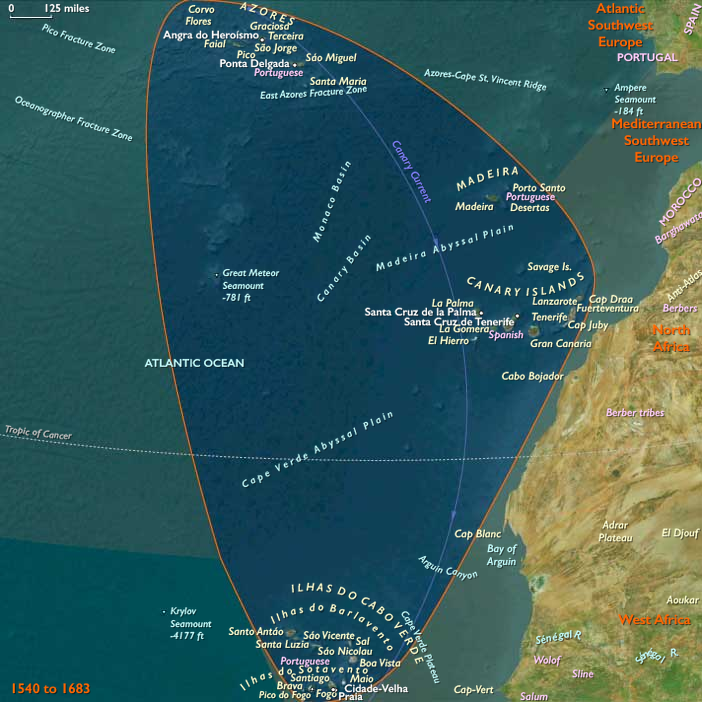
It is not a simple matter, and the expedition has three distinct aims: to burn the Spanish Atlantic fleet, to make a landing at Lisbon and raise a revolt there against Philip II, and then to continue south and establish a permanent base in the Azores.
A further aim is to seize the Spanish treasure fleet as it returns from America to Cadiz, although this depends largely on the success of the Azores campaign.
The complex politics are not the only drawback for the expedition.
Like its Spanish predecessor, the English Armada suffers from overly optimistic planning, based on hopes of repeating Drake's successful raid on Cadiz in 1587.
A critical contradiction lies between the separate plans, each of which is ambitious in its own right.
But the most pressing need is the destruction of the Spanish Atlantic fleet lying at port at La Coruña, San Sebastián and Santander along the north coast of Spain, as directly ordered by the Queen.
The expedition is floated as a joint stock company, with capital of about eighty thousand pounds—one quarter to come from the Queen, and one eighth from the Dutch, the balance to be made up by various noblemen, merchants and guilds.
Concerns over logistics and adverse weather delay the departure of the fleet, and confusion grows as it waits in port.
The Dutch fail to supply their promised warships, a third of the victuals have already been consumed, and the number of veteran soldiers is only eighteen hundred while the ranks of volunteers has increased the planned contingent of troops from ten thousand to nineteen thousand.
The fleet also lacks siege guns and cavalry—items that had been lavishly laid on in the Spanish Armada expedition of the previous year—which raises serious doubts about the intentions of those in charge of the preparations.
When the fleet sails, it is made up of six royal galleons, sixty English armed merchantmen, sixty Dutch flyboats and about twenty pinnaces.
In addition to the troops, there are four thousand sailors and fifteen hundred officers and gentlemen adventurers.
Drake assigns his vessels to five squadrons, led respectively by himself in the Revenge, Sir John Norreys in the Nonpareil, Norreys' brother Edward in the Foresight, Thomas Fenner in the Dreadnought, and Roger Williams in the Swiftsure.
Also sailing with them—against the Queen's express orders—is the Earl of Essex.
...Porto Santo in Madeira is plundered, his flagship, the Revenge, springs a leak and almost founders as it leads the remainder of the fleet home to Plymouth.
With the opportunity to strike a decisive blow against the weakened Spanish lost, the failure of the expedition further depletes the crown treasury that has been so carefully restored during the long reign of Elizabeth.
It is a crucial turning point in the Anglo-Spanish War.
Francis Bacon, through his uncle William Cecil, Lord Burghley, had in 1580 applied for a post at court, which might enable him to pursue a life of learning.
His application had failed.
He had worked quietly for two years at Gray's Inn, until admitted in 1582 as an outer barrister.
He had taken his seat in parliament for Melcombe in Dorset in 1584, and subsequently (1586) for Taunton.
He began at this time to write on the condition of parties in the church, as well as philosophical reform in the lost tract, Temporis Partus Maximus, yet he failed to gain a position he thought would lead him to success.
He showed signs of sympathy to Puritanism, attending the sermons of the Puritan chaplain of Gray's Inn and accompanying his mother to the Temple chapel to hear Walter Travers.
This had led to the publication of his earliest surviving tract, which criticized the English church's suppression of the Puritan clergy.
He had in the Parliament of 1586 urged execution , openly, for Mary, Queen of Scots.
About this time, he had again approached his powerful uncle for help, the result of which may be traced in his rapid progress at the bar.
He became Bencher in 1586, and he was elected a reader in 1587, delivering his first set of lectures in Lent the following year.
He had in 1589 received the valuable appointment of reversion to the Clerkship of the Star Chamber—a post worth sixteen thousand pounds per annum—although he will not formally take office until 1608.
Bacon soon became acquainted with Robert Devereux, 2nd Earl of Essex, Queen Elizabeth's favorite, and by 1591 acts as the earl's confidential adviser.
Cecil, who has begun performing the duties of secretary of state, is knighted in the same year.
Bacon’s vocal opposition to royal tax measures would probably have halted his political advancement were it not for the support of his friend Essex.
Norreys, having fallen foul of his French colleagues at the end of 1594, had returned from Brest.
He is in April 1595 selected as the military commander under the new lord deputy of Ireland, Sir William Russell.
The waspish Russell had been governor of Flushing, but the two men are on bad terms.
Sir Robert Devereux, 2nd Earl of Essex, had wanted his men placed as Russell's subordinates, but Norreys rejects this and is issued with a special patent that makes him independent of the lord deputy's authority in Ulster.
It is expected that the terror of the reputation he has gained in combating the Spanish will be sufficient to cause the rebellion to collapse.
Elizabeth’s favorite, Robert Devereux, 2nd Earl of Essex, burnishes his military reputation as the hero of an expedition, co-commanded by Lord Howard of Effingham, that sacks part of Cadiz between June 20 and July 15, 1596, but is unable to hold the city and port.
The Islands Voyage, an English campaign against the Portuguese colonies in the Azores in 1597 as part of the Anglo–Spanish War, is led by Essex with Sir Walter Raleigh as his second in command—other participants include Jacob Astley and Robert Mansell.
Essex defies Elizabeth's orders, pursuing the treasure fleet without first defeating the Spanish battle fleet, and so the voyage proves a failure.
It is thus the last major expedition sent to sea by Elizabeth and contributes to Essex's decline in favor with the queen.
Essex has enjoyed immense popularity in England during the 1590s, especially in Puritan London, where he is considered a pillar of Protestantism.
The hero of England’s recent expedition against Cadiz, he has championed maritime attacks on Spain and strong measures in Ireland to counter the rebel Hugh O'Neill, 3rd Earl of Tyrone, making himself leader of the war party at the height of the Anglo-Spanish war).
The Queen's principal secretary, Lord Burghley (father of Sir Robert Cecil), is however strongly opposed to him, favoring peace with Spain and a steady hand in Ireland.
Burghley in April 1598 confronts Essex in the council chamber or the last time.
Essex denounces peace with Spain as dishonorable, but Burghley interrupts him, saying that, "he breathed forth nothing but war, slaughter and blood", and then points to the twenty third verse of Psalm 55 in his prayerbook: "Bloodthirsty and deceitful men shall not live out half their days."